
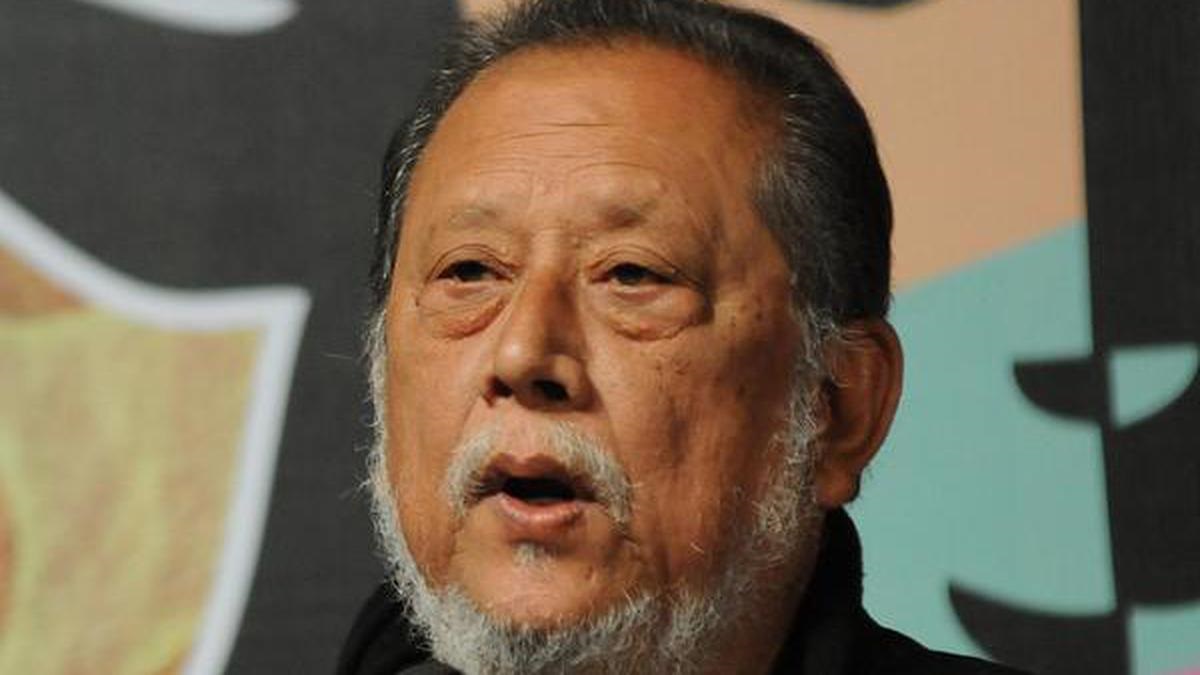
A heartfelt tribute to Ratan Thiyam, visionary theatre director and founder of the Chorus Repertory Theatre, who redefined Indian theatre through his indigenous, ritual-infused aesthetic. From Chakravyuha to Uttar Priyadarshi, his works bridged myth and modernity, embodying protest, rootedness, and spiritual depth.
The passing of Ratan Thiyam on July 23, 2025, at the age of 77, marked the culmination of a life devoted to elevating Manipuri theatre to global prominence and reclaiming indigenous aesthetics. A visionary director, playwright, and designer, Thiyam’s work transcended the boundaries of performance, invoking memory, myth, and resistance. His aesthetic was not merely a stylisation or a blend of East and West; it was an organic, deeply rooted cultural and spiritual expression drawn from his Manipuri heritage, yet universally relevant and resonant.
Born in 1948 to Manipuri classical dancers Thiyam Tarun Kumar and Bilasini Devi, Thiyam grew up surrounded by performance. He picked up the rhythms of backstage life, the movements of dancers, and the art of storytelling long before formally stepping into theatre. He began his creative journey through painting, poetry, fiction, and criticism. In 1974, he graduated from the National School of Drama, specialising in acting under Ebrahim Alkazi.
His training in traditional performance forms from Manipur—such as Natya Sankirtana, Thang-Ta, and Rasa Lila—combined with exposure to Western theatre at NSD, shaped a dual foundation for what he later called the Theatre of the Movement.
In 1976, eschewing the allure of metropolitan theatre centres, he returned to Imphal, Manipur, and established the Chorus Repertory Theatre, which became both his laboratory and his spiritual home. It developed as a cultural ashram where actors lived, trained, and performed together in a rigorous, immersive atmosphere. From this crucible, Thiyam launched a movement that would redefine Indian theatre: the “Theatre of Roots.”
Theatre of roots: A cultural reawakening
The Theatre of Roots was not merely a stylistic turn—it was a philosophical rupture. In the wake of postcolonial identity crises, Thiyam and his contemporaries, including Habib Tanvir, Kavalam Narayana Panikkar, and Arun Mukherji, sought to reclaim indigenous forms and narratives to create a theatre rooted in the performance and cultural tradition of the land. Thiyam created his theatre, which he described as the “theatre of the land,” speaking about its history, present situation, potential displacement of people, and agonies.
He wove together elements of Meitei rituals, Manipuri dance, the vigorous martial art form of Thang-Ta, traditional narrative singing forms like Pena and Wari Leeba, and classical Indian theatrical principles (drawing significantly from the Natyashastra) with influences from ancient Greek drama and Japanese Noh theatre. The result was a unique theatre with a performance language that is visually stunning, musically rich, physically demanding, and intellectually profound.
Ratan Thiyam conjured breathtaking visual compositions using light, shadow, props, and the highly trained bodies of his actors. Silence, often a powerful character in his productions, would resonate with profound meaning. His actors were not just performers; they were disciplined practitioners who underwent rigorous training, transforming their bodies into eloquent instruments of expression. This emphasis on physicality and vocal technique, coupled with an almost meditative stillness, created an immersive experience that transcended the spectacle.
Landmark productions: Choreographing myth into metaphor
Ratan Thiyam’s productions are characterised by their epic scale, visual grandeur, choreographic precision, and philosophical depth. He seamlessly integrated martial arts, ritual forms, music, movement, and poetic text into an aesthetic that has often been described as “total theatre”.
His most celebrated works include Chakravyuha (1984), based on a segment from the Mahabharata. The story of Abhimanyu’s tragic entrapment in the Chakravyuha formation became, under Thiyam’s direction, a metaphor for the innocent young caught in the machinery of war, terrorism, and violent political protests. Using martial arts choreography, stylised gestures, and haunting music, Chakravyuha powerfully evoked the futility of war.
The tragedy of Abhimanyu became a potent metaphor for the struggles and senseless violence faced by the youth of Manipur, a testament to Thiyam’s ability to imbue ancient myths with contemporary relevance. Uttar Priyadarshi (1996), based on Hindi playwright Agyeya’s poetic retelling of Emperor Ashoka’s transformation after the Kalinga War, became another iconic work, a contemplative meditation on violence, repentance, and inner awakening.
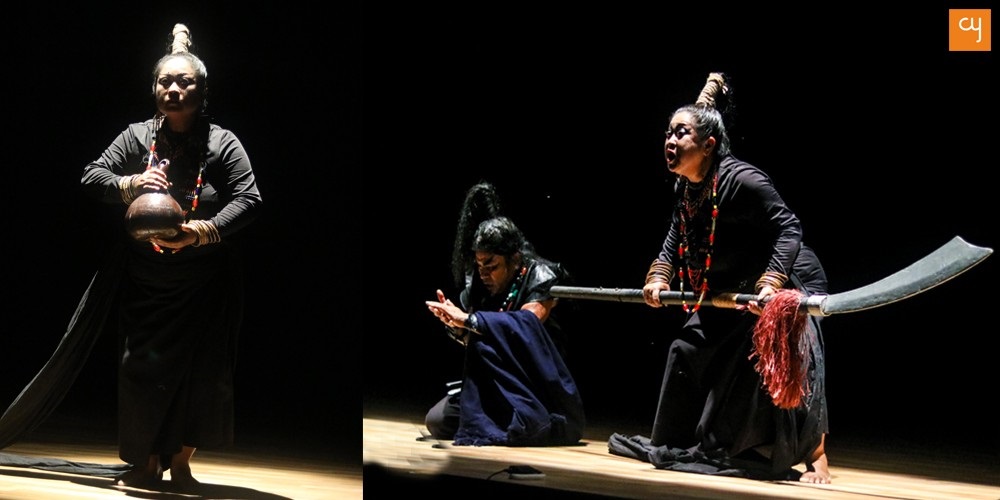
Other major works include Andha Yug, Rithusamharam, his Manipuri rendition of Shakespeare’s Macbeth, and an adaptation of Henrik Ibsen’s When We Dead Awaken. Even in adapting Western texts, Ratan Thiyam indigenized them, embedding them in an Indian spiritual and cultural framework, often using musical chants, traditional rhythms, and Manipuri scenography placed within the turbulent context of Manipur.
Every element in his theatre—light, movement, costume, music—was part of an integral and complementary to his vision. His stage designs replicated metaphysical spaces—timeless and placeless—where myth and reality intertwined. He sought a theatre rooted in the performance traditions of his land, but capable of responding to modern political and moral dilemmas surrounding him. His theatre became a space where myth illuminated the present, and where the personal was deeply political.
Voicing the unheard: Thiyam’s political aesthetics
Ratan Thiyam was an outspoken critic of violence and bigotry, often refusing state-sponsored gestures that diluted genuine dialogue. Living and working in Manipur, a region often marked by conflict and unrest, his theatre became a silent yet powerful form of protest. He used his art to voice the pain of his people, to critique oppressive systems, and to highlight the pluralistic heritage of Manipur. In 2023, amidst ethnic violence in Manipur, he rejected an invitation to join a peace committee, urging the Prime Minister to show “strong political will” instead.
His act of returning the Padma Shri in 2001 in protest against a government decision related to Manipur exemplified his unwavering commitment to his principles and his identity as a cultural ambassador who was not afraid to challenge authority.
His plays addressed themes of identity, oppression, and ecological destruction. Nine Hills, One Valley, for example, confronts the turmoil consuming Manipur, addressing violence, venality, instability, and poverty, and questioning how cultural traditions can be sustained when cut off or lost. It serves as a document of a restless society and political turmoil where common people suffer.
The play includes sequences depicting a demon disfiguring sacred dancers and mothers singing lullabies to console their children, with lamps lit to appeal for the return of peace. In Lengshonnei, an adaptation of Jean Anouilh’s Antigone, he critiqued political hypocrisy with lyrical ferocity. Ratan Thiyam’s politics were shaped by revolutionary thinkers, but his activism was always filtered through art.
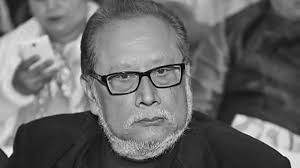
Thiyam’s contributions earned him numerous accolades: the Padma Shri (1989), Sangeet Natak Akademi Award (1987), Kalidas Samman, and the Sangeet Natak Akademi Fellowship (2012), among others. He served as Director of NSD (1987–88) and later as its chairperson (2013–17), and also served as the chairman of the Sangeet Natak Akademi. He was instrumental in bringing the Theatre Olympics, 2018, to India, and I was lucky to perform my play Karnnabharam in this prestigious festival.
Ratan Thiyam’s work transcended regional boundaries and reached global audiences. His plays were performed at international festivals in Europe, Asia, the United States, and Australia. Andha Yug was performed in Tongo, Hiroshima, on August 5, 1994, on the 49th year of the atomic bombing. His international success never diluted his commitment to local realities. He insisted on working in the Meitei language, used local folk instruments, and trained actors from the region.
He turned the periphery into the centre, showing that great art need not emerge from metropolises, and that indigenous traditions could converse with the world without losing their soul. He is one of the few directors who established that “Regional theatre” is the true “National theatre”, and it can imbibe and transcend to a universal ethos.
Theatre as ritual and spectacle
Ratan Thiyam’s theatre was not just performance—it was ritual, resistance, and revelation, where mythology met modernity, and silence became a form of protest. In a world increasingly fragmented by noise, his work reminds us of the power of stillness, of rootedness, and of art that speaks to the soul. His theatre was both traditional and contemporary, local and global, ritualistic and revolutionary. In a time when theatre is often consumed by commercial pressures and quick gratification, Ratan Thiyam’s body of work reminds us of theatre’s rooted origins and community stimulus. His productions are not mere performances—they are experiences, immersions into a deeper consciousness, and calls to awaken the shared humanity.