
The US-based dancer’s recital in Kochi traced a spiritual arc through tradition and technique.
Bharatanatyam is widely regarded as one of the most celebrated and extensively practiced classical dance forms of India. Although the art did not originally follow the codified classical structure we recognise today, its transformation began with the establishment of Kalakshetra and the pioneering efforts of Rukmini Devi Arundale.
Under her vision, Bharatanatyam evolved into a more structured and refined form, emphasising systematic training and academic rigour. This institutionalised approach played a vital role in the widespread popularity of the form in modern times. Its technically sound pedagogy has attracted countless artistes—both male and female—to pursue the form with dedication.
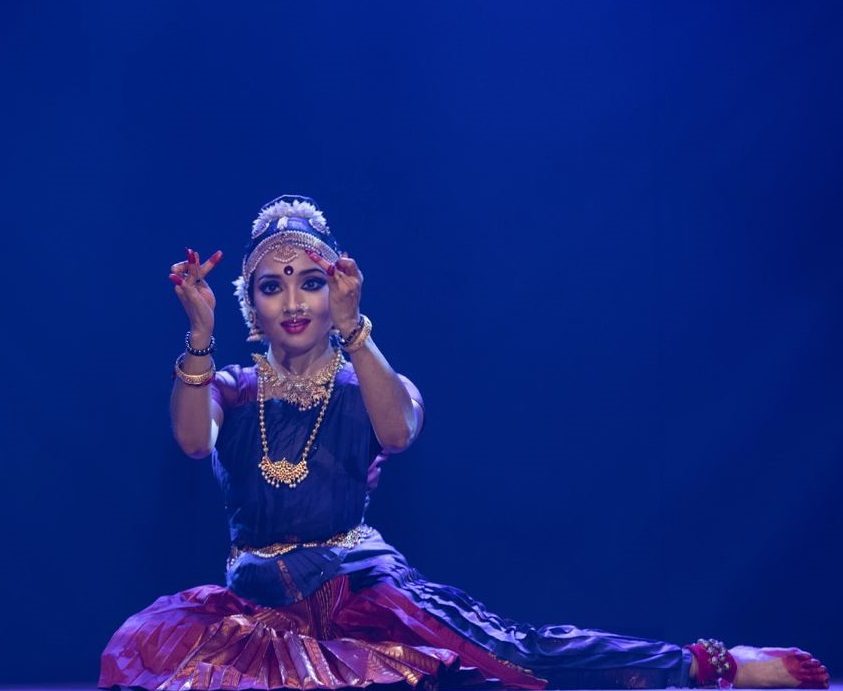
Bharatanatyam practitioner Gayathri Prasanth’s recent solo recital at Changampuzha Park, Kochi, was a celebration of this rich tradition and the expressive depth the art form offers.
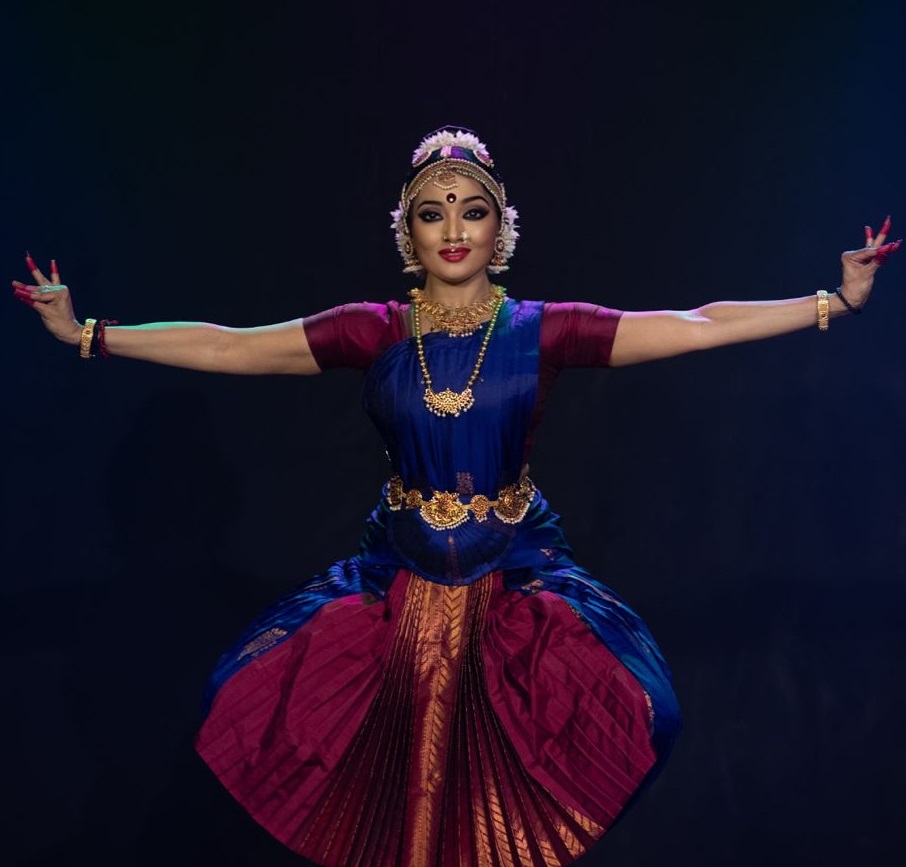
Originally from Kerala and currently based in the United States, Gayathri is a promising dancer. Titled Samyati – Union of Art with the Divine, the one-hour solo presentation traced Bharatanatyam as a spiritual journey. “Samyati reflects the essence of Bharatanatyam, where art transcends mere performance and becomes an offering to the Divine,” remarked the dancer.
The heart of the evening
The recital opened with a Pushpanjali set to Raga Jog and Adi Tala. This inaugural piece served as an invocation, offering prayers through graceful and rhythmic movements that symbolised the union of body, mind, and soul. It was dedicated to Lord Nataraja, the Guru, and the rasikas , acknowledging their integral presence in the sacred space of performance.
The performance took a compelling turn with the Varnam in Raga Anandabhairavi, set to Adi Tala — a highlight of the evening. In this piece, the dancer became the voice of a yearning soul, caught between longing and surrender.
Gayathri performed this item with energy, grace, and emotional depth. Her precise body movements and well-executed hastas (hand gestures) stood out, making this segment the most captivating of the evening.
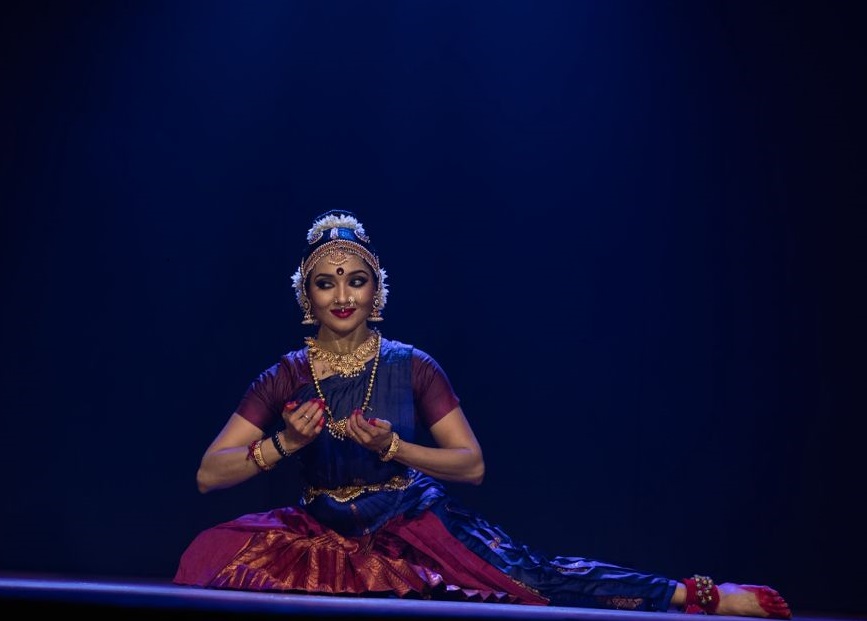
Anandabhairavi, known for its emotional range, provided the perfect canvas for exploring themes of devotion, separation, and inner longing. These emotions were vividly portrayed through her facial expressions and body language. Her enthusiasm and stage presence shone through every movement. The depth of her training was evident, adding polish and poise to the recital.
Love and longing
Next item was the Ashtapadi Kuruyadu Nandana, drawn from Jayadeva’s timeless Gita Govindam. Though the emotional conflict between Radha and Krishna is a familiar theme, Gayathri brought a refreshing depth to it through her sensitive classical interpretation.
The internal turbulence of the characters was expressed with elegance and restraint. With poise and maturity, Gayathri captured the sensuality of the Ashtapadi, balancing emotion with dignity and portraying both the vulnerability and intensity of divine love.
The recital concluded with a vibrant Thillana in Raga Poorvi, set to Adi Tala. This final piece showcased the dancer’s command over rhythm, agility, and body control. It marked the culmination of the performance — a journey from devotion to pure rhythmic bliss.
Gayathri Prasanth started her training in dance at the age of six in Bharatanatyam and Kuchipudi and later pursued advanced training and attended workshops under renowned artists, further refining her technique and deepening her artistic expression.