
When a campus road becomes a stage, a nation’s most uncomfortable truths return quietly, insistently, and impossible to unsee.
Memories are evanescent. They will fade away into oblivion even before we realise it. Within the wink of an eye, today will become yesterday. And recede into the distant past. May be, it is the survival mechanism of human mind. And thus, we have started to forget the Lockdown years, apparently. We have started to forget how the world stood still for more than two years. We have started to forget how people fell dead. We have started to forget how crematoriums overflowed. And we have started to forget how people set out walking hundreds of kilometers back home, barefoot.
Memory curated
When memories fade, art often steps in. Art preserves memories. Reminds us. Kindles back the memories.
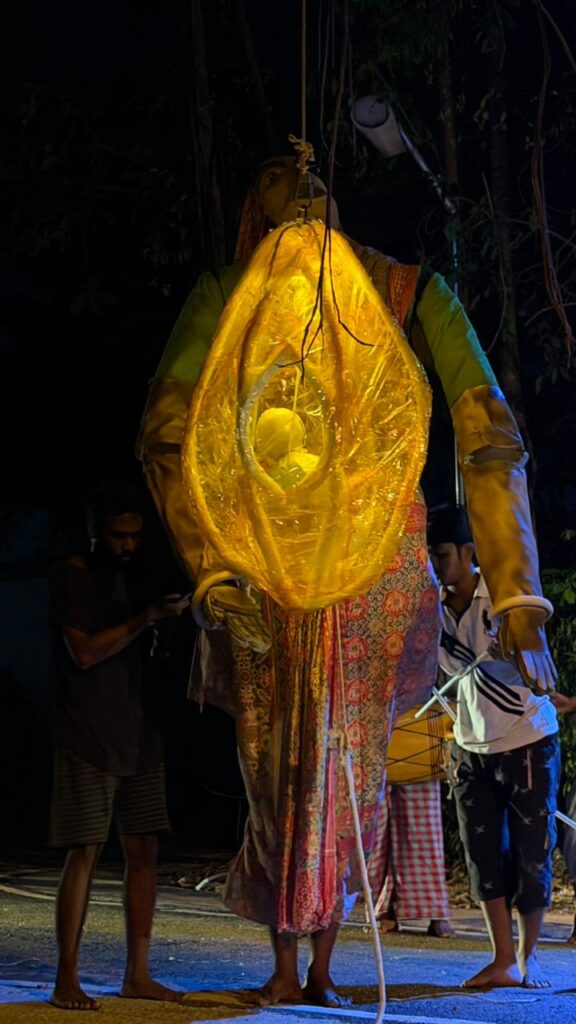
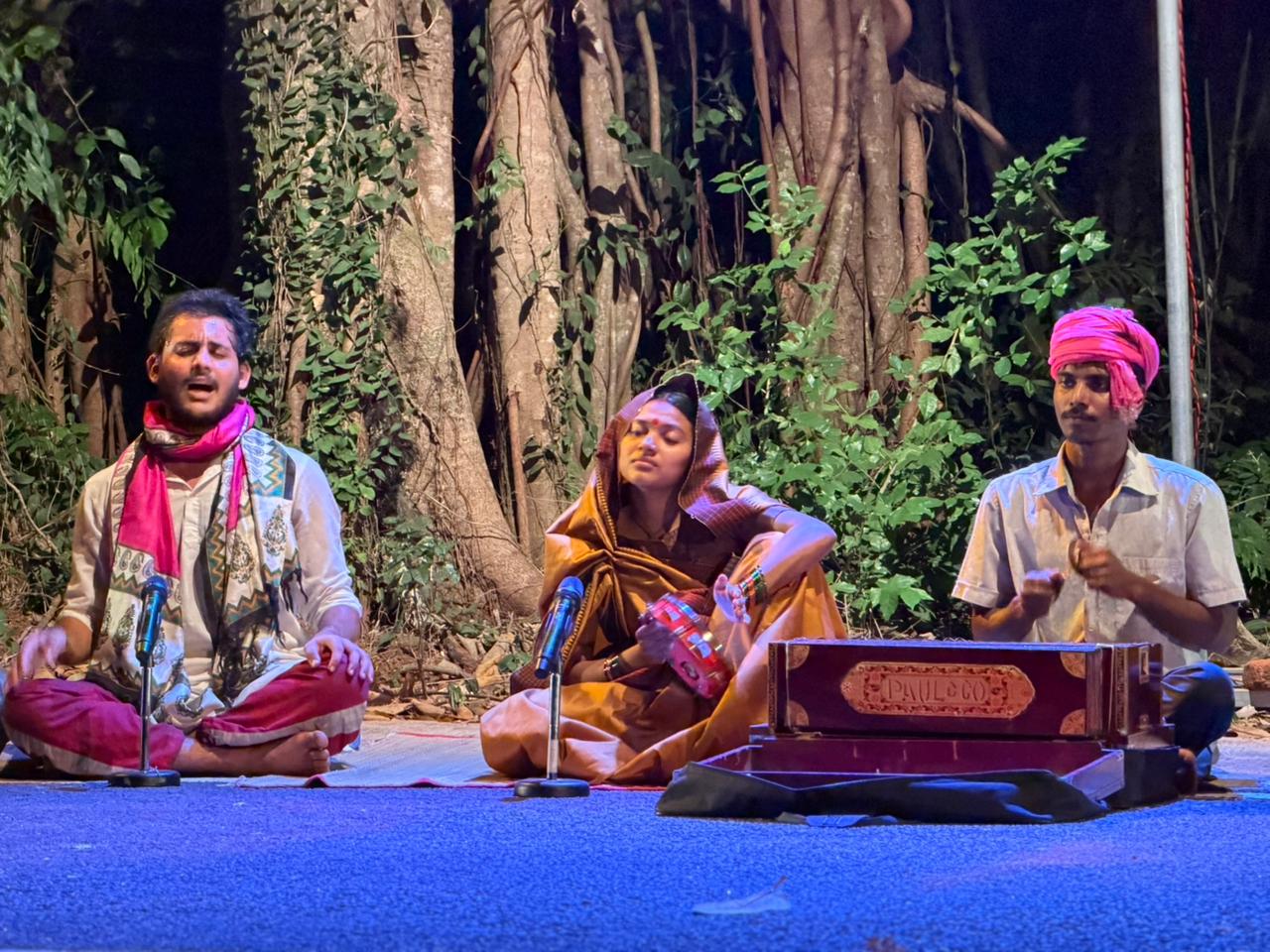
As the audience filed in towards the metal chairs arranged on the side of a tar road inside the sprawling campus of the Calicut University John Mathai Centre at Aranattukara, to watch ‘Barefoot Republic: The Uncertain Death March of the Invisible Citizens,’ a production by the First Year Integrated MTA students of the School of Drama and Fine Arts directed by Dr. Abhilash Pillai, it felt almost like a time travel. Vehicles stopped ahead of the performing space, face masks handed down by volunteers, pungent smell of hand-sanitizers sprayed onto the palms of the audience.
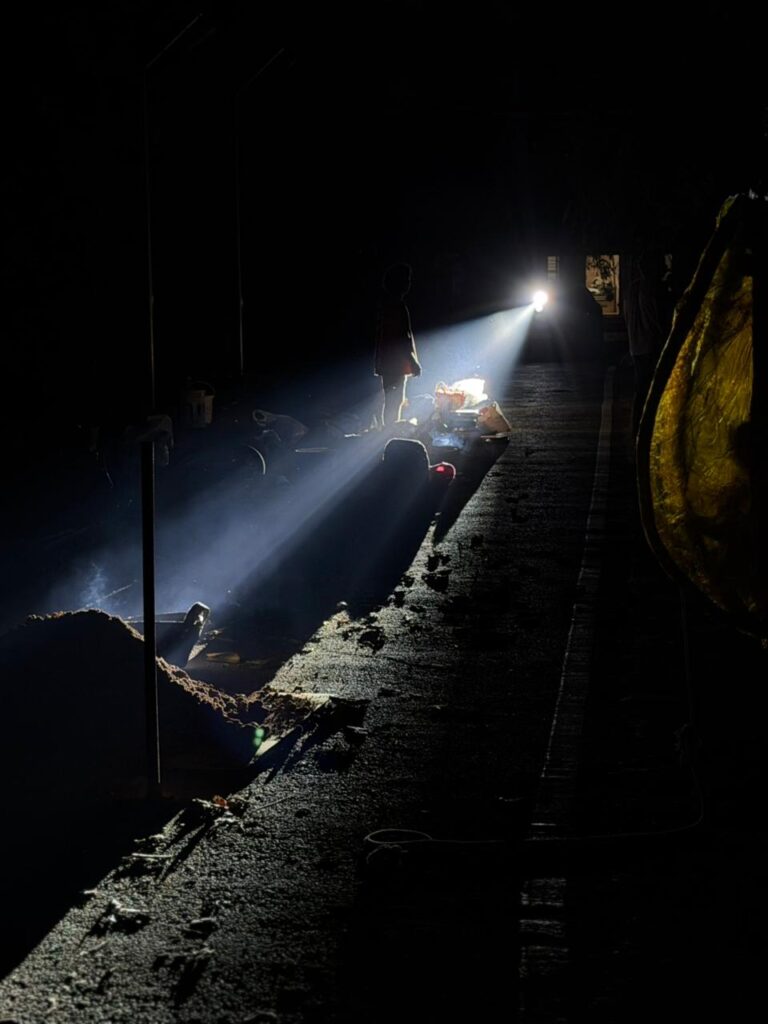
Since the performing space was a road in reality, with the huge trees with their intertwining creepers and hanging roots of the banyan trees creating a semi-wild background, the play directly transported the audience into the original landscapes of India where the tragic scenarios of the Covid-19 and the lockdown had enacted in reality.
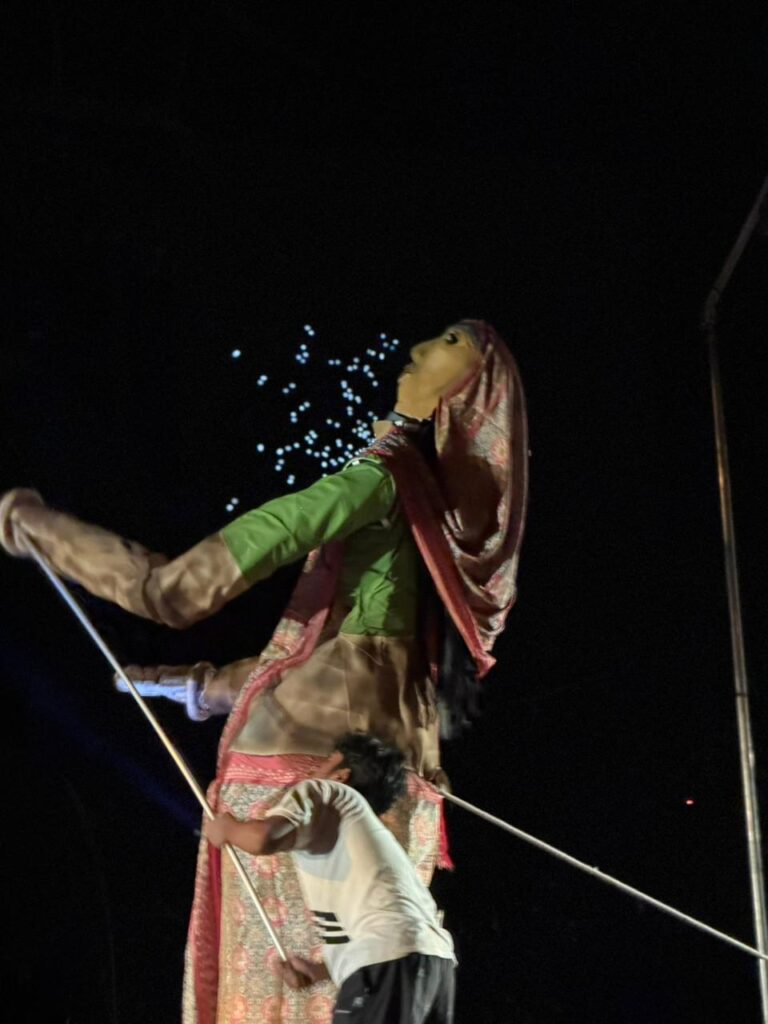
A devised multilingual production, ‘Barefoot Republic,’ is the result of an extensive research process conducted by the students among the migrant workers in Thrissur and Kochi. As the country shut down in March, 2020 following the nation-wide lockdown, which was clamped down overnight, a mass migration of the labourers started across the country.
As there were no passenger trains or buses, these people had to tread kilometers, without adequate food or water, often barefoot. They also had to face the police as they were ‘violating’ lockdown. Shocking incidents started to unveil from different parts of India, like the migrant workers getting run over a goods train as they fell asleep on the railway tracks believing there will be no trains, or people getting sprayed by insecticide by the authorities or the man forced to carry his wife’s dead body on a bicycle.
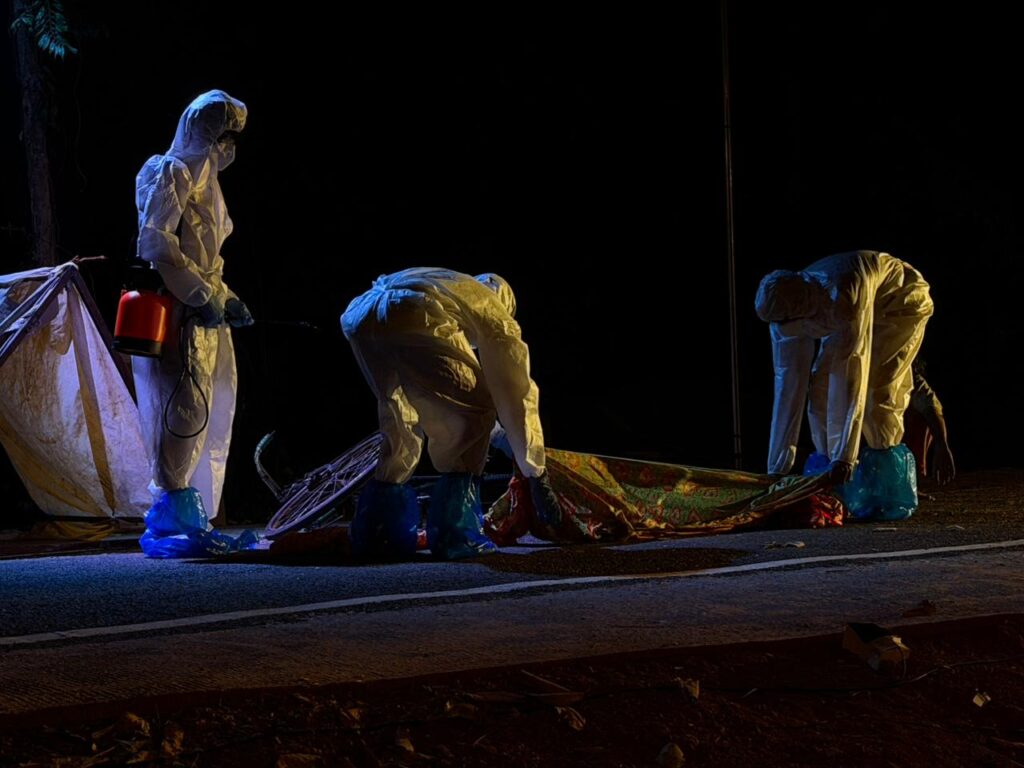
But it seems we have forgotten everything. As the plays started to unravel as ‘a collage of memories, journey, conversations, and moments of silent endurance,’ our memories also started to open up. To remember.
Migration, accent, and the politics of being heard
The play had no conventional plot. It rather followed the stories of a few individuals, and incidents. Two large screens, propped up among the trees, poured forth the bare statistics and the real-life visuals from the past, creating a docu-drama effect.
Interestingly, the play had an all-India cast. The present batch of IMTA includes students from Uttar Pradesh, West Bengal, Karnataka and Tamil Nadu besides Kerala. As they ventured out of the classrooms to meet the migrant workers, they realised that the workers from each part of India had learnt to speak Malayalam with distinct, distinguishable accents – the Assamese Malayalam, the Kannada Malayalam, the Tamilian Malayalam, the Oriya Malayalam, the Bihari Malayalam and so on. It is interesting to notice and study how migration works in the cultural and linguistics domains. And the play also carries a Tamil translation of the title – ‘Verum kaal Kudiyarassu.’
“The students were initially sceptical about the idea of telling the stories of lockdown,” says Dr. Pillai. They were not sure what was the point in recollecting something that was already past. But, a visit to the Kochi Biennale, and the direct interactions with the migrant workers in Kerala, totally changed their perspective. It opened them up to explore and experience the direct impact of migration. And they became aware of how migration was an integral part of their own academic experience, as most of the out-of-State students were struggling with language, food and culture after arriving in Kerala.
As we were waiting for the play to begin, a tiny boy behind me was pestering his mother, ‘Let’s go…’ he pleaded, obviously bored, and the mother trying to placate him. When the play started, the boy grew quiet and started to watch in silence. After some time, he was heard again, asking his mother, ‘Is the story over?’
For the barely five-year-old boy, it was just a story, I realised. How could you tell him it was not a story, but the harsh life which he had not yet known? But we need to. We need to tell children of all the dark days as well, or else they will not be able to take upon darker days later in life. And that was the relevance of ‘Barefoot Republic.’
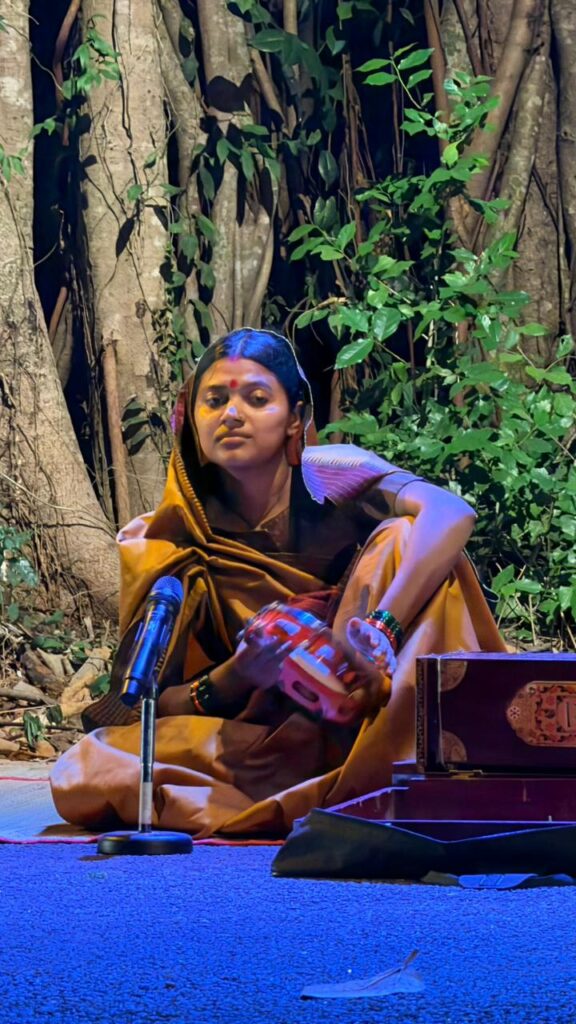
The performers / creators included Krishna Sharma, Fazeel Abdu Salam, Harish H.,Sidharth J.A., Karan Naskar, Daniel Martin Menachery, Khuswhant Awasthi, Vivek Vipindas, Deepak K., Siva Krishna S., Adarsh R.K., Abhijith S., Jain P Joseph, Akira Shasmi, Devika Jijeesh, Aditi Kakati and Gouthami Sunil. Conceptualisation and Direction was by Abhilash Pillai, with dramaturgy by Adith Krishna. Lighting design was by Sreejith Ramanan, with Shymon Chelad as Light Consultant.
Music and Sound Design was by Shaiju M, with choreography by Sujith Kalamandalam, Costume and Make-up by Sivaprasad S.P. and Property and Scenography by Sreejith U.T.