
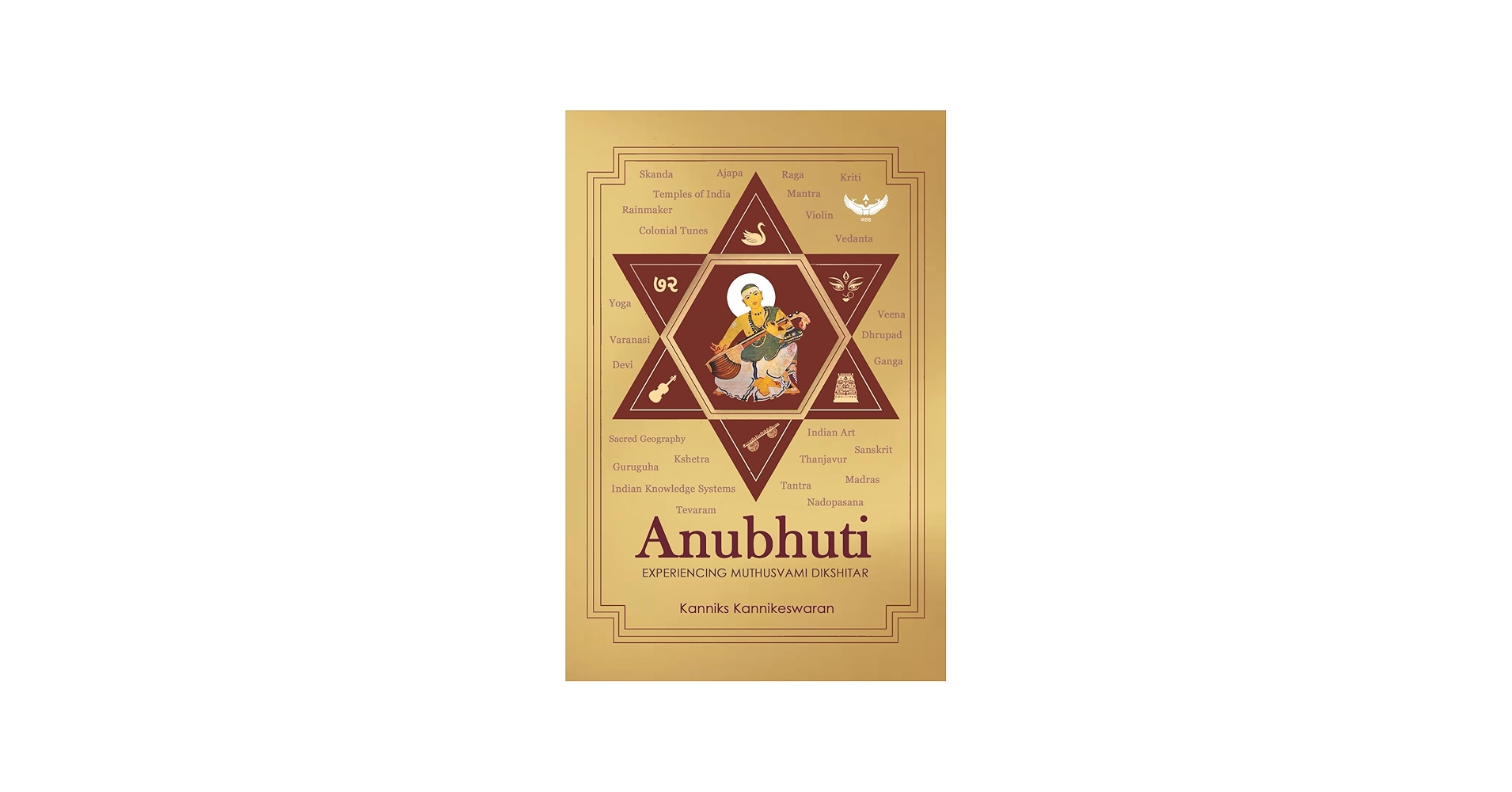
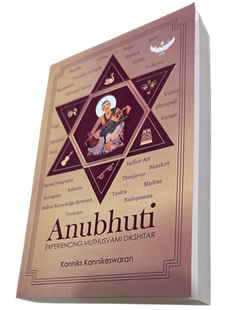
Anubhuti: Experiencing Muthusvami Dikshitar offers a reflective and comprehensive study of the composer’s life, music, and intellectual legacy.
Released as part of the commemorations marking the 250th birth anniversary of Muthusvami Dikshitar, Anubhuti: Experiencing Muthusvami Dikshitar arrives not as another biographical or musicological account, but as an invitation. It invites the reader to encounter Dikshitar not merely as a composer within the Carnatic canon, but as a civilizational figure whose music embodies travel, philosophy, ritual, and lived experience. In doing so, the book extends beyond the familiar terrain of scholarship and positions itself as both reflection and revelation.
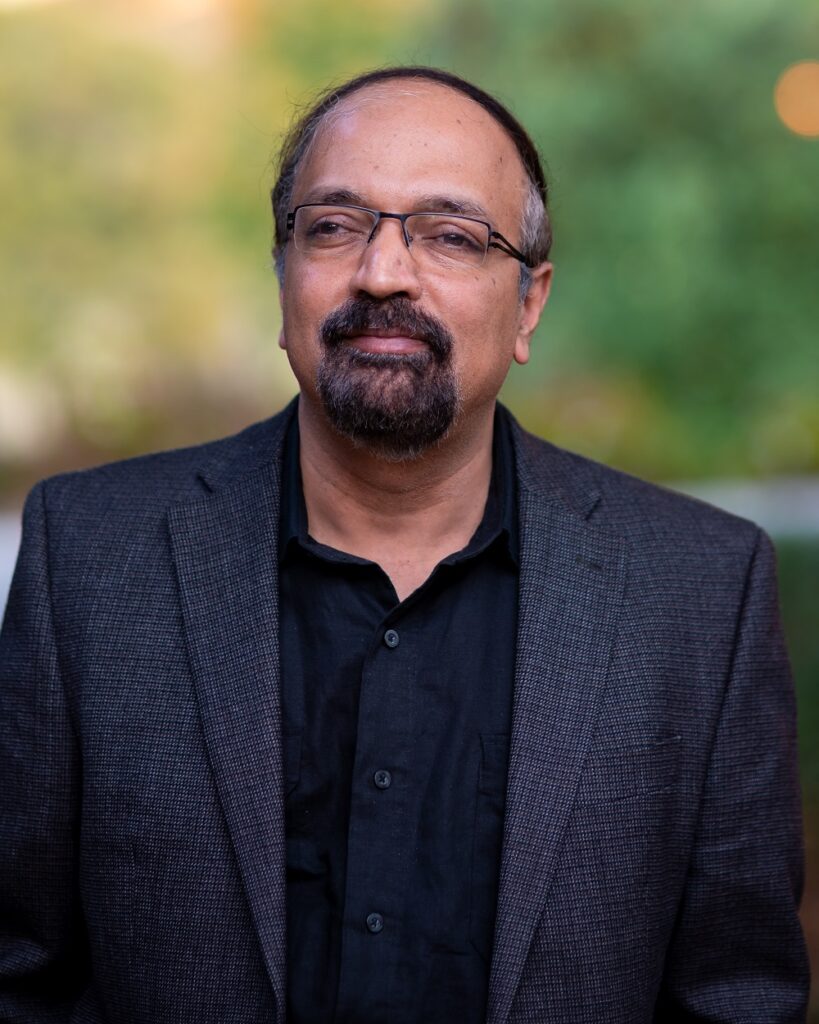
The author, Dr. Kanniks Kannikeswaran, is uniquely placed to undertake such a project. An Indian-born, U.S.-based composer, performer, scholar, and documentary maker, Kannikeswaran has spent decades engaging with Dikshitar’s music across continents and traditions. His work spans performance, pedagogy, documentary filmmaking, and composition, often at the intersection of Indian and Western classical forms. This long engagement lends the book its authority, while his distance from the conventional institutional frameworks of Carnatic discourse allows for a fresh, inclusive gaze.
What sets Anubhuti apart from earlier works on Muthusvami Dikshitar is not the novelty of material alone, but the manner of its presentation. While most writings on Dikshitar presume deep familiarity with Carnatic grammar and aesthetics, Kannikeswaran consciously lowers the threshold of entry without diluting complexity. Technical terms are explained with care. Concepts are unpacked through analogy and narrative. Readers trained in Hindustani music or Western classical traditions will find familiar points of reference, making the Carnatic system intelligible without flattening its nuance. This openness significantly widens the book’s interpretive reach.
The book is structured in three broad parts, preceded by a prologue that is personal in tone. Kannikeswaran recounts his own discovery of Dikshitar’s music and the gradual unfolding of what he terms anubhuti—a word that here signifies not emotion alone, but embodied understanding. This autobiographical strand runs quietly through the book, offering continuity and warmth. It also establishes the central premise: that Dikshitar’s music cannot be fully grasped through analysis alone, but must be approached as experience.
The opening section provides a lucid introduction to the Carnatic tradition itself. Rather than offering a technical manual, the author focuses on how the music is meant to be heard, how rasa is evoked, how structure and improvisation interact, and how listening itself becomes a cultivated act. This prepares the reader to encounter Muthusvami Dikshitar’s oeuvre as a living body of work shaped by philosophy, devotion, and sound.
From here, the book moves into a detailed biographical narrative that traces Dikshitar’s life across key geographic and spiritual centres. Kannikeswaran maps the composer’s journeys from Varanasi to the Tamil heartland showing how pilgrimage, temple culture, and local traditions shaped his musical imagination. These chapters are particularly strong in situating Dikshitar within his historical moment. Patronage, colonial presence, intellectual currents, and sectarian traditions are woven into the narrative, allowing the reader to see how a distinctive compositional voice emerged from layered influences.
The treatment of Dikshitar’s lineage and learning is careful and grounded. His grounding in Vedic and tantric study, the influence of his father Ramaswami Dikshitar, and the impact of his gurus are presented not as isolated facts, but as part of a continuous process of absorption and transformation. This contextual depth becomes especially relevant later in the book, when the author discusses Muthusvami Dikshitar’s engagement with Western tunes and colonial musical forms.
A significant portion of the book is devoted to Dikshitar’s compositions themselves. Kannikeswaran distinguishes between works preserved through notation, particularly those documented in the Saṅgita Sampradaya Pradarsini, and the larger corpus transmitted orally. Readers are guided through compositional forms, raga and tala choices, lyrical architecture, and thematic groupings. The discussion of prosodic devices—such as svarakṣara, prasa, and rhythmic yatis—is particularly illuminating, revealing the layered intelligence that underpins Dikshitar’s music.
Equally compelling is the attention given to textual and cultural sources. Tamil devotional literature, temple iconography, and ritual practice are shown to be integral to Dikshitar’s compositions. The insertion of the Guruguha mudra is examined not as a signature alone, but as a flexible device that shifts meaning across contexts. Through these analyses, Dikshitar emerges as a composer who braided language, theology, and melody into a single expressive fabric.
In the section titled “Colonial Interlude” Kannikeswaran revisits the much-discussed Noṭṭusvara sahityas, situating them within Dikshitar’s broader vision rather than treating them as curiosities. By framing these works as acts of transformation rather than imitation, the author underscores Dikshitar’s ability to absorb external forms without compromising metaphysical grounding. This reading resists simplistic narratives of syncretism and instead presents integration as a conscious, philosophical act.
The final part of the book, titled “Samashti,” widens the lens further. Here, Dikshitar is positioned within Indian Knowledge Systems as an integrator and innovator. His engagement with Vedanta, Srividya Tantra, temple ritual, and musical form is presented as a unified intellectual enterprise. Kannikeswaran concludes with reflections on Dikshitar’s legacy and the need for institutional recognition commensurate with his stature—through archives, memorials, and pedagogical centres.
Throughout, Anubhuti maintains a steady narrative flow. Each section builds on the previous one, moving from experience to structure, from biography to legacy. The prose is measured and unembellished, allowing ideas to unfold without strain. For readers deeply familiar with Carnatic music, the book offers synthesis rather than novelty. For those approaching Dikshitar from adjacent traditions, it provides orientation without oversimplification.
Anubhuti succeeds because it restores Dikshitar to the world that produced him; a world where music, philosophy, travel, and worship were inseparable. It is a book that listens as much as it explains. In doing so, it becomes not just a study of a composer, but an invitation to wonder.