
A landmark Kathakali production reinterprets Leonardo da Vinci’s Last Supper, blending visual art, theology, and performance into a compelling cultural dialogue.
The potential of Kathakali to embrace themes and stories alien to our culture has been proved many times from last century. Yet, a Kathakali play born out of an iconic painting is by all counts an epoch-making event. Davinciporul, presented to a packed audience at the Regional Theatre in Thrissur on April 1, stands as a remarkable instance of such artistic convergence.
Quite interestingly, the play did not entail varied characters, their interaction and anecdotes common to a conventional play. But it was the interpretation of a series of paintings that disproved the contents of the world famous novel by Dan Brown, Da Vinci Code.
Though a best-selling American novel, that was translated into 44 languages, Brown’s arguments based on the iconic work Last Supper of Leonard da Vinci in 15th century, ran counter to the teachings of Holy Bible and the Catholic Church. According to Brown, Jesus had married Mary Magdalene and had issues whose progeny are still surviving on earth. But the Bible says, while distributing the bread and wine, Jesus says, “This is my body which is given unto you. Do this in remembrance of me”. And likewise the cup after they had eaten, saying, “This cup that is poured out for you is the new covenant in my blood”.

From canvas to stage
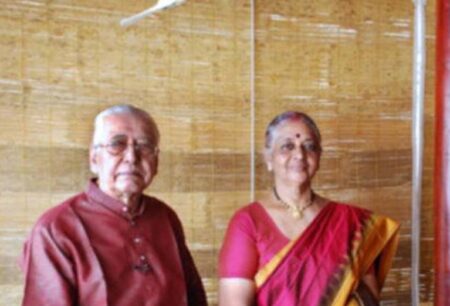
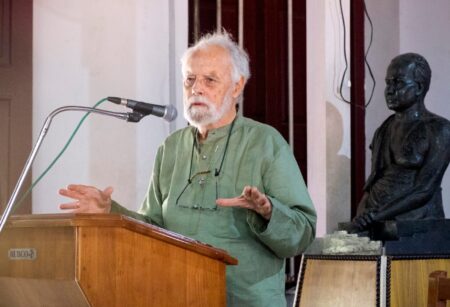
The inspiration for the play under review was the renowned artiste Francis Kodankandath whose world-famous paintings had won him encomiums across the globe. Through a series of paintings titled Decoding Da Vinci that was conceived in researches spanning a period of 13 years, the painter reinvented the original concept of Da Vinci.
This painting was appreciated by the Catholic Church and Cardinal Paul Paupard, a former cultural minister of Pope John Paul II during a visit to the Pilar Seminary in Goa, India. A painting from this series was also presented to Pope John Paul II in 2005.
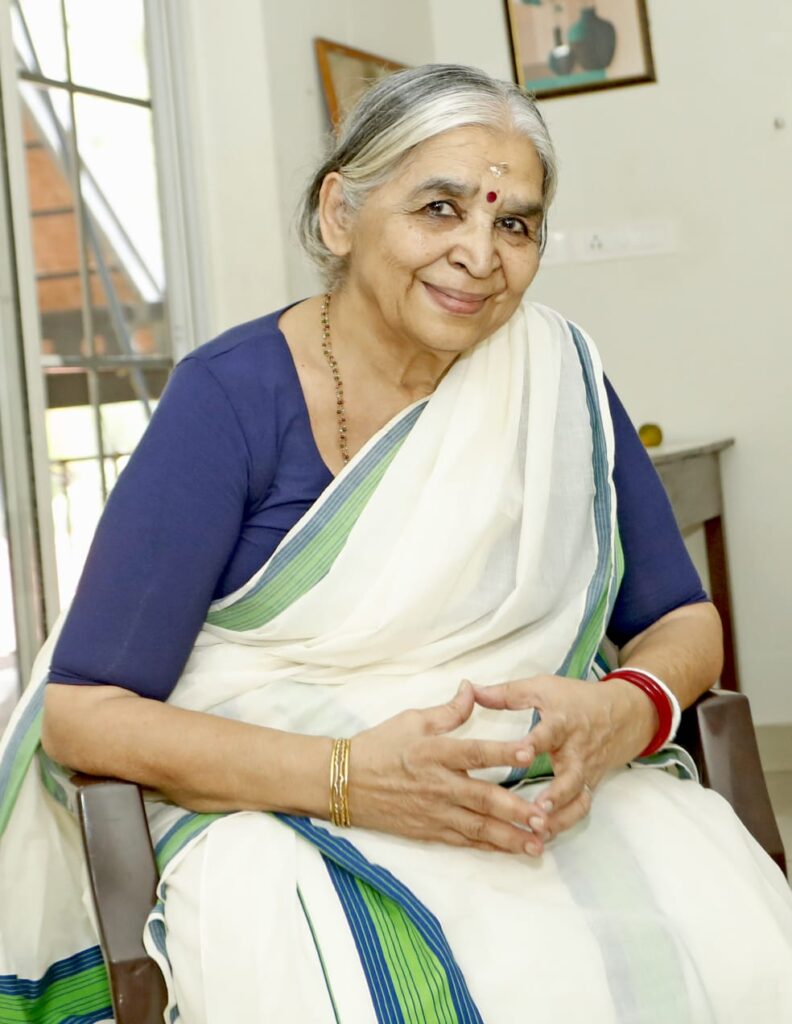
The idea of presenting his findings in Kathakali was suggested to Radha Madhavan, an illustrious writer and playwright with 22 attakathas (Kathakali play) to her credit. Said Radha, “it was the most challenging work I had to undertake in my life”. True, but the product was the most spectacular of all Kathakali plays in vogue.
Taking a cue from the series of drawings of Kodankandath, Radha composed the play divided into four scenes in the typical Kathakali framework.
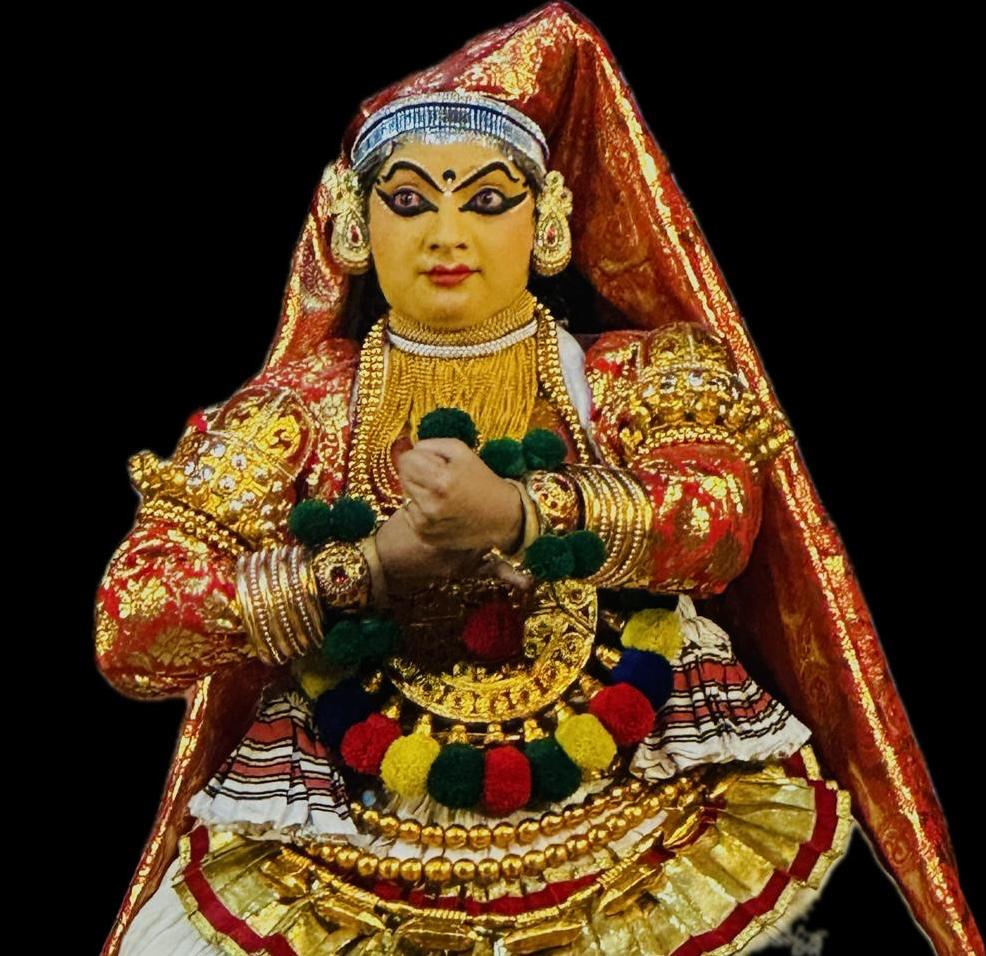
Post the the vandana sloka in Kedaragoula, Magdalene Mariyam enters. She prostrates before Jesus and entreats to him to find a way how to spread the message of Holy Mass to the generations to come. Jesus assures her that a great artist (Da Vinci) will take birth in future for this purpose and disappears.
Reimagining faith through form and gesture
Da Vinci appears in the second scene and is lost in thought as to how the painting is to be done. His contemplation yields the idea. Here, he is seen planning and translating his work to the painting. He envisages the arrival of Jesus with his disciples and provides seats to each. But among the disciples only Judas, the betrayer appears as a character on the stage. Donned in a vesham of an improvised kali, his antics are noteworthy as he counts the 30 silver coins, for which he had betrayed Jesus.
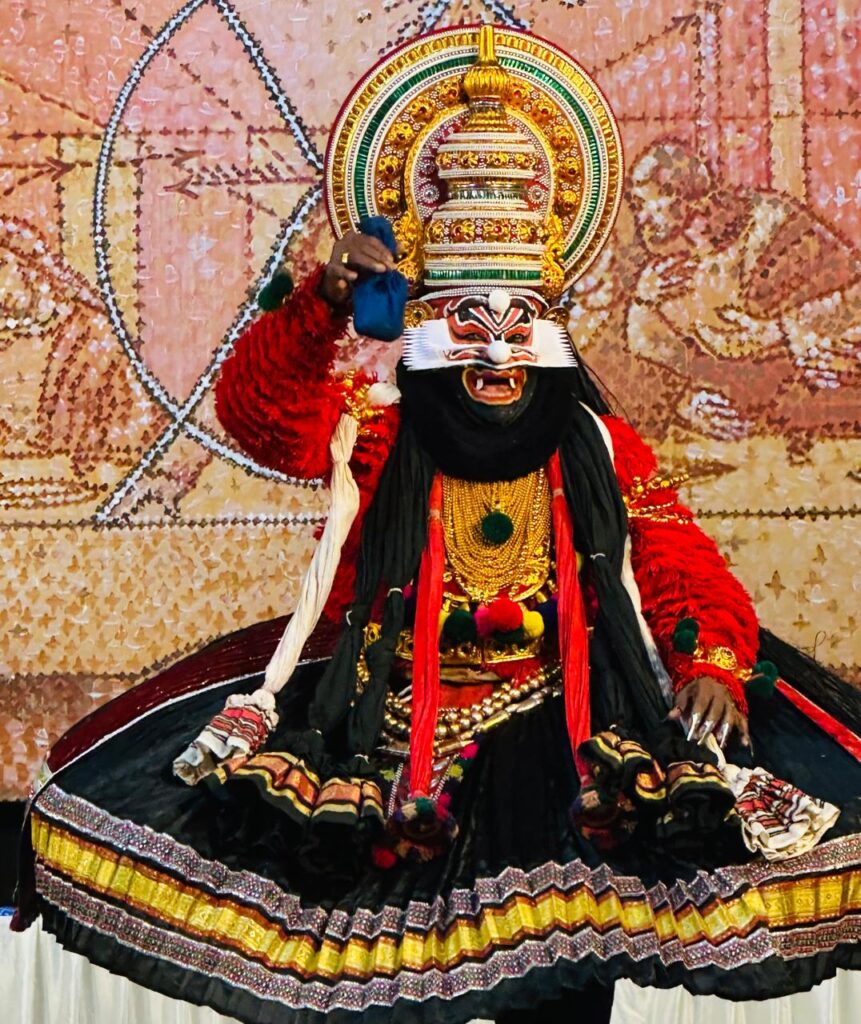
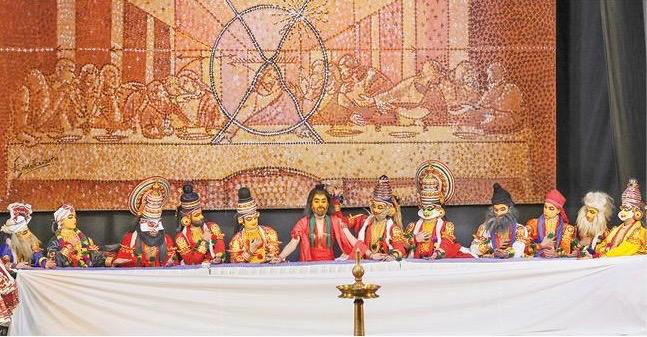
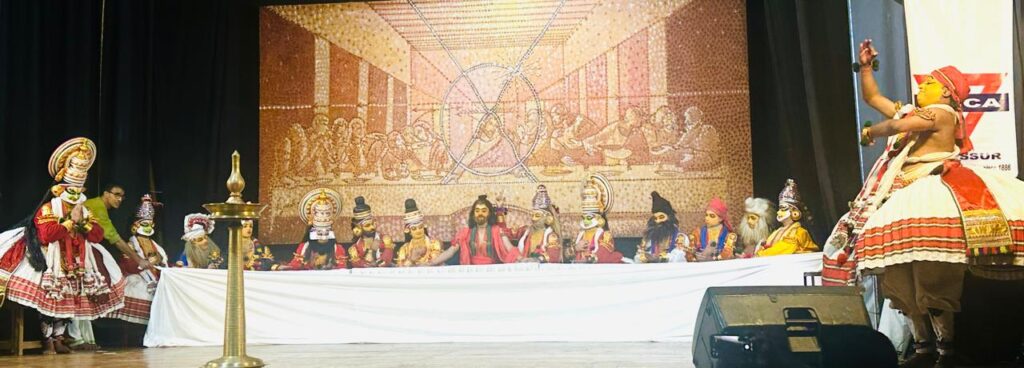
Once the painting is completed, a white curtain is lowered and the scene of the Last Supper appears on the stage which elicited wild applause from the audience. Da Vinci’s helpers examine the picture and dance out of joy. They praise their master.
Da Vinci thanks God wholeheartedly for helping him to create the picture as conceived by him. But soon the helpers find out that the Holy Grail is missing.
Jesus appears with angels with lit candles in their hands. He asks Da Vinci to explain how he has concealed the secret of Holy Mass in the finger of one of the disciples pointing upward. The geometrical construction of the painting is explained by Da Vinci. The Grail and bread, the essence of Holy Mass, are prominently seen in the painting.
Jesus reveals, through the last verses, that five centuries later a painter will take birth to decode this secret and blesses him, the very basis of Davinvinciporul.
Performance, craft, and cultural resonance
As for the 95-minute play, it brings to the stage mainly three characters – Mariyam, Da Vinci and Judas.
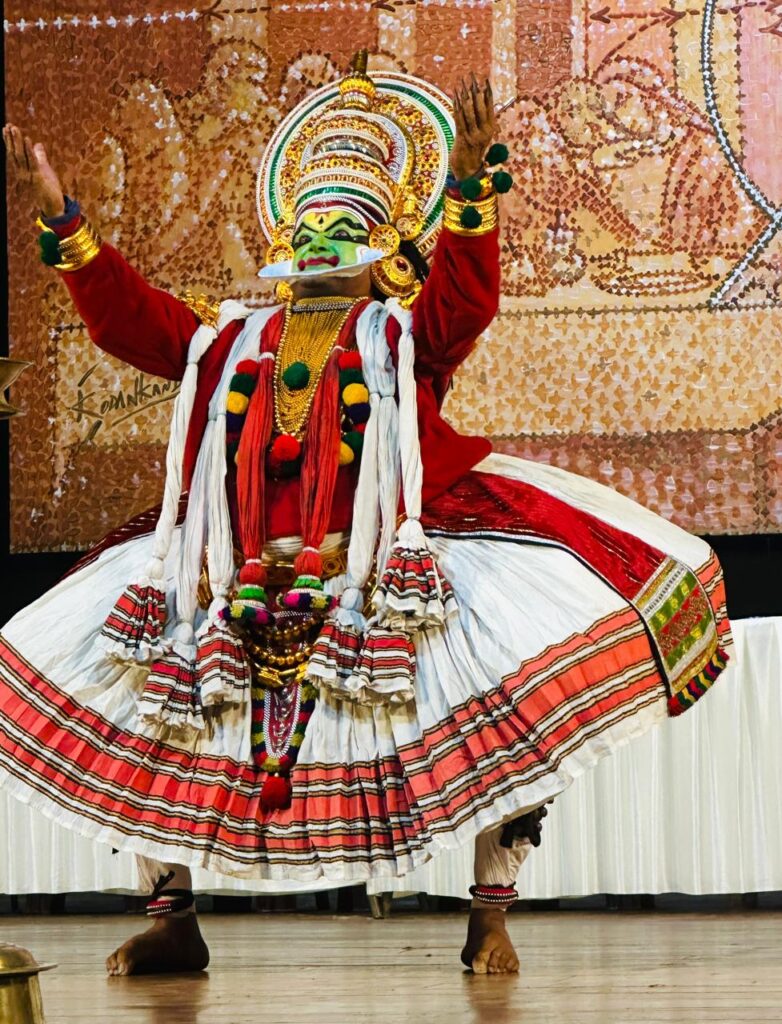
Mariayam portrayed by Induja Cheruliyil is the quintessence of grace. Her abhinaya and movements, especially of the eyes, are a testimony of a seasoned actor. Da Vinci donned by Peesappilli Rajiv has a long role to play and he executes each movement with commendable finesse. The wickedness of Judas (Kalamandalam Manoj) is evident from the very aharya. Perhaps this is the only character that provides elements of hasya in the play. But one felt, his performance could have been reduced by half. Harikedar Meledam in the role of Jesus appeared a boy. This could have been done by an actor with a bigger figure.
The libretto in simple verses is intelligible to anyone who is not initiated to Kathakali. This is an added advantage for communicating each anecdote.
Of all the scenes, the painting that is revealed by Da Vinci appeared a grand spectacle with Jesus and his twelve disciples seated on the dining table. The variety of the costumes including the headgears of the disciples, were especially noteworthy.
Interestingly enough, the whole performance takes place against the backdrop of the enlarged paining of Francis Kodankandath that had decoded Da Vinci’s secret. The sophisticated geometrical constructions he has made speak for the pains he has undertaken over the years to decipher the code. Directorial skills of Sadanam Balakrishnan and Nedumpilly Ram Mohan are discernible throughout the play.
That the play was presented before the playwright and the artist, who finds mention in the padams, seemed unprecedented.
Music scored by Nedumpilly Ram Mohan and rendered by Sadanam Sivadas and Sreedevan Cherumuttam was endearing, with select ragas and talas. As for the percussion Kalamandalam Sudheesh (chenda) and Biju Aattupuram (maddalam) was in the right portion.
Above all, the pains taken by Angikam Cultural Centre, Vandoor to make the elaborate stage settings and make the show a memorable one are really praiseworthy.
Incidentally the day the play was presented happened to be previous day of Maundy Thursday (April 2) known for the serving of Last Supper in all churches.