
Madhulita Mohapatra’s Odissi at India Habitat Centre retells the Mahabharata through Draupadi’s eyes and transforms it.
There is a particular quality of silence that descends over an auditorium when an audience stops watching and starts feeling. The Stein Auditorium at India Habitat Centre, Delhi, a space with a long memory for discerning programming held that silence recently, and it was not the silence of politeness. It was the silence of total absorption.
Madhulita Mohapatra and the Nrityantar Dance Ensemble presented ‘Draupadi’s Mahabharata … the epic that began with her’ – a focused and compelling interpretation of the vast epic. Rather than attempting to compress the entire Mahabharata into a single evening, the production made the considered choice to centre everything on Draupadi’s perspective. This gave the work a clarity of intent and an emotional coherence that proved to be one of its greatest strengths.

The art of restraint
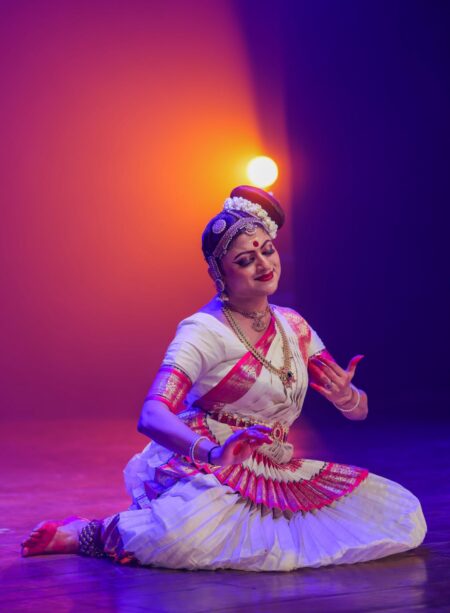
At the heart of the production was Mohapatra’s own portrayal of Draupadi, a performance defined less by what it displayed than by what it withheld. Her abhinaya was exemplary for its sincerity and, more unusually, its discipline. There was no reaching for effect. Each emotional state was given precisely the space it needed, no more. For a dancer, this kind of economy is not the path of least resistance; it is, in many respects, the hardest discipline to master. The body’s instinct is to amplify, to ensure the audience receives what it is meant to receive. Mohapatra trusted both the material and the room.
As a choreographer, Madhulita displayed a strong and mature vision. Rooted in the classical framework of Odissi, the work stood out for the precision of its conception and the care with which it was structured. The transitions between scenes were seamless, ensuring the narrative never felt fragmented. The familiar episodes – the swayamvara, the game of dice, the court humiliation, the war – were presented not as isolated set pieces but as a continuous unfolding, each moment carrying the weight of what had come before.
The emotional arc of the production was handled with great sensitivity. The intensity of the court scene gradually gave way to a more inward, reflective tone as the narrative progressed. By the end, the energy on stage had shifted entirely – from confrontation to contemplation. The closing moments, where Draupadi reflects on the aftermath of war, were particularly affecting. The production resisted the pull towards dramatic resolution, choosing instead to leave the audience in a space of quiet reckoning. It was the right choice, and it lingered.
The quiet after the war
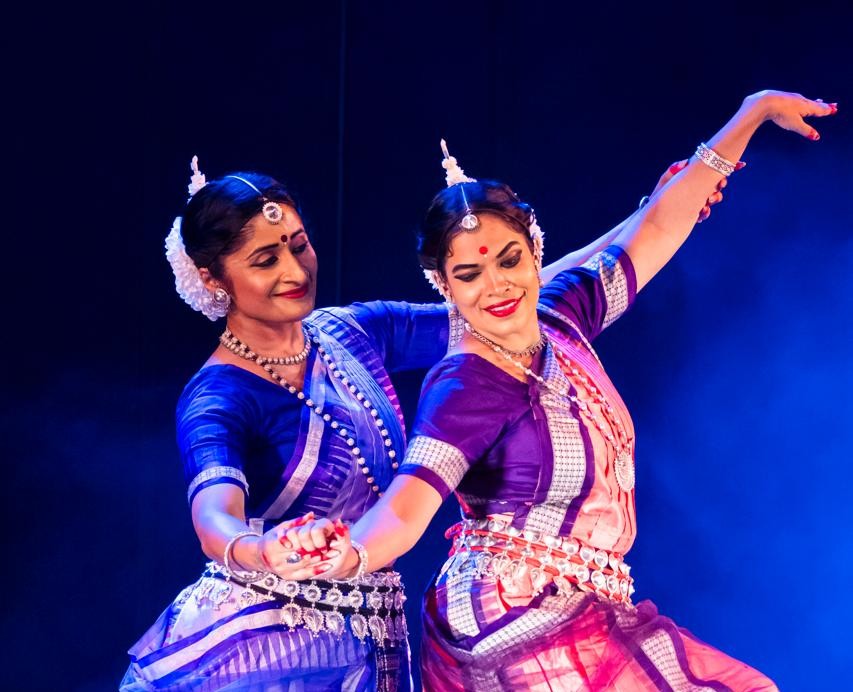
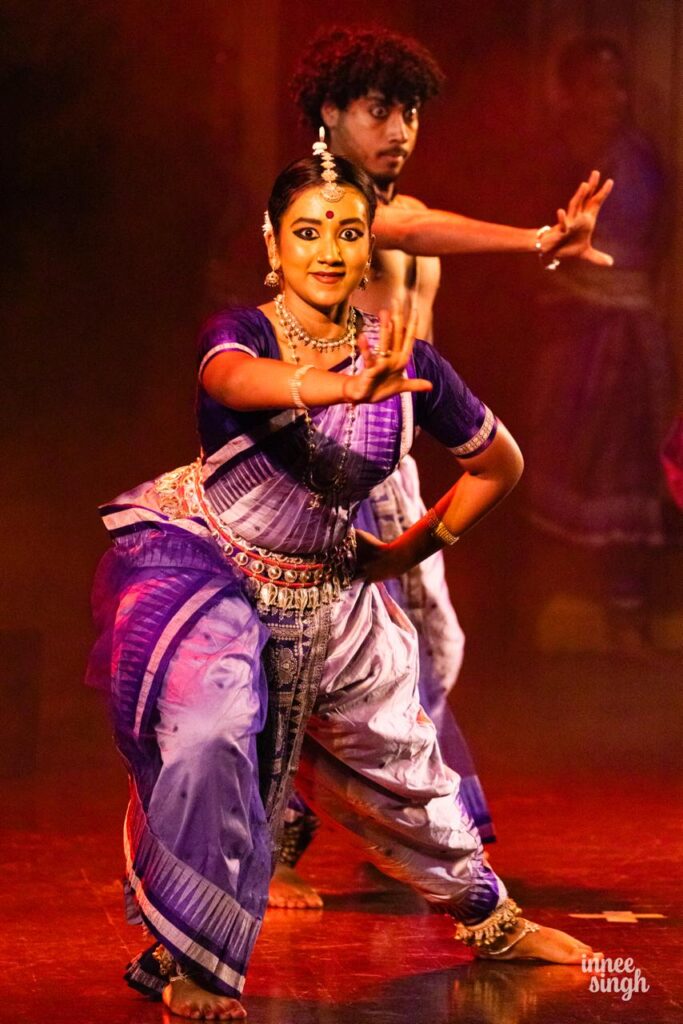
The ensemble played a vital role in bringing the epic to life. Each dancer contributed with clarity and commitment, ensuring that the characters remained distinct and present. The group sequences were carefully structured, with well-coordinated movements and thoughtful formations that added visual richness without overwhelming the stage.
Sahana Raghavendra Maiya as Arjuna, Reshmi Divakaran as Krishna and Yudhishthira, Sumana Das as Bhima, Aditi Das as Karna, Prasun Mondal as Duryodhana, Anupama Kumar as Shakuni, Srudhi Retheesh as Dushasana, Siri Reddy as Kunti, and Nandhana S. in the dual roles of Bhishma and Subhadra, along with Sreyashi Dey – all sustained the narrative with conviction and cohesion. Particularly moving were the episodes featuring Angeleena Avnee as Abhimanyu, and the brief appearance of five-year-old Mihika Mahnoor as baby Abhimanyu – a touch of pure innocence that drew instinctive warmth from the entire auditorium.
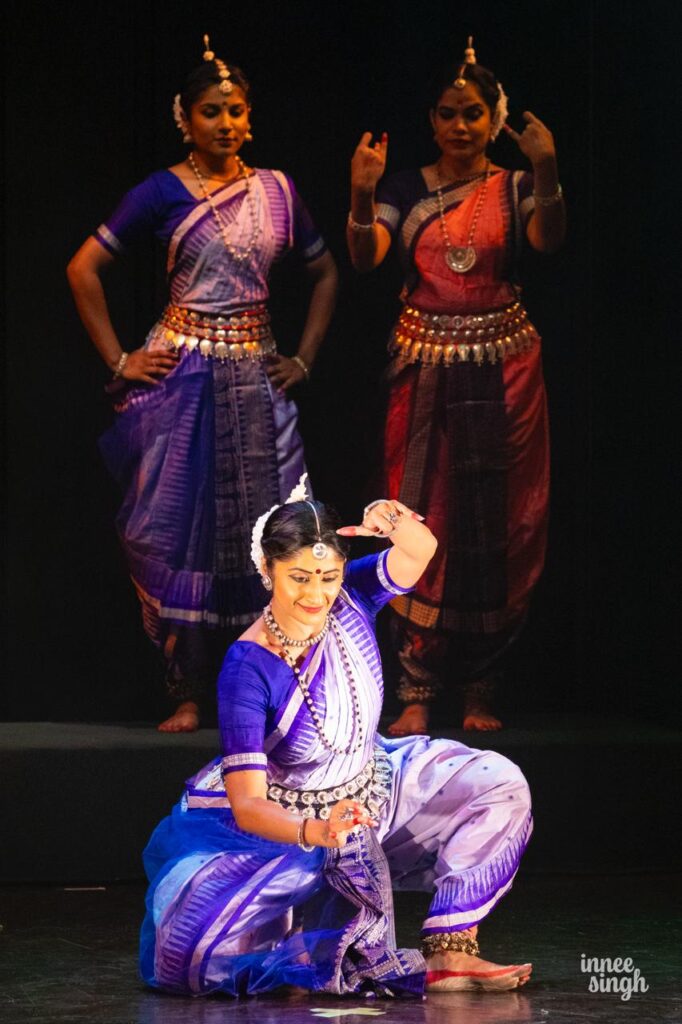
The music and rhythm composition added greatly to the overall impact of the production. Drawing inspiration from Maharishi Vyasa’s Mahabharata, with poetic inputs by Ashtavadhani Shri Balachandra Bhat in Sanskrit and Shri Kedar Mishra in Odia, the evocative score by Shri Rupak Kumar Parida enhanced both the lyrical and dramatic dimensions of the performance. The rhythmic patterns, composed by Guru Dhaneswar Swain, complemented the choreography with precision – lending energy to the nritta (pure dance) passages while holding space for the nuance of the abhinaya.
One of the most striking qualities of the presentation was its contemporary resonance. While rooted in an ancient epic, the themes explored – conflict, pride, injustice, and the consequences of war felt urgently alive. The production did not attempt to draw conclusions; instead, it created the conditions for reflection. That restraint – the refusal to tell the audience what to feel – is what made the experience genuinely lasting.
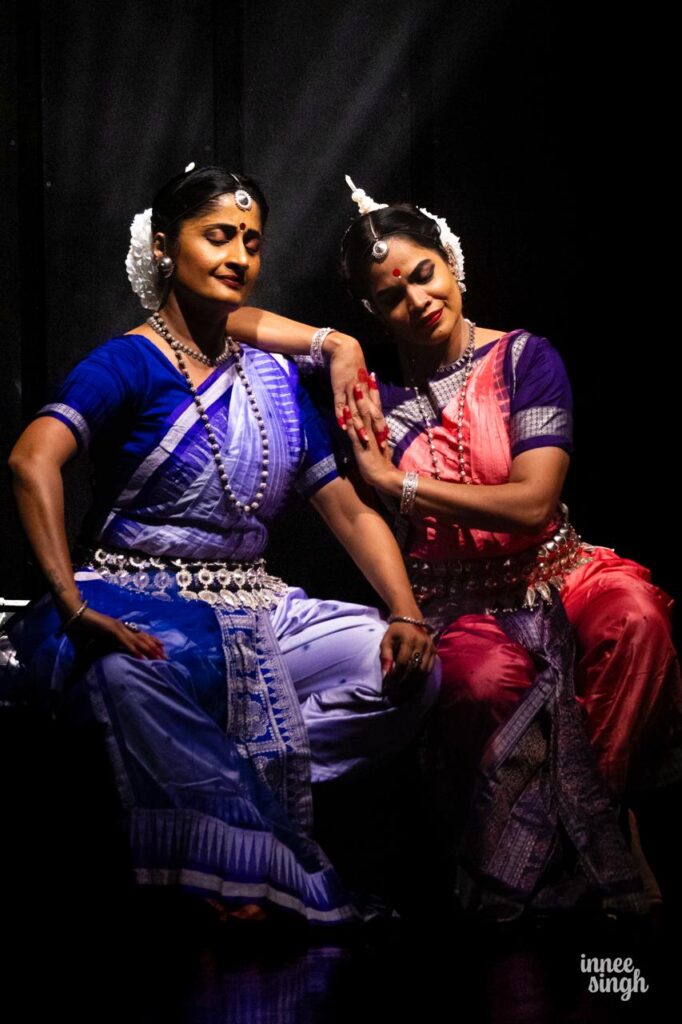
The audience response was warm and deeply appreciative. There were stretches of complete silence in the auditorium the kind that signals not absence of reaction but total absorption. At the close, the standing ovation felt less like applause for a polished performance and more like collective gratitude for something that had genuinely moved the room.