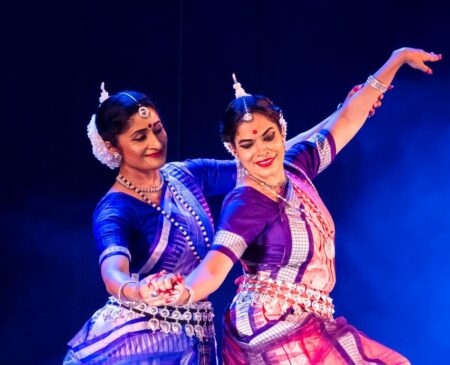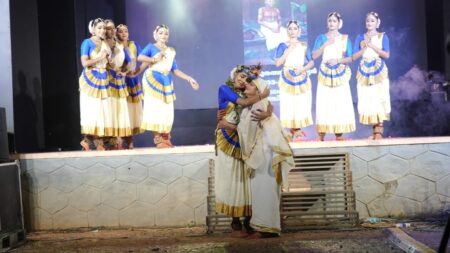

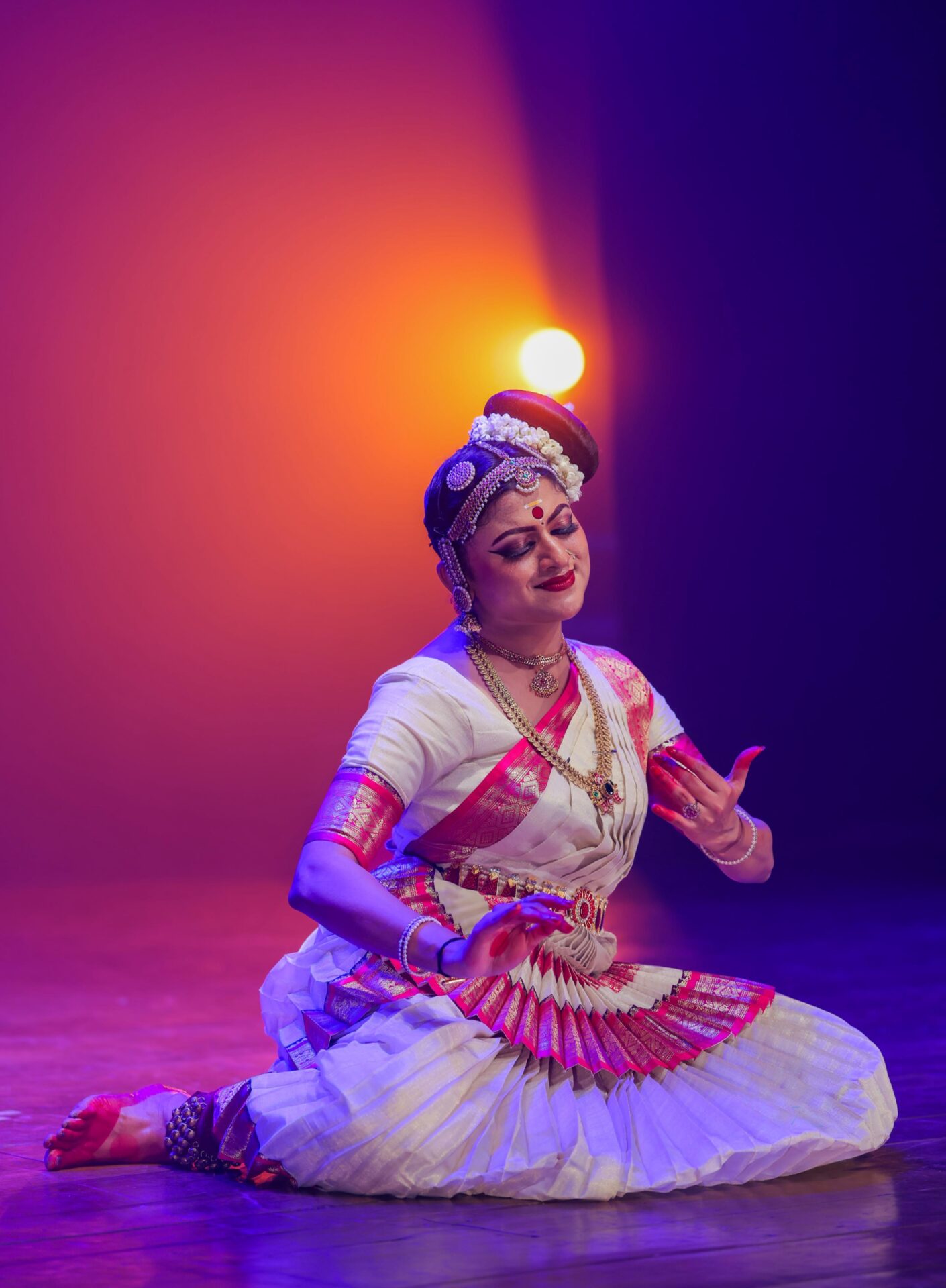
Born and brought up in Irinjalakuda, Kavya Deepak’s journey into Kerala Sangeetha Nataka Akademi’s stage for Sooryakanthi’s Mohiniyattam recital reflect years of dedicated training and artistic growth. With a strong foundation in Kathakali, she brought a distinctive depth of abhinaya to her Mohiniyattam performance resulting in a uniquely expressive recital.
The jam-packed auditorium of Kerala Sangeetha Nataka Akademi witnessed a two-hour Mohiniyattam recital of Kavya Deepak as part of Saparya 3.0, a unique project conceived by Thrissur-based institution Sooryakanthi. Saparya is a manifestation of the commitment of Sooryakanthi for grooming Mohiniyattam artistes, both by training and providing facilities for them for stage performance. In this respect, the title of the project itself makes it meaningful.
Setting the stage
Kavya presented the recital in the strict format of a Kutchery beginning with Cholkettu and finishing with tillana in the typical Kalamandalam sailee. Cholkettu is a vehement demonstration of nritta involving multiple adavus peculiar to the dance form. Moreover, the number is also a stamp of identity of Mohiniyattam right from its revival in Kalamandalam. Adavus performed to bundles of rhythm syllables and ragas, mark an auspicious beginning of the recital.
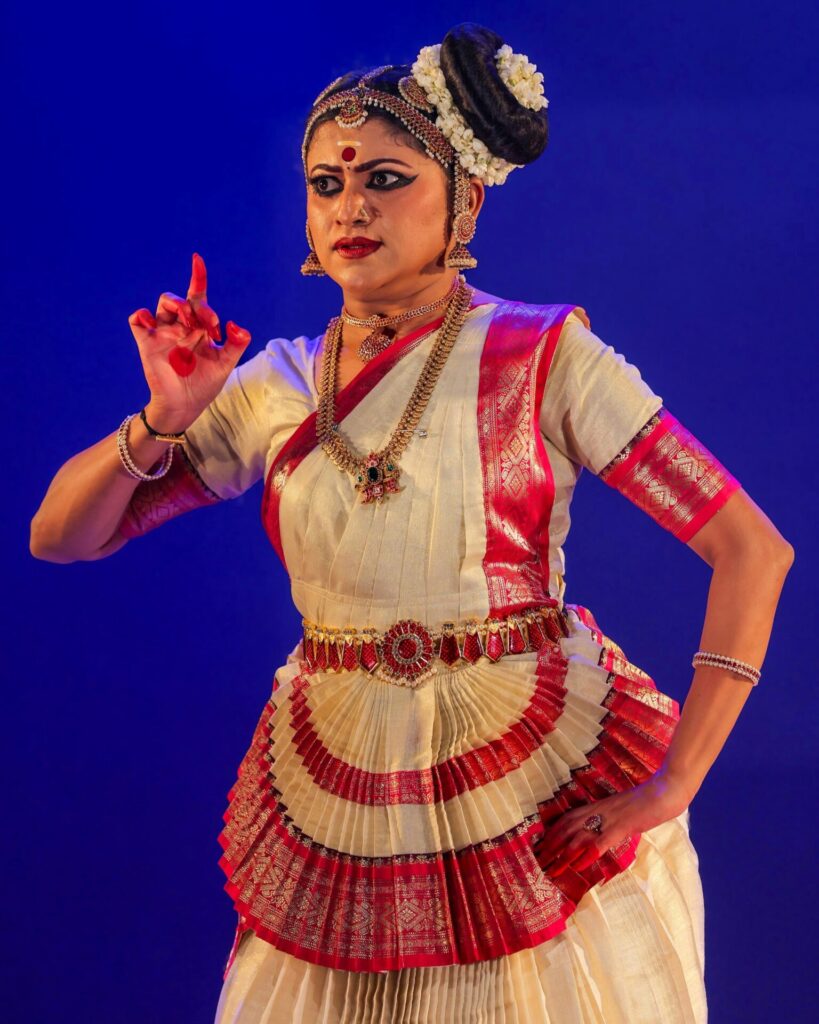
Graceful were the execution of the adavus and the chuzhipus (spiral) characteristic of Mohiniyattam were especially noteworthy. Further this was an exposition of her terpsichorean skill too. The ragas included Vasantha, Bhairavi and Vasanthabhairavi in order.
The credit for choosing such a raga combination goes to Bijeesh Krishna whose rendition is the quintessence of dance music. Interestingly, the accompanying artistes Thrissur Ajith Kumar (Edakka) coined the syllables while the jatis were the contribution of Kalamandalam Charudatt (mridangam). And the item was an index of the choreographic cleverness of Kalamandalam Akshara Bijeesh, Kavya’s guru.
The Varnam that followed was an impressive choreography of the late maestro Kalamandalam Leelamma. The 50- minute piece was specially noted for the perfect balance of nritta and nruthya.
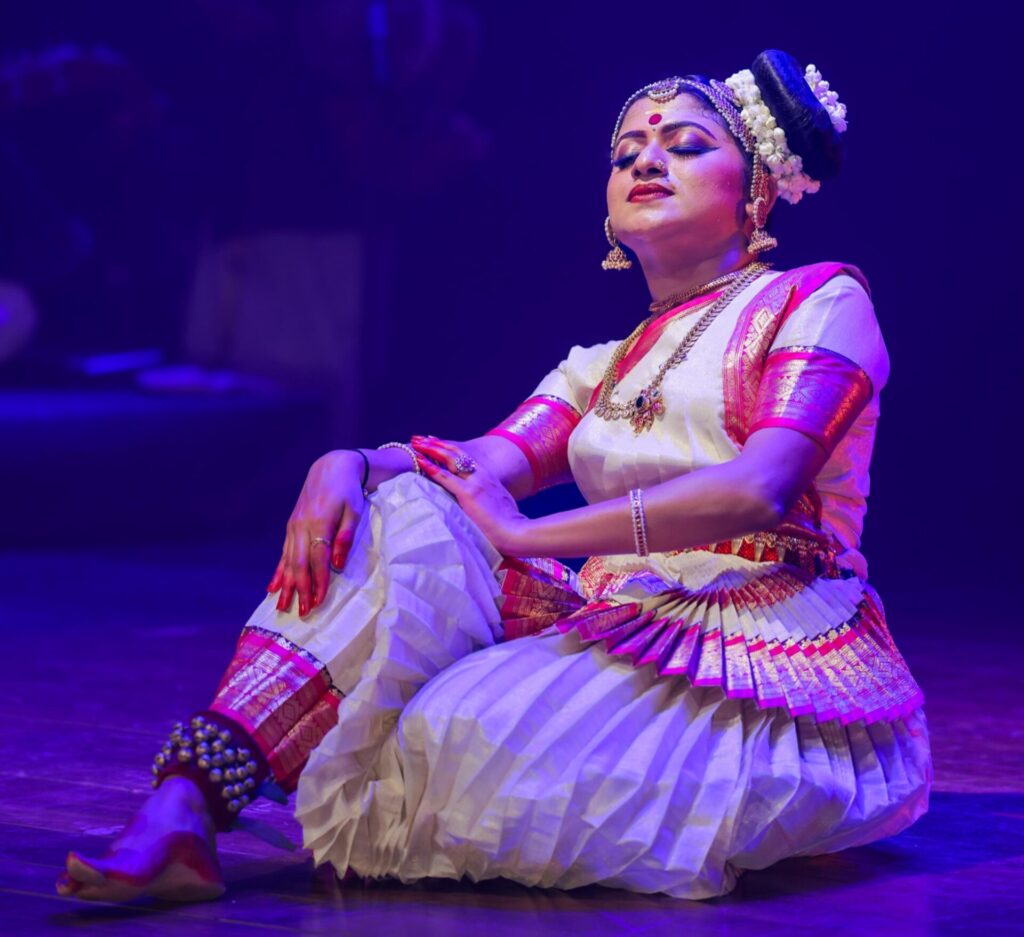
The leitmotif was the spar between Urvasi, the celestial dancer and Arjuna who arrives in Indrapuri to master the art of archery from Indra. Urvasi is attracted by the handsomeness of Arjuna and her requests to marry her are politely rejected by him since according to him Urvasi enjoys the status of his mother. Dejected, she curses him to lead the rest of his life as a eunuch.
Love and longing
Kavya who had earlier proved her incomparable abhinaya in the production of Edassery’s ‘Poothappattu’ by Sooryakanthi, once again made this number a memorable one. Her expression of love and fury throughout and the ‘pakatnattam’ as Urvasi and Arjuna was non-pareil. Composed by Kilimanoor Madhu in Charukesi and adi, music was scored by Payyannur Jagadeeshan master.
Perhaps the most sought-after padam of Swatithirunal is ‘Panimathimukhi bale’ in Ahiri and misrachap. Nayika, who yearns for the union with Nayaka, is totally distressed and she shares her own feelings with the Sakhi. What made the number praiseworthy was the extremely slow tempo of the rendition that gave the dancer enough space to describe her disposition elaborately.
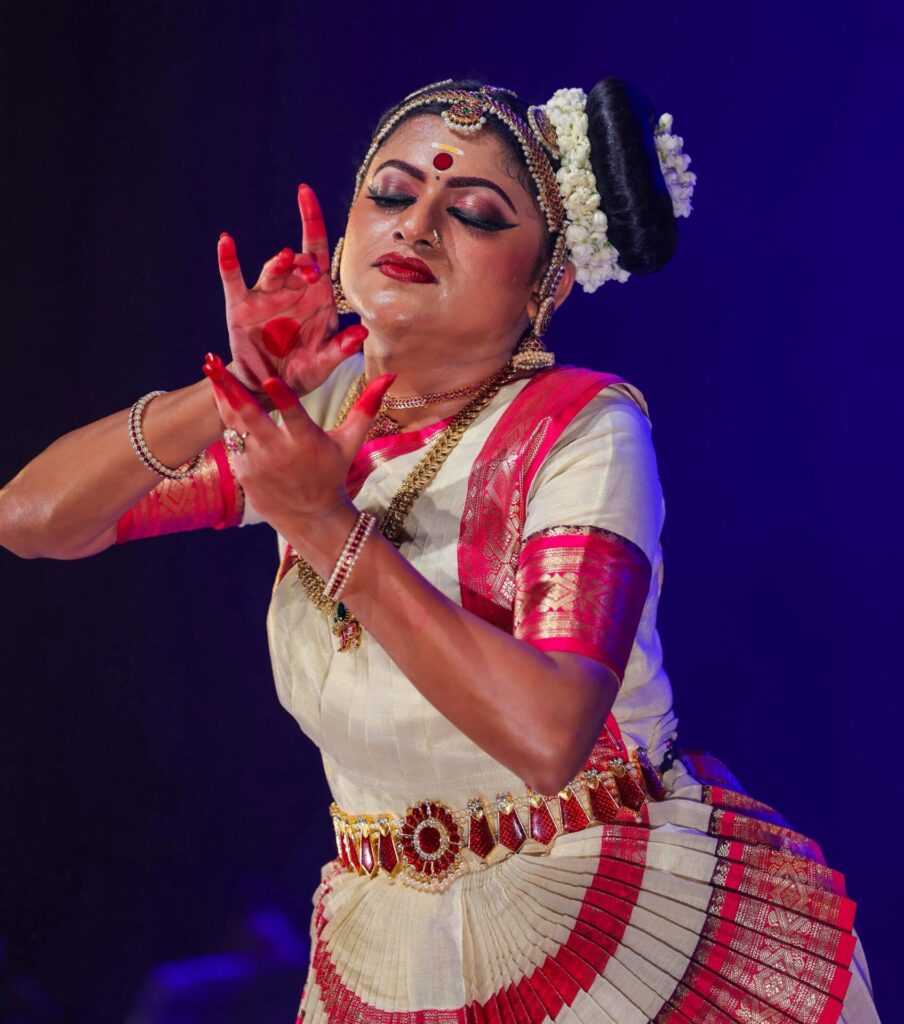
Further, Akshara’s choreography added more charm to the recital. Distress of the nayika could be discerned as she sat on the floor trying to tune the vina and failed as her mind was totally upset owing to separation. Needless to mention that Kavya’s presentation of the ‘virakotkhantitha’ nayika was commendable.
Tillana for the finale
Bhakthi (devotion) is the core of Kirtana which entails music, dance and abhinaya. This found expression in the story of Narasimha in whose garb Vishnu takes birth to kill Hiranyakasipu. A personification of arrogance, he commands his people to chant, “Om Hiranyaya nama:”, but what he hears is chanting in praise of Vishnu. In response to Prahlada’s affirming faith that he feels the presence of Vishnu in the ‘pillar and even the rust’, an enraged Hiranya cuts the pillar from which Narasimha jumps out and kills him. Kavya could portray the essential traits of these characters with élan.
Music for the item was scored by Bijeesh in ragamalika and talamalika.
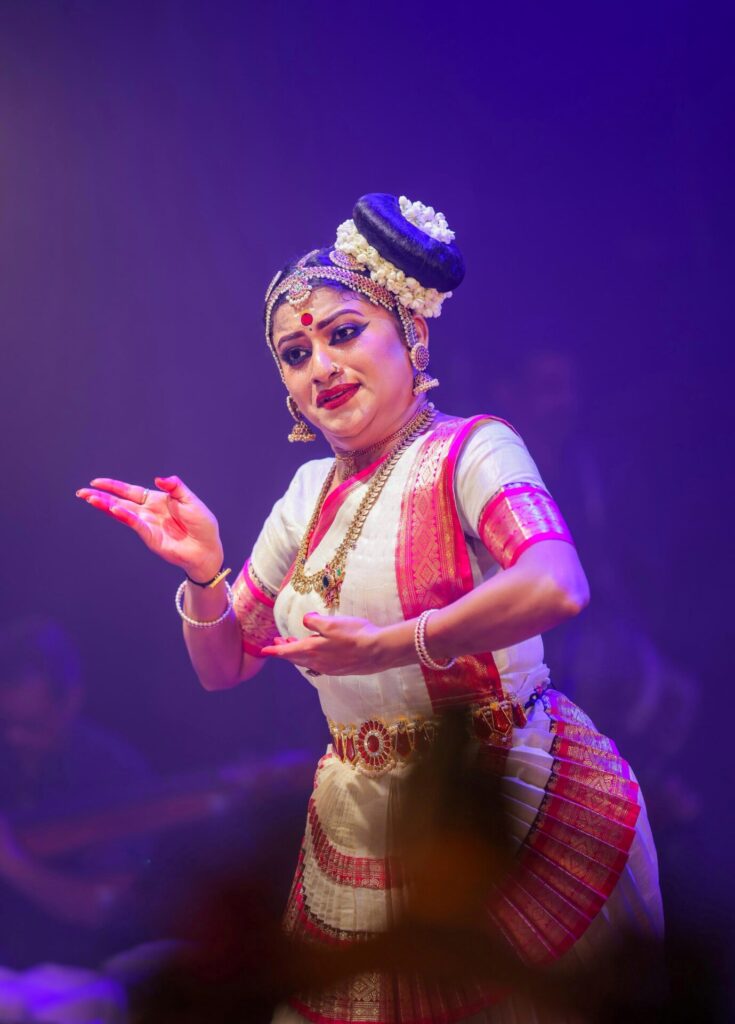
Kavya wound up the recital with a scintillating tillana of Lalgudi Jayaraman in Madhuvanthi and adi.
As for Kavya’s bewitching abhinaya throughout the recital, apart from the angika, the subtleties of her facial expressions were highly communicative. And this could be an offshoot of her strong footing in Kathakali and further the ‘Navarasasadhana’ course she had attended under the Koodiyattam maestro G Venu. That all her gurus had turned up to watch her performance was an indication of their regard for her.
Sooryakanthi can really boast of the team of musicians – very productive and creative – and they included, Kalamandalam Charudutt (mridangam), Hariprasad Subramanian (flute), Soundararajan (vina), and Thrissur Ajith Kumar (edakka).
Photos: Sreenath Narayanan