

When a song takes over your feed do your feelings follow the film or the algorithm?
Cinema is an art form built on the alchemy of light, sound, and narrative, designed to evoke human emotions. Today, however, a new collaborator has entered the boardroom and that is ‘Social Algorithm’. This in fact leads us to ponder upon the quantification techniques of algorithms and emotions particularly in cinema.
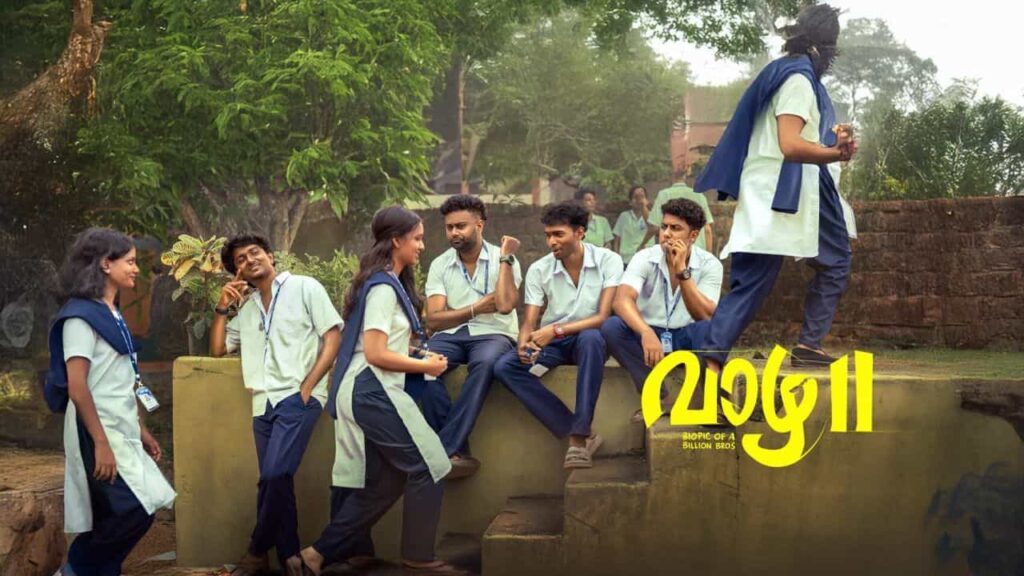
Vaazha 2 captures Kerala’s everyday cultural truths through a story shaped by friendship. However, certain key areas that Vaazha 2 can be delved upon is perhaps through three major entry points
Gender norms exist like a Vaazha in Kerala society
First, Vaazha means a banana plant, and “instead of producing kids, I would have rather planted a Vaazha” is a common metaphor in many Kerala families (perhaps less so after this film). The movie begins with Hashir and Alan waiting to meet their younger sibling. Alan, who wants a younger brother, gets a sister, while Hashir gets a brother. Such moments show how society still fixates on the birth of a boy or girl. Their acting is subtle, and it needs to be, reminding us that despite calling ourselves progressive, patriarchal norms still shape gender roles.
One can also relate to the othering an elder brother faces when a younger brother is born (as with Hashir). In many households, the elder boy is suddenly “promoted,” which can lead to them being sidelined. Often this happens because the younger child receives more attention. Similarly, when the younger sibling is a girl, the elder brother is expected to care for her – a norm deeply internalised and well entrenched in many homes.
These stereotypes definitely carry a clear gender angle, and Vaazha 2 subtly unpacks them. The movie in fact becomes an eye-opener for families that label boys and girls in ways that often go wrong. Like Ente Veedu Appuvinteyum, where an elder brother feels left out after a sibling’s birth, Vaazha 2 highlights the importance of nurturing children regardless of age. The film is not just about its emotional ending; its core lies in the idea of nurturing the self.
Brother from another mother is also like a Vaazha
Second, brotherhood often called bromance is highly celebrated in Indian cinema for its social and cultural appeal. We often view brothers, not necessarily by blood, as symbols of solidarity and strength that transcend religion and caste. This theme continues to dominate for its emotional pull, as seen in Vaazha 2.
The peak of this bond appears in the latter half with the introduction of Ajin and Vinayak. The film then turns to pressing youth issues like substance abuse, yet the writer avoids leaving the boys in a negative light by adding growth and transformation.
The literary technique of Bildungsroman is evident as the boys undergo psychological change and leave harmful habits behind. The term combines the German words Bildung (education) and Roman (novel). Goethe’s Wilhelm Meister’s Apprenticeship is often cited as the classic example. Dickens’ David Copperfield and Great Expectations are also early English examples. Vaazha 2 echoes this form as the protagonists, after clearing their exams, begin dreaming of the UK and starts working towards it.
Everyone except Hashir achieves this dream, and the brotherhood begins to falter. As Alan and Vinayak move abroad, Hashir is left behind. Friendships once rooted like a Vaazha are replanted elsewhere, raising the question of whether going abroad truly means growth. While together they stood strong like a Vaazha departures weakened the bond and the Vaazha slowly fell down.
When the friends in the UK needed help back home, Hashir remained the one standing tall as a Vaazha for support. This is where emotions also become algorithmic in the film. Going abroad for education is valuable, but unexpected challenges can arise. In such moments, “brothers from another mother” at home matter most, as Hashir proves. Perhaps households caught in the migration frenzy should recognise such a Vaazha before leaving abroad.
That said, a key aspect to critique is the film’s algorithmic use of emotion.
Emotions have become algorithmic
Vaazha 2 offers a wholesome cinematic experience, with brotherhood at its core. But with all the hype, does it truly deserve to be in the 100-crore club? The makers seem to have invested heavily in marketing. Suddenly, social media is also flooded with the song Koodapirannor, leaving the Malayali audience teary-eyed and drawing them to the theatres. At the same time, lack of similar attention to other songs is quite apparent. The makers have smartly pushed a single track aggressively on all the social channels, making the audience go gaga.
This leads us to think that algorithms possess an unprecedented ability to analyse, replicate, and stimulate human feeling, offering filmmakers new tools for immersive storytelling and giving audiences highly personalised experiences. Yet, the soul of cinema lies in its humanity- its flaws, its idiosyncratic visions, and its ability to capture the messy, unquantifiable truth of existence. As algorithms continue to evolve, the challenge for the future of film will not be figuring out how to make a machine evoke a tear, but ensuring that the tear still means something real.
While Vaazha 2 is a well-made biopic on “billion bros,” whether the crores it has collected are truly earned or simply driven by a smart algorithm is open to debate.