
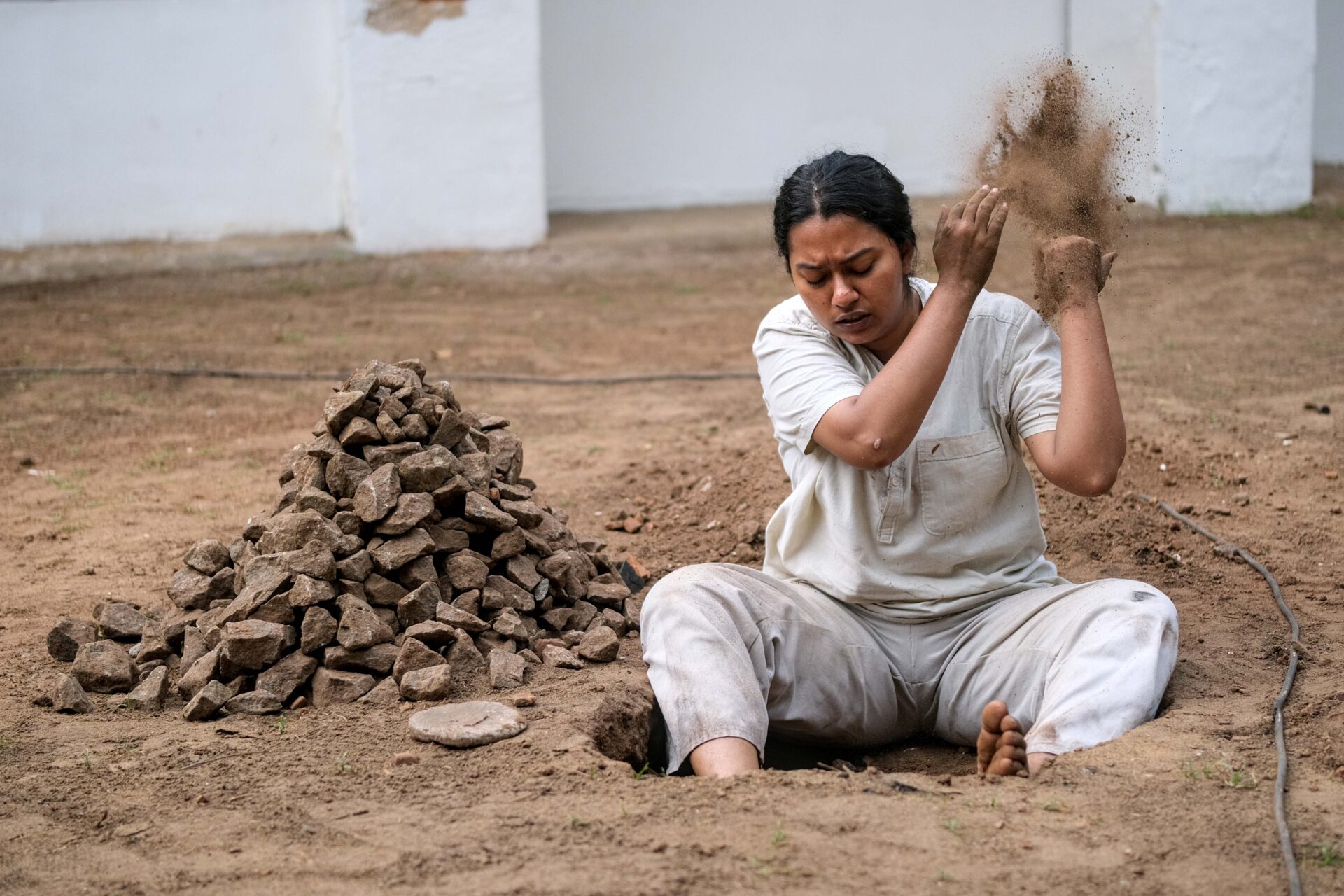
At the ongoing Kochi-Muziris Biennale, Arpa Poddar, a performance artist based of Bangladesh, showcased‘The Prolonged Sigh’, a two-day performance centred on digging and endurance, in collaboration with the Panjeri artists’ union. This excerpt is based on the conversation with Poddar shortly after her performance.
How does the ideas of borders and migration influence the actions you performed in this space?
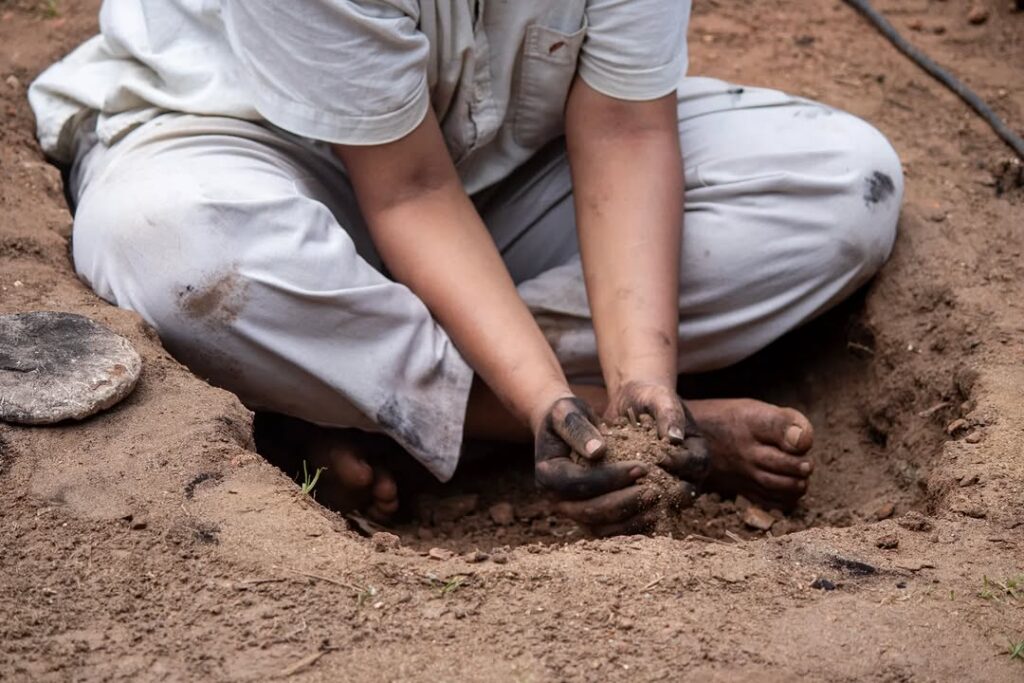
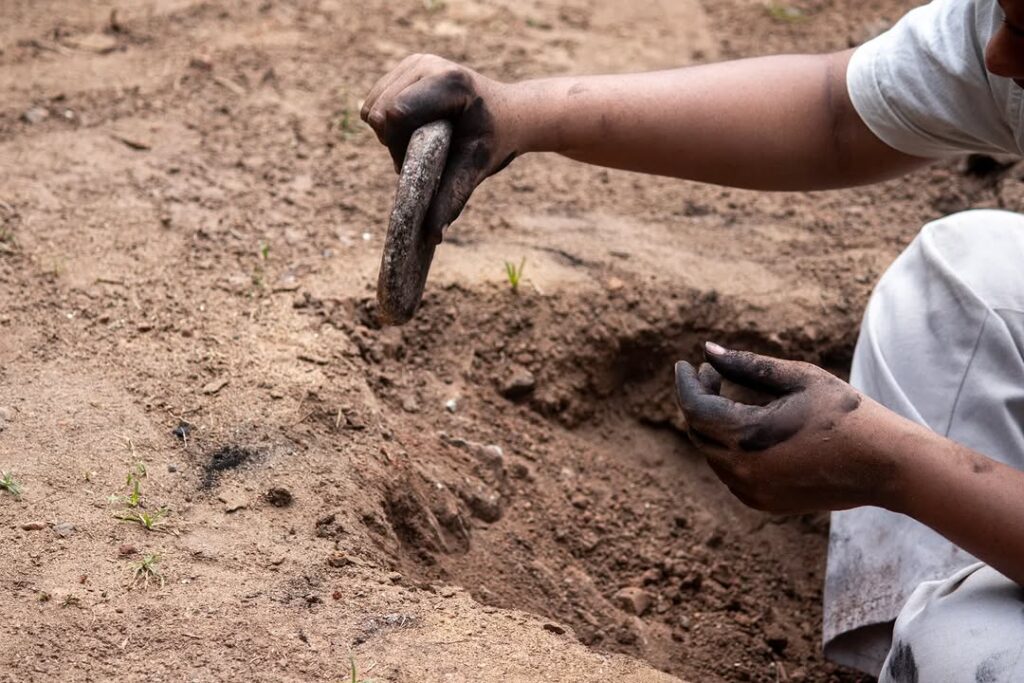
I am from Bangladesh, and therefore I wanted to perform on matters like border and border migration. For two days I have been toiling hard in the soil digging and collecting stones. Towards the end of my performance I was trying to hug the sand on to my body and carry it across the electric wire that lies here. Since the wire runs through the space in which I was working, I could not avoid it and cross it. If I tried to remove the wire the whole power for the building will go down. Therefore the wire was already created a boundary and a restriction for my work.
I wanted to carry sand across the wire but I was not able to do since the sand slipped through my hands. The amorphous nature of soil makes it very difficult to control it. Nobody can stop the soil from flowing from one place to another. If you want to control water, you can build a dam to restrict water from flowing. But soil on the other hand keeps flowing, whether its from Bangladesh or from India. Soil can even flow with the air. So the wire is like a very vague idea of border and these borders created by men was the basic thought of my work.
Can you talk about the initial idea behind this performance?
My initial thought was this question, what does it means to dig a hole or well, in an island? The people are not digging for water since islands are surrounded by water. So what are they actually searching for? So I wanted to follow their footsteps to figure it out. During this act I came across meteorite stones which have different colour shades like green and purple. These rocks does not belong here and appear to be of mountainous origin. I began counting them each time one surfaced during the digging.
While working, you were not interacting with the audience even though they tried to do have a conversation. Were they interrupting your work?
No, they were not interrupting my work. Some people did try to have an audience with me but at the time I was deeply immersed in my performance and could not have a conversation. I was having a conversation with the stones through numbers and the people who came to converse with me could not understand the language. But the people who came to me were not interrupting me, they were part of the performance. If they were interrupting, I could have just placed a sign not to to disturb me. Even though I don’t interact with people while I’m working, I find time and space to have a conversation after my work is done.
We often think of art as paintings or sculptures, but contemporary practice has moved far beyond that and your performance practice reflects that shift. For you, what is and is not art?
For me, art is about creating a discourse that grows out of our very personal experiences. It can also emerge from the experiences of people you know or come across with in life. The way your sensibility provokes you to create or express it through your language is also important. The authenticity of a person trying to create an original or something new is also characteristic of art.
What strikes as art for me, are the ones which provoke us to think and imagine. It can be performance, painting, or sculpture. Not everything provokes us. For me those which do provoke us is art.
Did you have any formal training in performance art?
I would not say that my engagement with performance comes from a conventional or formal training in the discipline. I did my bachelors in painting, but even then in my painting practice, performativity has always been present. I did not use brushes; instead, I painted with my hands, my body, and clothes using layered movements on the floor.
Alongside my formal training in painting, I began studying the history of performance art. When I came across performing artists like Marina Abramović and Yoko Ono, among others I got aware of the fact that their work emerged from very specific political, historical, and geographical urgencies.
I realised early on that performance could be a medium for me because I felt I was able to express something there more immediately. Painting, on the other hand, often requires longer durations and can bring a certain frustration; sometimes I pause, return later, and allow that distance to be productive. Performance is not something I do every day—it arrives when there is an urgency.
Your works are open-ended. How important is audiences’ interpretation to you?
I always try to let the doors open so that other ideas can also be let in. When people see me digging for six or seven hours they are able to connect it to their personal life and interpret it. Some people came to me and asked me if my work is about the struggles of labour. I feel that leaving the interpretations to the audience is important for my work. These interpretations create dialogue between the audience and the artist.