
A tribute to the Australian cultural patron, Graeme Vanderstol, whose lifelong devotion to Kathakali and Indian classical music helped introduce generations of international audiences to India’s performing arts.
From the 1950’s, the traditional Indian dance forms and music labelled as “classical” started intensifying their exposure to the West, for which a handful of cultural ambassadors played significant roles in those days. Several of them were westerners who had developed a taste for the highly evolved Indian performing arts. Of the institutions which were in the forefront during that period, striving for recognition and encomiums across the sea, Kerala Kalamandalam was an irresistible presence to reckon with.
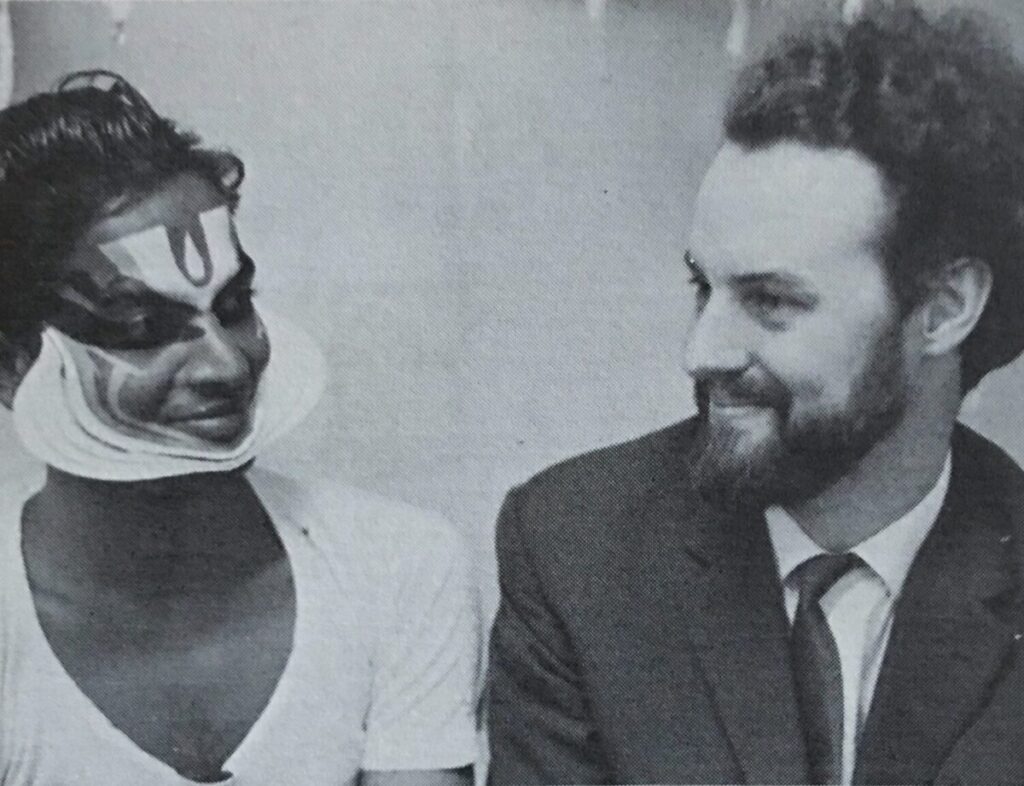
The Kathakali Troupe of Kalamandalam, consisting of top-ranking artists, toured Europe, the UK and the US extensively in the 1960’s. Graeme Vanderstol, an Australian by birth, happened to be the facilitator of these tours and mediator between the hosts and the guests through and through. Graeme passed away a few weeks back in Berkeley, leaving in the minds of all those who knew him indelible impressions of his inexplicable passion for Kathakali, the globally renowned classical dance-theatre of Kerala and Music, both Hindustani and Carnatic.
To those who were familiar with the personality of Graeme, he was much more than an art aficionado. He adored the cultural and artistic treasure-troves of India beyond our imagination, the reason for which lies in his deep-rooted association with the greatest icons of Kathakali and Hindustani Music. Right from Vazhenkada Kunju Nair to Kottakkal Nandakumaran Nair and Kalamandalam Balasubramanian, he maintained a healthy and jovial friendship. From the day he stepped into Kerala Kalamandalam, Graeme became a close comrade of the late scholar and connoisseur, Killimangalam Vasudevan Namboodiripad.
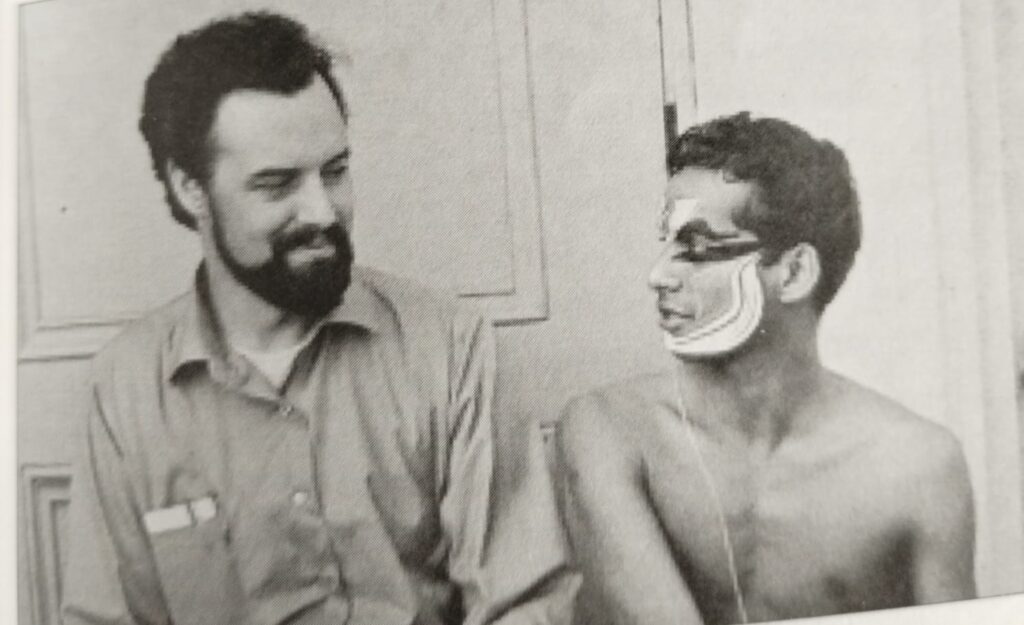
Although I had heard of him from Killimangalam decades back and had seen him once in a while, we didn’t have a chance to know each other till 2015. Until then, whenever I saw him, we exchanged smiles and departed. I don’t remember the day or venue that facilitated our acquaintance, leading to a warm bond. From then onwards, I started receiving his mails frequently with high-resolution photos attached. He was an ace photographer, as is evident from the innumerable photos of Kathakali found in his personal archive.
A foreigner who became family
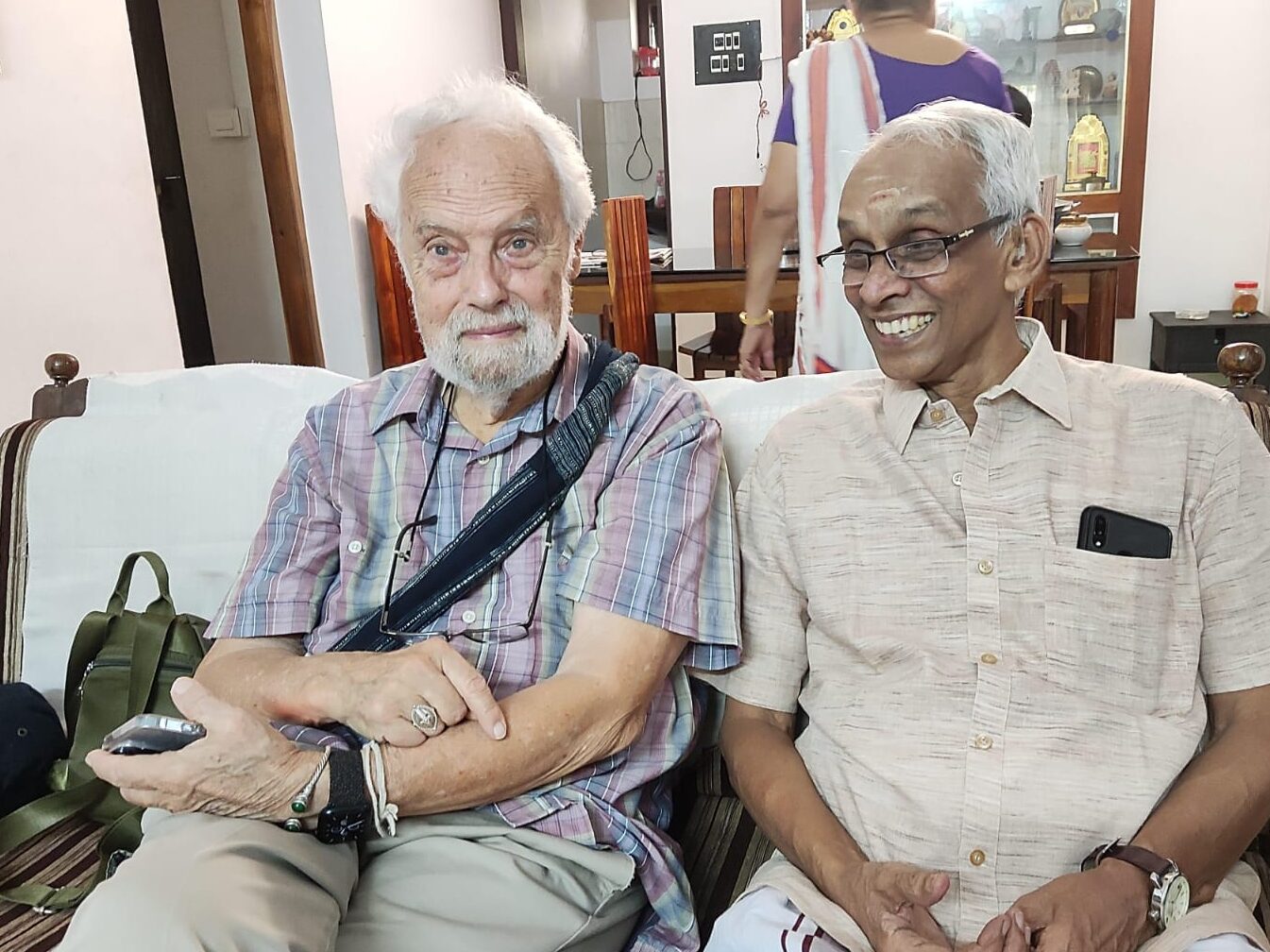
A couple of years back, I visited the US with Kalamandalam Manoj, a Kathakali artiste driven by an unusual commitment to and involvement in the roles assigned to him. Together, we travelled to more than a dozen universities and colleges, conducting lecture-demonstrations and workshops before arriving in San Francisco. Graeme had invited us to stay in his house in Richmond, close to Berkeley.
Our mutual friend, Kris Cargo, was kind enough to come to the airport, meet us, and drive us to Graeme’s house. The small house along the street had two rooms, a very small kitchen, and a drawing room. We improvised a little space in the drawing room besieged by books, artefacts, gramophone records, albums, and so on. As one fond of and accustomed to sprawling space wherever I went, this proved to be a God-given punishment.
Notwithstanding the space constraint and the resulting inconvenience, the days and nights we spent there were delightful. In the morning and at night, I listened to the sterling recitals of legendary singers. M.S. Subbulakshmi’s “Rangapuravihara” I heard time and again and was carried away by its inimitable bhava and laya. Ali Akbar Khan, unravelling the intricacies of the weighty ragas in Hindustani Music on the Sarod, was a highly delectable aural treat. I was also fortunate to listen to the rare recording of a musical piece in which the eminent Pandit Ravisankar played along with Ustad Ali Akbar Khan. An exceptional communion!
Generosity beyond borders
Graeme, the octogenarian, had an astounding remembrance of things past. At times, he vividly recollected his memorable tour in Europe with Ustad Ali Akbar Khan as his Manager. With an unfading smile, Graeme touched upon the Ustad’s discordant notes with Pandit Ravi Sankar and with Alla Ragha as well. When I made a brief reference to the divine melody emanating from the Sitar of Nikhil Banerjee, Graeme got excited, immediately looked for one disc from his archive, and played it for me.
While looking back on his Kathakali experiences from the Netherlands in the late 1960’s to the four-month US tour of the Kalamandalam troupe in the 1970’s, Graeme recalled not only the problems he confronted but amusing anecdotes too involving the artists and the onlookers. Graeme had great respect towards Vazhenkada Kunju Nair. While he was stunned by the artistry of Kalamandalam Krishnan Nair, Graeme did not hide his fascination for Kalamandalam Ramankutty Nair and Gopi.
Of the younger-generation artists during that period, Nelliyode Vasudevan Namboothiri and Kalamandalam M.P.S. Namboothiri were his favourites. Over the years, Graeme had watched almost all the leading Kathakali actors belonging to the subsequent generations. As a spectator, he had almost always carried the innocent look and curiosity of a child. Unlike me, Graeme was non-prejudicial and non-judgmental in appreciating the calibre of every artiste. I had envied his “balance of mind”.
Graeme had taken Manoj and me to Ukiah, precisely to something like a farmhouse at the mountain-top owned by his friend. The journey was akin to an adventurous tour. Graeme, who was driving the car, lost the directions halfway. We had a tough time locating the destination. Finally, we managed to get there. In the chilly night, the forest forming the backdrop, Manoj performed the role of the aboriginal hunter in the Play, Nalacharitam Day II.
Nearly forty to fifty people formed the audience in that serene atmosphere. They seemed to be impressed by the hunter engulfed in romantic imagination as he came across the deserted Princess, Damayanthi. Two days later, we drove back and proceeded to Santa Rosa. On the way, Graeme got a message on his phone that someone had possibly broken into his house.
Finding him slightly unsettled, I tried to console him, though I couldn’t control my penchant for humour. “I don’t think there will be any untoward incident. Seeing the discs of the maestros in Hindustani Music and the books dealing with esoteric topics, the thief might have been befuddled. He wouldn’t have gathered the courage to move further. Hearing my words, Graeme began laughing like a child.
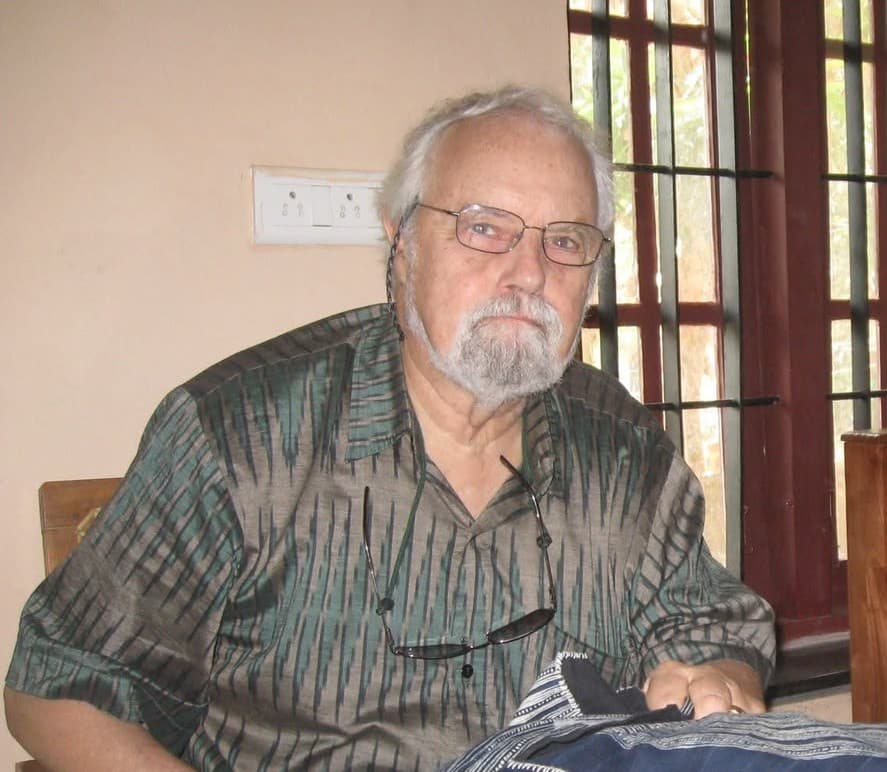
Other than Kerala, the place Graeme liked most was Bali in Indonesia. He repeatedly referred to me his intimate association with Bali, where he still had a few close friends. He loved the pastoral splendour of the land and the lilting melody of the gamelan. Graeme had an unalloyed empathy towards and concern for Asians. I had apprehensions about his indiscriminate magnanimity. He spent profusely for commissioning Kathakali performances and for the deprived he came across in the different parts of Asia. He was an indefatigable traveller.
Age didn’t deter him from travelling across the globe year after year. Still, he led a comfortable and peaceful life far from the madding crowds following retirement. I don’t remember him mentioning any of his close relatives in Australia or elsewhere during our conversations. I often felt that he was destined to be lonely, for the most part, in his private life. The fag end of Graeme’s life, what I have learnt from my friends in California, was in penury. For such a noble and large-hearted human being, God should not have awarded a tragic finale.