
A visual spectacle that sidelines emotion, women characters and storytelling, while Yash’s Ravana steals the show.
The hype that built up around the release of “Ramayana: Part 1” centred on its grand visuals and majestic performances in the retelling of the great Indian epic. Those who watched the television version in the last part of the twentieth century, as well as its re-telecast during the COVID-19 pandemic, might have had several expectations after watching the trailer and short promotional videos that the PR team successfully circulated on social media. However, a movie lover who believes in the craft of cinema has very little to be happy about after watching this film.
Directed by Nitesh Tiwari, the film is reportedly the most expensive Indian film ever made, with a budget of approximately ₹2000 crore for Part One alone. The two-part project also brings together international talent, including Oscar-winning composers A.R. Rahman and Hans Zimmer, and the Hollywood visual effects company DNEG. However, despite the huge investment and the involvement of an international team, the film fails to establish the emotional connection one would expect from an epic of this magnitude. The spectacle is undoubtedly ambitious, but spectacle alone cannot make a story emotionally compelling.
The missing emotional Arc
The original epic is grand in its narrative, coherence, storytelling and structure. There is always an underlying thread of emotions that weaves the plots together and holds them in place. The movie lacks this emotional undercurrent. The pain is not communicated, and the agony is underplayed. The movie rushes to dazzle the spectators with the CGI spectacles it promised to deliver.
Even when crucial moments of sadness are presented, the film does not allow ample time to develop the subplot and let the spectators muse over the philosophy conveyed by the epic. An example is the death of Dasaratha and Bharata conveying the news to Rama in the forest. Here, Rama controls his tears, adhering to popular notions of masculinity (that men do not cry!), whereas in other texts, he is portrayed as a loving son who does not care about his social standing but laments uncontrollably. Several sequences lack emotional gravity.
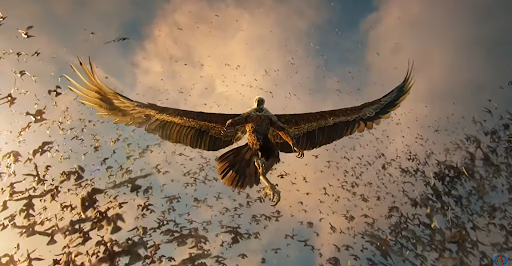
The only scene that appealed to me both visually and emotionally was that of the bird fighting Ravana and eventually dying. The Jatayu sequence was, to a great extent, fascinating. Moreover, it established a connection between the world of the epic and our contemporary society, where acts of resistance and the assertion of integrity can sometimes lead to self-destruction. Yet, the willingness to uphold one’s values, even at the cost of one’s life, remains profoundly significant.
Manthara convincing Kaikeyi about the viciousness of Dasaratha and Rama was yet another sequence that lacked credibility. Kaikeyi, who initially dismisses Manthara, suddenly appears convinced by a few unimpressive arguments she puts forward.
Beyond being the great Indian epic with religious significance, The Ramayana is a rich literary text that offers room for philosophical rumination, much of which evolves through the discourses between its characters. Here, there is not even a single memorable dialogue that spectators can recall and retain as they leave the theatre. The aesthetic quality of the film appears to have been reduced to the visual effects that the filmmaker attempts to offer. This has definitely come at the cost of the epic’s literary merit.
The vanishing ‘beauties’
Which version of The Ramayana served as the primary text for this filmic rendition is not very clear, although one may assume that it is the Valmiki Ramayana, except for its relatively glorious and less malignant portrayal of Ravana. When an epic is adapted for cinema in contemporary times, several negotiations become necessary to avoid reproducing historical biases that perpetuate the subjugation of particular communities.
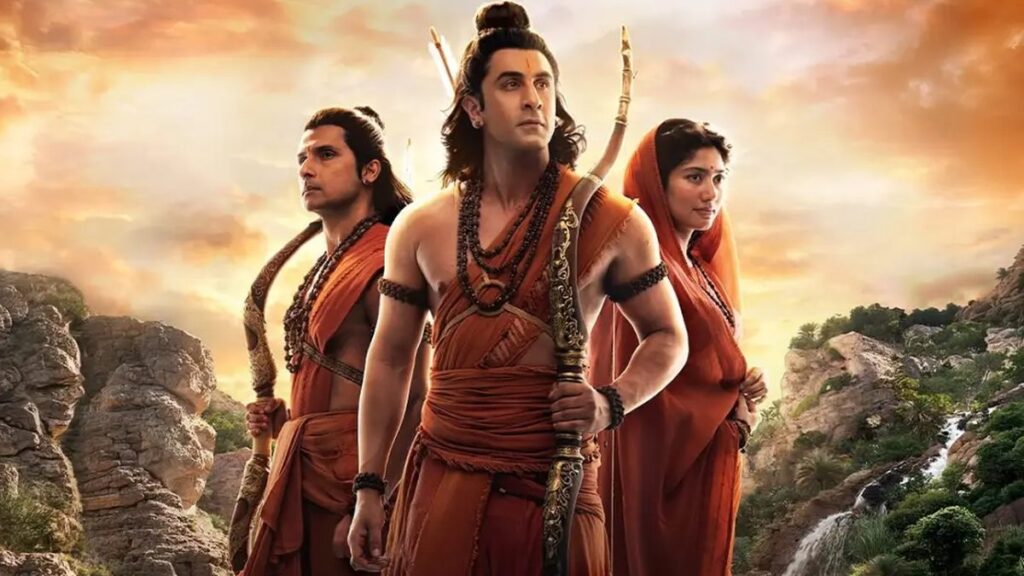
In other words, there is always a need to consider the demands of political correctness and make the narrative more relevant to contemporary society, even if this means challenging some of the conservative perspectives embedded in what are considered the “original versions”. Sita being portrayed as a learned woman who is trained in martial arts did some justice. However, there are several other women characters who are muted or edited out.
The film conveniently crops out not only the voices and narratives of Urmila, Mandavi and Shrutakeerthi, the wives of Lakshmana, Bharata and Shathrughna respectively, but also their very presence on screen. Urmila’s absence, with neither screen space nor dialogue, cannot be dismissed as inconsequential, as it reinforces the ways in which patriarchy operates.
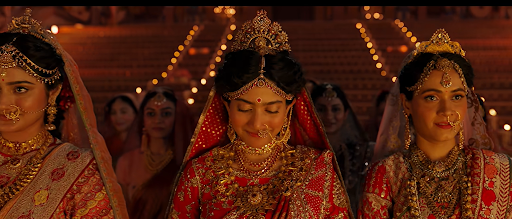
Why should she be silenced when her husband decides, without even consulting her, to leave her behind and accompany his brother and sister-in-law on a fourteen-year exile? Would it not have been an original contribution to the narrative (or the “tellings” of the Ramayana, as A.K. Ramanujan put it in his seminal essay) if she had been allowed to confront the decision or at least voice her dissent or consent regarding the entire ordeal of Rama’s exile? After all, she is the one who is left behind to bear the consequences of this decision.
Mandodari, the queen of Lanka, is similarly relegated to the background, with little agency of her own. Being one of the Panchakanya, the values she upholds deserve recognition beyond those that are merely underscored and approved within patriarchal frameworks. She displays greater moral clarity than most of the other characters and is portrayed in the epic as someone who attempts to correct Ravana and opposes his unrighteous actions. In the film, however, she appears timid. Even when she is shown supporting Soorpanakha, she does not display the moral courage to question Ravana for killing his brother-in-law, thereby causing his sister the pain of widowhood.
As for Soorpanakha, she appears to recover rather quickly from the death of her husband and sets out in search of another, as her brother Ravan advises her. Her encounter with the two brothers is not merely a casual episode in this pursuit; it eventually leads to her tragedy.
Sumitra’s conversation with Lakshmana is another important episode found in several Ramayana traditions, including the Valmiki Ramayana and the Adhyatma Ramayana. This episode is completely omitted, as the screenplay rushes to send the trio into the forest. These erasures reinforce the silencing of certain voices and add to the problematic nature of this film.
Of Ravana, for Ravana
As anyone who has watched the film would agree, the only truly outstanding performance and screen presence belong to Ravana, the villain of the epic. This raises an interesting question, particularly because Yash, who plays Ravana, is also one of the producers of the film. Had he not been a producer, would he have played the role of Ravana? Would Ravana have received as much screen time as he does in the film? Would the narrative have been equally sympathetic towards him?
There are several versions of The Ramayana across different genres, including poetry (such as Vayalar Rama Varma’s “Raavanaputhri”), plays (such as Snehalatha Reddy’s “Sita”) and films (such as Mani Ratnam’s “Raavan”), which present Ravana differently from the villainous figure we encounter in the Valmiki Ramayana. Is the film’s portrayal of Ravana a reflection of the filmmaker’s ideology? I would say no. The ideology behind this portrayal is the ‘capital’ that Yash managed to bring into the project.
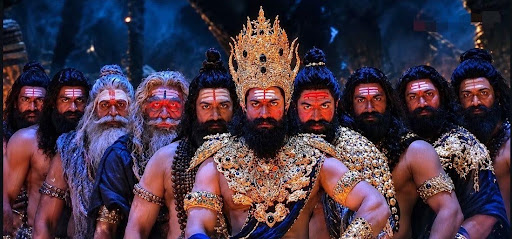
One of the film’s few genuinely interesting and original contributions is its interpretation of the ten heads of Dasanana, or Ravana. However, it was recently revealed that Yash, the actor and co-producer of the film, was the one who suggested this interpretation. Does this not take away some of the creative credit from the writer and director? The absence of directorial brilliance is also evident in the depiction of Pushpak, Ravana’s aircraft. The design of Pushpak is interesting and differs from its representations in earlier adaptations, including the television series “Ramayanam” and other cinematic renditions. Yash’s Ravana enjoys flying in a lotus-shaped Pushpak, seemingly dismissing the basic principles of physics but symbolising something else!
Everything about Ravana is majestic, magical and grand. Yash plays the character exceptionally well, making him the one element that stays with the spectator long after leaving the theatre. In a sense, his stardom overshadows everyone else in the film, making this a movie made by Yash, for Yash, and probably of Yash!