
On Malayala Bhasha Dinam, Sooryakanti presented Kavyanubhooti in Thrissur—a captivating Mohiniyattam production bringing iconic Malayalam poems to the stage.
Thrissur based cultural organisation Sooryakanti’s commitment to promote Mohiniyattam was once again demonstrated on November 1 when four performances based on Malayalam poems were presented at the Regional Theatre. Captioned ‘Kavyanubhooti’, the show assumed more importance as the day is being celebrated as ‘Malayala Bhasha dinam’ (language day). That the select poems belonged to the outstanding poets added to the attraction of the programme.
While ‘Meera Paadunnu’ by Sachidanandan, ‘Krishna nee enne ariyilla’ by Sugathakuari ,‘Sooryakanti’ by G Sankarakururp were presented as solos, ‘Poothappattu’ by Edassery was a dance-theatre.
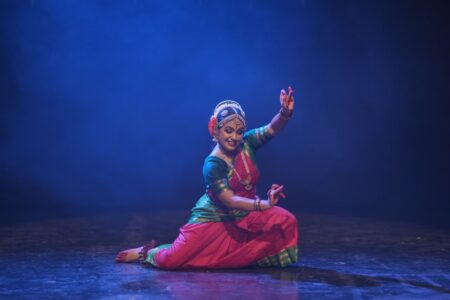
Choreographed and presented by Dr Kalamandalam Nikhila Vinod, Meera as conceived by Sachidanandan is the quintessence of the woman whose ambition is freedom. Krishna for her is the very metaphor of freedom itself.
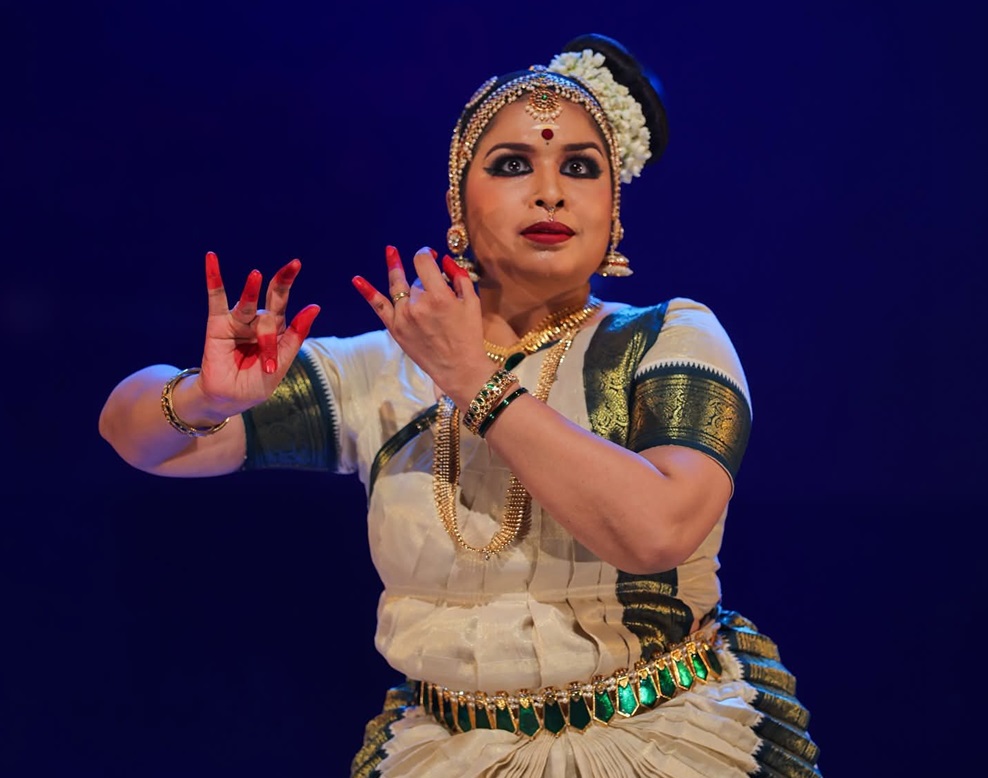
Nikhila interpreted the verses through impressive abhinaya for which music was scored by Jayesh Manchery in ragamalika and adi. Though a short piece, she could communicate the message effectively.
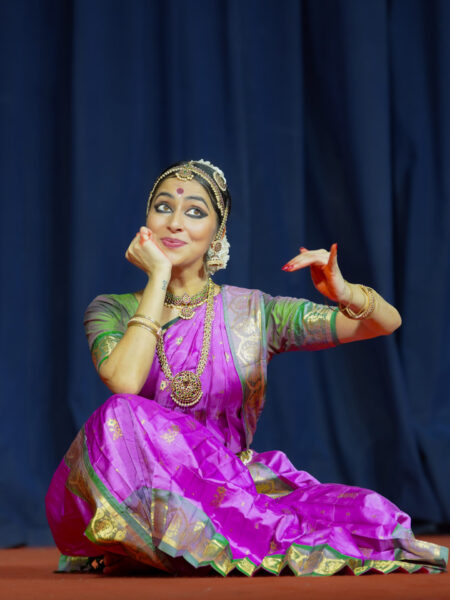
Sugathakumari’s ‘Krishna nee enne ariyilla’ narrates the disappointment of the nayika as she cannot enter into playful events with him like the Gopikas. She keeps her love and devotion to Krishna a secret. But finally, on his way to Maddhura after leaving Brindavan, Krishna’s chariot stops for a moment in front of her abode. Her joy knows no bounds as she realises that Krishna has identified her.
Choreographed by Kalamandalam Kshemavathy more than three decades ago, the recital as presented by Mahalakhsmi Anoop was touching. Feelings of distress arising out of Krishna not identifying her could be well portrayed by her. Music was scored by Kalamandalam Vasudeva Panicker, former head of the department of music in Kalamandalam.
Solo performances illuminate poetic essence
G Sankarakurup’s ‘Sooryakanti’ (sun flower) describes the intense love of the flower towards Sun.
She considers herself as the future bride of the Sun and blossoms as Sun rises in the sky. But when the Sun takes her for his sister, she is crestfallen. Still she is determined to continue her love towards him. Finally, just when the rays before sunset fall on her, her spirit is enlivened and for a moment both stand locked in embrace. But soon darkness fills the world.
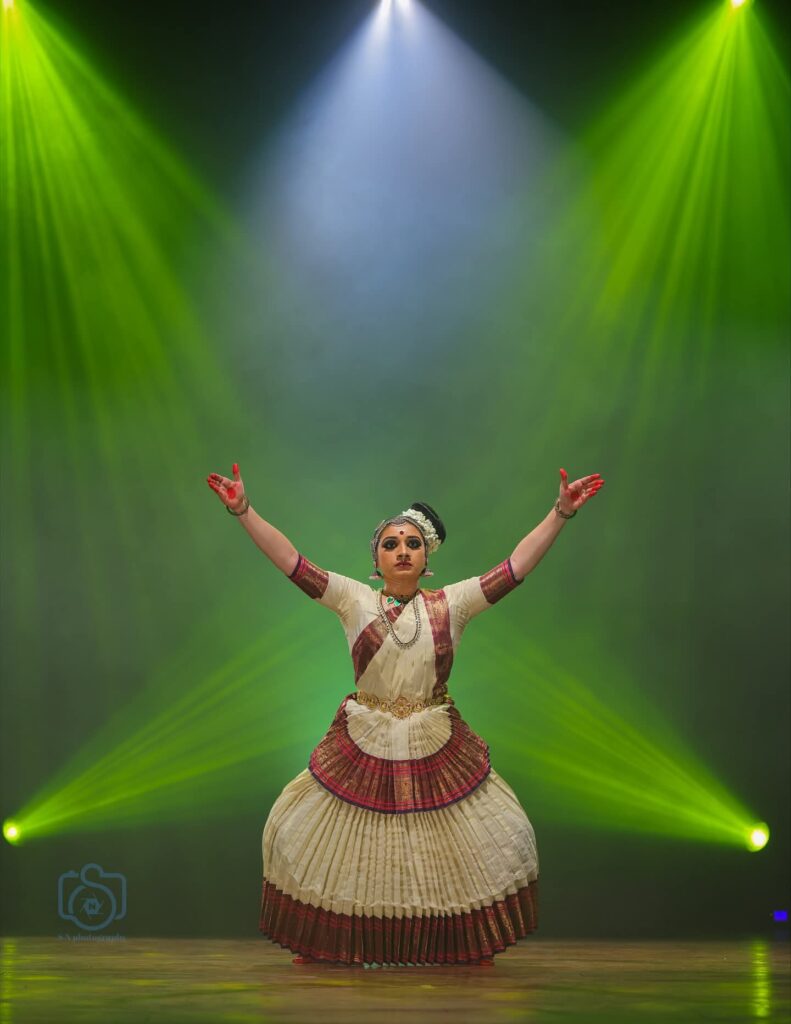
As she waits anxiously for his coming next morning, an unexpected storm takes her life. Sun, as he enters the sky next morning, is dejected to see the plight of the flower and he immerses in the sea.
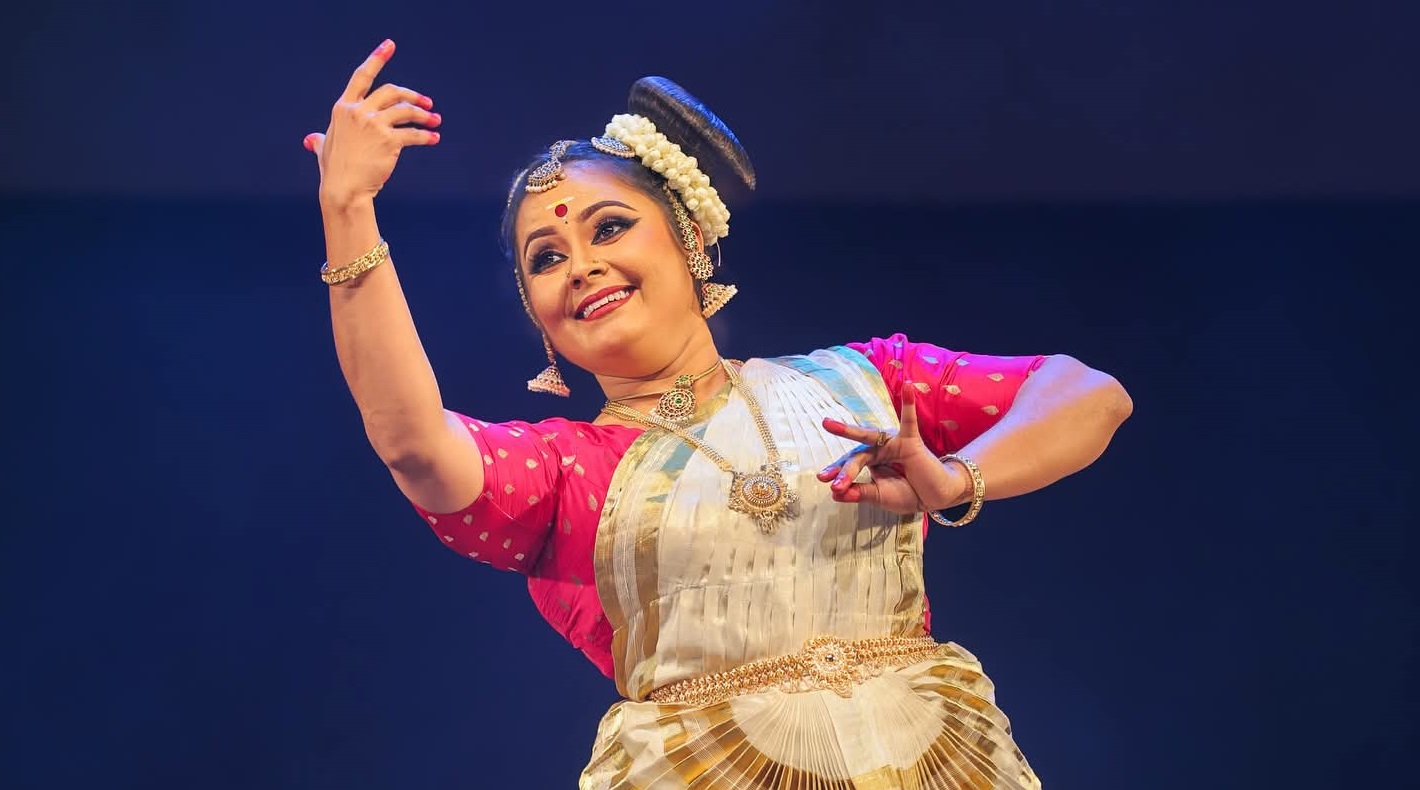
Bewitching was the portrayal of the flower by Meera Sreenarayanan, a distinguished dancer of national reputation. Commendable was her dexterity of portraying the feelings of the flower not only through her hand gestures but the whole body. There was a touch of aesthetics in her every move.
Lighting by K D Sanesh contributed in no small measure for creating the right ambience of the leitmotif. Choreography by Kalamandalam Akshara and vocal rendition by Bijeesh Krishna were laudable.
A myth reimagined
It speaks for the choreographic ingenuity of Akshara to have ventured to produce Poothapattu with all its rustic charm and mythical aura, into a dance-drama.
‘Pootham’ is a mythical evil spirit believed to roam about the villages of north Malabar. Poothapattu is quintessential of the poetic brilliance of Edassery who has woven a story against the rural background of the region.
A baby boy, Unni, is born to Nangeli after a long wait. At the age of seven, he is sent to the school. Pootham is enticed by the sight of this cute handsome boy. The cuneiform in his hands prevents Pootham from catching hold of him, for it is made of iron. While initially he refuses to throw it away, eventually, he yields to the enchantments of the Pootham and he is kidnapped.
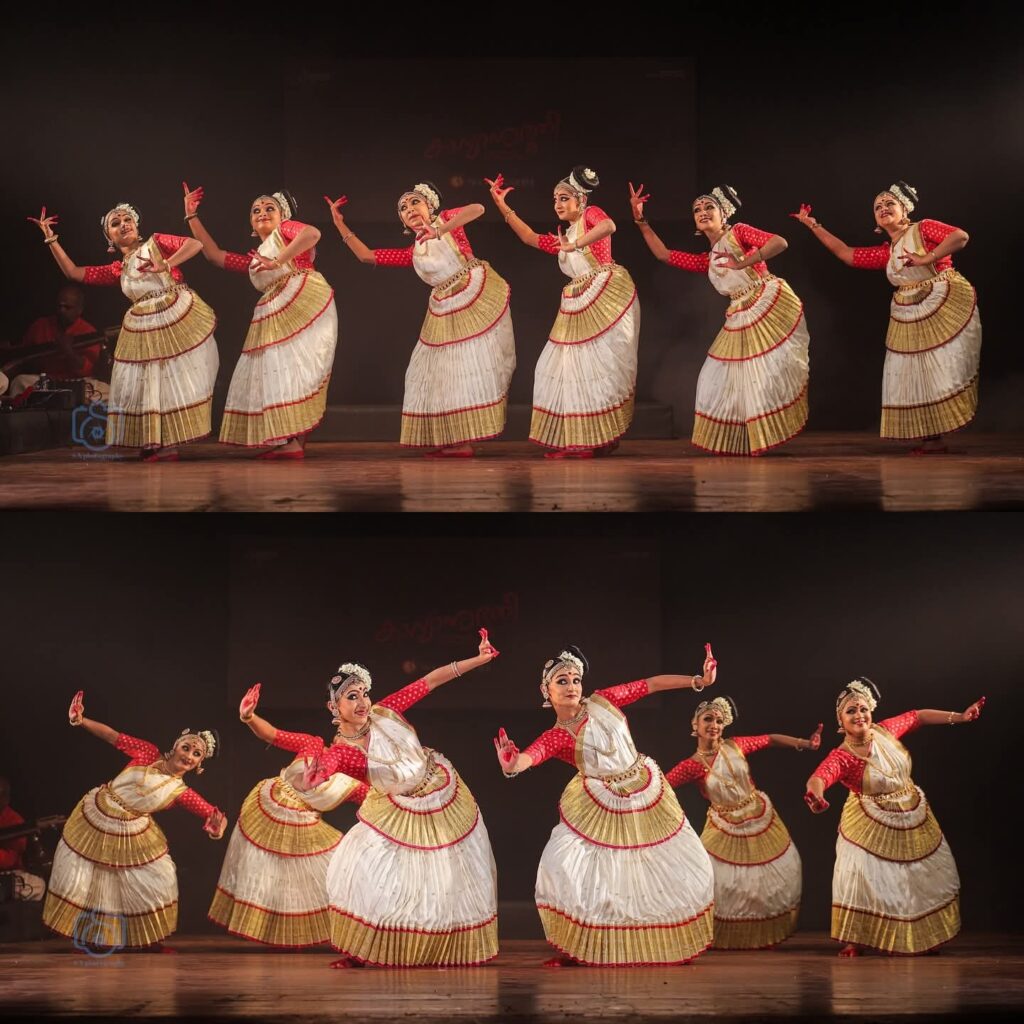
As the boy has failed to return home from school, Nangeli wanders frantically in search of him. Finally he was seen in the lap of the Pootham at the bottom of a tree.
Pootham won’t yield to any amount of persuasion to give the boy back Nangeli expresses her love by gouging out her own eyes, tramples them on the ground and says, “My Unni is more than this’. But such acts fail to impress Pootham. He creates magically a replica of the boy and presents it before Nangeli who throws it away, for she could identify her own child even when blind.
Finally, Pootham hands over the boy to Nangeli promising that he would return to her home every year after the harvest of the paddy to see the boy. Nangeli should be kind enough to open the door as Pootham knocks at the door.
Poor being, Pootham failed to ask for the location of the house and therefore every year he comes and knocks at the doors of all houses in the village, but in vain.
Akshara has taken care to pay discreet attention to stage every anecdote as described by the poet.
Kavya Deepak’s Pootham frightened not only the musicians on the stage but even the audience by her ferocious looks and leaps supported by beatings on the chenda. Her every move reminded one that she is not an earthly being. Nangeli and Unni were donned by Arunima Pramod and Kalamandalam Riya Raj respectively.
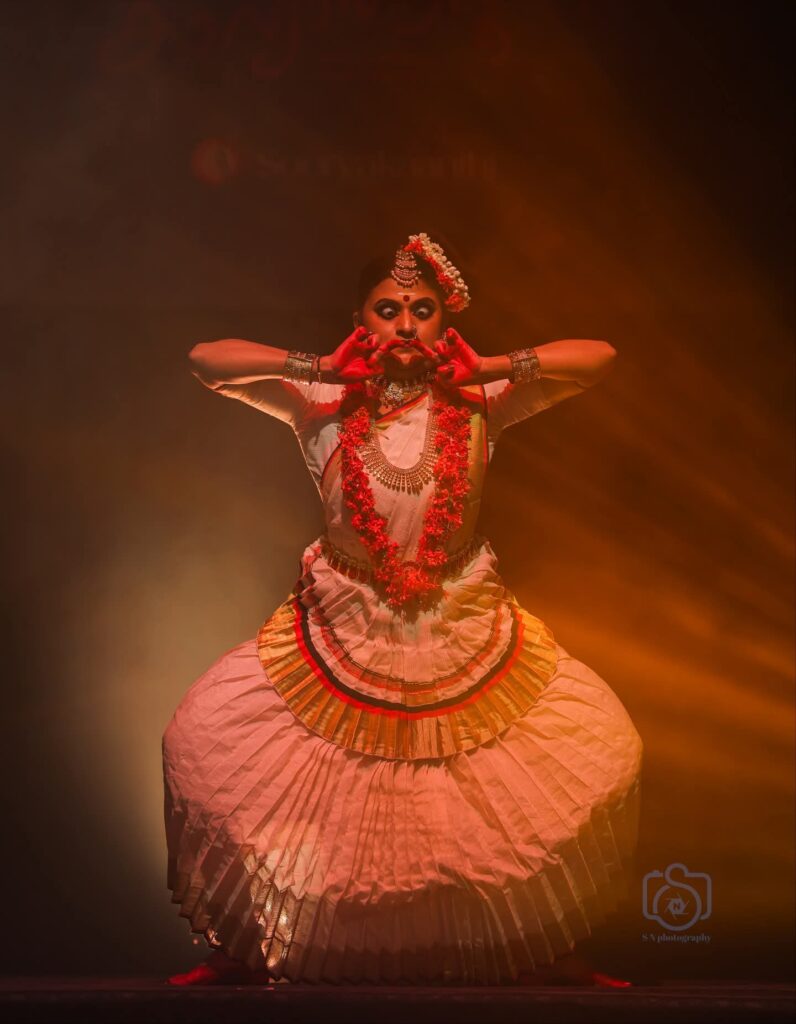
Introduction of an array of dancers who make their appearances intermittently served as story tellers (soothradhara) and change of scenes. They included Anjali V Krishna, Harinanda, , Apoorva P, Gouri Nair, Nandana B Panicker and Nanditha Saresh. Vivid description of Nature by the poet also could be discerned in the performance. The production was immensely rich in dance sequences. Unni could have been of a smaller stature.
Bijeesh’s recital was awe-inspiring. Other musicians included Kalamandalam Charudutt (Mridangam), Murali Narayanan (Flute), Murali Krishna (Vina) and Kalamandalam Nidhin Krishna (Edakka, Chenda). Akshara was on nattuvangam.
Photo credit: Sreenath Narayanan and team