
A reflective Bharatanatyam journey through devotion and remembrance
In classical dance, memory often serves as more than recollection; it becomes a means of revisiting ideas, emotions and spiritual insights that continue to resonate across time. Smtri-trayam, presented by Chennai-based Bharatanatyam institution Sri Mudhraalaya under the direction of Dr Lakshmi Ramaswamy, embraced this idea with sensitivity and artistic clarity.
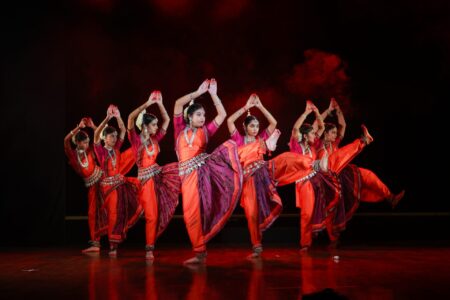
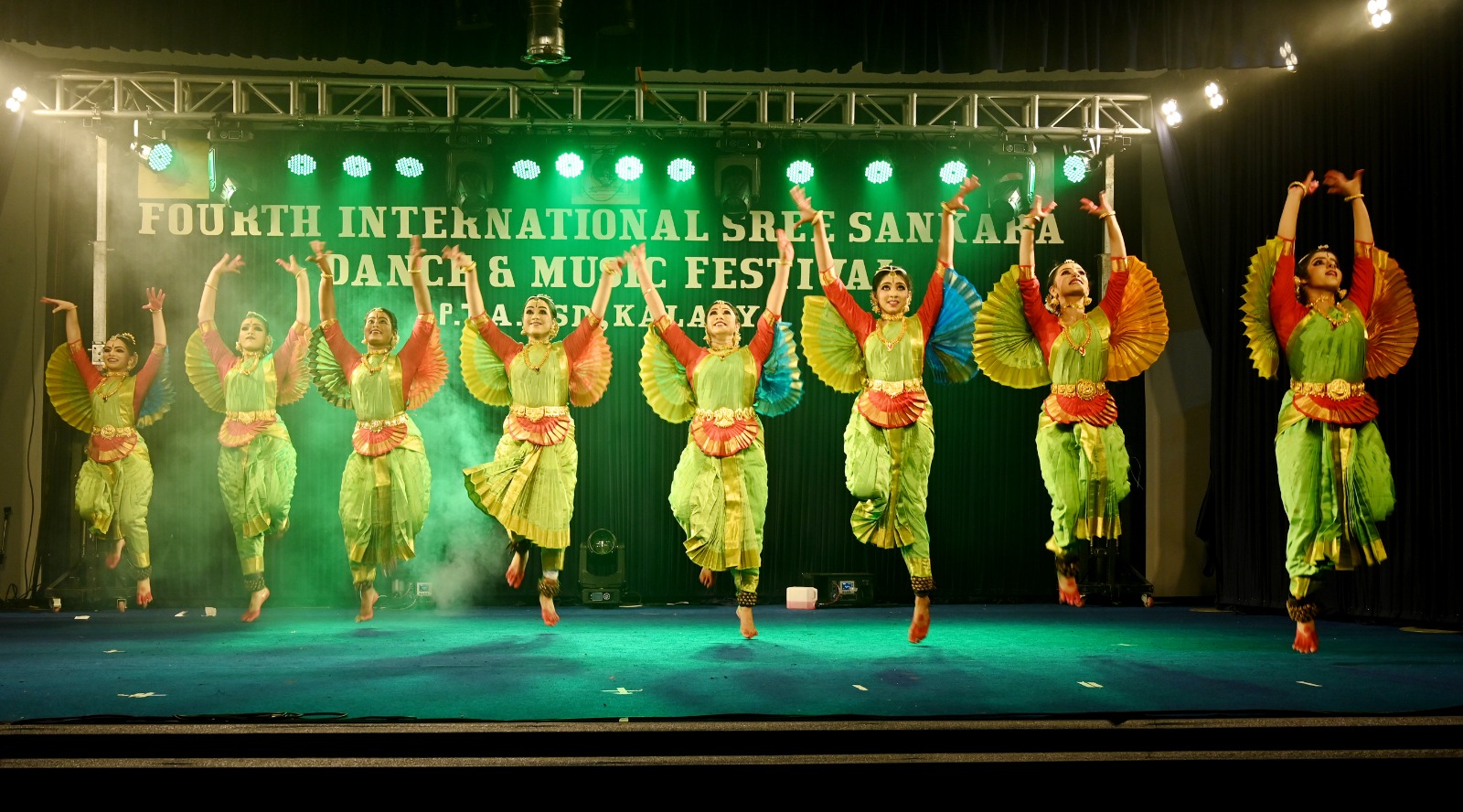
Staged at the Sree Sankara School of Music and Dance as part of the institution’s ongoing exploration of philosophical and devotional themes, the production revisited select excerpts from three acclaimed dance works Suka Marga, Pramāṇam and Shivanubhava weaving them into a cohesive performance that celebrated devotion, reflection and inner awakening. The programme demonstrated how excerpts from earlier productions can acquire fresh meaning when placed within a new thematic framework.
Rather than functioning merely as a compilation of past works, the production evolved into an integrated thematic experience tracing a subtle spiritual arc from playful divine expression to intense devotion and, finally, contemplative realisation. The conceptual framework itself revealed the choreographer’s mature artistic vision.
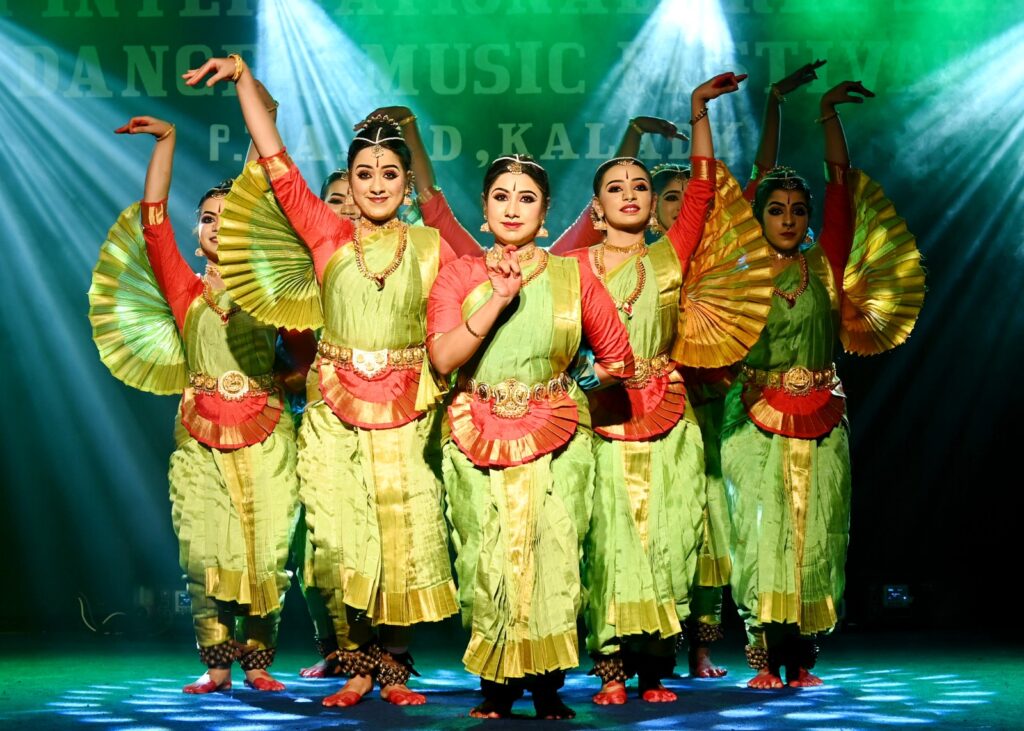
The evening commenced with the lively Tatthai Kavuttuvam from Suka Marga, where the world of parrots unfolded with delightful rhythmic energy and visual charm. The choreography carried freshness and buoyancy while retaining classical discipline. The music composed by Dr Rajkumar Bharathi and the lyrics by Dr Sankaranarayanan blended effectively to create an engaging opening.
Devotion as dialogue
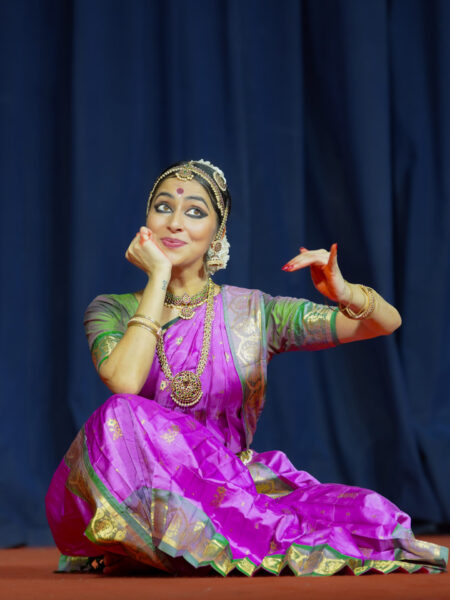
The emotional centrepiece of the evening, however, was undoubtedly the Varnam segment from Pramāṇam. Drawing inspiration from the Bhāgavata Purāṇa, the work explored bhakti not as mere sentiment but as profound existential surrender. The Pallavi, in which the devotee pleads with the Lord not to abandon him, was rendered with emotional depth and sincerity. The production intelligently interwove several well-known devotional episodes—Prahlada, Gajendra Moksha, Ambarisha and Durvasa, Krishna before Bhishma, and the moving Tirumazhisai Alwar episode—each contributing to the central philosophical idea of divine grace responding to unwavering devotion.
Particularly noteworthy was the conceptual reversal in the latter half of the Varnam, where the Lord Himself declares that He is bound by the love of His devotees. This transition elevated the choreography beyond narrative representation into the realm of spiritual dialogue. The Tirumazhisai Alwar sequence, in which Vishnu follows His devotee out of the kingdom, emerged as one of the most visually and emotionally compelling moments of the evening.
From visual imagery to inner realisation
The concluding Viswanatha Ashtakam, based on the celebrated composition of Adi Shankaracharya, brought the programme to a meditative culmination. Through evocative imagery of Shiva—Ganga adorning the matted locks, the crescent moon, serpents, the trident and the symbolism of Ardhanareeswara—the choreography moved gracefully from external depiction to inward experience.
Lakshmi Ramaswamy and her students, displayed admirable coordination, expressive maturity and commitment to the thematic content. The lighting design effectively complemented the changing moods without overwhelming the choreography.
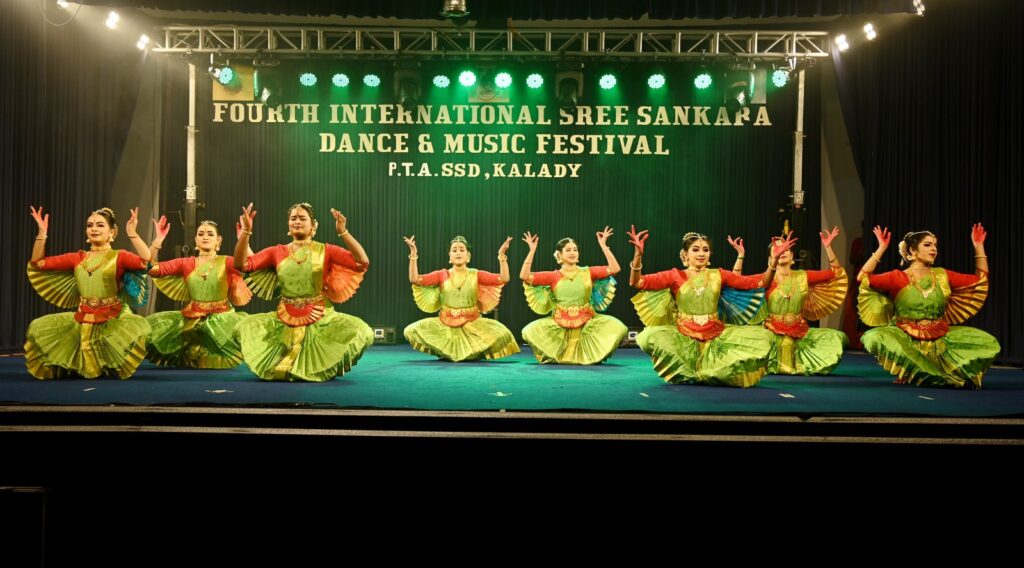
Musically, the production stood on strong footing. The orchestra, guided by Dr Rajkumar Bharathi, supported the dance with sensitivity and classical richness. Vocal support from Sri Veeraraghavan and Sri Srikanth Gopalakrishnan, along with an accomplished ensemble of instrumentalists, contributed significantly to the immersive atmosphere of the evening.
What distinguished Smṛti-trayam was its ability to combine scholarship, devotion and stagecraft in a manner that remained accessible while retaining classical integrity. The production reaffirmed Lakshmi Ramaswamy’s reputation as a choreographer who approaches Bharatanatyam not merely as performance but as an intellectual and spiritual exploration.