
Across the world, contemporary light festivals have transformed the night sky into a canvas of bold experimentation. Dubai’s Dhai joins this global conversation with an unexpected clarity of voice. Rather than dazzling for its own sake, the festival uses light as a cultural lens—an instrument for tracing lineage, perception, and the evolving imagination of a city in motion.
From Lyon’s operatic façades to Amsterdam’s canal-born poems, from Tokyo’s technoluminescent gardens to Melbourne’s urban lanterns, light festivals have evolved far beyond civic celebration. They are now cultural laboratories — places where technology, memory, and public space fuse into temporary cities of meaning.
Into this glowing global dialect steps Dhai Dubai, a festival that does not just participate in the conversation but subtly rewrites its grammar. Now in its second edition, the Emirati-led light exhibition at Expo City’s Al Wasl Plaza doesn’t chase spectacle. Instead, it steps into the heart of Dubai’s evolving cultural identity and asks: What stories does light carry when used as an indigenous language?
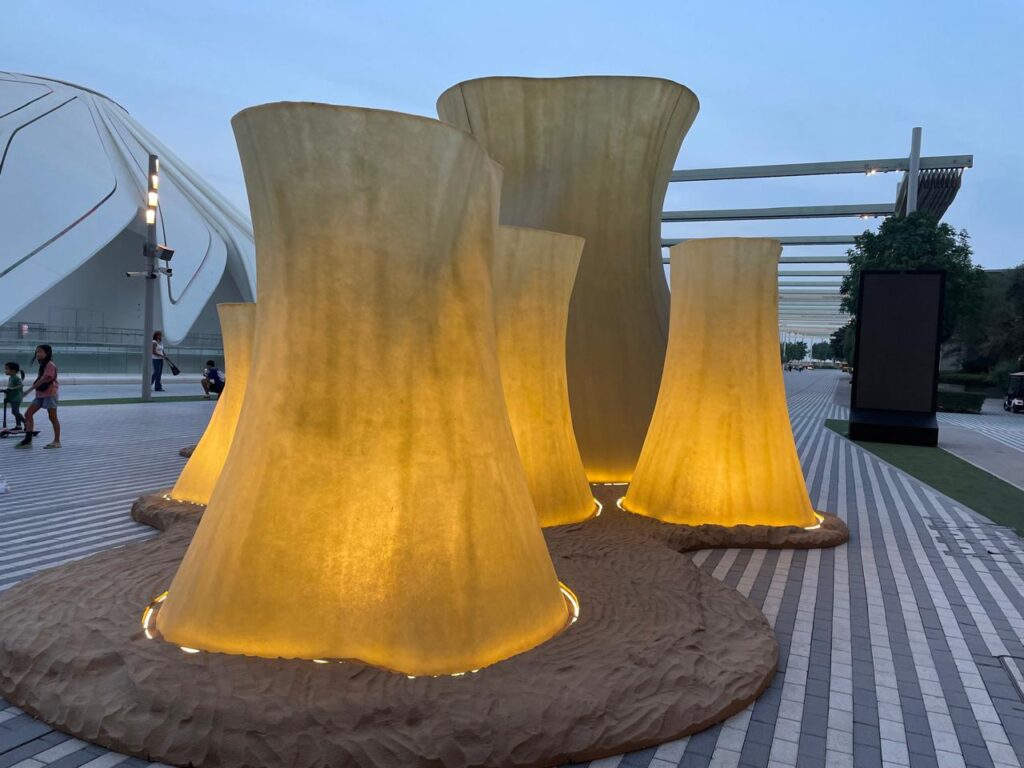
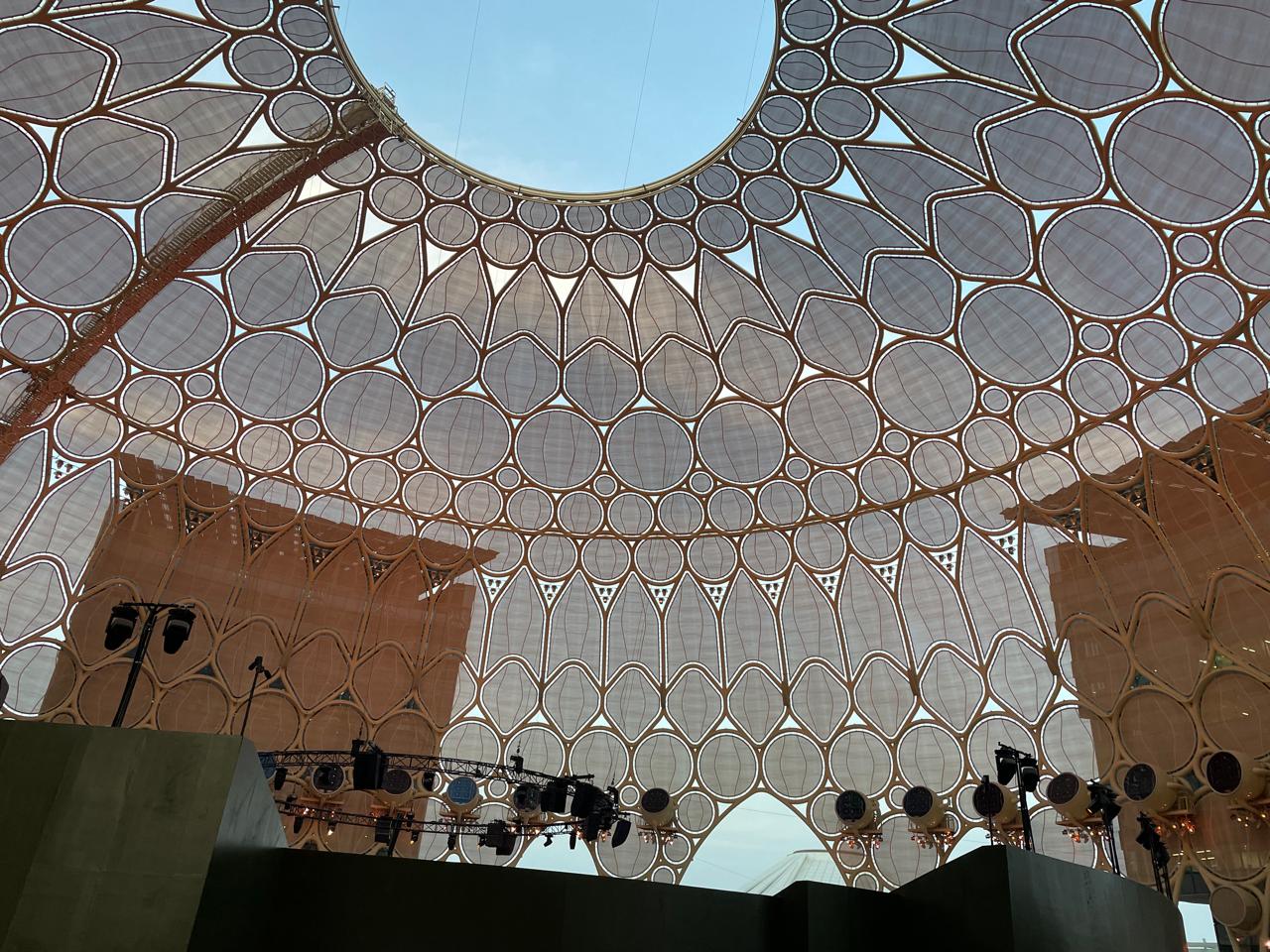
This year’s theme, Light Influences Life, turned the vast dome of Al Wasl Plaza into a kind of open-air observatory of Emirati consciousness. Beneath its monumental lattice, the festival unfolded with surprising intimacy: warm light pooled like memory, shadows stretched like echoes, and projections moved with the logic of breath rather than bombast.
A global canvas of light
Dhai set itself apart by rejecting the shorthand of dazzlement. Instead, it treated light as heritage — not something to merely display, but something to unearth.
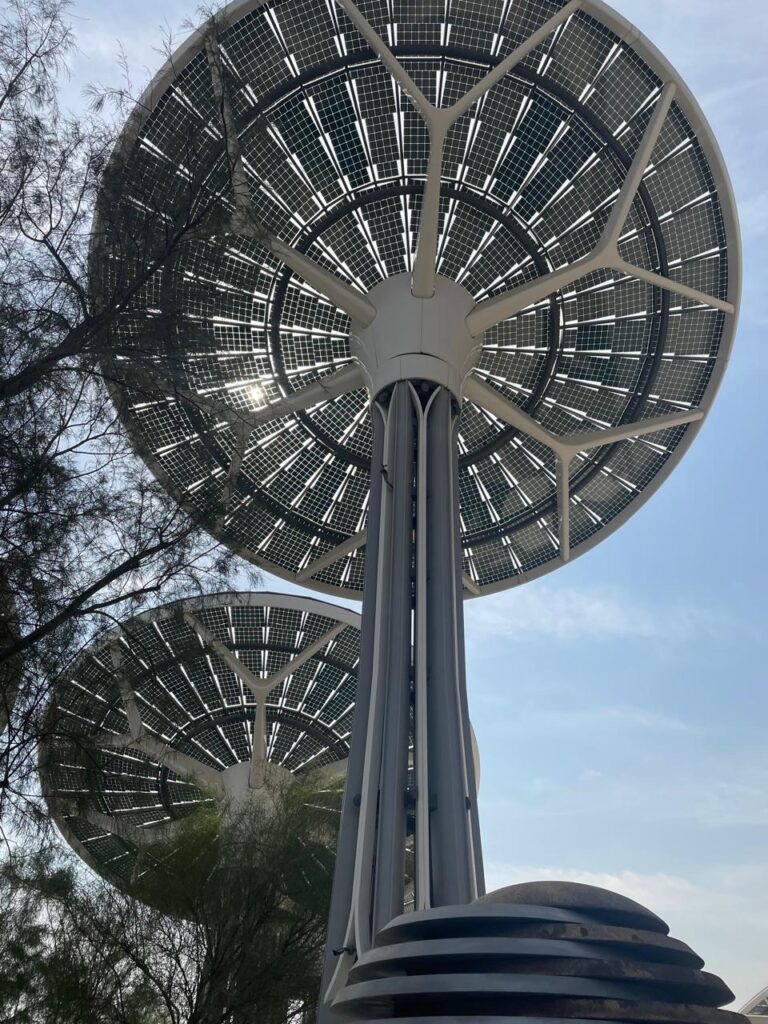
Running November 12–18, Dhai Dubai expanded its remit beyond nightly illuminations. Workshops, discussions, and public dialogues — many held at the newly launched House of Arts — transformed Expo City into a cultural commons. Artists, designers, scholars, and visitors drifted between installations and conversations, creating a temporary community built on shared radiance. As one curator put it, “You arrive for the images. You stay for the ideas.”
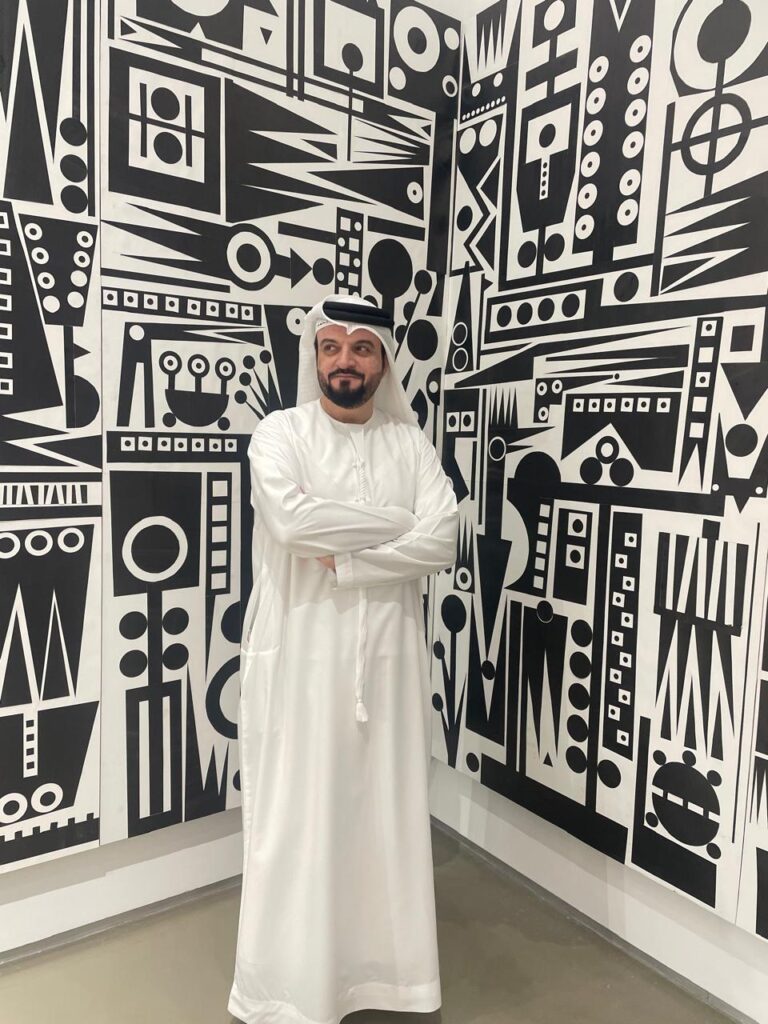
What gives the festival its sharpest edge is its Emirati-only artist roster, a rare stance in the region’s globalised art landscape. Curators Amna Abulhoul and Anthony Bastic AM commissioned works across generations, creating a cross-sectional portrait of a culture thinking in light. “Dhai Dubai is the spirit of Dubai made visible,” Abulhoul said. “Where past and future intertwine.” Bastic described the edition as “inclusive, panoramic and resonant,” a cultural mapping exercise rendered in luminosity.
Building a community of radiance
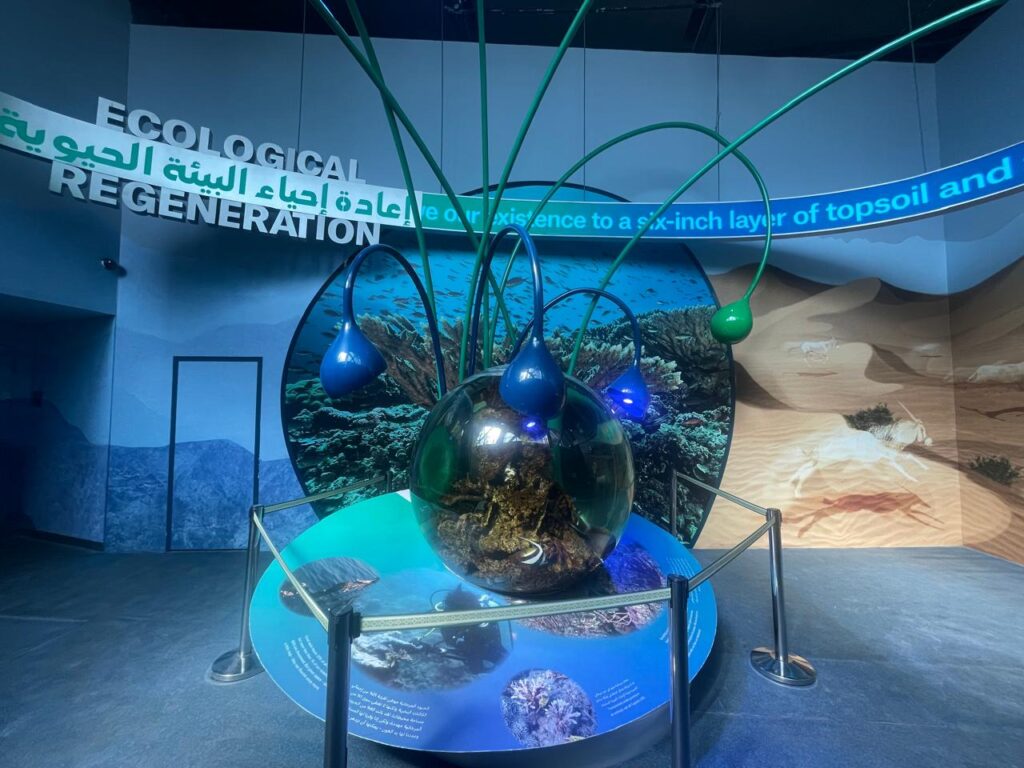
Rather than spotlighting individual works, the collective atmosphere is what defines Dhai. The installations together form a circular choreography, at times meditative, at times boldly contemporary, often unexpectedly tender.
Traditional geometries quietly surface through modern projection. Domestic textures appear enlarged and abstracted, becoming architectural. Movement, sound, and memory loop through the dome in slow, steady pulses. There is a distinct refusal to rush, a counterpoint to Dubai’s velocity.
Across the week, the festival’s purpose became increasingly clear: this is not a spectacle-driven event but a cultural articulation. Dhai positions Dubai not simply as a host to global light art, but as a generator of its own visual language — one rooted in place, lineage, and lived rhythm. It asserts that light can be a vessel of identity, a trigger for collective memory, and a medium capable of conveying cultural nuance as effectively as paint or clay.
Dubai Culture’s Shaima Rashed Al Suwaidi captured it succinctly: “Dhai is an important moment on our annual calendar. It invites visitors to discover the creatives shaping our public spaces and experience how the city’s diversity is brought to life.”
In the international ecosystem of light festivals — where theatrics often dominate — Dhai Dubai offers a quieter, more culturally grounded glow. It insists that illumination can do more than decorate the night. It can remember. It can connect. It can reveal what cities often forget to show. And for one luminous week in November, beneath Al Wasl’s monumental dome, it does exactly that.