
Across Bharatanatyam, Kuchipudi and Mohiniyattam, dancers engaged deeply with margam, raga and rasa.
In the last five years, the Kochi Municipal Corporation, headed for tectonic shifts in its political, social, economic, environmental and cultural milieus under the stewardship of the Mayor, M. Anil Kumar. Of the several progressive ventures he embarked upon, the national dance-festival titled Bhav inaugurated in 2023, was an earnest endeavour to uphold the legacy of the highly evolved Indian dance-heritage.
The third chapter of Bhav took place at the recently renovated Town Hall, Ernakulam, lasting for five days. Even amidst the bustling activities associated with the populist arts and culture in the city, discerning spectators did attend the dance recitals of highly talented dancers on all the days. As a prelude to the Bhav festival, Paulson K.J. played Sitar for an hour accompanied on the Tabla by Ratnasree Iyer. The talented duo enchanted the audience fluently navigating the terrains of a few solid compositions in Hindustani Music.
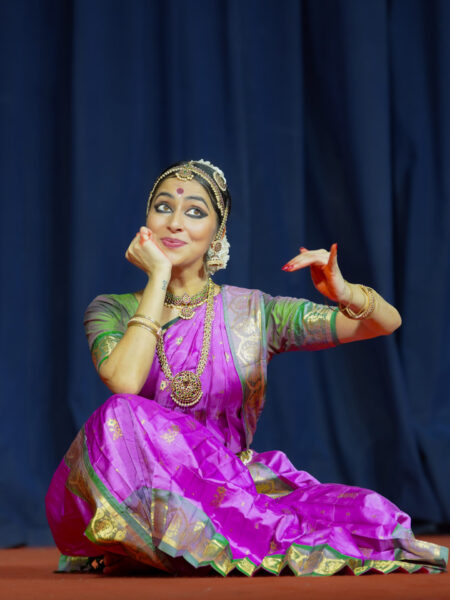
The brief musical feast created an excellent backdrop for staging the Bharatanatyam of Sathvika Shankar, a gifted young dancer who hadn’t been to Kochi before. Sathvika, rigorously groomed under the renowned Guru, Anitha Guha, started her recital stylishly unfolding the image of the indomitable Lord Srirama through the illustrious composition, Raghuvamsasudha of Patnam Subramanya Iyer, in raga, Kadhanakuthuhalam set to Adi tala. She then moved on to the Swarajathi of Shyama Sastri, Raave himagiri, in raga, Thodi set to Aadi tala. Right from the thrikalajathi, Satwika established her technical virtuosity – adavus in sync with the jathis and the charanaswaras – with deep devotion and involvement.
The composition is in praise of goddess, Parvathi/Kamakshi, the daughter of Himavan, by an ardent devotee. Bhakti is its enduring mood although the vinyasa zeroing in on to the fierce confrontation between the goddess and Mahishasura offers scope to the dancer for articulating the Veerarasa. Some of the images in the lyrics are poetic, yet untranslatable into visual phrases. Hence, the emotive component of the Swarajathi was a wee bit lackluster.
The next item was a well-executed Javali composed by Vijayaraghavan in raga, Begada and Aadi tala. Sathvika concluded her recital with a Thillana, a composition of the ace violinist, Eswar Ramakrishnan, in raga, Marubehag set to Matya tala. This was indeed a distinctive treat. The background artists including the one who wielded Nattuvankam invigorated each and every item significantly.
Exploring form and feeling
On the second day of Bhav, there were a series of dance-concerts that began in the afternoon. A group of talented students trained under the Guru, Kalamandalam Mohanathulasi, performed several items from the traditional Kuchipudi-repertoire. The young, vivacious dancers stuck to Margam and thereby kept intact the intrinsic grace and vitality of Kuchipudi.
Next on stage was Rupika Julian, a distinguished alumni of Kalakshetra, Chennai. She was back on stage after a decade long interlude. Rupika started with elucidating a Virutham from Kuchelopakhyana, a Swathi Thirunal composition in praise of Lord Padmanabha. She then stepped into the all too familiar Padavarnam of the same composer, Sumasayaka, in raga, Karnataka Kappi and Adi tala.
Through the piece deftly choreographed by the veteran dancer-teacher, K.P.Rakesh, the dancer made an earnest endeavour to combine the grammatical grace of the Kalakshetra bani with the rathibhavas of the virahotkhanditha Nayika (pangs of separation of the heroine). The next one was a Javali, Saramaina Maatalentha, once again a composition of Swathy Thirunal in raga, Behag set to Rupaka tala. Rupika drove home, through emotive acting, the shift in the mood of the Nayika from insolence to yearning. With moon as symbol of isolation, the dual faces of the Nayika as Khanditha and Vipralabdha were effectively portrayed. She concluded her recital with a moving depiction of the Devarnama, Baro Krishnayya composed by Kanakadasa.
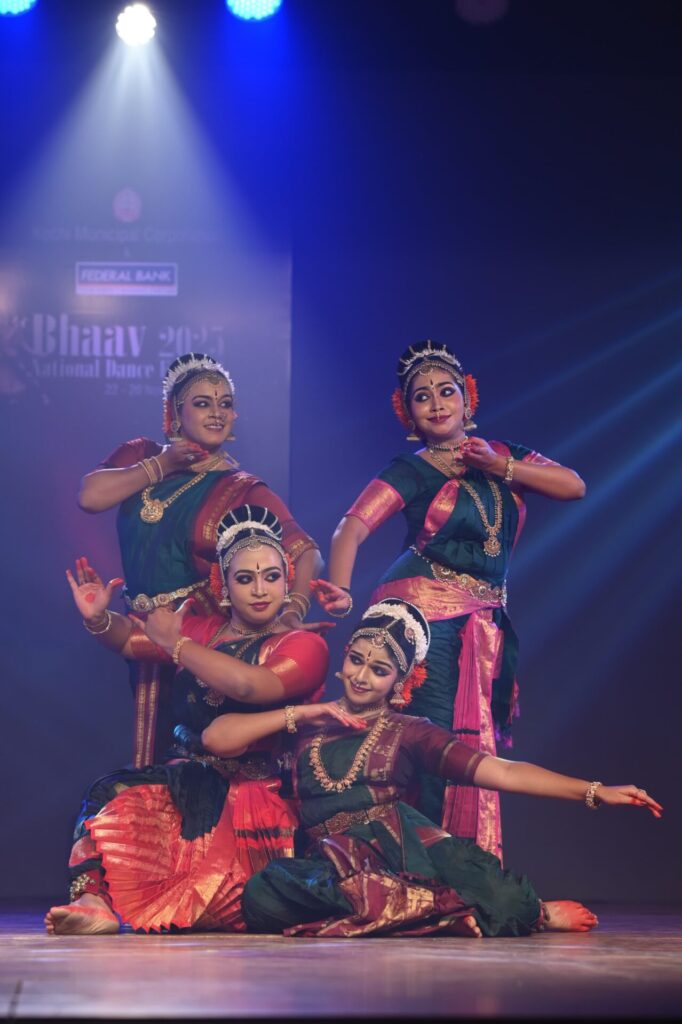
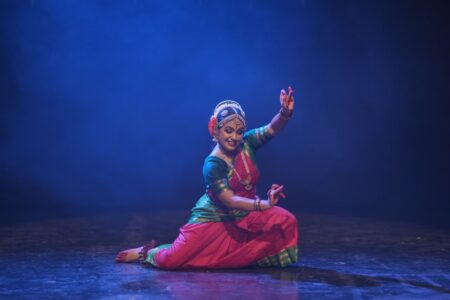
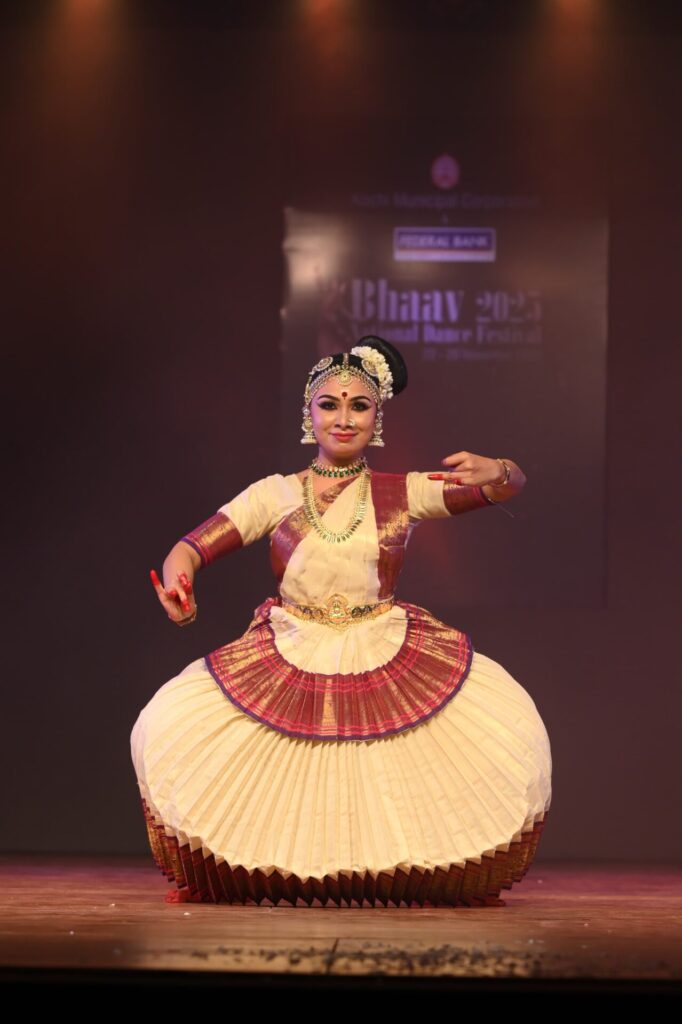
The next was the Mohiniyattam recital of Jamsheena Jamal, a rising young star in the field. The dancer trained at the R.L.V. College of Music and Fine Arts and now under the mentorship of Kalamandalam Kshemavathy adhered to the Margam in Mohiniyattam. She began with a traditional Cholkettu in ragamalika followed by a fairly new Varnam titled Manjulal, in raga, Saramathi and set to Adi tala. The theme centers round the legend linked to Lord Krishna’s deep empathy towards his devotee, Manjula.
She had regularly offered a garland to the Lord. But one day, she arrived late and couldn’t offer it to the Lord Guruvayoorappa. Poet and devotee, Poonathanam, took notice of it and advised her to place it on a stone beneath a peepal tree. She did and the next day morning it was seen on the idol of the Lord in the sanctum-sanctorum. Jamsheena’s presentation of the Varnam was well codified and aesthetically nuanced. In the subsequent item, Chaliye kunjanumo too she was in her elements.
The last one was also a popular composition, pibare rama rasam of Sadasiva Brahmendra in which Jamsheena explicated the glory of Lord Rama highlighting the beauty of each and every line. The orchestra provided full support to the angika and the satwikaabhinaya of the dancer.
Contrasting styles, common stage
Deepa Kartha is a versatile dancer having sound practical training in the Kalakshetra Bani of Bharatanatyam and in Kathak. As the disciple of renowned dancer and teacher, Parvathi Dutta, Deepa was the first dancer to introduce and familiarise Kathak to the urban audience of Kochi. She is an accomplished teacher as well. Deepa Kartha’s Kathak concert empowered by her team of vocalist and instrumentalists carried a distinctive tone and ambience. She did full justice to the organic framework of the traditional Kathak.
The final program of the evening was a Bharatanatyam recital of the duo, Aswathi and Srikanth. Both the dancers straightaway zeroed in on to the Lalgudi-Padavarnam, Devar Munivar thozhum paadan composed in raga, Shanmukhapriya set to Adi tala. The Perumal of Venkatagiri, is the protagonist in this Varnam whom the devotee eulogizes without any qualms. The piece offers enough space for the dancers to elucidate the incarnations of Lord Vishnu. In the vinyasa-segment, Aswathy and Srikanth compellingly portrayed the Vamanaavathara of the Lord. The Nritta and Nritya portions were spick and span.
Following the Varnam, Srikanth did a solo performance of the piece, Manayolagaado, a composition of Purandaradasa and Aswathy presented Enthapeda Vaade, a Padam of Sarangapani. The concluding item was the acclaimed Thillana in raga Purvi set to Rukapka Tala. The accompanists considerably contributed to the movement-dynamics and emotive acting of the duo.
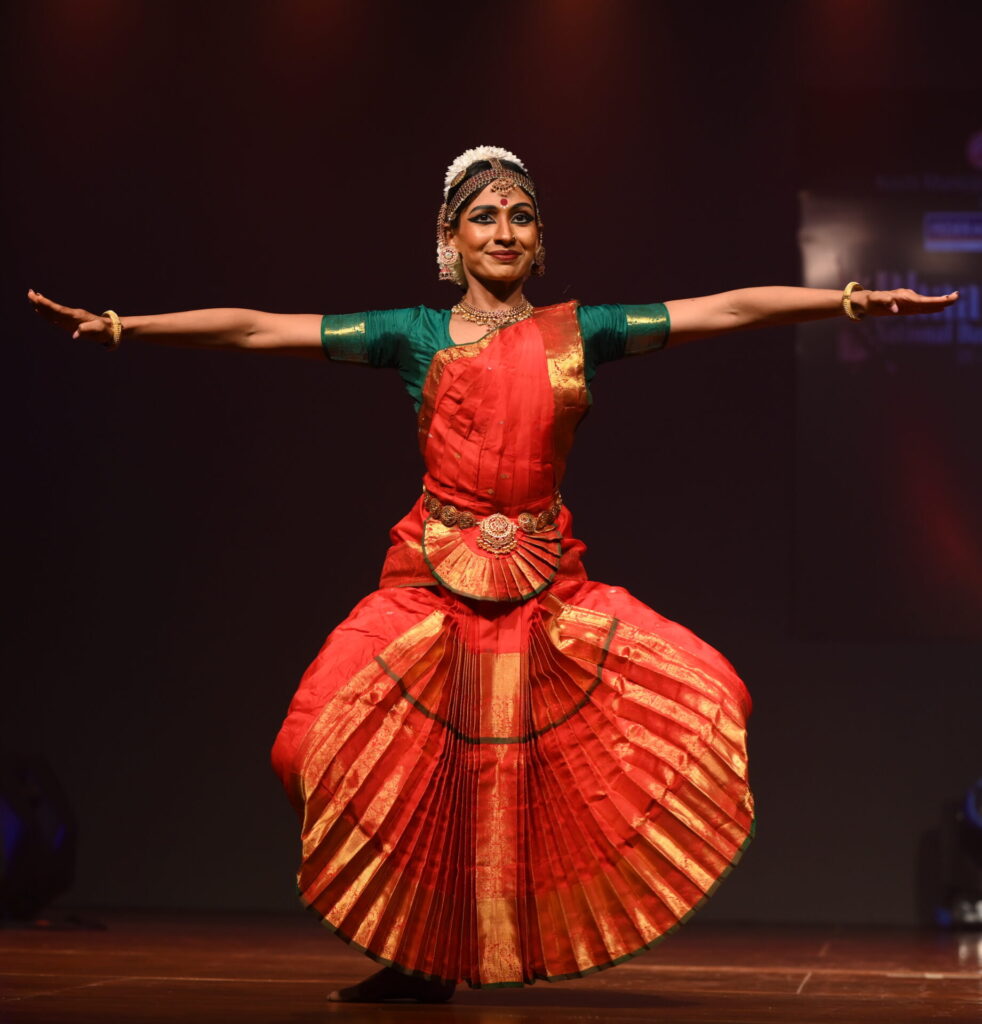
On the third day of evening, Medha Hari, one of the best-known disciples of Anitha Guha and Priyadarsini Govind, stormed the stage with her Bharatanatyam recital. She began with the visual interpretation of Jambupathe, the eminent composition of Deekshitar in raga, Yaman Kalyan set to tala, thisra ekam. Here, Lord Siva is conceived as one taking the forms of water-bodies such as the ocean and the rivers.
As one holding Ganga and the crescent on his head and as one whom Lord Brahma and other gods worship, the devotee pleads for his mercy. Medha’s presentation of the piece was pithy and evocative. She then moved on to the piece de resistance of her recital, the eminently popular Lalgudi-Varnam, Innum en manam in raga, Charukesi set to Adi tala. Both in the textual and in the non-textual dance, she revealed her virtuosity.
The Nattuvankam, vocal and instrumental music played a crucial role not only in solidifying the adavus she executed but in vitalizing the image of the Nayika and her beloved Krishna resembling muzhumathiye kanda katalala polavum. “Hey ramba”, “eshopi halahalam” and the Thillana in raga Purvi that followed bore the stamp of her Guru, Priyadarsini, both in tone and treatment.
As the final notes faded
On the penultimate day, Abhinaya Nagajothi, a gifted young dancer, based in Delhi, presented a Kuchipudi recital retaining the crux of the traditional Margam. Trained under her mother, Seetha Nagajothi, Abhinaya commenced her concert with Vani ki Vandanam, a Telugu lyric, in ragamalika set to Adi tala, exalting the glory of the goddess, Saraswathy. The last line of the lyric bore the mudra of her mother’s Guru, the late legend, Vembatti Chinnasatyam. Abhinaya’s subsequent presentation was Shivashtakam, one of the evergreen choreographies of Guru Vembatti. In this Adisankaracharya-composition in raga, Mohanam set to the tala, Khanda chappu, the dancer convincingly depicted the multi-faceted Lord Kailasanadha whom the devotees turn to for redemption.
After this, Abhinaya moved on to Emani Pogadudu, an Annamacharya composition choreographed by Seetha Nagajothi. Here, Abhinaya effectually portrayed the invincibility of Lord Vishnu who as Krishna cut off Banasura’s numerous hands and as Vamana put down the immeasurable pride of Mahabali by gauging the three worlds and sending him to the netherworld. An excerpt from the time-tested Bhamakalapam of Sidhendra Yogi followed. The piece involved Satyabhama, her confidant, Madhavi and the hero, Lord Krishna.
The finale of the recital was Tharangam from the Krishnaleelatharangini of Yati Narayana Theertha, in ragamalika and Adi tala. Abhinaya delineated the pranks of child Krishna vis a vis the varied reflections of his mother, Yashoda. The last segment of it, dancing on the brass-plate was palatable. Apart from her mother on the Nattuvankam, the accompanying musicians enlivened Abhinaya’s recital noticeably.
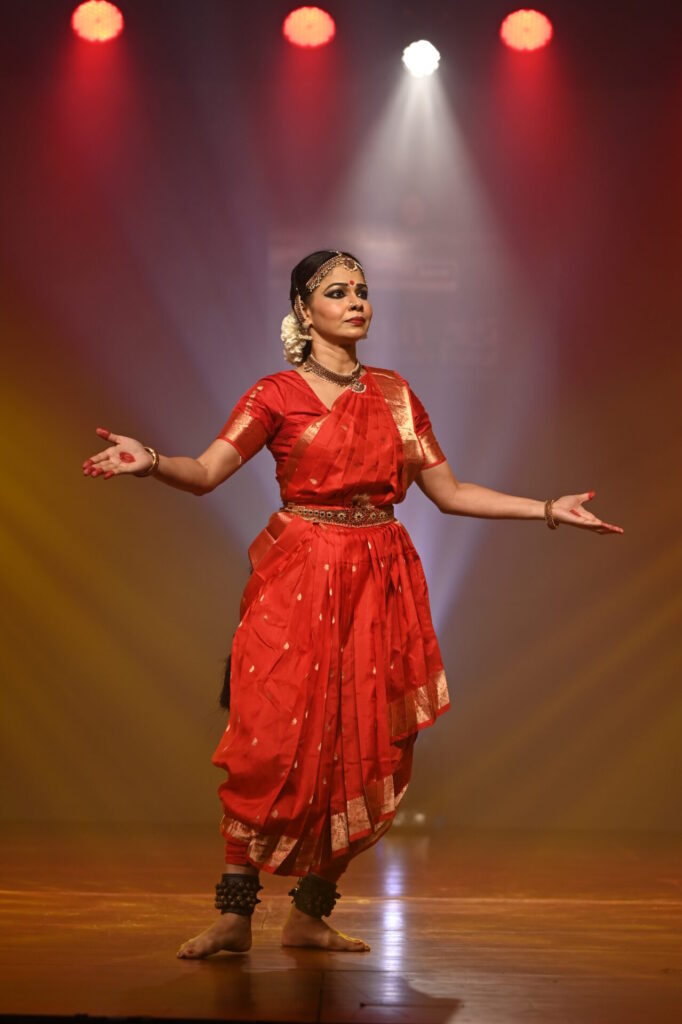
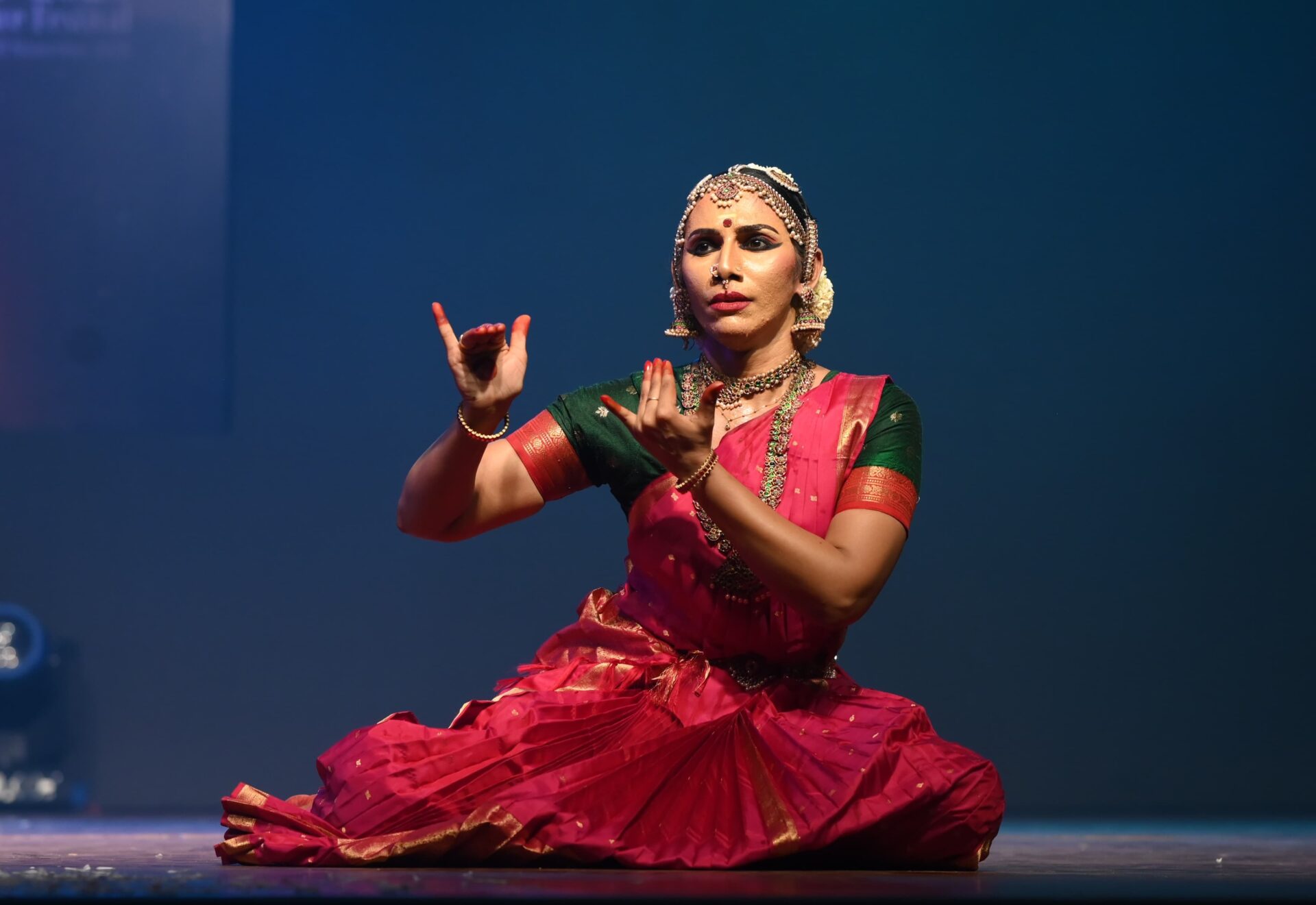
Navia Natarajan’s Bharatanatyam proved to be a fitting finale to the five-day national dance festival. Navia, a synthesis of nature and nurture, started with the exposition of select verses from Adi Sankaracharya’s Saundaralahari. Through Aho purushika, the dancer employed both the angika and the satwikabhinayas to sculpt the exquisite form of the Mother Goddess in her splendor.
An ardent devotee’s vision of the Kanchi Kamakshi in her physical stature came to the fore thanks to the dancer’s immaculate articulation. The Varnam, Navia chose for the day, was Kamakshi nine Kori yunnadira of Kunrakkudi Krishna Iyer in raga, Kamboji, set to tala, Mishra Jampe. Prasanna Kumar composed its rhythm and the Jathi. This was again centered on Goddess Parvathi whose blessings her devotee yearns for. Navia’s prowess for emotive acting and her command over the Nritta were evident all throughout. Her adavus bore an extraordinary tenor and texture.
Navia then presented Draupadi adopting verses from Subramanya Bharati’s poetic work, Panchalisapatham and a couple of Tamil verses penned by Prof. Raghuram. The piece had its desired effect. The Thillana was a Swathy Thirunal composition in raga, Bhoopalam set to Adi tala. The full fledged orchestra including the Nattuvankam handled by accomplished artists and exquisite lighting heightened Navia’s postures, movements and expressions.