
Remembering Guru Gopalakrishnan, the Kodungallur-born dancer, choreographer, actor and guru who carried Kerala’s dance traditions from the stage to Indian cinema and the international arena.
No place in Kerala can claim a hoary heritage like Kodungallur. Historically, socially, religiously and above all culturally, especially in the performing arts, the contributions of this place have been immortal. Needless to mention Ilango Adikal, who composed the Tamil epic Chilappathikaram at the nearby place Mathilakam, Kulasekhara, who recreated Koodiyattam in the present format, the Palace that was a veritable university, etc. are monuments that can never fade from history.
Perhaps it was destiny that the place had to give birth to a supremo artiste like Guru Gopalakrishnan 100 years ago. Today, September 5 is the fourteenth death anniversary.
A dancer of international repute, he strode like a colossus in the filmdom for more than seven decades, making immortal contributions in varied capacities as an ace performer, actor, choreographer and above all a much venerated guru. There was hardly any actor/dancer celebrity who had not either performed under his direction or co-acted with him.
A child captivated by Kathakali
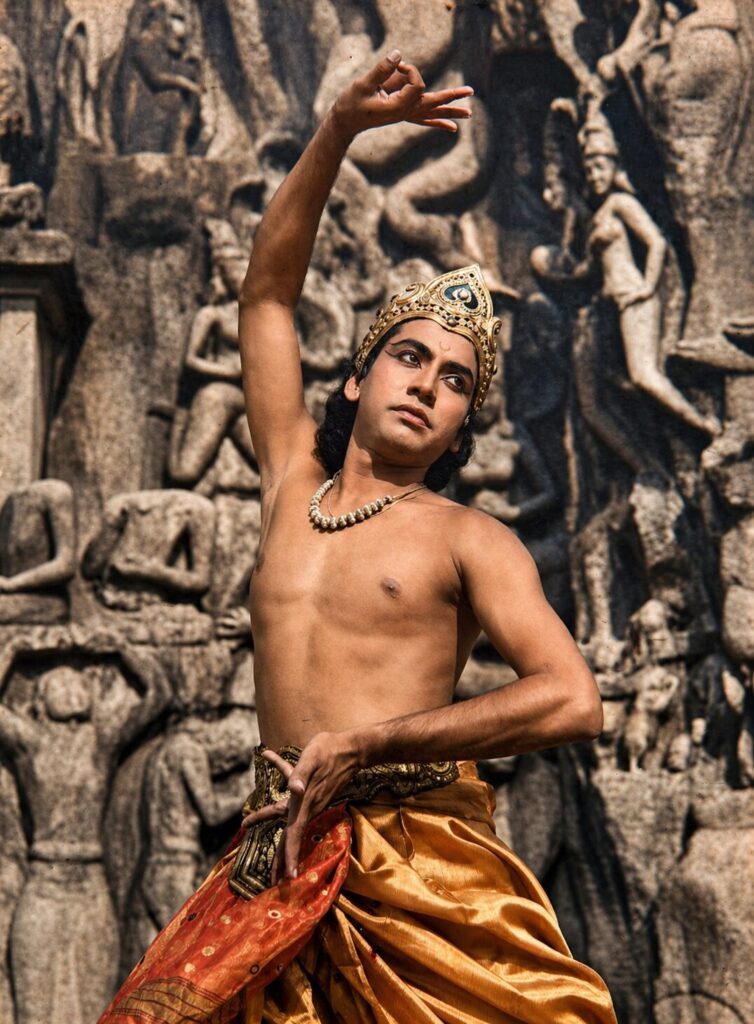
Thumbing through his life history, one can see how dance was an insatiable passion for him even as a child of three. He used to watch the Kathakali performances taking place near his home and mimicked the same in front of his mother. At school, he had a good company of friends who had encouraged his talents. Among them was P Bhaskaran, the acclaimed lyricist and film director. When Gopalakrishnan presented that famous dance “shock, shock’ in the film ‘Balan’ in the girl’s attire, it was Bhaskaran who had kept rhythm thumping on the desk!
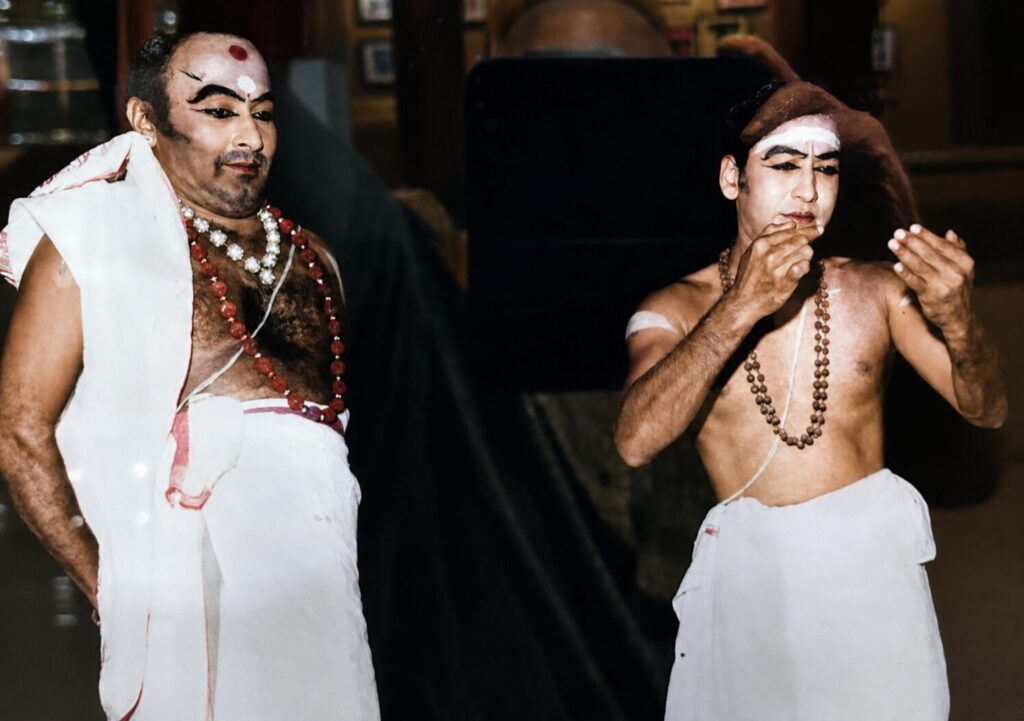
An advertisement in the newspaper by Natana Nikethan of Guru Gopinath inviting dancers for his institution in Chennai was a god-sent opportunity for Gopalakrishnan. Within days, he reached Chennai and was selected. No wonder his joy knew no bounds. It was his inimitable artistry that compelled his Guru to assign him the role of the ‘deer’ in the dance drama ‘Sitapaharanam’ for which his co-dancer was Thankamani, Guru’s wife, as Sita.
That too, on the third day of his joining the institute. Even as he was undergoing rigorous disciplining in the institution for ten years, he was also listed in the A category of ‘Dance artistes and bit players’ in the Gemini Studios. That marked his entry into the filmdom.
The dancer behind Chandralekha’s iconic spectacle
Soon he became the most sought-after dancer in the studios, and he never had to look back. Myriad were the films for which he either performed or choreographed in Malayalam, Tamil, Kannada, Hindi and Sinhala. The Tamil classic ‘Chandralekha’ directed by S S Vasan needs special mention, as the epoch-making ‘Drum Dance’ in the film was a mammoth production that took six months for rehearsals alone.
Almost all the dance celebrities of those days had performed with him. Lalita-Padmini sisters, Anjali Devi, Waheeda Rahman, Krishnakumari, Abhaya (who was later Musician Balamuralikrishna’s wife), Santhilekha (Sri Lankan), Vempatti Chinna Sathyam, the veteran N T Rama Rao and of course, his own guru and mentor, Guru Gopinath. His stature as a dancer could be understood from the fact that film maestro M G Ramachandran was the compeer for some of the programmes presented by his own company ‘Bharathi Ballet’ in Chennai those days.
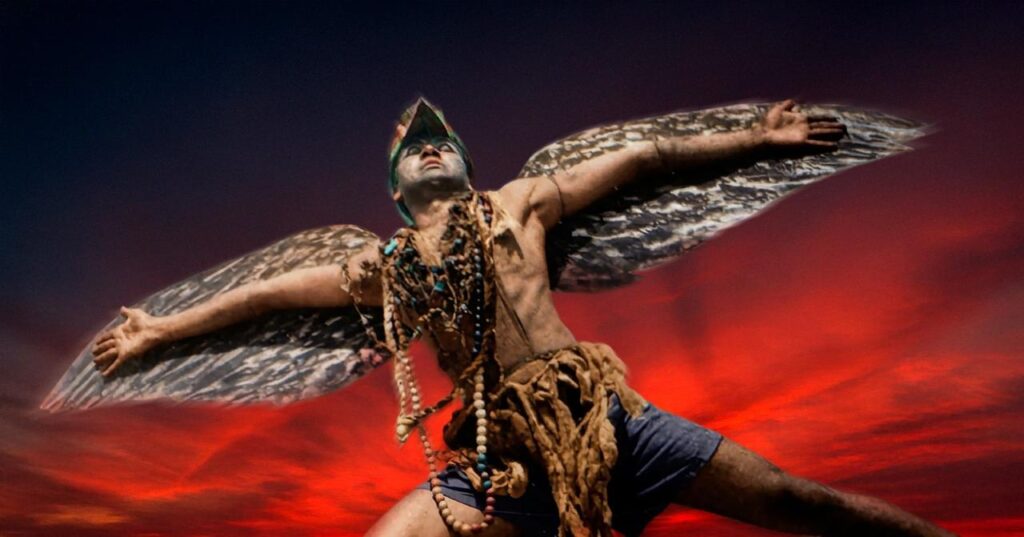
International accolades followed him through his choreographies ‘The Spirit of Africa’ based on the life of Patrice Lumumba of Congo and ‘Swan Lake’ produced on the same lines as the Russian ballet directed by Tchaikovsky. It was his team that performed during the inauguration of the Lotus Temple in Delhi. Gopalakrishnan gets credit for choreographing the first group dance in a Malayalam film, ‘Neelakkuyil’. His tally of 31 films and 16 dance-dramas is really incredible. Very active on stage, he also acted in six plays.
It was the practice of Kerala Natanam, his Guru’s own creation based on Kathakali, that enlightened him to the potentialities of this classical theatre form. And soon he joined the PSV Natyasangham, Kottakkal, to be trained in Kathakali under the doyen Vazhenkada Kunchu Nair. The success of most of his choreographies was attributed to the training in Kathakali.
It was the government of Tamil Nadu that recommended him to the first Indian Cultural delegation to China where he staged performances along with Ustad Vilayat Khan and Hirabhai Barodekar in front of Chairman Mao Zedong and Premier Chou En Lai. He had also performed in Teen Murthy Bhavan for Jawaharlal Nehru along with his guru.
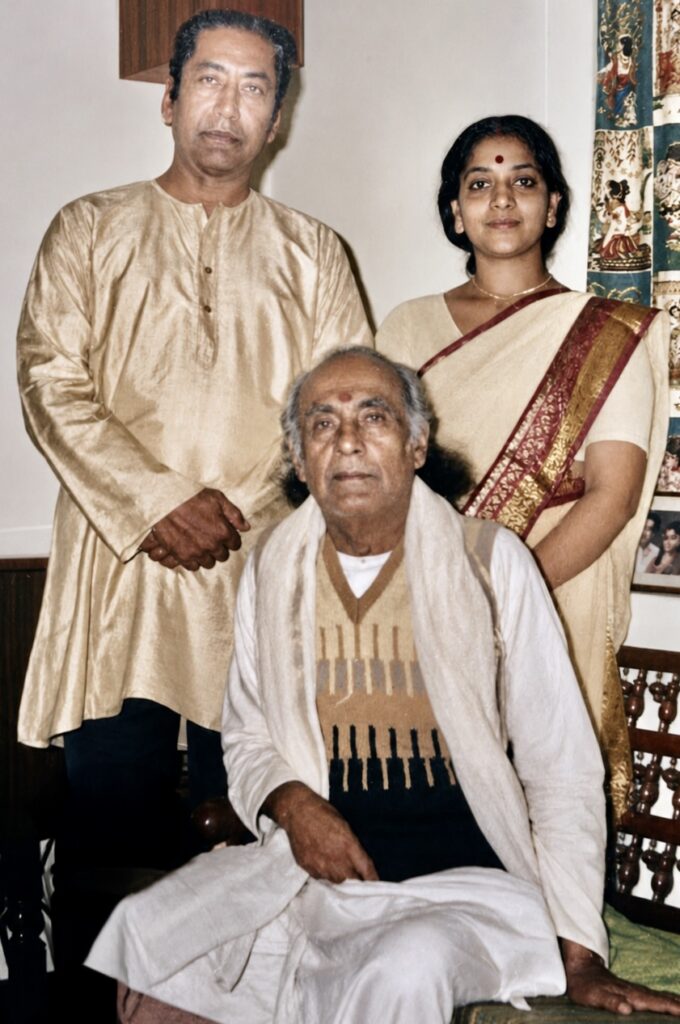
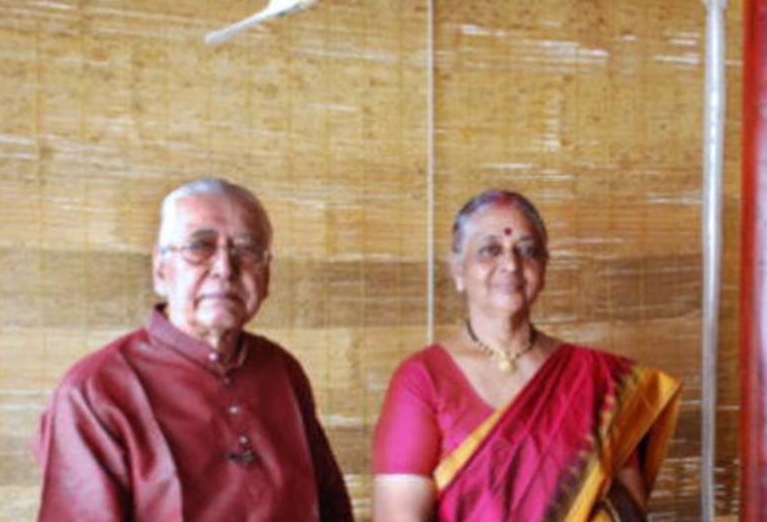
The popular saying about marriage goes, “Joined in Heaven”. But for Gopalakrishnan, it was “Joined in Dance”. For his partner, Kusumam was a dancer trained in Kerala Kalamandalam. This was an additional motivation.
Twenty-two years they spent as teachers in the New Era International School at Panchagani, Pune, were the most memorable, he used to say. The school had students from 30 countries, and the couple not only took pains in teaching them Indian dance but also in inculcating in them the essential traits of Indian culture. Incidentally, Kusumam’s book on Kerala Natanam is perhaps the only authentic documentation of this dance form. She is highly critical of the way competitions in this dance form are held in Youth Festivals of Kerala.
Gopalakrishnan and Kusumam are blessed with two children – Vinod Gopalakrishnan, a globe-trotting dance historian and Apsara Gopalakrishnan, a dancer of repute who runs a dance institution in Kuala Lumpur.
Kerala Sangeetha Nataka Akademi honoured the couple with its award. Gopalakrishnan was also awarded the Kerala government’s Nruthya Natya Puraskaram.