
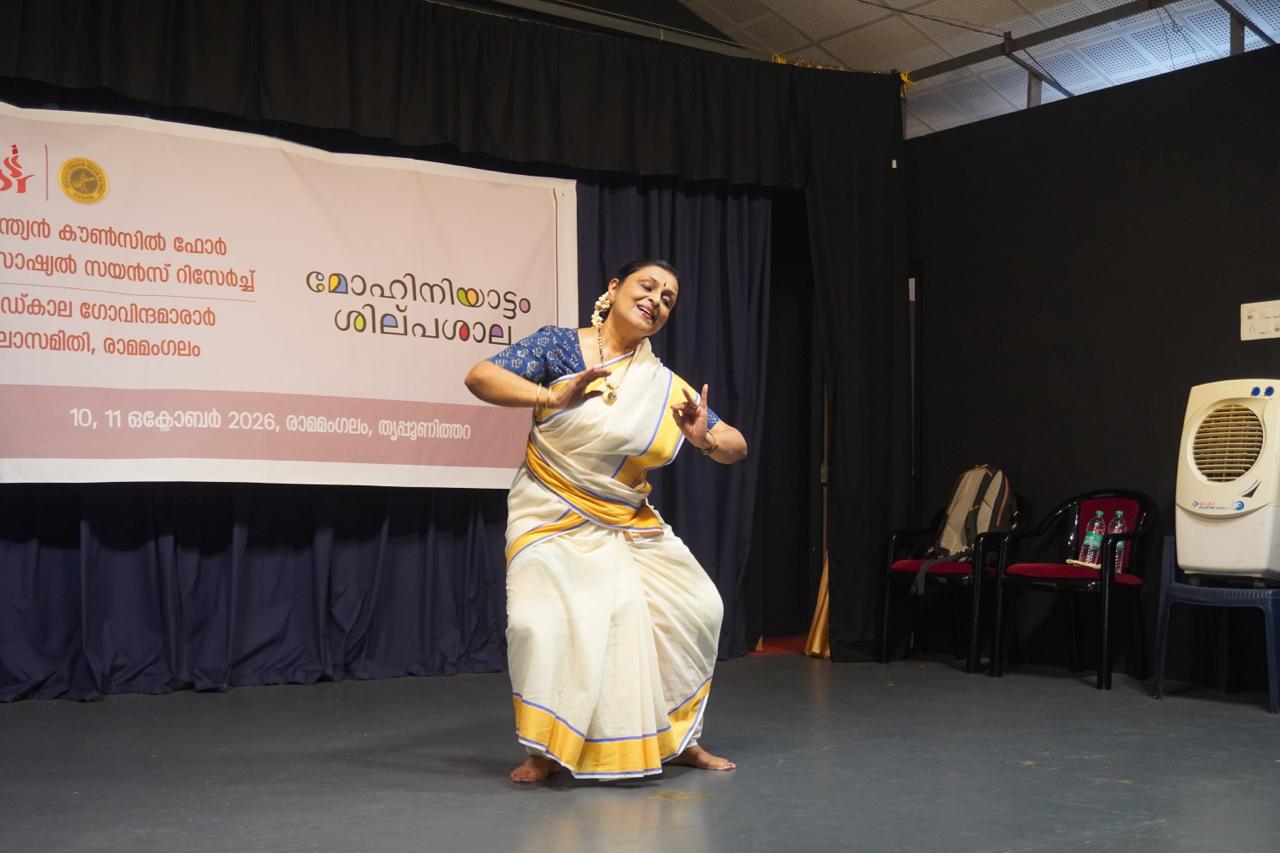
A Mohiniyattam workshop explored the dance form’s history, Kalyanikutty Amma’s legacy and Deepthi Omchery Bhalla’s rare Nritya Prabandham.
A two-day workshop on Mohiniyattam, held at Shatkala Govinda Marar Smaraka Kala Samithy in Ramamangalam, explored the historical evolution of the dance form and introduced participants to rare choreographies.
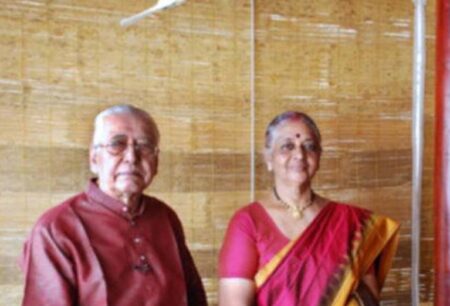
Guru Kala Vijayan, daughter of Guru Kalamandalam Kalyanikutty Amma, explained the contributions of her mother in the formative period of Mohiniyattam. Kalyanikutty Amma was the first researcher, and she travelled the length and breadth of Kerala in search of the roots and finally evolved a school which is still known as ‘Kalyanikutty Amma sailee’. A highly talented maestro, she could logically and philosophically explain every aspect of her style.
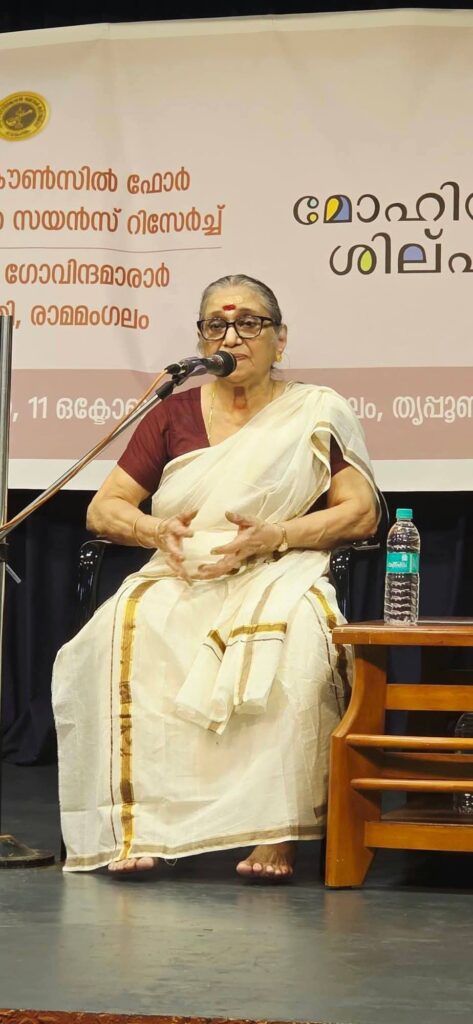
No wonder, all the researchers both from within and without Kerala, had anchored their studies on Kalyanikutty Amma’s style. Vijayan described her mother as the taproot of the Mohiniyattam tradition. “The tree has many branches and bears many fruits, but all have the same taste,” she said. Drawing on a difficult experience at an institution that offered Mohiniyattam training, she urged teachers to instil in their students respect for all styles of the dance form.
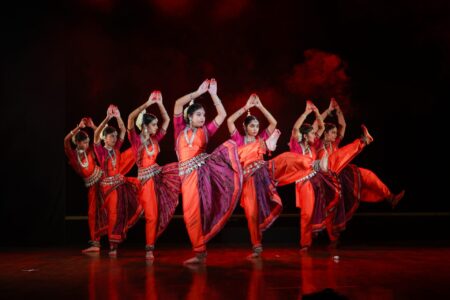
She also invited some of her students to demonstrate key features of the Kalyanikutty Amma style, offering participants a valuable opportunity to understand its distinctive elements.
Another luminary was Prof (Dr) Deepthi Omchery Bhalla, former HoD of Carnatic Music in Delhi University and also an ardent researcher in Mohiniyattam, to which she was initiated by her scholar-mother Dr Leela Omcheri. Need not mention that both mother and daughter were acclaimed authorities on the intrinsic features of Kerala music and dance.
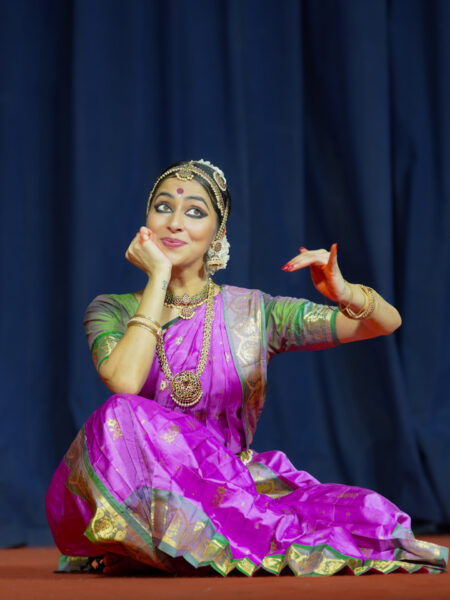
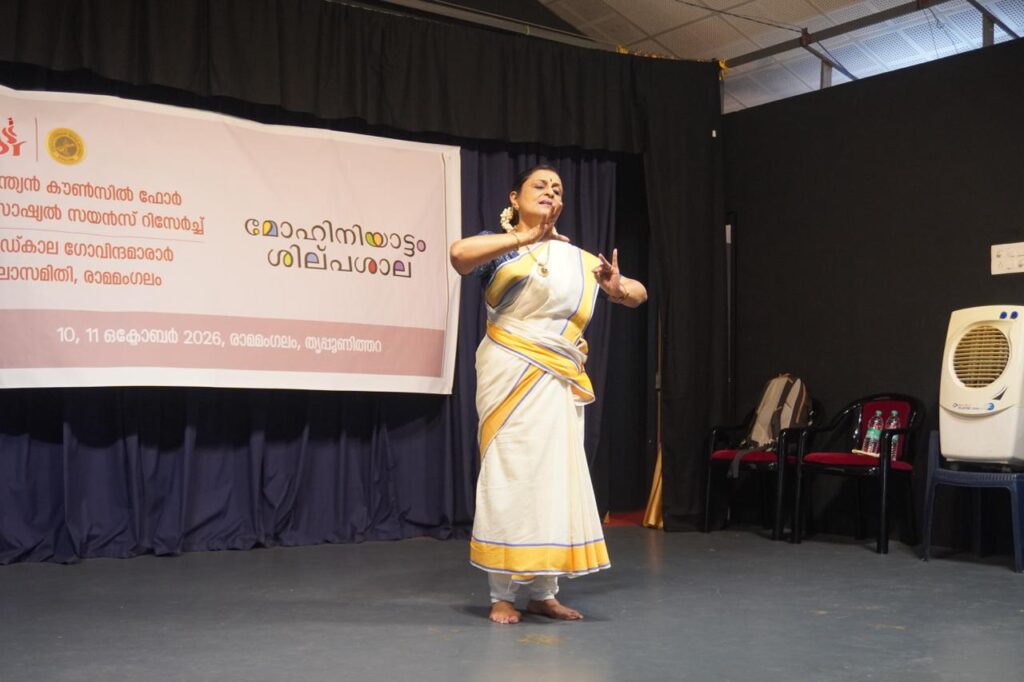
Prof. Deepthi presented one of her rare early choreographies, Nritya Prabandham, and explained its musical and literary foundations.
Understanding the origins of Nritya Prabandham
To begin with, she pointed out that to comprehend Nritya Prabhandham, it is important to understand the term ‘Prabandha’, which is of an ancient origin.
As per some scholars, the Uparupakas, which developed from Rupakas, paved the way for Nritya Prabandhas. Vaacya (speech or text) gradually fell out of use until it was completely replaced by songs. The literary compositions of a particular length pioneered the advent of short compositions and dance-music.
Prabhandha has been well defined and dealt with in detail by Sarangadeva in his book Sangeet Ratnakara. Sarangadeva describes Prabhandhas through sloka ‘ranjakah svara sandarbho gītamityabhidhīyate’. Any melodic structure or expression of svaras, which delighted the mind, was categorised as ‘Gita’.
Gita had two varieties: Gaandharva and Gaana. While Gaandharva was considered to be of divine origin, immutable, to attain the supreme good, Gaana (also known as Desi) was artistic creativity, aesthetically created with the sole purpose of deriving sensual pleasure.
Gaana was classified into Nibaddha and Anibaddha gaana. Prabhandha, came under the Nibaddha gaana. The present-day Carnatic musical forms and Bandish in Hindustani music have been structured into a format like Nibaddha gaana. The Anibaddha gaana termed ‘Alapti’, was an extempore presentation of a raga, unstructured, which may be compared to the current ‘ragaalapana’ and its improvisation through a composition.
Although abhoga is the last section, Prabhandha concludes on dhruva. Therefore, after the abhoga, dhruva is repeated. These features are very clearly met within the Ashtapadis of Jayadeva’s Gitagovinda.
Prabhandhas have been classified into Gita prabhandhas, suited for singing, Vadya Prabhandhas, suited for instrumental playing, and Nritya Prabhandhas.
suited for dancing. The Nritya Prabhandham, Anupama Kalebaran, set to Raga Surutti and Tala Guru Jhampa includes Anga and Dhatu, the two important components of a Prabhandha.
As found adopted in the regional music of Kerala, which is Natya / Bhava sangeeta, the raga exposition through its interweaving with words is more pronounced than the Tala. This may be compared to the Rupakaalapti, wherein the words and Tala are interwoven in such a manner to make the raga delineation more attractive, as met within the Neraval in Carnatic music or Bol banaana in Hindustani music.
Reviving a rare Mohiniyattam choreography
While the Pallavi and Anupallavi of the Nritya Prabhandha, with limited words, use prolonged raga delineation interweaving into the 10 matra-s of Guru Jhampa tala, the Charana, with more words, assumes an enhanced speed with raga limiting itself to just exhibiting the melodic pattern of the sahitya within the specified tala āvartana. The jati-s interspersed with swara-s add to the enhancement of rhythm and dance movements.
The rendering of Guru Jhampa tala, comprising ten matras, also differs from the Jhampa tala adopted in Kathakali. In the former, the structure is described as one Drutam (one sashabda kriya and one nishabda kriya), three Laghu units (two sashabda and one nishabda kriya) and five Laghu units (four sashabda and one nishabda kriya). In Kathakali, the sequence is rendered in the reverse order: five Laghu units, three Laghu units and one Drutam. This distinction may be attributed to differences between the Tekkan Sampradaya (South Kerala tradition) and Vadakkan Sampradaya (North Kerala tradition).
Although the names of the Dhatus (sections) and Angas (verbal components) have evolved over time, the fundamental concept of Prabandha remains unchanged: a composition in which melodically structured words are bound by tala.
Prof. Deepthi subsequently trained the participants in the Nritya Prabandham, composed in Curutti raga and Guru Jhampa tala. Learning this rare choreography offered participants a distinctive experience. The workshop concluded with a presentation of the composition by the students.
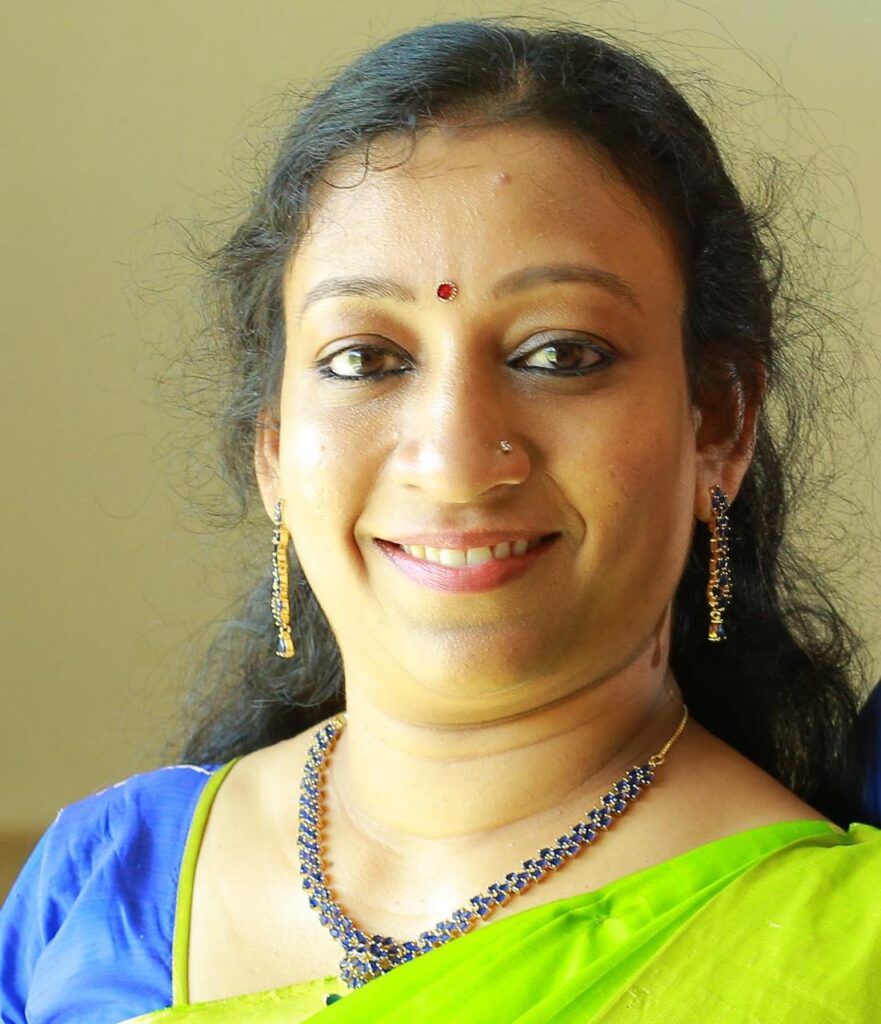
The workshop was organised by Dr N B Lekha as part of her project under the Indian Council of Social Science Research (ICSSR). Noted dancer and choreographer Sithara Balakrishnan
Mohiniyattam workshop, Kalamandalam Kalyanikutty Amma, Guru Kala Vijayan, Deepthi Omchery Bhalla, Nritya Prabandham, Mohiniyattam history, Kerala classical dance, Indian classical dance traditions