
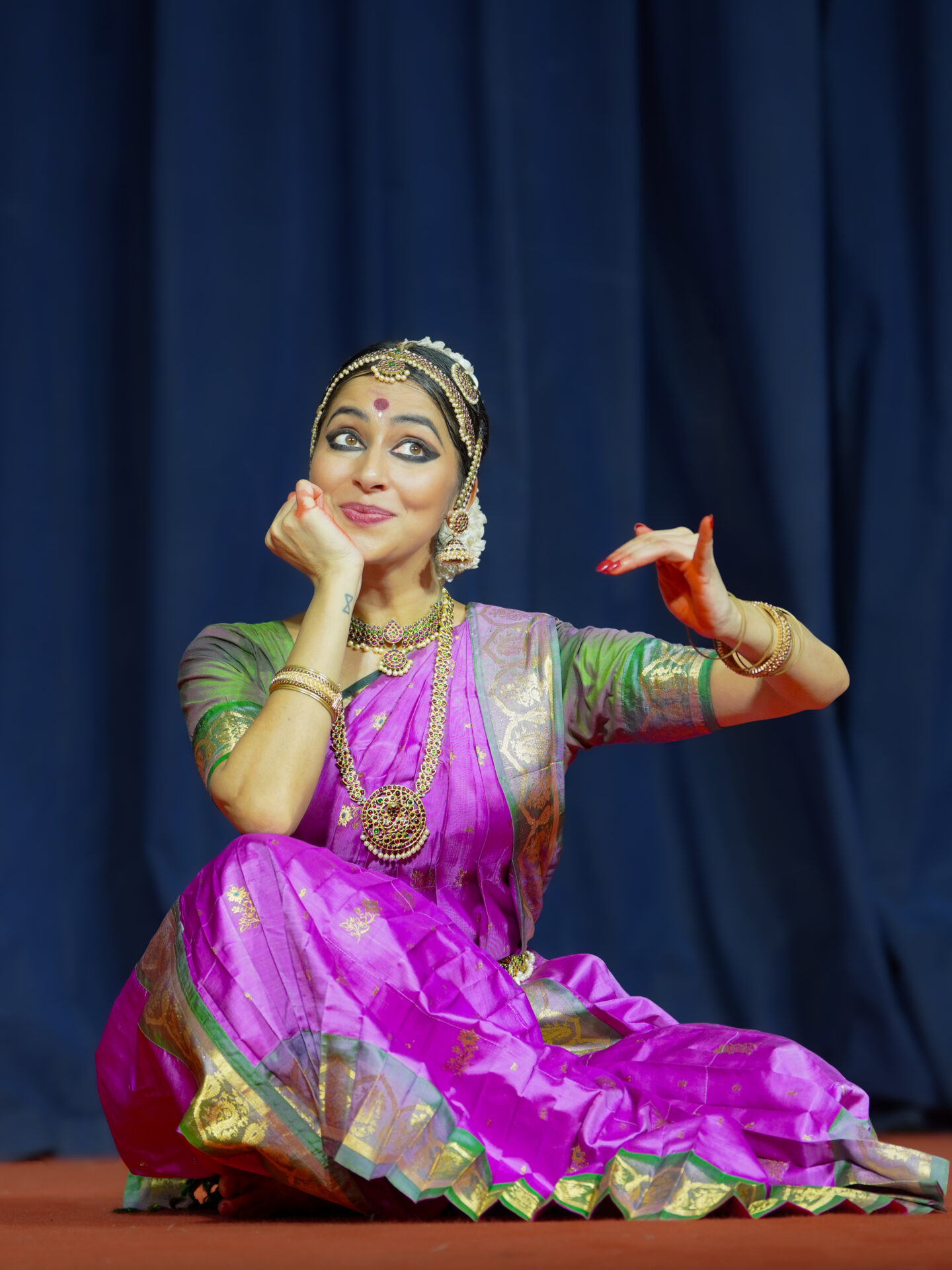
With technical precision and a keen sensitivity to sattvikabhinaya, Pallavi Anand brought depth and emotional nuance to a thoughtfully curated Bharatanatyam repertoire.
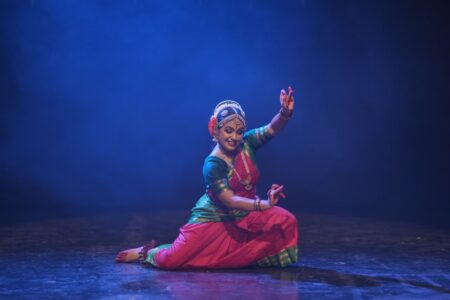
While the younger generation Bharatanatyam dancers, by and large, display a high degree of technical virtuosity on stage, those who are competent enough to identify with the sentiments of the Nayika and to traverse the subtle terrains of satwikabhinya are few and far between. Pallavi Anand who did a recital at the T.D.M. Hall, Erankulam, recently, under the auspices of the cultural organization, BEAME, undoubtedly belongs to this tiny group of dancers.
Pallavi commenced her recital with an Alarippu set to tala, Chathrushrajaathi Dhruva composed and choreographed by her current Guru, Mavin Khoo. The preliminary items of a traditional Bharatanatyam repertoire hold aloft the inexplicable splendor of non-textual dance. Unfortunately, even one of these items is seldom performed on stage these days. Hence, Pallavi’s impeccable execution of the adavus in this Alarippu turned out to be a delectable visual treat.
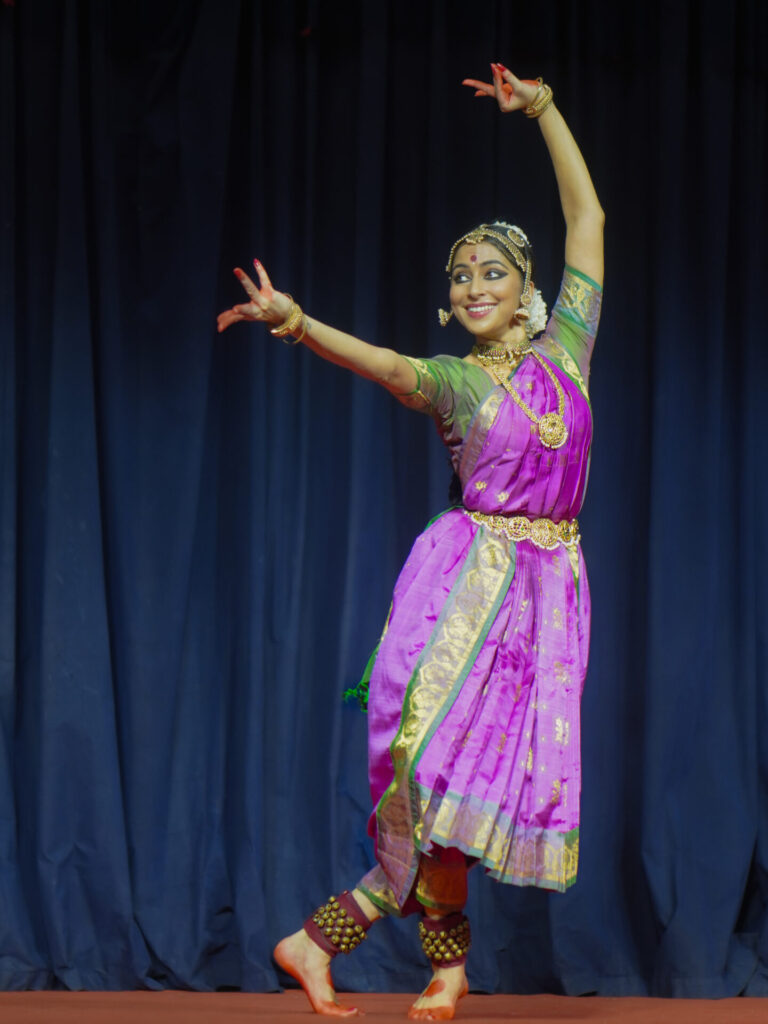
Technical precision, expressive depth
Pallavi moved on to the widely acclaimed Varnam, Mohamana, of the Tanjore Quartet, in raga, Bhairavi set to Roopaka tala. Her thrikalajathi carried a distinct fragrance. In fact, the entire Jathis in the Poorvankam composed by Vijaya Kumar became resplendent as Pallavi meticulously executed each and every adavu.
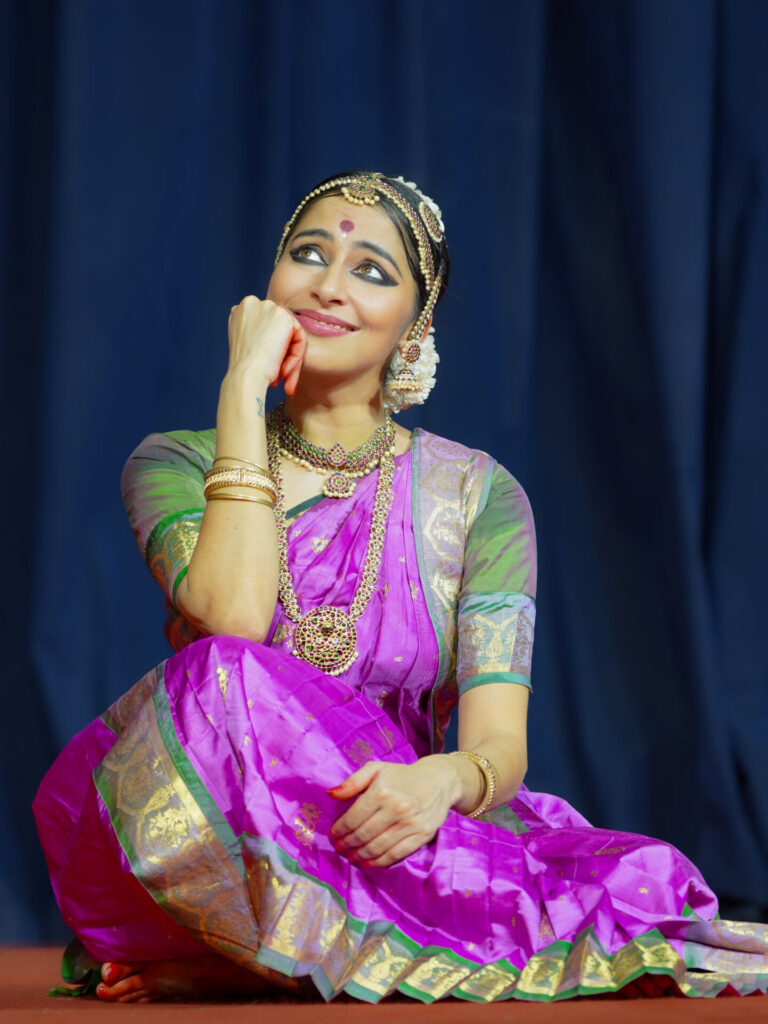
One could notice a natural flow in the behavioral patterns of her hand-gestures, facial expressions and foot-works. It is no mean task for a dancer to portray the Sringara–bhakti of the Nayika especially when the Nayaka is none other than Lord Thyagesha. The Prekshakas were able to perceive the invisible presence of Lord Siva as the Nayika compellingly carved on stage the eye-catching images associated with him. The Vinyasas were brief yet alluring.
The scene in which the rising heart-beats of the Khandithanayika blending into the beats of the Lord’s Damaru was simply remarkable. Arjun Kanth’s magical fingerings on the Mridangam accentuated its visual impact. The Nayika’s depiction of the Lord Kailasanadha opening his third eyes and burning Lord Kamadeva to ashes followed by her offering of the Vibhuti of herself consumed by the flames of passion was a little too dramatic. Pallavi aptly made use of her eye-movements to express multiple emotions. Even the familiar images the dancer wove on stage such as Maran, the flower-arrows, the cuckoos, the breeze and the gentle rays of the moon were not tasteless.
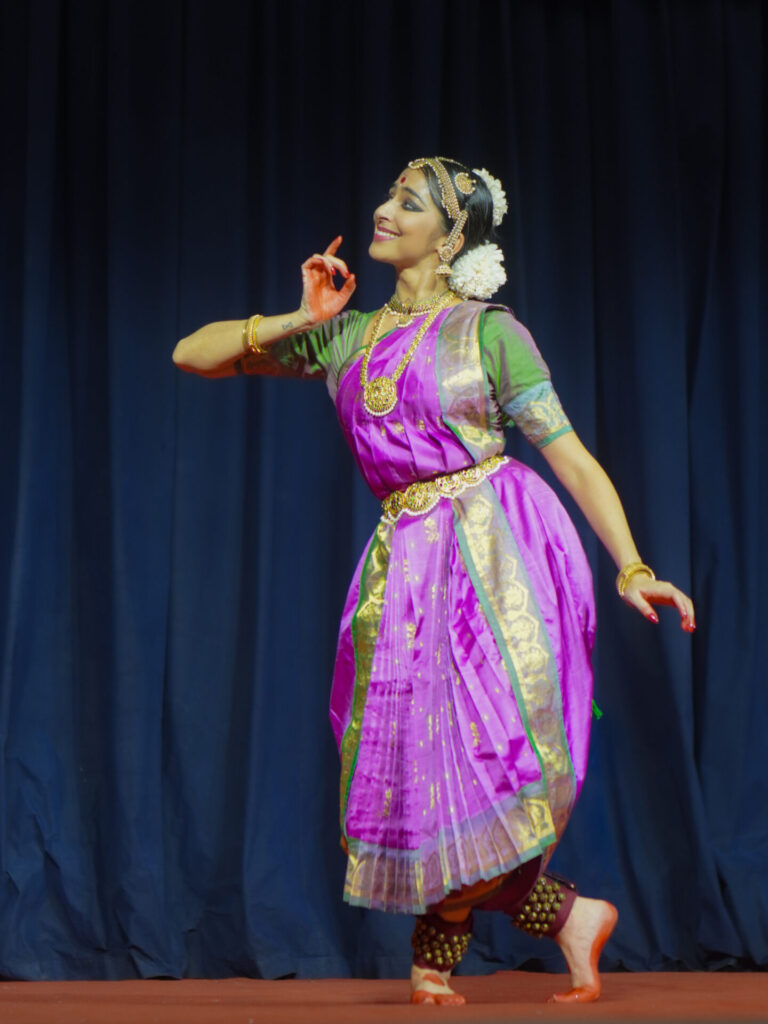
Pallavi’s expressive maturity is rooted in a long and diverse training journey. Having begun Bharatanatyam at the age of five under her mother she later refined her technique and abhinaya at Bharata Kalanjali in Chennai founded by the Dhananjayans .
The next one was something akin to a lullaby. Penned by the dancer herself in English and beautifully translated into Tamil by Jayakumar Sundararajan, the piece began with the singing of the swaras in raga, Anandabhairavi, by Annapoornna Pradeep. As the lines progressed, Anandabhiravi gave way to raga, Shahana. The Nayika here is imagining the pranks of a child born to her. She showers her infinite affection on the infant. At a certain moment, the veil of imagination disappears and the reality stares at her face.
A dancer who dwells within the dance
The finale of Pallavi’s recital was the Thillana of Moolaiveedu Rangaswamy Nattuvanar in raga, Sankarabharanam set to Adi tala composed by Adayar K. Lakshmanan. Annapoornna sang it in the mid-tempo and Pallavi performed it convincingly. Udayasankar Lal on the Nattuvankam and Suresh Namboothiri on the violin enlivened the movements and expressions of the dancer through and through. Annapoornna’s soulful singing, especially in the emotionally charged segments, illuminated the dancer’s prowess to a considerable extent. The Jathis and the music were admirably in sync with the visual phrases.
The success of any recital is determined mainly by the charisma of the dancer to connect with her/his audience. The spectators, initiated and the uninitiated, watched her performance from the beginning till the very end with rapt attention. The credit for the same substantially belongs to Pallavi Anand.
Photo: Manu Thekkoot