
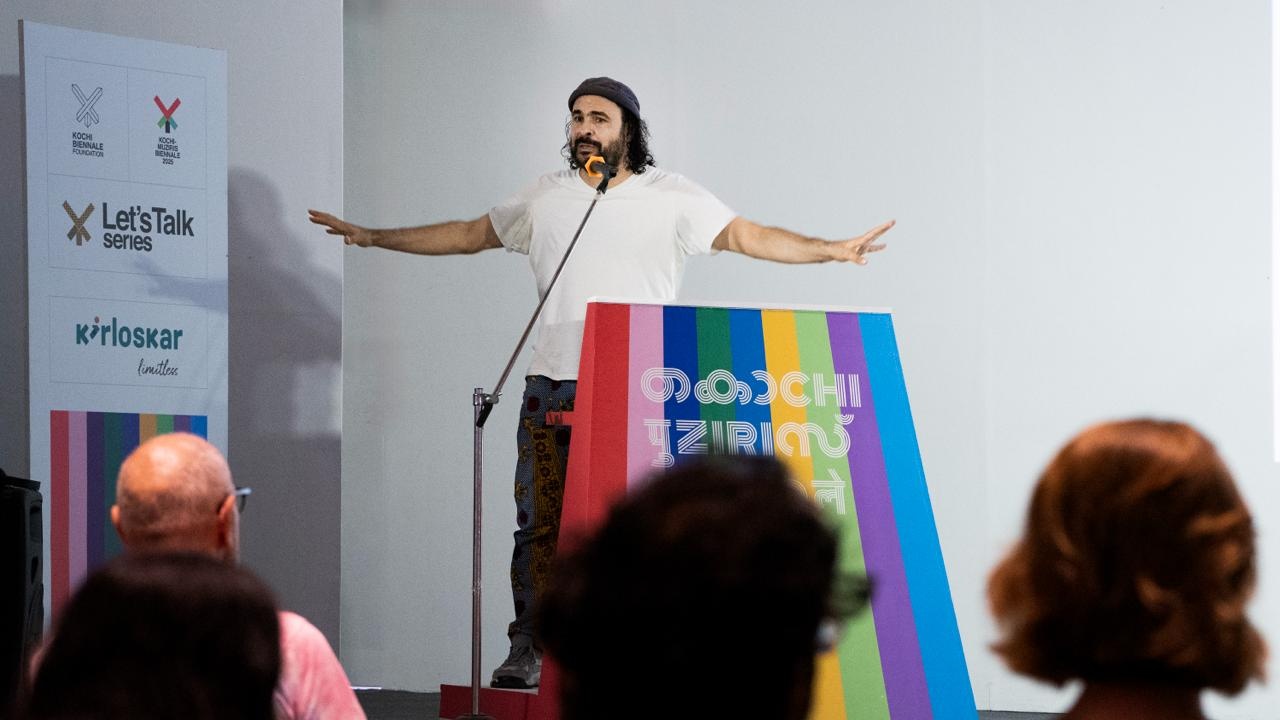
Kader Attia, a French-Algerian contemporary artist, works across film, installation, sculpture, and photography to explore repair as a way of remembering, healing, and resisting erasure. This extract traces ideas from his Vivan Sundaram Memorial Lecture, “Unpredictable Memory” delivered at the Kochi-Muziris Biennale.
Kader Attia is a contemporary artist whose work asks a deceptively simple question: what does it really mean to heal after damage—whether to objects, bodies, cultures, or histories? Working across film, installation, sculpture, and photography, Attia explores how wounds are remembered, repaired, or deliberately erased in modern societies.
During his lecture Unpredictable Memory at the Kochi-Muziris Biennale, he spoke about repair not as concealment, but as an attempt to erase damage and return an object or body to its original, untouched state. This idea assumes that injury can be undone and history reset. Attia challenges this logic at its core. For Kader Attia, such restoration is a form of denial, a refusal to confront the reality of violence, trauma, and loss. True repair, he argues, begins not with concealment but with recognition—by allowing wounds and scars to remain visible.
Across film, installation, sculpture, and photography, Attia has built a practice around this expanded notion of repair. His work insists that damage, once inflicted, becomes part of an object or a body’s history. To hide it is to erase experience itself. Repair, in this sense, is not about returning to an imagined original state, but about learning to live with transformation and rupture.
Kader Attia’s ideas are deeply shaped by histories of colonialism. Colonial modernity, he suggests, caused profound material, cultural, and psychological damage while simultaneously attempting to erase the evidence of its violence. In response, colonised societies developed forms of cultural resistance—acts of reappropriation visible in their aesthetics and artistic practices. These counter-reactions do not seek wholeness through forgetting; instead, they reveal repair as an ongoing process of survival, memory, and meaning-making after injury.
Repair vs restoration
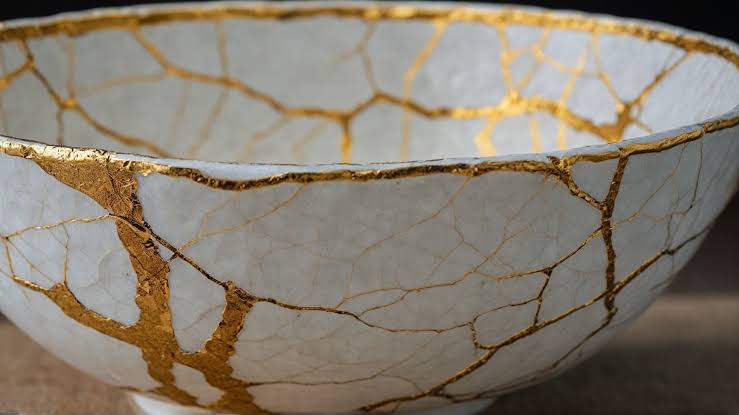
Attia explains his idea using the analogy of kintsugi art of the Japanese civilisation. Traditional artisans repair broken ceramic utensils using lacquer mixed with gold or silver. Instead of hiding the cracks, they are highlighted and celebrated.
In many Eastern and pre-modern cultures, repaired objects retain visible scars—cracks, stitches, staples. These marks are not defects but signs of care, continuity, and survival. Repair becomes both an ethical act of recognising injuries and an aesthetic principle.
Beauty standards and aesthetic possibility
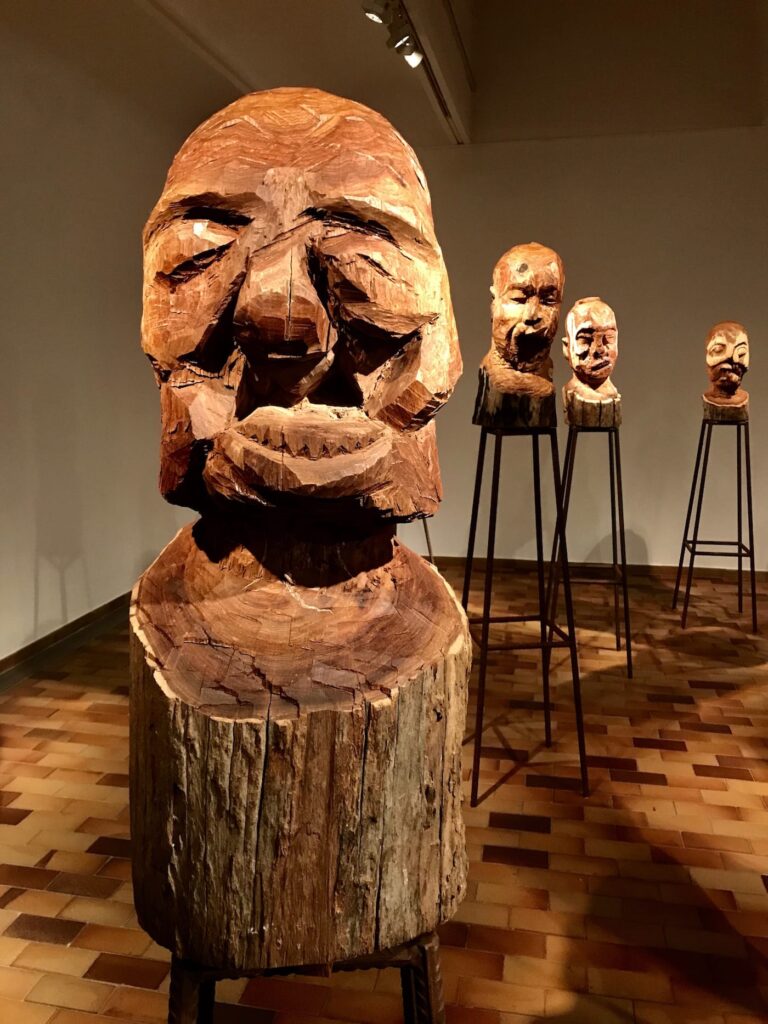
Beauty does not necessarily mean symmetry of the face or other facial features. A scar, a distorted mouth, a transformed face can also be beautiful. Beauty standards have changed throughout history, and what we consider beautiful today is heavily shaped by a cosmetic, capitalist, and neoliberal industry.
Aesthetics do exist in the universe but they have nothing to do with these propaganda ideologies which are marketed. Rarity is connected to beauty. Difference can be beautiful. “If someone has been transformed by illness, accident, or trauma, perhaps they are not ugly—perhaps they are simply different,” says Kader Attia. The work, Open Your Eyes, is an invitation to reconsider how we look at faces, bodies, and lives that fall outside dominant norms.
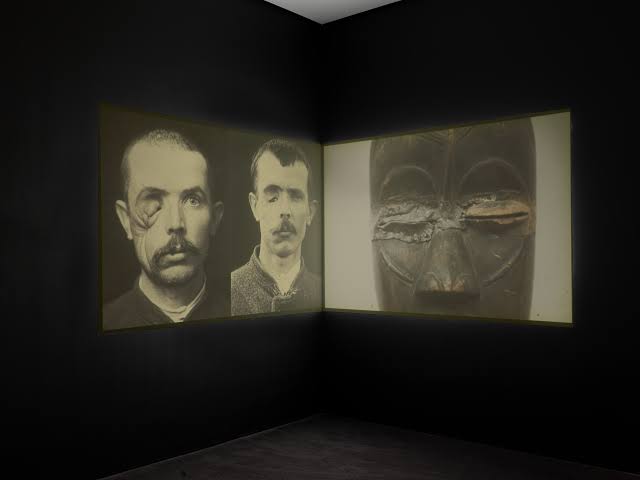
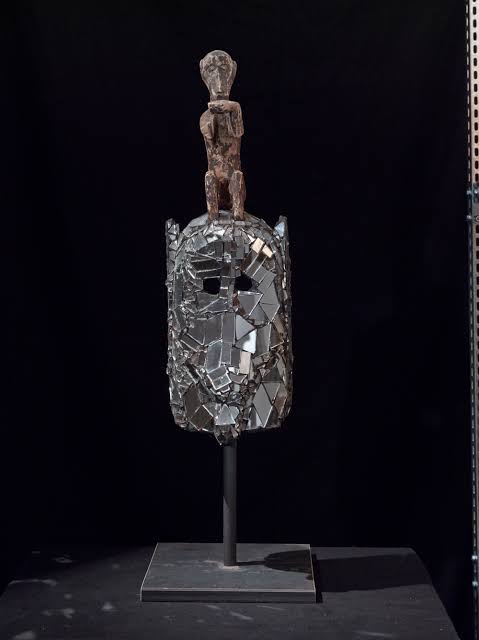
For Attia, repair also holds time together. A repaired object contains past (injury), present (repair), and future (utility). This is also why repaired African masks occupy a prominant place in many of Attia’s works. “These masks are objects through which I articulate a critique of amnesia within contemporary global art regarding African art.” The masks also open passages toward forms of knowledge and perception that modern rationalism has lost.
In a world where transcendence is denied, two paths emerge: destruction, or the search for the irrational, the spiritual. Attia believes this longing partly explains the fascination with non-Western art. Illness masks—which represent healed or distorted faces— deeply interest Attia. They challenge normative ideas of beauty, distortion, injury, and repair.
Postcolonial repair and its limits
Attia also links repair to the idea of colonial modernity. Colonial systems seek to erase violence while continuing to benefit from it. Colonial narratives maintain power by hiding historical, cultural, psychological wounds. Visible repair resists this erasure, protecting civilisations from cultural amnesia.
Attia says that countries like India which went through the colonial trauma need to face the pain and find a way to move on through it. Independence is seen as end to the sufferings when wounds have not been healed completely. Colonialism has not only underdeveloped societies materially; it has also caused deep intellectual, cultural, and psychological damage. These forms of damage takes much longer time to heal.
Indian society is extraordinarily diverse. This diversity is a strength, but it also requires sustained effort to create solidarity across languages, religions, castes, and regions. India is held together not by a single cultural identity, but by a constitutional framework. For such a complex society to thrive, it needs stable material, social, and cultural conditions.
Colonialism severely damaged these foundations without replacing them with systems that could adequately support such diversity. So remembering pain is necessary—not to remain trapped in it, but to acknowledge its depth and complexity. Only through recognition can genuine healing and forward movement take place.
Absolute healing
Attia believes that repair or complete healing is possible only in certain instances. He is particularly interested in things that cannot be completely repaired. Acknowledging irreparability can itself become a form of repair. “If you respond to mass violence by seeking equivalent revenge, that is not repair. But if a society acknowledges a crime as irreparable—names it, confronts it, and takes responsibility—then a different kind of repair begins,” argues Attia.
Repair is not always about fixing. Sometimes it is about recognition. We need new vocabularies and concepts to understand repair not as erasure of damage, but as acceptance of what cannot be undone. In that sense, the irreparable is not the opposite of repair—it is part of it.