
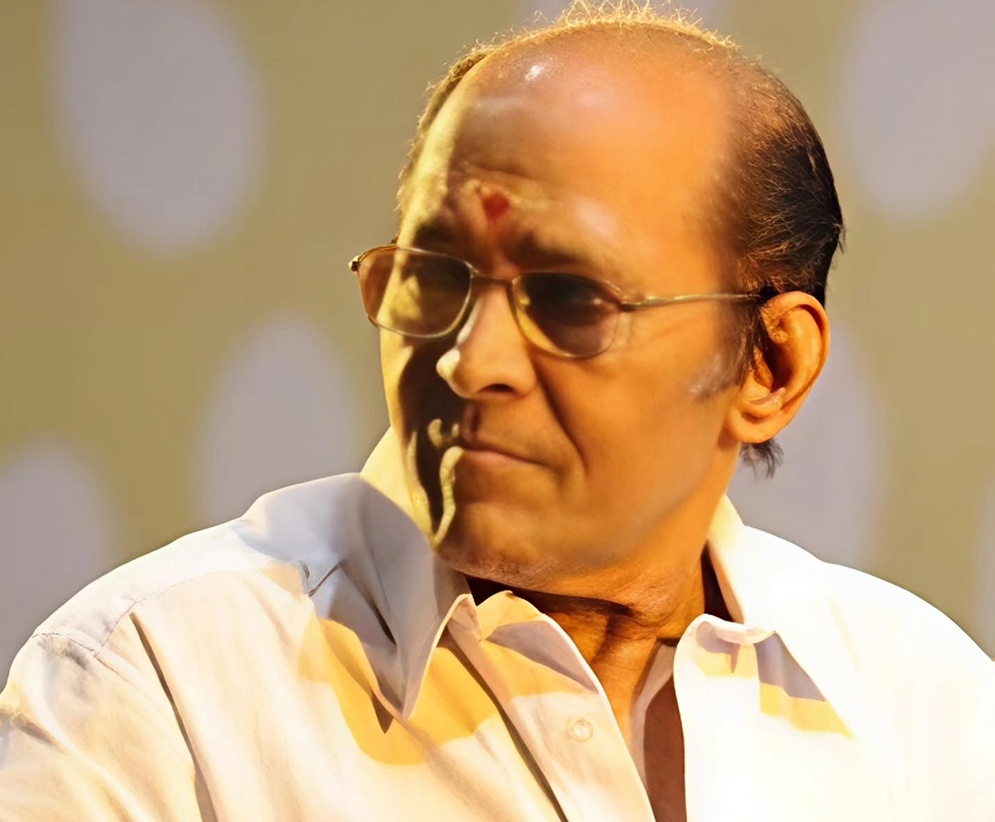
A master of the mridangam and a sensitive accompanist, Guruvayur Dorai knew that great percussion was as much about listening as rhythm. Through cherished memories, the author recalls a musician who brought out the best in everyone on stage.
Some musicians leave behind a legacy that can be measured in recordings, concerts and disciples. Others leave behind something harder to quantify: moments of music that remain etched in the listener’s memory. Mahavidwan Sri Guruvayur Dorai belonged to the latter category as much as the former. A master of the mridangam, he had the rare ability to elevate a concert without ever making the music about himself.
My earliest memory of Dorai goes back to the time when I had just begun attending concerts on my own. The first concert I chose to attend independently had him on the mridangam, with Harishankar on the kanjira. I was seated very close to the artistes, and the rhythmic fireworks that unfolded before me remain vivid even today. Dorai’s playing on the thoppi, in particular, left a deep impression.
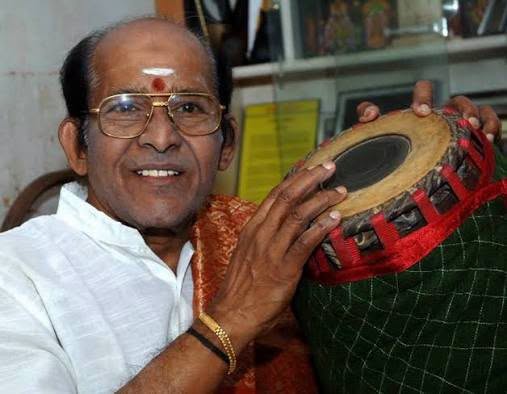
The following month, I was travelling on an ordinary bus from Thanjavur to Thiruvaiyaru when Dorai boarded. We were both standing, and he chatted casually with those around him. There were no airs about him, no trace of the distance one might expect from a musician of his stature. I wanted to hold his hand and tell him, “I am a fan of your playing, sir.” But I was too shy to do so. It remains one of those small regrets that stay with you.
The brilliance of an accompanist
At Thiruvaiyaru, I witnessed another instance of his extraordinary sensitivity as an accompanist. Kadri Gopalnath was playing an expansive Kalyana Vasantham, and his swaraprastara seemed to go on endlessly. The mridangam supported the saxophone, while the ghatam accompanied the violin. Kadri eventually brought the swaras to a close with a precise korvai and aruthi, drawing thunderous applause.
When the violinist began her swaras, the ghatam artiste played beautifully. Yet, after the exhilarating passage by Kadri, it was difficult for the audience to settle back into the music. Dorai sensed this. He joined in subtly, holding the surging tempo and introducing sparkling chollus that helped draw the listeners back into the performance. He did not overwhelm the ghatam or seek attention for himself. He simply did what the moment demanded. It was a lesson in accompaniment that I have never forgotten.
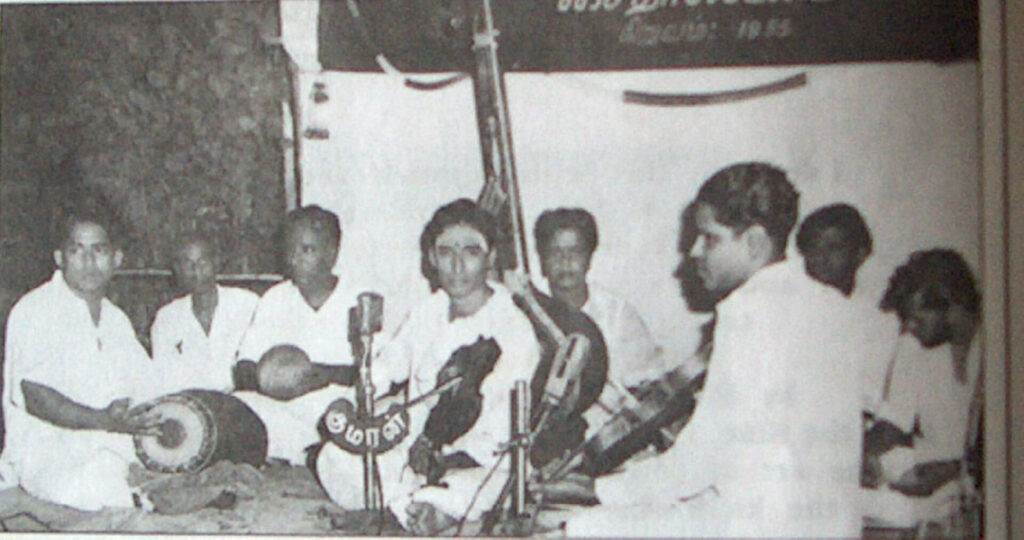
In December 2003, I attended a concert at Raga Sudha Hall featuring violin maestro T.N. Krishnan, with Dorai on the mridangam. They seemed to turn everything they touched into gold. The concert included Saramathi and Kalyani, followed by a Saveri ragam-tanam-pallavi. The entire sequence, including the tani avarthanam, was completed in about twenty minutes, yet nothing felt hurried or inadequate.
After the concert, I approached T.N.Krishnan and asked him for the sahitya of the pallavi. He told me it was an Iyengar pallavi, referring to Ariyakudi Ramanuja Iyengar, and then turned to Dorai to ask whether he remembered it. Dorai softly sang, “Karimora vinaleda — Hare Krishna,” twice. That was all. Yet the Saveri, emerging from his unassuming voice, was deeply moving. A handful of us standing nearby were fortunate to have witnessed that little moment.
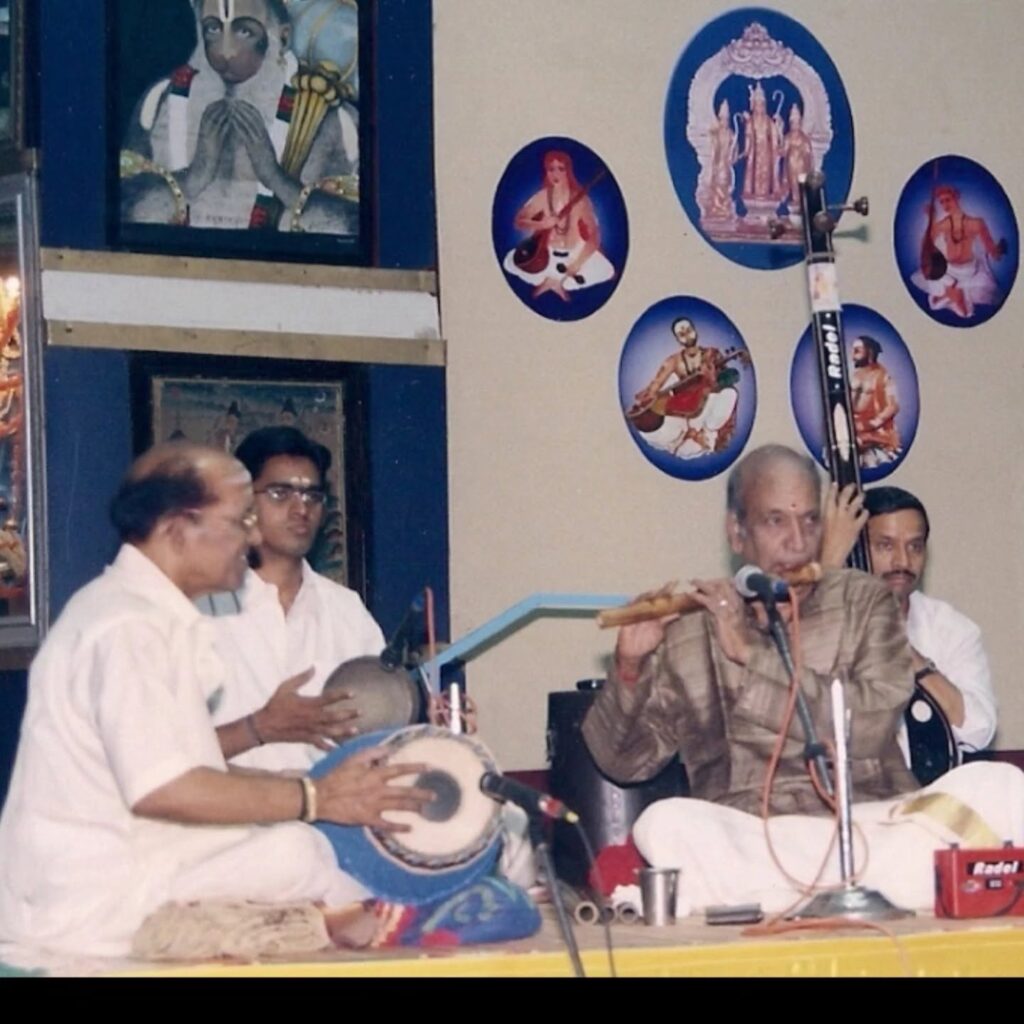
Another unforgettable experience was a felicitation for Trichy Sankaran at Hotel Woodlands, marking fifty years of his performing career. I do not remember the year, but the concert featured maestros Madurai T.N. Seshagopalan, M. Chandrasekaran on the violin and Dorai on the mridangam.
Guruvayoor Dorai’s tani avarthanam was so steeped in Sankaran’s musical vocabulary that, listening to a recording without knowing who was playing, one might well have believed it was Sankaran himself. The chollus, the rhythmic architecture and the aruthis all bore his unmistakable imprint. I remember Dorai playing the theka chollu, with tobacco tucked into his cheek, emphatically turning his head towards Sankaran with a smile, as though to say, “Look at your chollus!” It was not mere imitation. It was a tribute from one great musician to another, made possible by years of listening, understanding and internalising another artiste’s musical language.
I was fortunate to hear Dorai speak at a lecture-demonstration organised in 2010 by Music Forum, in association with TAG Centre and Sruti magazine. Speaking about accompaniment, he demonstrated how different sections of a kriti could invite different approaches, and how rhythmic patterns could follow the contours of the sahitya itself. He spoke of the rapport between Palani Subramania Pillai and Madurai Mani Iyer, recalling how the vocalist would sometimes stop singing and listen to Palani’s playing. Accompaniment, he made clear, was not a subordinate art. It was a collaborative art, capable of creating its own moments of brilliance when the music called for it.
A disciple’s determination
Dorai also once narrated to me how he became a disciple of Palani Subramania Pillai. As a boy, he had met Palani when the latter travelled to Tripunithura to accompany Chembai Vaidyanatha Bhagavathar. Chembai, who was senior to Palani and had played a pivotal role in promoting him, asked Palani to teach the young Dorai during his stay. Palani could hardly refuse Chembai’s request, and so he taught the boy some lessons without disturbing the technique he had already acquired.
Years later, after moving to Madras, Dorai wanted to study with Palani in earnest. But Palani initially declined. Dorai was already performing concerts, and to learn Palani’s style properly would require him to start from the basics and change his fingering technique entirely. Palani felt that such a drastic change would be unwise at that stage of his career.
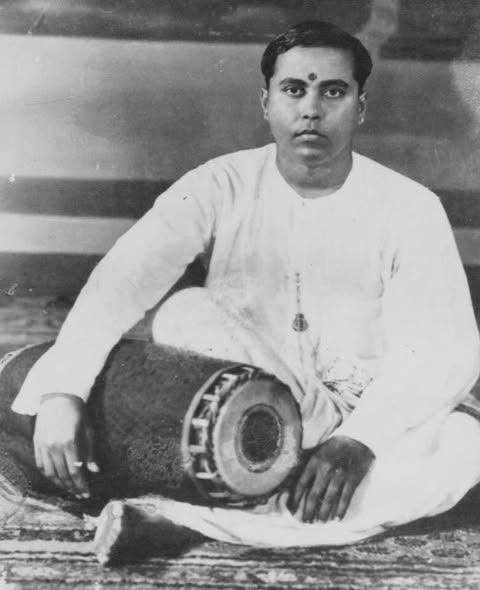
Dorai, however, refused to give up. He continued visiting Palani. On one occasion, when Palani was away, his wife, Kolar Rajam, asked Dorai why he kept coming when her husband had repeatedly declined to teach him. Dorai broke down and confessed how desperately he wanted to become Palani’s disciple. Rajam consoled him and promised to intervene.
When Palani returned, Rajam made such a forceful case for Dorai that he could no longer refuse. Thus Dorai became his disciple, though he retained his own fingering technique. There was no gurukulavasam; he took lessons whenever time permitted, but he never missed visiting his guru on Vijayadasami. In time, Dorai became part of the distinguished Pudukottai school of mridangam playing that Palani spearheaded.
Dorai may not have adopted Palani’s physical technique in its entirety, but he absorbed something deeper: an understanding of rhythm, musical sensitivity and the responsibility of an accompanist. Over the years, I heard Dorai accompany a remarkable range of musicians, from Mandolin U. Shrinivas and T.N. Seshagopalan to Sanjay Subrahmanyan. Listing those concerts would take pages; the memories themselves could fill a book.
My younger brother studied with Dorai for a few years, and I accompanied him on his first visit, which happened to be on Vijayadasami. There was a festive atmosphere, with several disciples coming to seek their guru’s blessings. After each student played a lesson, Dorai would offer his guidance. At one point, he spontaneously sang a brief alapana in Sree, followed by “Sri Kamalambike”.
I had read that Dorai had performed vocal concerts with his sister in his younger days. Hearing him sing, even for that short while, made me wonder what Carnatic music might have lost when he chose the mridangam instead. There was a natural musicality in his voice that revealed another dimension of the artiste.
What connects all these memories is not merely Dorai’s mastery of the mridangam. It is his ability to listen: to a vocalist’s phrasing, to a violinist’s swaras, to another percussionist’s vocabulary, and to the changing mood of a concert. He could be dazzling when the music called for brilliance, but he also knew when to hold back. His playing was never simply about displaying what he could do. It was about understanding what the concert needed.
That, perhaps, is the most difficult art of accompaniment. It demands not only technical command but also generosity, imagination and an instinctive understanding of the whole. Dorai possessed these qualities in abundance.
Another disciple of Palani Subramania Pillai has now departed. I imagine Palani waiting to greet him with a familiar blessing: “Thambi! Your gumukki is also something special!” Beside him, Kolar Rajam would be smiling, the same woman who had once insisted that Dorai be accepted as a disciple, ready to welcome him into their company once again.
Farewell, Dorai sir. You gave us countless moments of music without ever making a fuss about them. They will continue to resonate long after the sound of your mridangam has fallen silent.