
Jompet Kuswidananto, an internationally acclaimed artist from Yogyakarta, Indonesia, explores Indonesia’s cultural transitions through installations, videos, sound art, and performances. His works, delve into the complexities of colonialism, occupation, and the shift to democracy. His work ‘Ghost Ballad’ is an installation, part of the Kochi-Muziris biennale 2026, in which ghostly bodies loom within the space singing fado music.
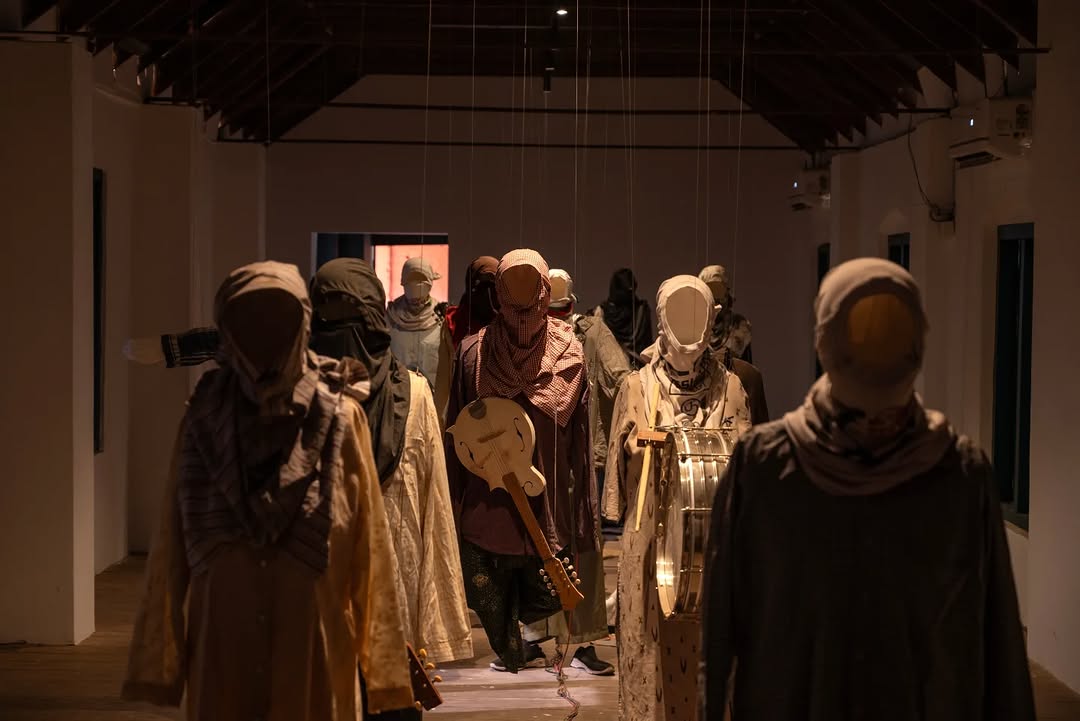
A horde of ghostly floating bodies greet you with melancholic music when you enter into the dimly lit room in pepper house. These hollow figures, adorned in worn garments, remain absorbed in their singing and instrumental play, indifferent to the world that moves around them. Automated drums and guitars accompany the uncanny soundscape, producing an eerie sense of presence even in absence.
Ghost ballad consists of numerous hollow men chanting a collective song of struggle, oppression and resilience. Each figure carries a musical instrument, together forming a band without a leader or focal point. Sound becomes a carrier of memory, resistance, and unresolved histories in the work.
History of indomitable spirit
The installation unfolds as a musical parade of common people—a dialogue between sound and absent bodies. Sound does not merely accompany the artwork, it haunts it. Historically, such melancholic music served as a quiet yet enduring form of resilience for communities living under systems of domination. In Ghost Ballad, sound becomes a carrier of memory, resistance, and unresolved histories.

Kuswidananto traces the origin of the looming ghost bodies back to a legend from 1980’s Yogyakarta, his hometown. Residents of the place started to hear marching sounds early in the morning but were unable to find the source for the sound. The sounds seemed to emerge from multiple directions, remaining untraceable.
Some interpreted them as the voice of the spirits of soldiers who died fighting the colonisers Indonesia. Others believed they were echoes of people fleeing the mass killings of 1965. Kuswidananto was interested in how these disembodied sounds triggered the memories of unfinished historical trauma.
Mystic music free from flesh
“Fado music felt like a ghost song for me,” Kuswidananto reflects, “like a song that always invite people to discuss a lot of things in the past that has not been well discussed.” Fado, a genre of melancholic songs about the sea in Portuguese that emerged in Lisbon and later travelled across the Portuguese empire. Through trade routes, forced migration, and military movements, Fado’s emotional structure spread to Goa, Sri Lanka, Malacca, Batavia, Banda, and Timor.
For Kuswidananto, Fado music was really important for the setting of the sonic experience of the installation. Rather than merely understanding history through text books he wants the audience to experience it through sounds. “For this work,” Kuswidananto explains, “I tried to portray the sonic expressions of melancholia that was shaped by the long history of colonialism.”
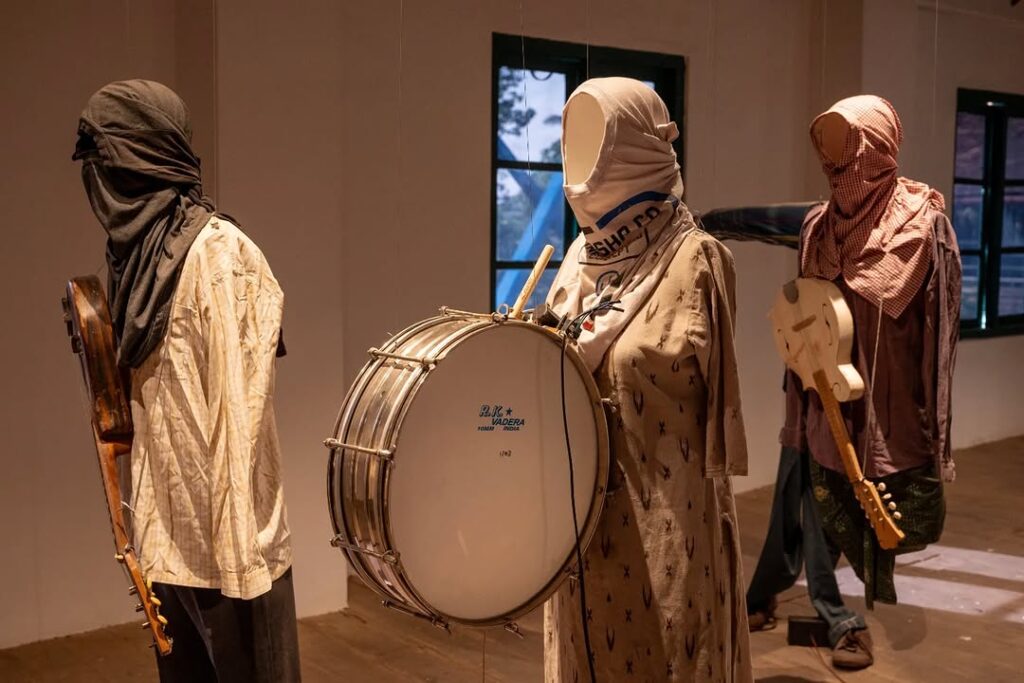
The absence of bodies and the presence of music metaphorically signify the survival of Fado even after the singers who once gave it voice have passed away. Through these melancholic sounds, Ghost Ballad explores how colonial trauma and resilience are preserved in these songs and performances. Each of these musical forms carries the sentiments of melancholia and longing, tied to the historical experiences of migration, displacement, and disillusionment.
Kuswidananto believes that melancholic music itself has long functioned as a form of resistance against power and domination. In 1980s Indonesia, during an authoritarian and aggressively developmentalist regime, melancholic and weeping music gained unexpected popularity. At the height of state control, such music unsettled the government, precisely because it articulated emotional truths that could not be openly spoken.
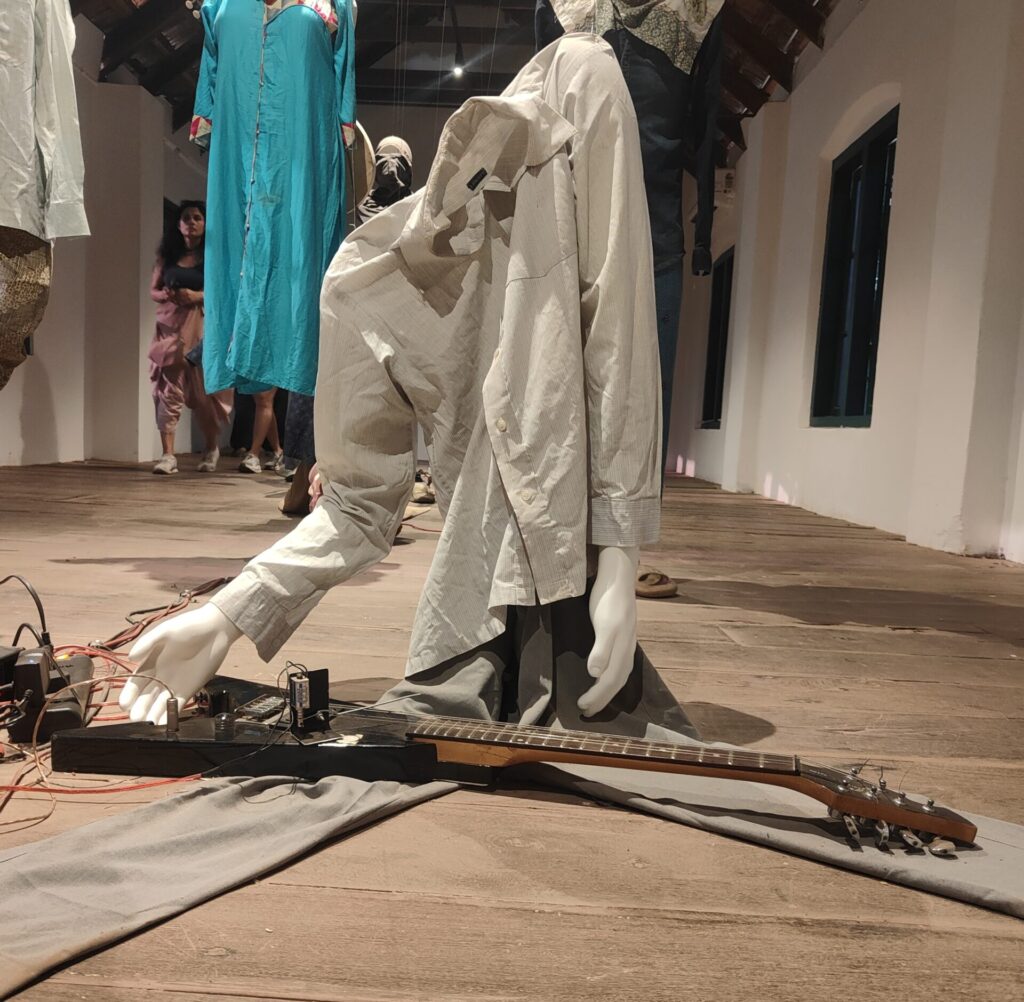
The government got offended by the music, and eventually decided to ban sad, melancholic songs. Melancholic music became deeply subversive—political, powerful, and almost aggressive in the intensity of its emotional force.
la résistance
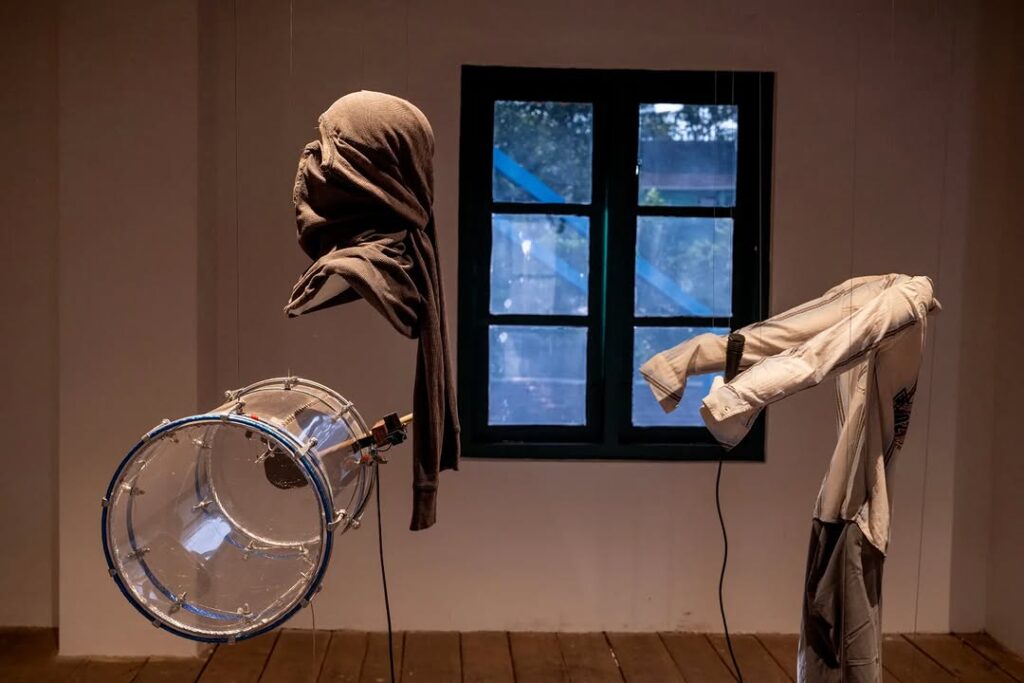
Ghost Ballad builds on the network of colonial encounters between these coasts with an installation of a kinetic, bodiless crowd, which comes to life to play stringed instruments. Made with the used, everyday clothing and shoes of people from Kochi and Yogyakarta, Kuswidananto’s assemblage of ghost figures carrying small, portable automated instruments marks the absence of those forgotten or erased by colonial histories. The lack of physical bodies creates an uncanny sensation, as if the ghosts themselves are asking visitors to listen.
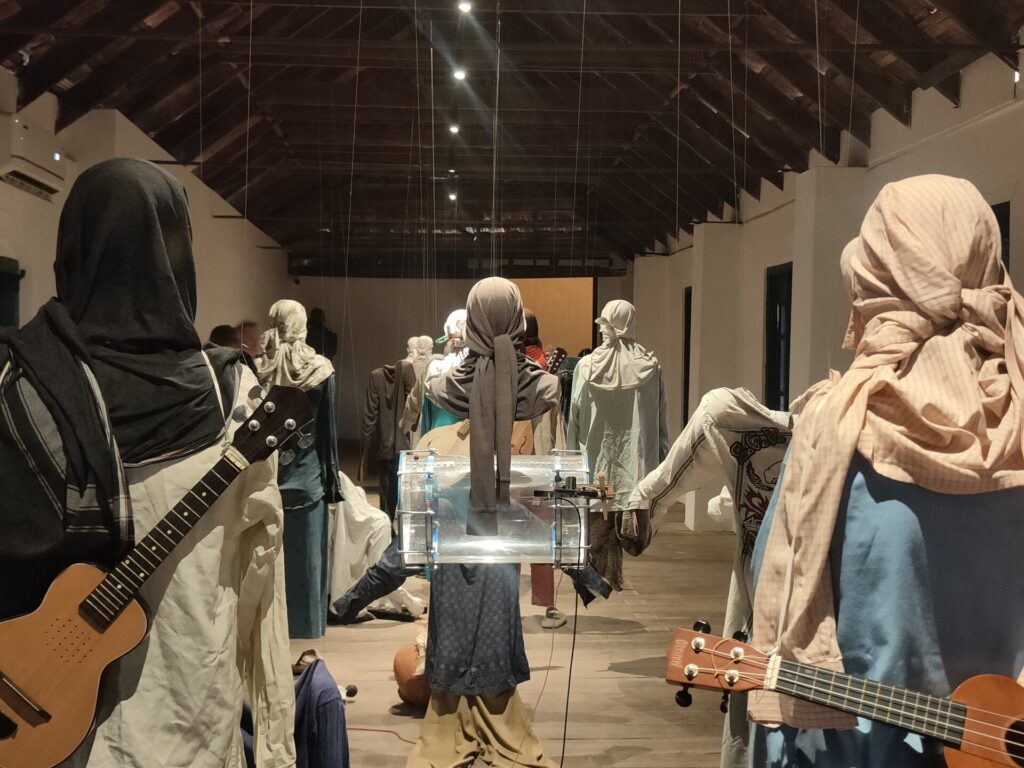
The intermittent beating of the drums and strumming of the guitar evoke an acute sense of loss— of the spirits who rebelled on their own terms. Spectators become increasingly aware of their own body in relation to the disembodied sounds.
The voices of Goan singer Nadia Rebelo and Indonesian singer Giwang Topo ask visitors to witness narratives of resistance and survival rooted in a shared colonial past. Ultimately, the work explores how common people under colonial rule adopted and reshaped melancholic music as a quiet, persistent form of resilience, allowing individuals to express loss, displacement, and longing in contexts where direct resistance was often impossible.