
The brushstrokes of freedom, from Abanindranath Tagore’s Bharat Mata to M F Husain’s bold modernism, tell the story of a nation finding its voice on canvas.
The independence of India in 1947 marked not only a political but also a cultural renaissance that swept the nation. The moment the nation began to recognise itself brought a clash of ideas for artists. The moment was a storm of creativity in the nation, as the artists across the country were ready to let go of hitherto colonial practices and sought to build a new identity of modern Indian art. From east to west, Bengal to Bombay, artists weaved a visual representation of hope and societal complexities that the new nation brought with itself.
However, these seeds of change were sown years before the achievement of independence. At the turn of the 20th century, the Bengal School of Art emerged as a response to the British vision of art. It soon flourished against these colonial homogeny and looked as art as a space to celebrate our own cultures and traditions.
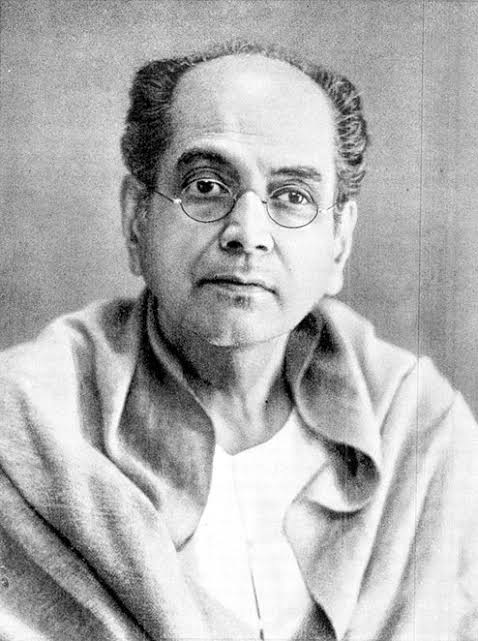
Abanindranath Tagore’s 1905 painting Bharat Mata became one of the most recognisable images of the nationalist movement. Rather than depicting her as a warrior, Tagore portrayed her as a serene woman in saffron, holding a rosary, a sheaf of grain, a book, and a piece of white cloth—symbols of education, sustenance, and purity.
In a time where people sought the identity of a nation, this artistic depiction of India was a powerful narrative. It was further pursued by Abanindranath’s disciple Nandalal Bose. He integrated folklore and was inspired by the Ajanta cave murals into his style. Many of his paintings had epic stories that celebrated India’s rural inheritance and heroism.
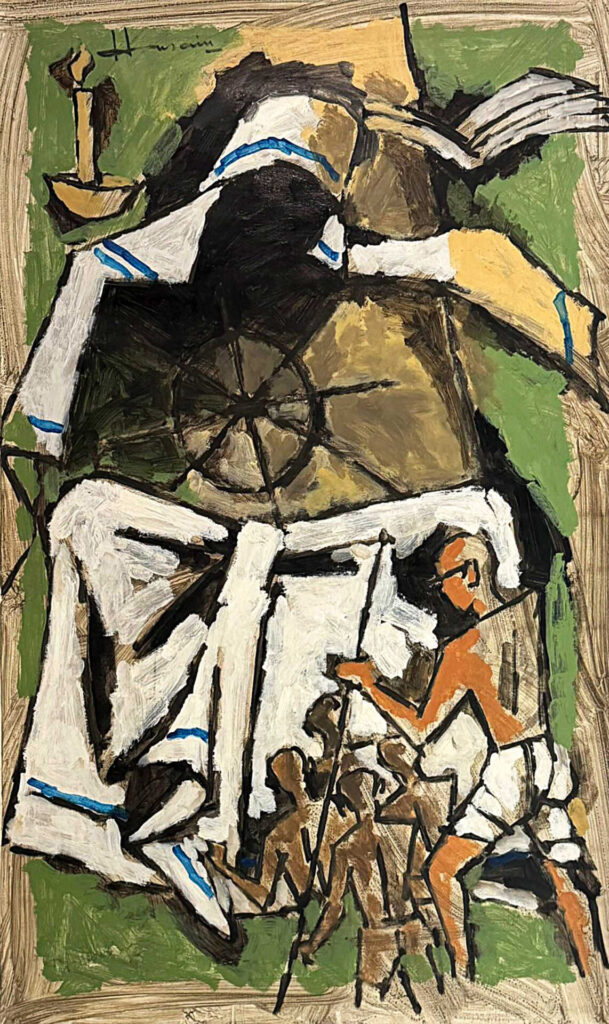
Art in service of the nation
Bose’s most politically significant work came in 1947–48 when the Constituent Assembly commissioned him to illustrate the original manuscript of the Indian Constitution. With a team from Kala Bhavan, Santiniketan, he adorned every page with borders and illustrations that celebrated Indian history and culture—from the Indus Valley civilisation to the freedom struggle.
As the nation inched towards the most important historical milestone, the diversity amongst Indian painters brought creativity to the idea of independence. The solidarity of the independence era was depicted through mythological symbols by some and for others, the dignity of the common man was illustrated through cities and villages life. This was especially true for the new generation of Indian modernists, especially those associated with Progressive Artists’ Group (PAG) which was also founded in 1947.
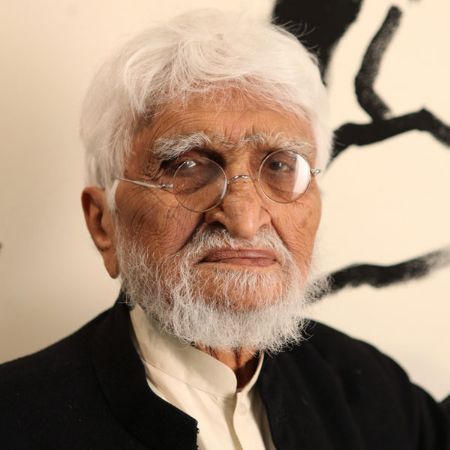
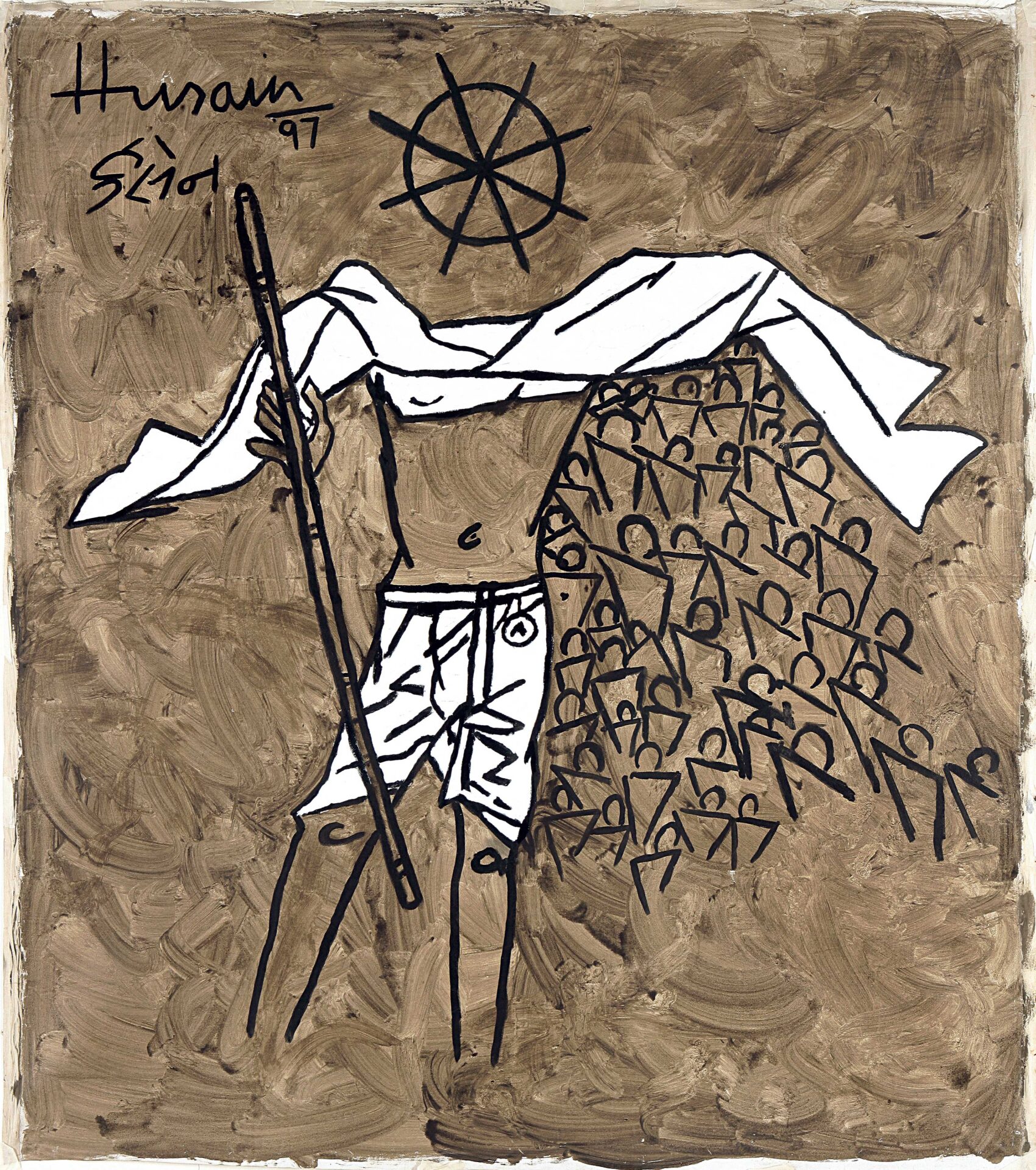
Coming to terms with the reality of a free, yet truly complex, India, these artists such as Husain, Raza, and Souza contributed greatly in carving out a individual artistic idiom of the nation and they continued to do so even as they progressed in their careers and reached new heights. For Husain, India was a country of rich culture and history and his works often depicted varied symbols of the country’s heritage and civilisation.
The celebration of independence on his canvases was captured perfectly during the 1980s when he looked back to the colonial years and conjured the British Raj series, which playfully yet critically examined the British colonisation of India. With sweeping, almost theatrical scenes, he painted British and Indian regal figures in vivid colours and depicted their meetings in an exaggerated fashion to ridicule the absurdity of dominance and subservience.
Indian emperors and royalty were richly and vividly adorned in gem colours, sitting next to tailor coat-clad imperial officers, while regal marches, hunts, and court assemblies unfolded in a blend of extravagant farce and farcical grandeur. Elephants, horses, and richly patterned backdrops added to the outward spectacle, yet beneath the vivid colours, there lay a reminder of the complex mix of imitation, defiance, and cultural intertwining under colonial rule.
Diverse visions
For S. H. Raza, painting was a way of paying homage to the land which shaped him and the land which shaped him. The reds, ochre, greens and blues used by him were inspired by India and the earth’s colours. The earth after the rain, the sweeping fields during the monsoon, the sun kissed walls around the country side and the boundless skies. The colours of India, when blended into the symbolic and geometric shapes he used, gave birth to his iconic Bindu series. These were not mere arrangement of shapes or colour selection but a hallmark of India’s beauty, amity, spirit, and culture. By means of Raza’s art , he was paying tribute to the ideals of independence which is his way of celebrating the beauty of the country blended with remembrance and the sense of belonging.
Other artists like K.K. Hebbar celebrated the socio-political milestones of the country by adopting
pride symbols like the peacock, classical forms of dance and rural dances and celebrations. While celebrating the rural and classical forms of India, K. K. Hebbar also painted scenes from the freedom struggle, such as his iconic painting of Dandi March executed in the colour of national flag and showcasing the revered figure of Mahatama Gandhi.
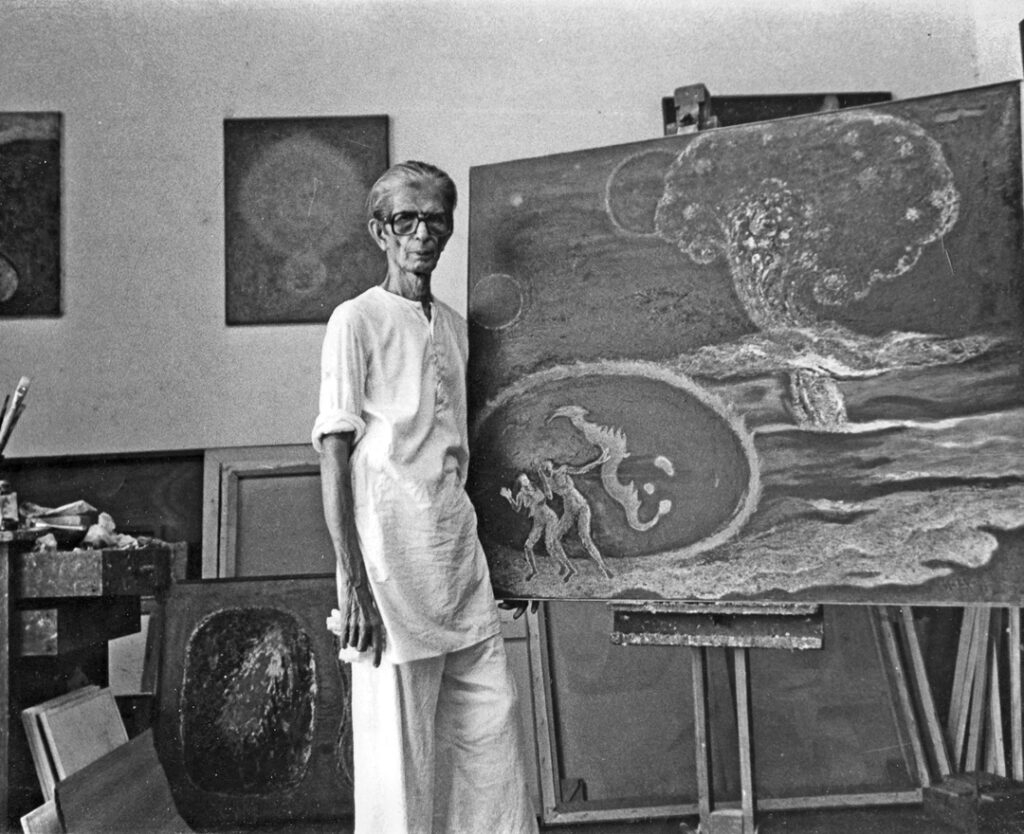
As India celebrates its Independence Day, it is also a moment to reflect on the artists whose work gave visual form to the nation’s hopes, struggles, and identity. From the stirring imagery of the Bengal School to the bold visions of the Modernists, these creators not only chronicled the journey to freedom but also shaped the language of modern Indian art. Their canvases continue to speak of resilience, unity, and pride, reminding us that the story of independence lives on not only in history books, but in the enduring power of art.
Indian independence art, Bengal School of Art, Abanindranath Tagore, Bharat Mata painting, Nandalal Bose, Progressive Artists’ Group, M.F. Husain, S.H. Raza, F.N. Souza, Indian modernism, nationalist art movement, British Raj series, Indian Constitution illustrations, Santiniketan art, colonial legacy in Indian art.