
Sooraj Nambiar’s Kutiyattam adaptation of Cilappatikaram, premiered in Ahmedabad recently, transforms a Tamil kavyam into a full-length performance shaped by Kutiyattam’s form, grammar, and abhinaya.
Recent discourses in the historiography of South Indian art and literature have re-examined the significance of the long-lost yet enduring Tamil odyssey Cilappatikaram authored by Ilango Adigal. These studies have convincingly traced its deep cultural and geographical resonances with ancient sites such as Tirukkunavai, Mahodayapuram, which falls under the present-day Mathilakam region in Kerala. This renewed scholarly attention has not merely repositioned Cilappatikaram as a canonical Tamil epic but has also foregrounded its intimate connections with Kerala’s ritual, performative, and sakta traditions.
Near Mathilakam lies Irinjalakuda, a region long associated with classical performance and literary culture. It is here that Koodiyattam practitioner Sooraj Nambiar conceived Cilappatikaram: An Anklet’s Verdict as an ensemble production. Moving beyond a retelling of Kovalan and Kannaki’s story, the work approaches the epic through the symbolic agency of the anklet (cilambu), positioning it as both material evidence and moral axis within a larger ethical and cosmological framework.
Sooraj has repeatedly asserted that the story of Kovalan and Kannaki is not alien to the cultural consciousness of Kerala. Rather, it is deeply rooted in the region’s soil, where celebratory markings of the sakta cult continue to shape ritual and performance practices. While feminist movements in the region have followed varied historical trajectories, goddess traditions have consistently shaped everyday life in Kerala, anchoring narratives of female divinity, justice, and emancipation within the lived realities of the Malayali psyche.
This cultural proximity becomes evident when one considers the legends of Bhagavati across Kerala, from the northern terrains to the southern coastline. Fierce yet benevolent manifestations such as Bhadrakali have long been revered not only by devotees but also by anthropologists and scholars of ritual across the globe. The mythic and ritual worlds of Kodungallur Bhagavati, Attukal Amma, and the various Theyyam manifestations such as Neeliyar Koottam echo the narrative arc of Kannaki; chastity transformed into fury when she sets the entire of Madurai ablaze, from transforming her personal loss into a matter of claiming her much needed justice.
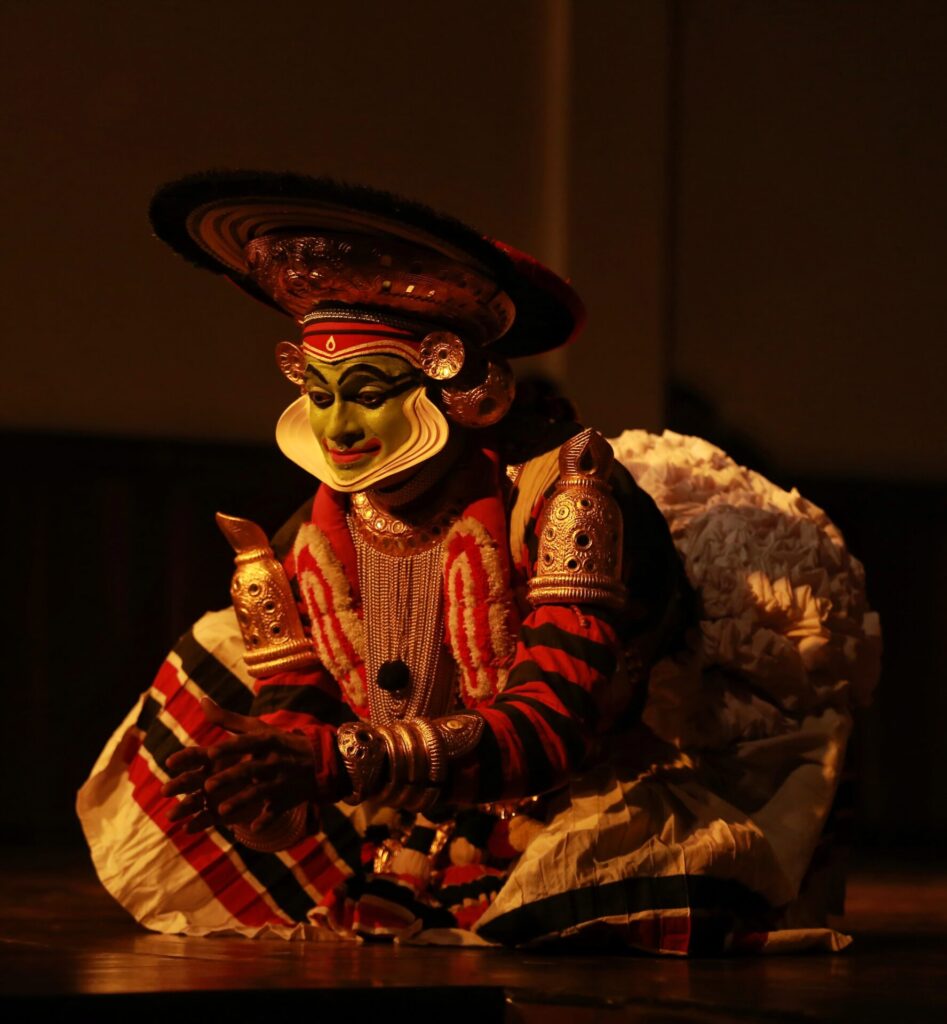
It is within this indigenous framework of folk religiosity and goddess worship that Sooraj locates Cilappatikaram. While remaining rigorously faithful to the intrinsic technical vocabulary of Kutiyattam, his vision draws from Kerala’s ritual memory, allowing Kannaki to be perceived not merely as a literary heroine but as a living sakta force.
Tracing the radical theatrical experiment
Kutiyattam’s form, grammar, elaborate abhinaya, and codified performance structure evolved in direct dialogue with dramaturgical texts. In this context, Cilappatikaram marks a rare and significant intervention: the transformation of a kavyam, an epic poem, into a full-length Kutiyattam performance.
Viewed through this lens, the production emerges as a modern theatrical experiment undertaken within an art form that carries centuries of performative authority. While Kutiyattam has survived numerous canonical shifts- from medieval temple spaces to contemporary proscenium contexts, its engagement with a Tamil epic disrupts linguistic, aesthetic, and historiographical boundaries.
It is worth noting that related forms such as Nangyarkuttu have, in recent decades, become fertile grounds for experimentation and narrative expansion. Artists like Usha Nangiar and Kapila Venu have significantly contributed to reimagining female-centric storytelling within classical frameworks. Sooraj Nambiar’s Cilappatikaram may thus be seen as part of a broader continuum of innovation; one that remains firmly grounded in tradition while recalibrating precise technical negotiations in performance. His direction extended far beyond on-floor choreography and staging.
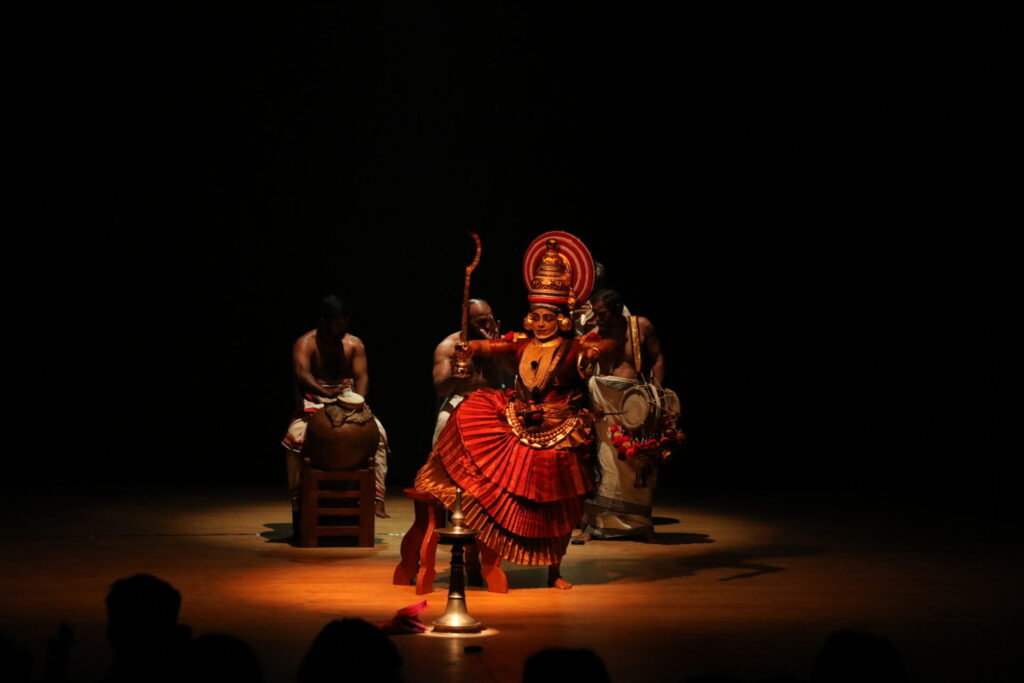
Several creative interventions stand out. Kannaki was presented with a newly conceived aharyam, subtly departing from established visual codes while remaining within Kutiyattam’s aesthetic logic. The linguistic choices were equally radical. Tamil slokams, rarely heard within Kutiyattam’s predominantly Sanskrit repertoire, were employed with deliberate care. The recitative passages experimented with new ragas previously unexplored in the Kutiyattam soundscape, thereby expanding the musical vocabulary without diluting its structural integrity.
Ecology of the production
Cilappatikaram: An Anklet’s Verdict was commissioned by the UN Mehta Foundation and premiered at the seventh edition of Abhivyakti, Ahmedabad- a festival that has increasingly positioned itself as a significant platform for contemporary performance practices and emerging artistic dialogues. The premiere context enabled the production to address not only practitioners and connoisseurs of classical theatre but also a heterogeneous audience comprising theatre enthusiasts and younger spectators engaging with experimental and cross-disciplinary forms.
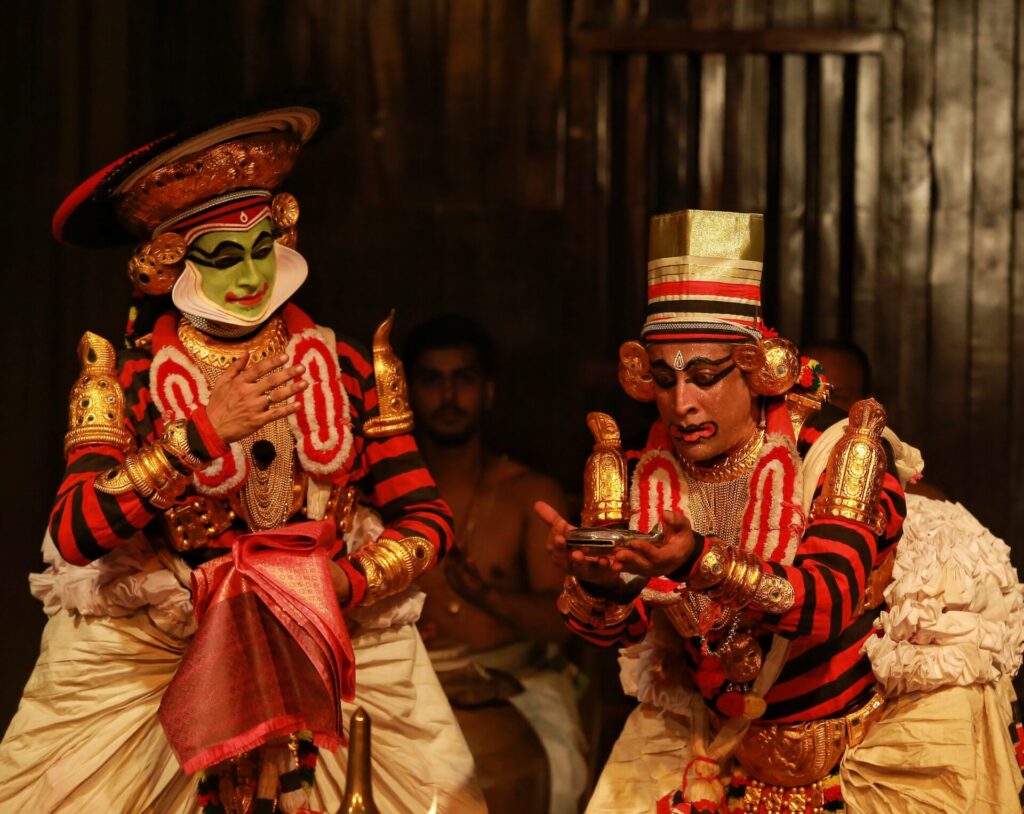
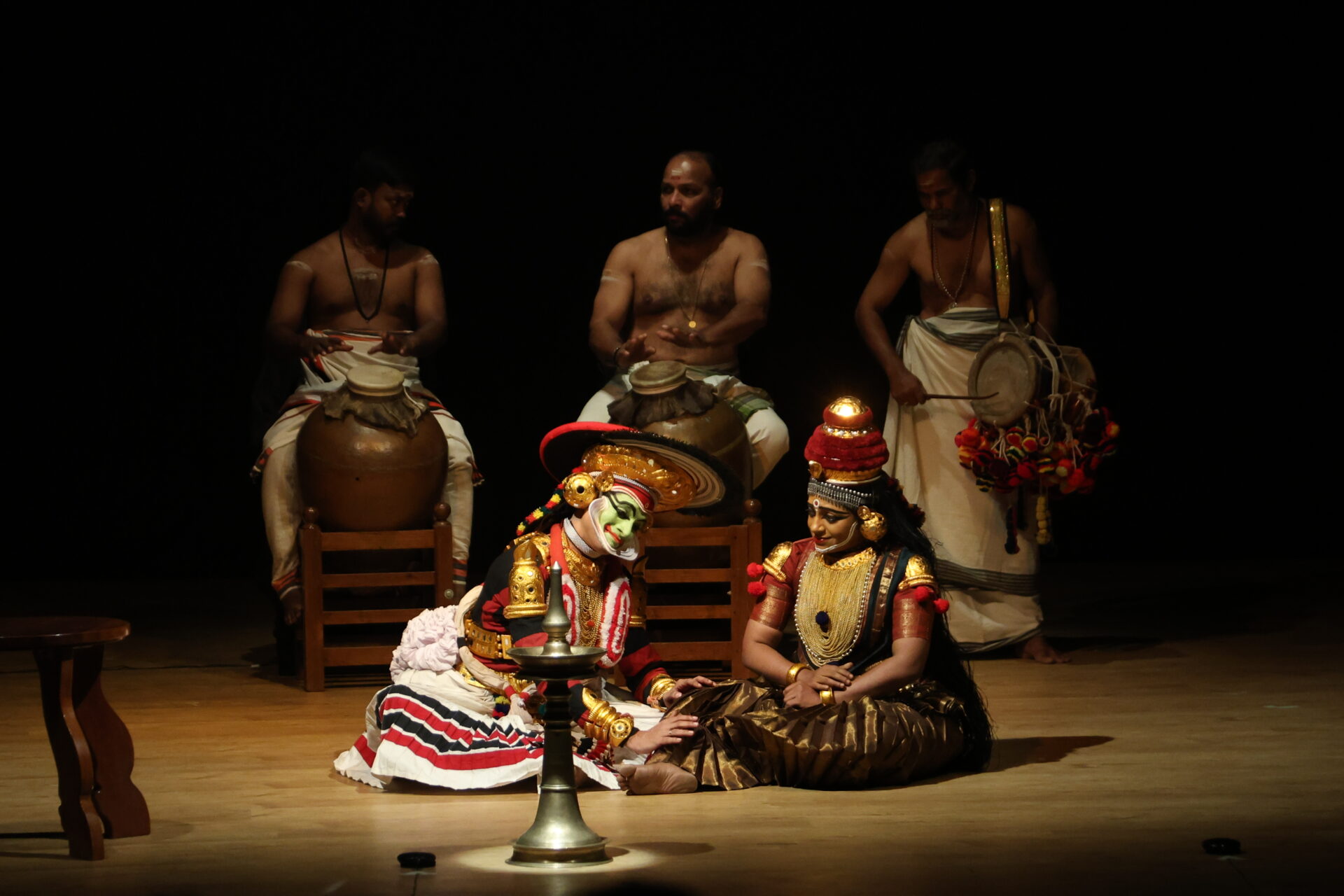
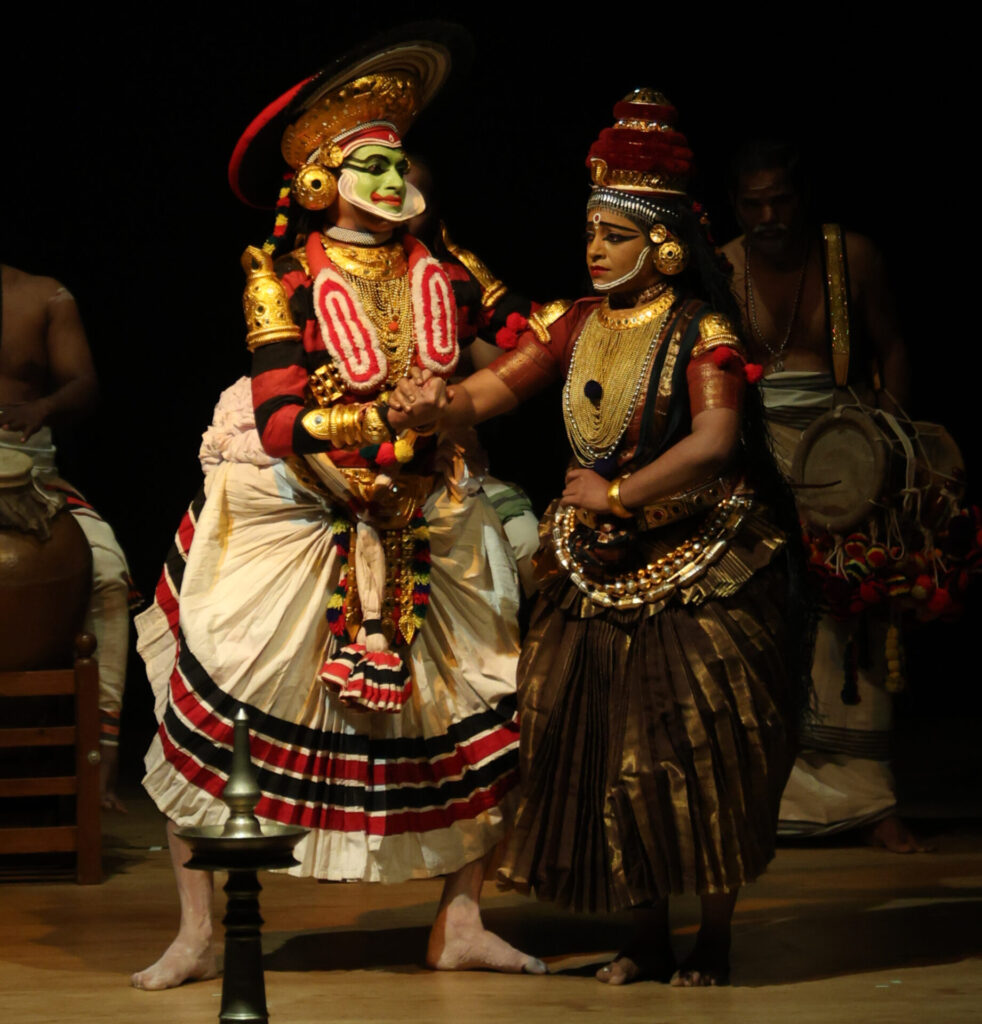
The production’s dramaturgical strength emerged through its ensemble configuration. Sooraj Nambiar assumed the role of Kovalan, while Kapila Venu embodied Kannaki. Kapila’s performance revealed layered emotional and psychological registers of Kannaki; from a devoted wife to wronged woman, and finally to an embodiment of righteous fury executed with consummate artistic control, illuminating the acting prowess she holds. Sooraj, reflecting on the production, has described a process that unfolded over several months, involving not only intensive rehearsal but also sustained intellectual engagement.
The role of the goldsmith, pivotal to the moral inversion was performed by veteran theatre actor, trainer, and director Sankar Venkiteswaran. His portrayal was particularly noted for the newly devised vesham (character configuration), conceived within the grammatical parameters of Kutiyattam while addressing the demands of a non-canonical role.
The sonic architecture of the production was anchored by Kalamandalam Rajeev, whose command over the Mizhavu formed the rhythmic and affective backbone of the performance. He was supported by Kalanilayam Unnikrishnan on Idaykka, Kalamandalam Sajikumar on Mizhavu, and Kavya Harish on talam. Together, the musical support sustained the ritual density intrinsic to Kutiyattam while accommodating carefully modulated experimental interventions.
Costume and makeup, central to Kutiyattam’s semiotic and performative grammar were overseen by Kalamandalam Vaisakh, who played a decisive role in materialising the production’s visual vocabulary. This artistic labour was complemented by the logistical and organisational framework managed by Aswathy Sarojini. As production manager, she facilitated the structural coherence necessary for the realisation of a project of this scale. The ensemble was brought together under the banner of Tripudi Acting Laboratory, an organisation founded by Sooraj and Aswathy, envisioned as a space for sustained experimentation and critical discourse within theatre and art practice.
Completing the circle of classical theatre
Beyond its aesthetic achievements, the production resonates powerfully within contemporary socio-political discourse. Kannaki’s demand for justice, articulated through personal loss and moral authority, intersects with ongoing conversations around gender, power, and state accountability. The anklet-an intimate domestic object becomes juridical evidence, collapsing the divide between private grief and public justice. In an era where classical forms are often perceived as inaccessible or elitist, the enthusiastic reception of this production suggests otherwise. It demonstrates how rootedness, when coupled with thoughtful innovation, can generate accessibility without compromise.
The premiere was followed by three consecutive performances, all to houseful audiences. On the final day, the organisers reportedly struggled to manage the crowd, with many spectators turned away due to overcapacity at the Gujarat University amphitheatre. Such an enthusiastic response is particularly notable for a Kutiyattam production, especially one engaging with an “alien” textual tradition for a large section of the audience. The reception thus gestures toward a growing receptivity to classical forms when they are presented through thoughtful contextualisation.