
A landmark celebration of rhythm, ritual, and resilience, the Kerala Sangeetha Nataka Akademi’s National Rhythm Festival brought together India’s diverse percussion traditions under one resonant roof.
From July 11- 13, three days in succession, the Kerala Sangeetha Nataka Akademi premises in Thrissur reverberated with a slew of enthralling rhythms drummed out by ace percussionists who seemed to vie with each other to show off their best. And they encompassed a wide spectrum of classical, folk, ritualistic, tribal, cutting across gender, religious and caste barriers.
‘The National Rhythm Festival 2025’ turned out to be a landmark in the sixty-seven year old history of the Akademi. What made it more singular was that it happened when the chairman of the Akademi was the world famous percussionist, Padmasree Mattannur Sankarankutty.
Surprisingly, the variegated programmes lasted for more than twelve hours each day, that too even without a break. Moreover the presence of the chairman and the secretary Karivallur Murali among the audience during each performance was further an added motivation for the thousand and odd artistes who performed in this unique event.
National Rhythm Festival took off with the ‘Edakka Vismayam’ (wonder) by Peringode Chandran and his team as early as nine in the morning on the first day. This appeared auspicious since the musico-percussion instrument is esoteric to Kerala. ‘Melappadam’, part of a full- fledged Kathakali performance, but only rarely staged, was one of the best heard in the recent times.
While the percussion part was led by Kalamandalam Unnikrishnan (chenda), the musicians Kottakkal Madhu and Nedumpalli Rammohan made it a most memorable one. This was followed by an exhilarating ‘Mizhavil Iratta Thayambaka’ led by Kalamandalam Rajiv, Kalamandalam Vineesh.
Inclusion of ‘Sinkari Melam’ in the programme was indication of the attitude of the Akademi to project even the popular and socially relevant melam.
Rhythms of rituals
The intricate rhythms of ‘Arjuna Nrittam’ – a near-extinct art form- and of ‘Garudan Thookkam’ were also staged, the former by Anirudhan Kunnankkari and Sajiv Ithithanam and the latter by Kalamandalam Shaji and party. But in the absence of the presentation of these ritualistic art forms, the audience could hardly comprehend the role of rhythms in these art forms. But admittedly one could realise how melam played a pivotal role in the tribal dances staged by the Malappulaya community of Idukki and the Irulars of Attappady .
In the category of Desi rhythms, ‘Muttum Viliyum’, peculiar to the Muslim community, was noteworthy for the popular songs blared out by Ustad Mohmmed Khan through Shehnai.
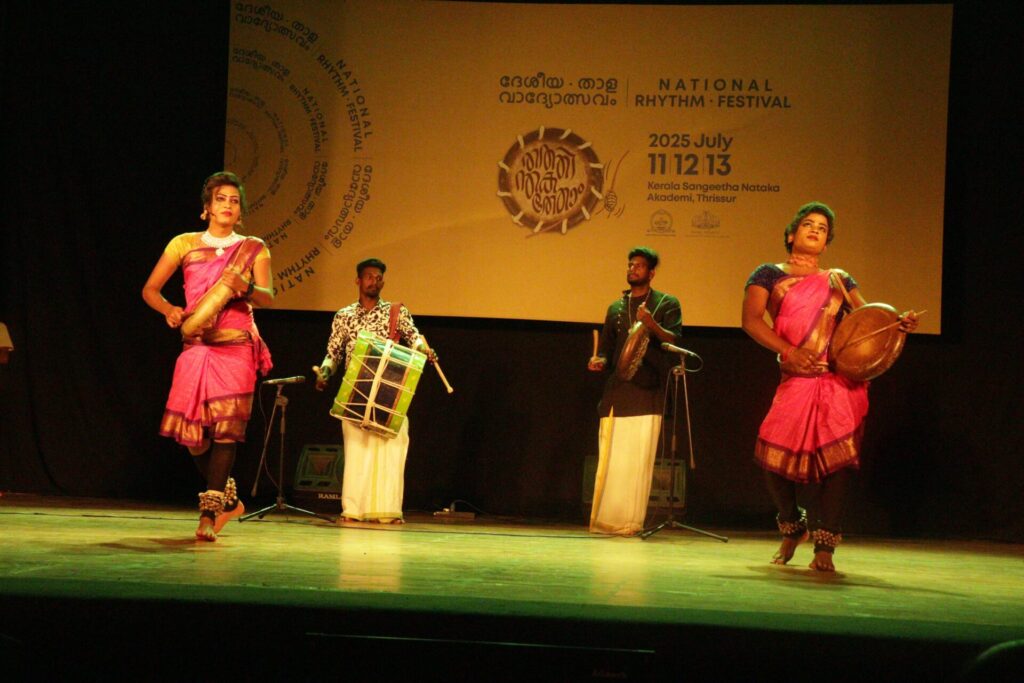
‘Thappattam’ of Tamil Nadu received applause from the audience as Thirunankai Tamizhini and Rithika exhibited their terpsichorean talents tapping rhythm on the Thappu. Surprisingly, Mattannur Sankarankutty inaugurated the National Rhythm festival by drumming on the same Thappu with sticks after a short speech.
Rajasthan was represented by ‘Kartal’ by Mohammed Rafeeq aided by Shakir Khan on the Pakhawaj. By involving the audience also in keeping the rhythm with him, Rafeeq proved a well experienced artiste. Kartal consists of two wooden pieces that are struck together to create a rhythmic sound. Kombu pattu was presented by Odakkali Murali and party.
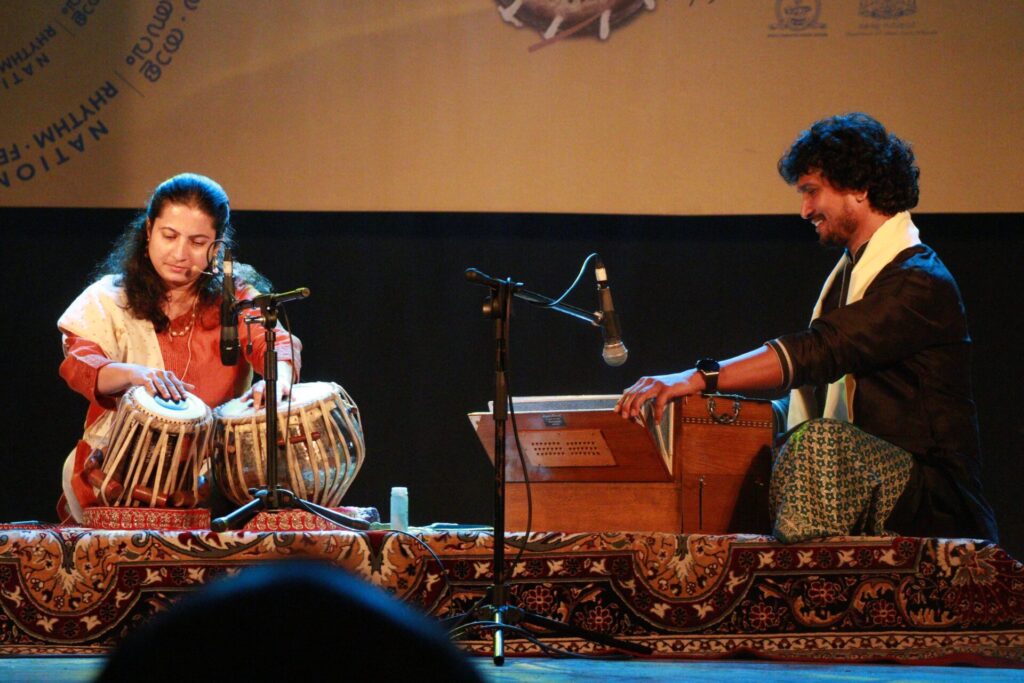
The segment for highlighting woman’s role in percussion, Tavil by Amritha Varshini and group, Ottamthullal (Kiratam) by Kalamandalam Sharmila and troupe , Tabla by Muktha Raste supported by Santhosh Khante on Harmomium, an enchanting Thayambaka by Dr Nandini Varma and team were especially noteworthy.
Sukanya Ramgopal who had ventured into the male-dominated instrument of Ghatam exhibited her virtuosity accompanied by Lakshmi on Mridangam, Morsing by Bhagyalakshmi and Flute by Vani Manjunath which made it further a musical treat. Sukanya was grateful to the Akademi for inviting her for a second time, the first being the festival held at Ramamangalam in 2018. This session had an introductory speech by Dr Deepti Omchery Bhalla.
Folk echoes and cross-cultural rhythms
The secretary of Folklore Akademi A V Ajaykumar explained the nuances of the rhythms in Theyyam and also the colloquial terminology employed by the artistes. He also pointed out that in the absence of a presentation of the art form, he was helpless in going into the applications of the peculiar rhythms in detail.
Janardanan Puthussery presented a variety of folk instruments and their applications by singing the songs peculiar to each art. He also invited the audience to join him in the movements of some of the strains. That women among the audience came forward dance with him, was an index of the efficacy of his presentation. Another performance from Maharashtra was ‘Bhuspandanangal’ presented by Sukhad Munde, Tejovrush Joshi and Santhosh Khande.
Panchari melam drummed out by a 118 strong contingent on the second day had five helmsmen for the five tempos – a novel idea. While the octogenarian drummer Therozhi Ramakurup opened the performance, the subsequent tempos had Cheranellur Sankarankutty Marar, Thiruvalla Radhakrishna Marar, Porur Haridas, Vellithiruthy Unni Nair at the helm. But for the wrong distribution of the Kombus and Kuzhals, the melam was awe-inspiring.
Resounding ensembles
But Padmasree Peruvanam Kuttan Marar who led the Pandi melam the next day took care to see that the Kombus and Kuzhals faced the Chenda contingent and enough microphones were provided for that section. Together with the ‘ferocious’ nature of Pandi, the performance made the spectators on the gallery of Actor Murali Theatre jump in tune with the rhythms. The ensemble contained 130 strong contingent.
Parisha Vdyam, the precursor to Panchavadyam, was led by Kavil Sundaran and his troupe. Once Thayambaka by Kallur Ramankutty and team and Panchavadyam by Chottanikkara and team were over, many were heard commenting that hardly there is any percussion ensemble in any part of the world that could outshine those of Kerala. Among the talas discussed, Sopana talams and intricate Padayani talas were serious omissions.
The only seminar moderated by Dr N P Vijayakrishnan was productive as the veteran artistes including the Chairman threw much light on the development of the ensembles over the years.
All the artistes were grateful to the Akademi for highlighting the percussive art. N Padmanabhan, president of Kerala Kshetra Vadya Kala Sangam, reminisced Akademi’s programme ‘Melangalude Melam’ held for two days in January 1997 in which the late veterans Chakkamkulam Appu Marar, Trippekkulam Achutha Marar and Pallavur Appu Marar had participated.
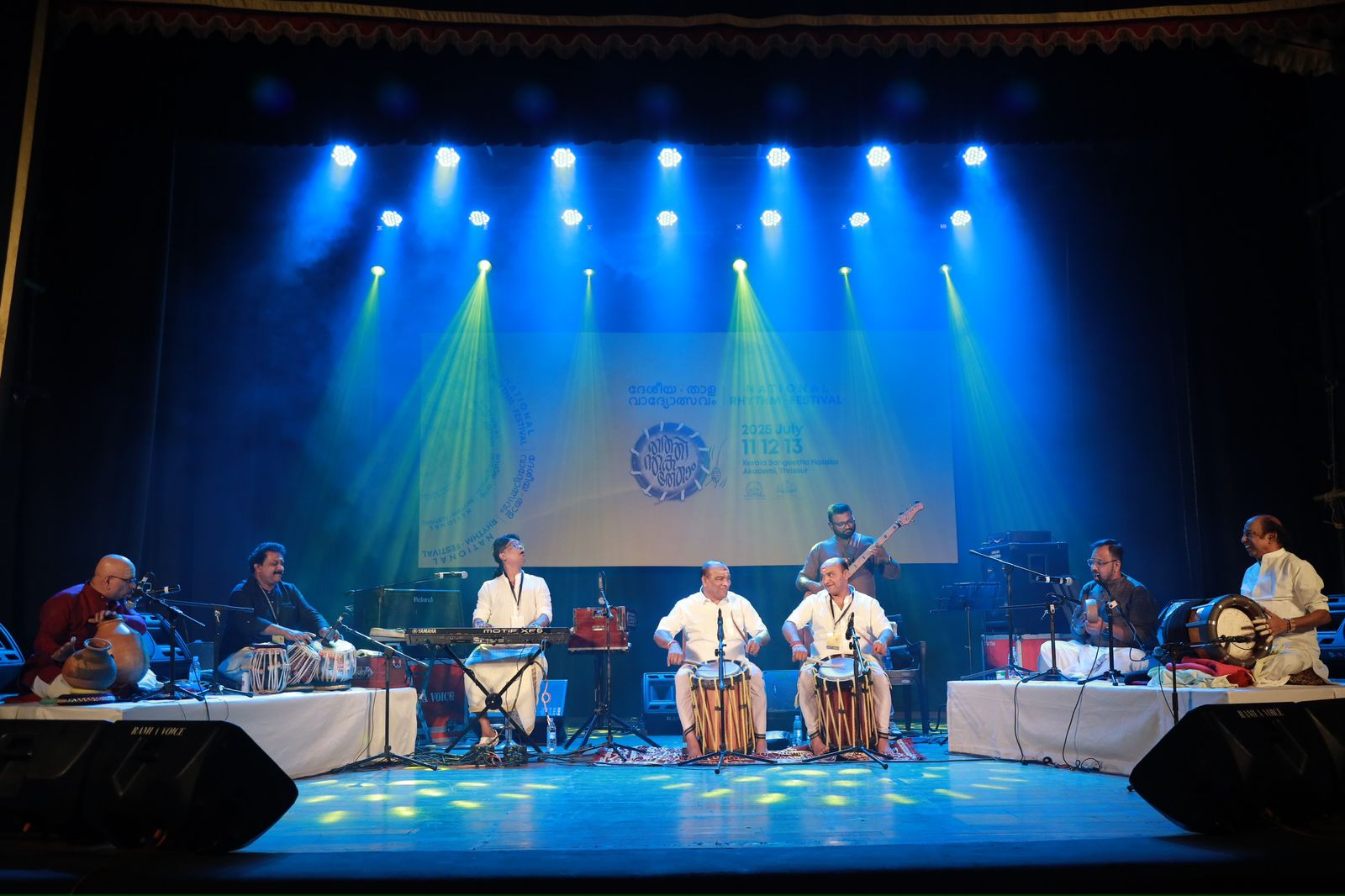
To crown the three days variegated programmes, the Chairman himself presented ‘Chairman’s Symphony’, participated by veterans to mark the finale of the National Rhythm festival. They included, apart from him, his son Mattannur Sreeraj (Chenda), Kalaimamani Guru Tanjavur T R Govindarajan (Tavil), B Sree Sundarkumar (Ganjira), Prakash Ulliyeri (Keyboard and Harmonium), Mahesh Mani (Tabla) and Dr Suresh Vaidyanathan (Ghatom). Regional Theatre had never been packed before with aficionados who occupied every inch of the hall.
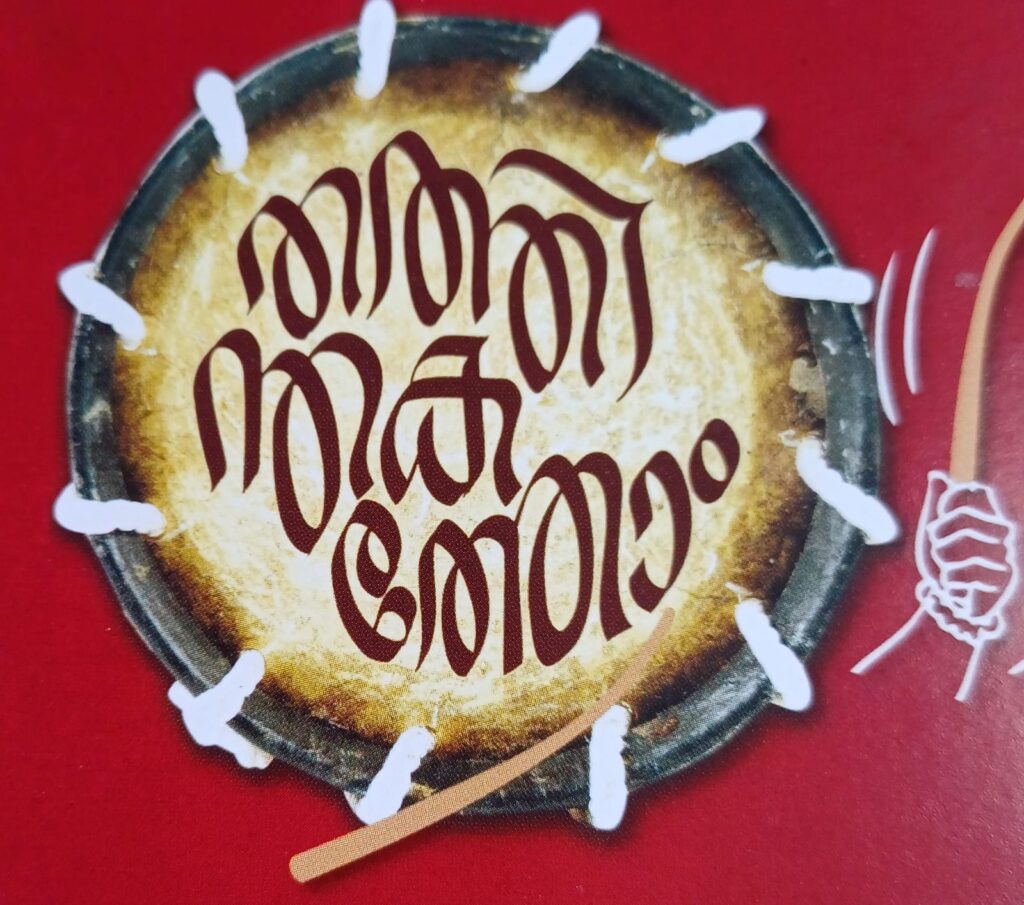
The National Rhythm Festival dedicated to the late Tabla maestro Ustad Zakir Hussein and had a befitting logo ‘Thathinthaka Thom’, a drum syllable.
Dedicated were the services of the curator Keli Ramachandran who worked for months in organising this percussion extravaganza and that of the entire staff of the Akademi which made the festival a grand success.
Photos and videos: Sebastian Joseph, Praveesh