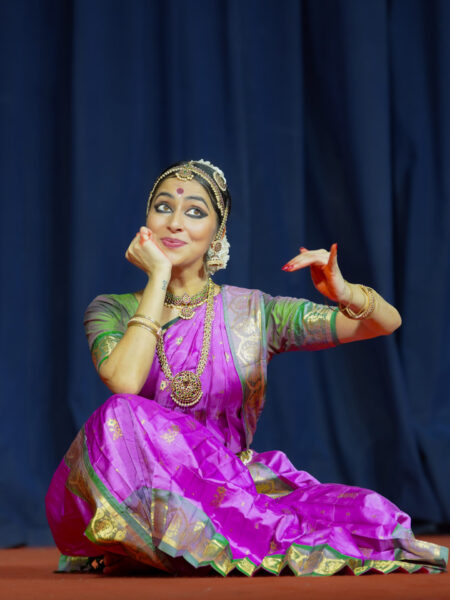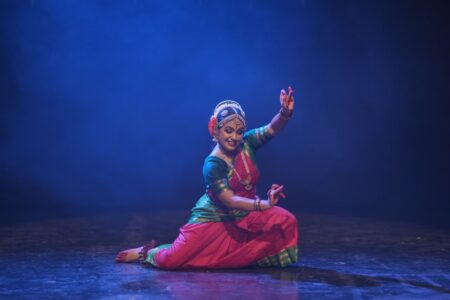

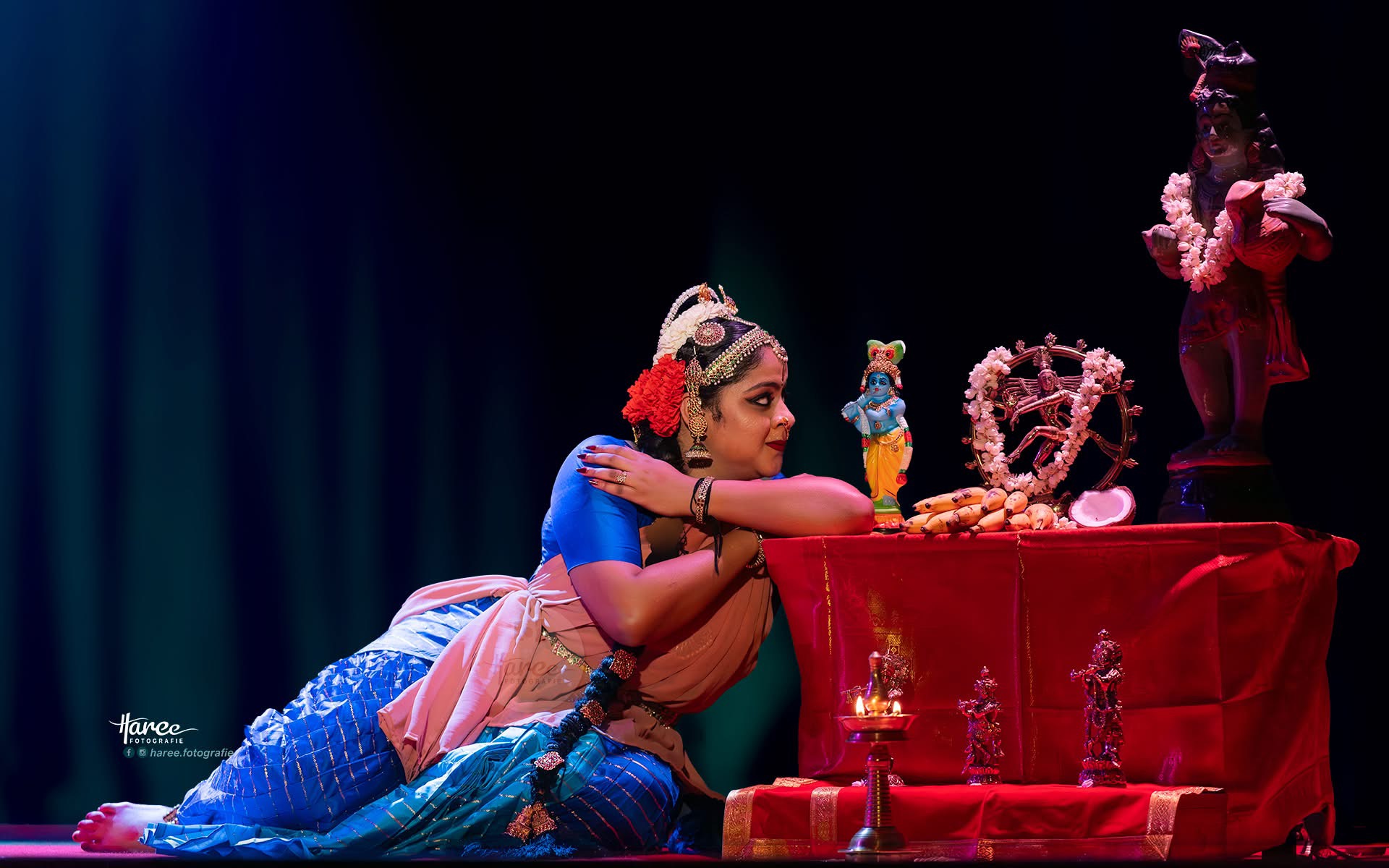
Parvathy Menon’s Krishnapaksha explores Lord Krishna’s life through ten women, blending devotion, drama, and the lyrical grace of Kuchipudi.
Compared to the rest of Indian classical dance-forms, Kuchipudi is more demanding in the sense that it seldom allows the dancer to relax for a moment throughout the recital. In other words, a Kuchipudi-dancer on stage is in relentless motion. Unfortunately, the number of performers seriously engaged in perpetuating this hoary-heritage has registered a steady decline over the years.
In Kerala, several dancers are still capable of and interested in preserving and promoting Kuchipudi. One among them is Parvathi Menon, one of the best-known disciples of Kalamandalam Mohanathulasi and the doyen, Bala Kondal Rao.
Parvathi just recently presented her latest production titled Krishnapaksha, at the T.D.M. Hall, Ernakulam.
A dedicated artist
The solo-recital stretched over two hours portrayed the multiple interactions of Lord Krishna with ten women right from his birth till the fag end of the historic Kurukshetra battle. Meera was enlisted as the last one in the series.
Parvathy began with Devaki who gave birth to the divine child, Krishna. By creating the images of the gentle Vasudeva, the brutalities of the demon king, Kamsa and the luminosity of the child born, the dancer brought to the fore the maternal affection of Devaki and the iridescence of the Lord.
Bijeesh Krishna sang the appropriate lines from the classic, Narayaneeyam, redolently. Parvathy then moved on to Yashoda depicting her in conjunction with the childhood pranks of Krishna. Apart from Ambujam Krishna’s immensely popular lyric, chinna chinna padam, she selected a charanam from Swathy Thirunal’s famed, Gopalakapahimaam, and portions from the alluring, Jagadodharana, of Purandaradasa.
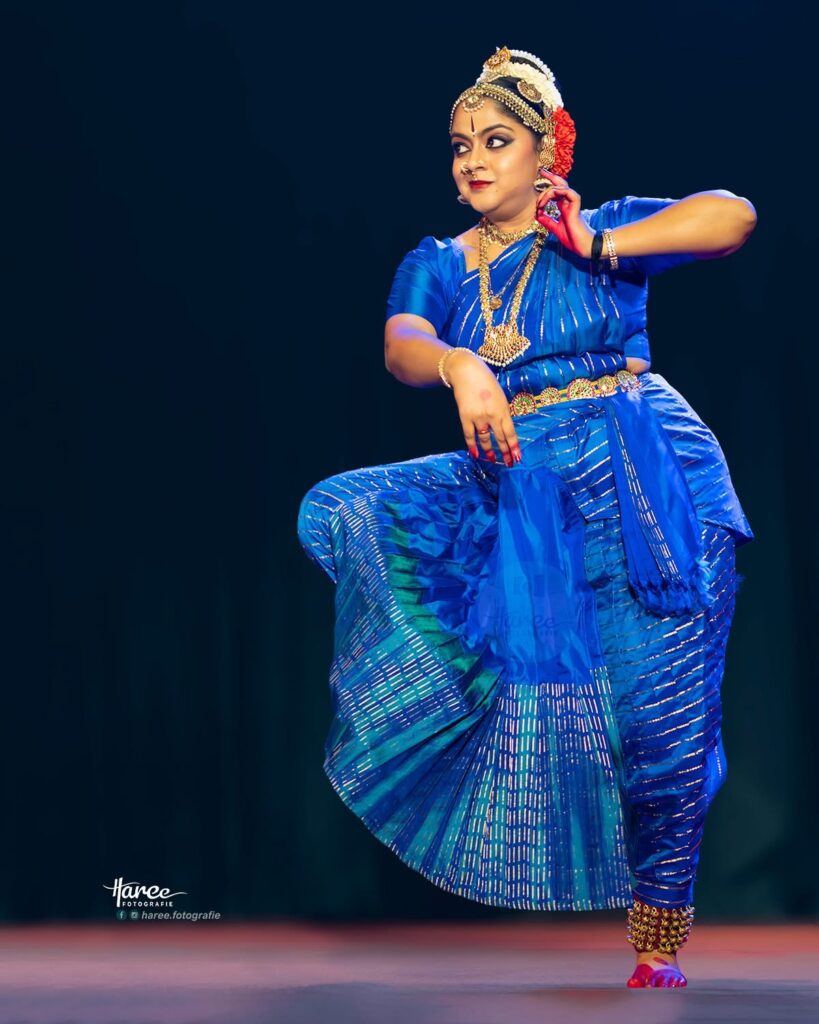
Hermovements and expressions backed by the music helped re-create Ambadi marked by the vibrant presence of the Lord. Again, verses from the Narayaneeyam and the lines from the Dwijavanti composition Chetasree Balakrishnam of Muthuswami Deekshitar established the arrival and actions of the female- demon, Poothana disguised as Lalitha, an ethereal beauty, toAmbadi.
Here, Parvathy employed her theatrical panache to drive home the complex mental makeup of the character who finally attains redemption.
The depiction of Gopika and Draupadi’s plea
Next came Gopika the picturization of which revealed in ample measure the essentials of Kuchupudi invigorated by Neeradasama Neela Krishna, lines from the bewitching composition of Oothukad Venkitakavi in raga, Jayanthashri. Parvathi took up the role of Radha afterwards generously enlivened by the Ashtapadi, Yahi Madhava and Priye Charuseele.
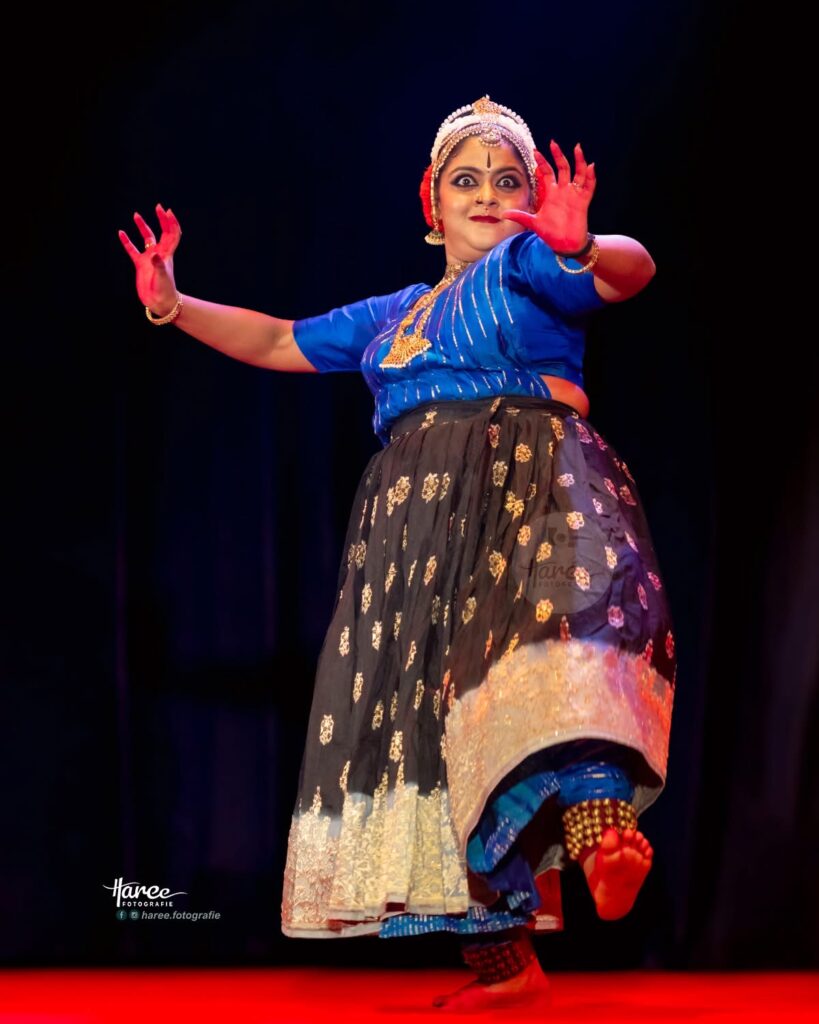
As Gopika, Radha and Krishna, the dancer delved into the intriguing tenors of Sringara rather fluently. The moods of the Virahotkhandithanayika and her eventual reunion with the Lord were poignantly represented.
For the next heroine, Rukmini, the lyrics of Narayana Theerthar, Kshemam Kuru Gopala, and Alokaye Rukmini Kalyana Gopalam, provided the perfect backdrop for unveiling the irresistible longing of Rukmini for Lord Krishna through the Brahmin-messenger.
For concretizing Sathyabhama on stage, Parvathy chose Mayagopabala,a composition of K.C. Kesava Pillai. Afterwards Parvathy delineated the plight of Draupadi whom Dussasana, the demon, tries in vain to disrobe in the Court. Here, Krishna, the supreme Lord comes to her rescue.
Ksheerasagarashayana, the Thyagaraja- composition in raga, Devagandhari, formed its Sahitya extolling the invincible Lord Vishnu as the emancipator of his ardent devotees.
Devotion, drama, and dance
The finale comprised of two more characters; Gandhari and Meera. As an appendix to the Thillana set to raga, Purvi, composed by Thirugokarnam Vaidyanatha Bhagawathar, Parvathi incorporated dialogues taken from Vedavyasa’s Mahabharata and Ezhuthachan’s Gandharivilapam. Gandhari’s outburst culminating into her curse of Lord Krishna was intensely dramatic.
Following the Meera Bhajan, the last shloka of Narayaneeyam formed the Mangalam. The inculcation of the shlokas from Melpathoor’s magnum opus was perhaps intended to attribute an extra authenticity to the production.
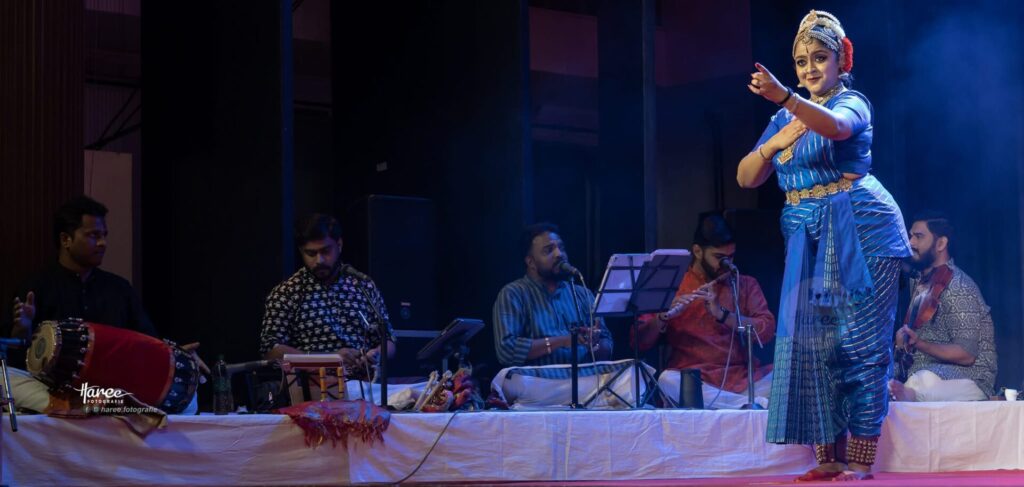
While the gifted vocalist, Bijeesh Krishna sang the lyrics remarkably, seasoned artiste, R.L.V. Hemanth Lakshman solidly contributed to the Nritta-segment of the performance. Kalamandalam Charudutt on the Mridangam, Thrissur M. Shyam Kalyan on the Violin and Sreejith Kamath on the Flute enlivened the movements and expressions of
Parvathy by means of their deft fingerings on the musical instruments concerned. Conceptualized and choreographed by the dancer herself, the production was the resultant of insistent homework and rehearsals.
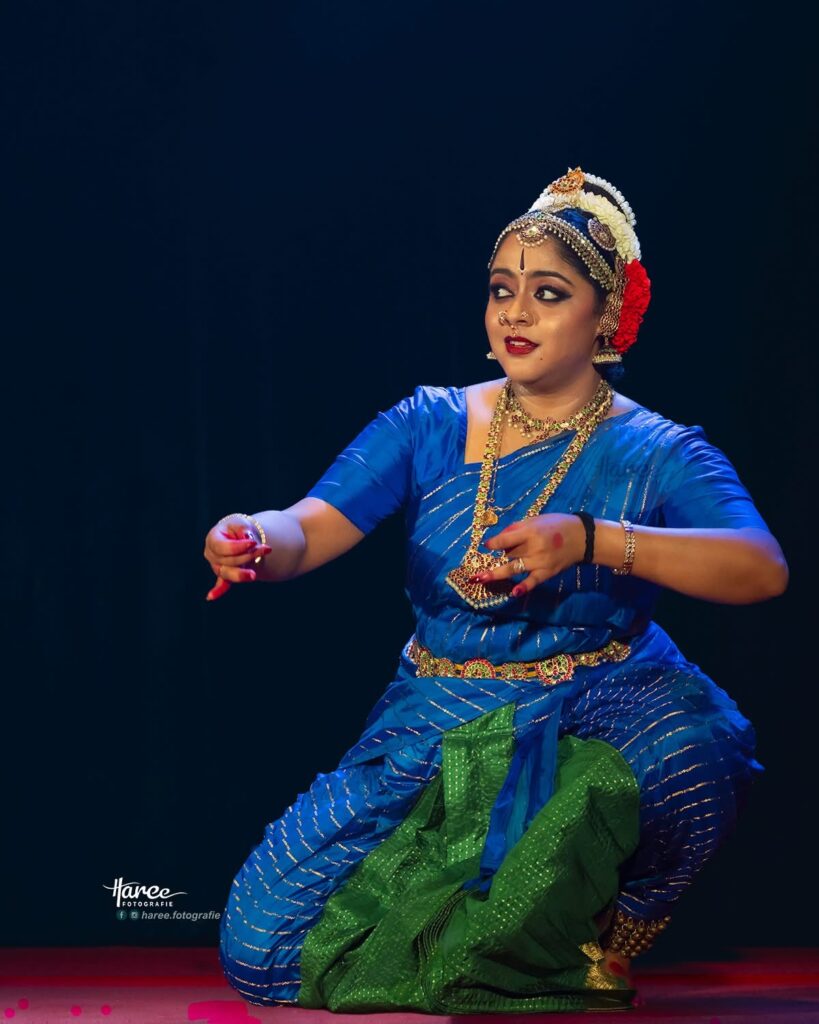
Lyrics from multiple sources enriched the craft and content of each episode. Explicating ten episodes at a stretch by one and the same dancer is no mean task. Parvathy managed it efficaciously. Nonetheless, she could have reduced the number of episodes in such a way as to illuminate the identity of four or five heroines in relation to their hero, Lord Krishna.
Of all the traditional Indian dance-forms, Kuchipudi alone has an elbow room for theatrical tones. Parvathy is one dancer who does have a definite flair for both dancing and acting. Yet I wish she were a little more prudent while enacting characters like Poothana and Gandhari whose depiction turned out to be a bit too loud.
Parvathy effected changes in the costumes in several episodes probably to add to the identity of the characters concerned. In the classical dance-forms, frequent alterations in costumes are more often than not unwarranted.
With more and more opportunities to present Krishnapaksha before initiated audiences, I hope, the dancer-cum-choreographer would revisit her work and go in for appropriate refinements.