
After a period of hibernation, Bharatham, the Thrissur-based cultural outfit, woke up to organise a two- day festival of music and dance recently.
On the first day of Bharatholsavam, Jayakrishnan Unni enthralled the music lovers with a two- hour Carnatic music concert that was especially noteworthy for his creativity. Admittedly, his repertoire included choicest compositions mostly of Thyagaraja and Dikshitar. For the same reason, they appealed to the listeners more.
He opened with Dikshitar composition ‘Kanchadalayakshi Kamakshi’, in Kamalamanohari ragam and adi talam. The very opening revealed his energetic approach to the concert. Niraval at raka shahi vadane mostly done in the upper sthayi were enchanting.
Soon followed Devamanohari ragam through the Thyagaraja composition, Evarikai avataram, in misra chap talam. The alapana of the raga brought forth his mastery of the raga as also an insatiable urge for improvisation. One could feel the mood of the composition – a salutation to Rama asking why he took birth here.
Marked by creativity
Jayakrishnan’s style seemed to present the compositions in quick succession. Soon after finishing one, he jumped to the next in the same breath! This was laudable as the audience was compelled to listen to him uninterruptedly.
Alapana of Devagandhari could not have been better, judging from the ingenious phrases he had woven to bring out the essence of the raga. A tendency to traverse in the upper octave added to its charm. Naturally the audience responded as he switched on to the much sought-after composition, Ksheera sagara sayana of Thyagaraja in adi talam. The opening line itself was noted with sangatis galore.
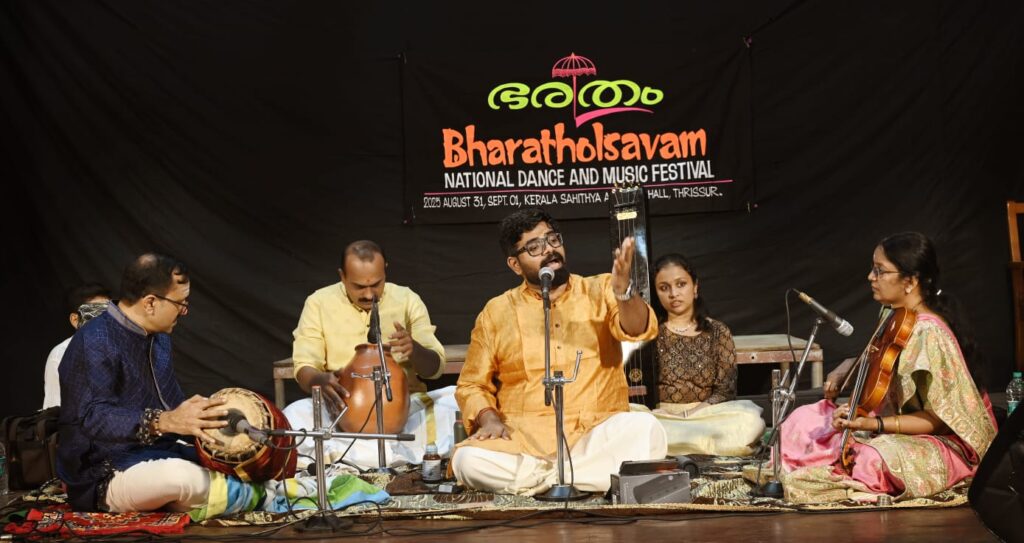
The fast number in Malavi, Nenarunchinaau of Thyagaraja, heralded the main number of the concert Kamalambam bajare in Kalyani, from the Navavarana compositions of Dikshitar. Need not mention, for a creative singer like Jayakrishnan, the essaying of Kalyani was all-embracing. Moreover it was an extensive one bringing out all the subtleties of the raga. Niraval at Kamalapura Sadanam was multicolored.
Violin accompaniment by Sunita Harisankar was in the right proportion and throughout the concert she provided excellent support to the vocalist. As for percussion – Sanoj Poongad on mridangam and Kurichithanam Ananthakrishnan on ghatam – appeared most dynamic and disciplined.
Virutham was followed by Jayakrishnan’s own composition ‘Chendhil nidra bala’ in Desh, Kapi and Darbarikannada.
Before winding up the concert with a tillana by T N Seshagopalan, ‘in Basanth, the vocalist presented the Swatithirunal number Kalaye sri kamalanayana in Chenchurutty and adi.
Promising dancer
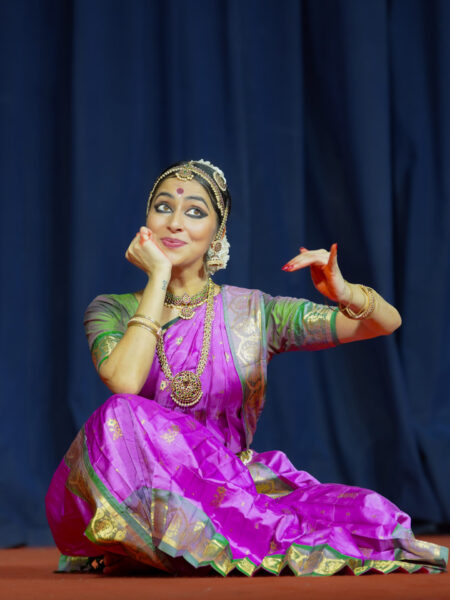
The second day of the festival witnessed two dance recitals. Anjali Krishnan, an up-and-coming dancer of Mohiniyattam presented two items. She opened with the famous Ganesha sthuthi of Oothukkad Venkatasubbayyar, Sri Vignarajam bhaje in Gambirannatta and khanta chap. The composer glorifies Ganesha, the remover of obstacles while describing his enchanting features. Anjali’s portrayal of the elephant-headed God was commendable and her adavus were laudable.
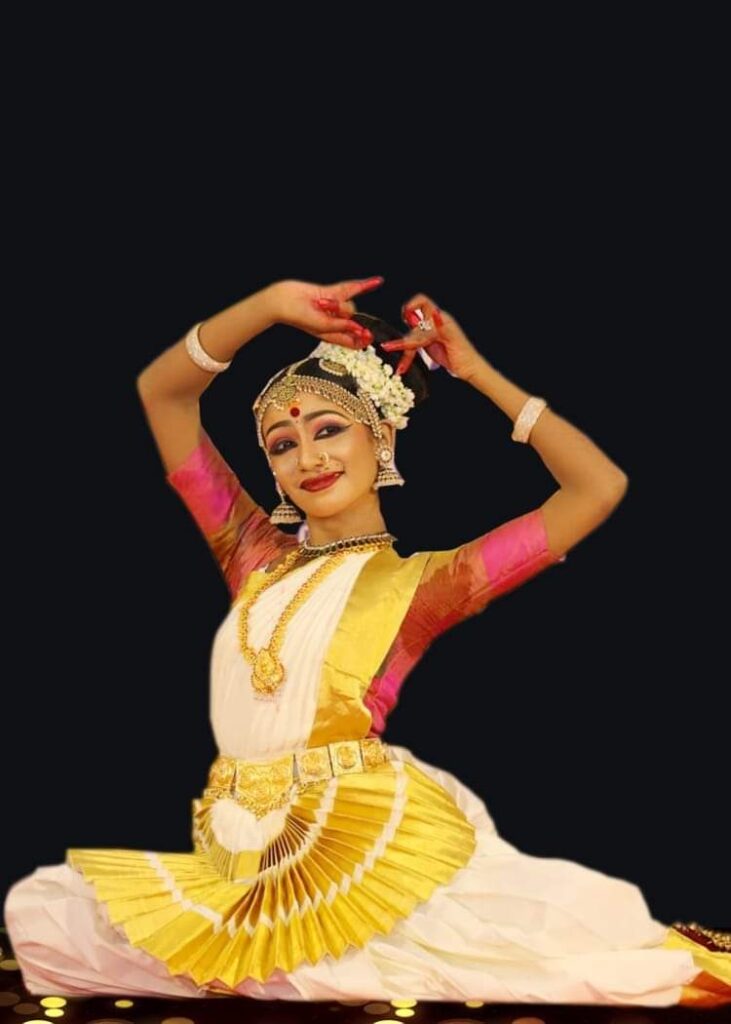
But more of her abhinaya and nritta, well balanced, appeared in the last number, a Varnam on bhaktha Meera. Penned by Vyloppilly Narayanankutty who has turned a prolific composer these days, Vismrutthaasim kim thava…..explained Meera’s life and her passionate devotion to Krishna. And Anjali could do justice to the relatively long composition in heavy manipravala, by interpreting the Sahithya with her abhinaya.
Anjali is a disciple of Kalamandalam Akshara Bijeesh, and Bijeesh himself had scored music for this number in Puriyadhanasree and adi.
Scintillating performance
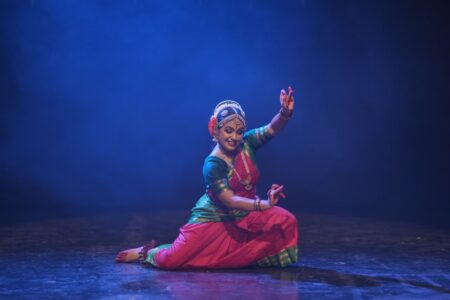
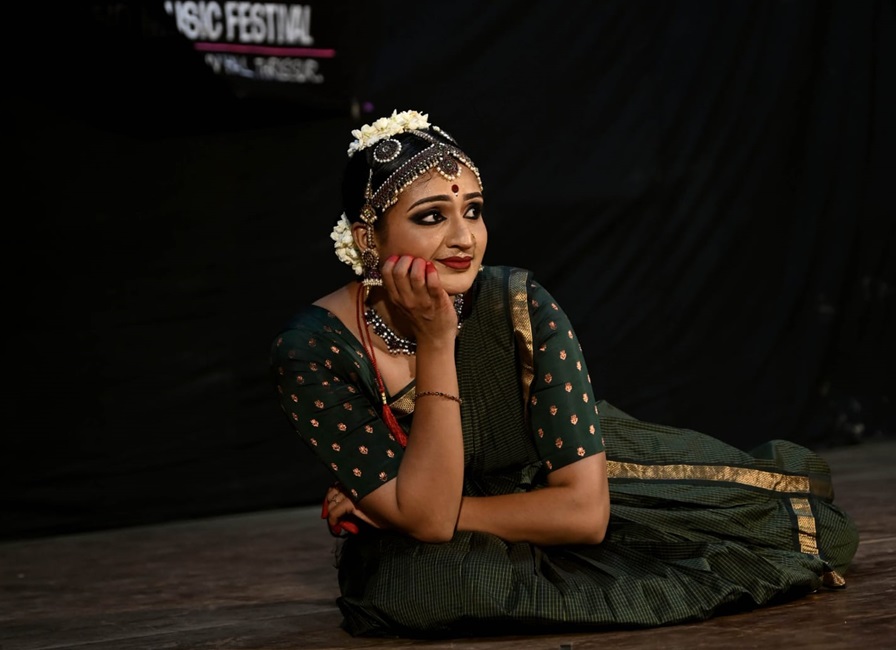
A fitting finale to the Bharatholsavam was a brilliant Bharatanatyam recital by Manju V Nair, a seasoned performer.
The 90 minute performance demonstrated her mastery over the terpsichorean art and all the five numbers she presented were eloquent demonstrations of the Panthanallur bani.
She opened with Narayana Guru’s ‘Sivaprasada Panchakam’ that was a praise of Lord Siva and the devotee asking for his grace. Composed in Ragamalika, and adi talam, by Bijeesh Krishna, ‘Siva, Sankara, Sarva, Saranya vibho’ was delectable for the innumerable postures of Siva she struck and they were noted for their sculptural finesse and stability.
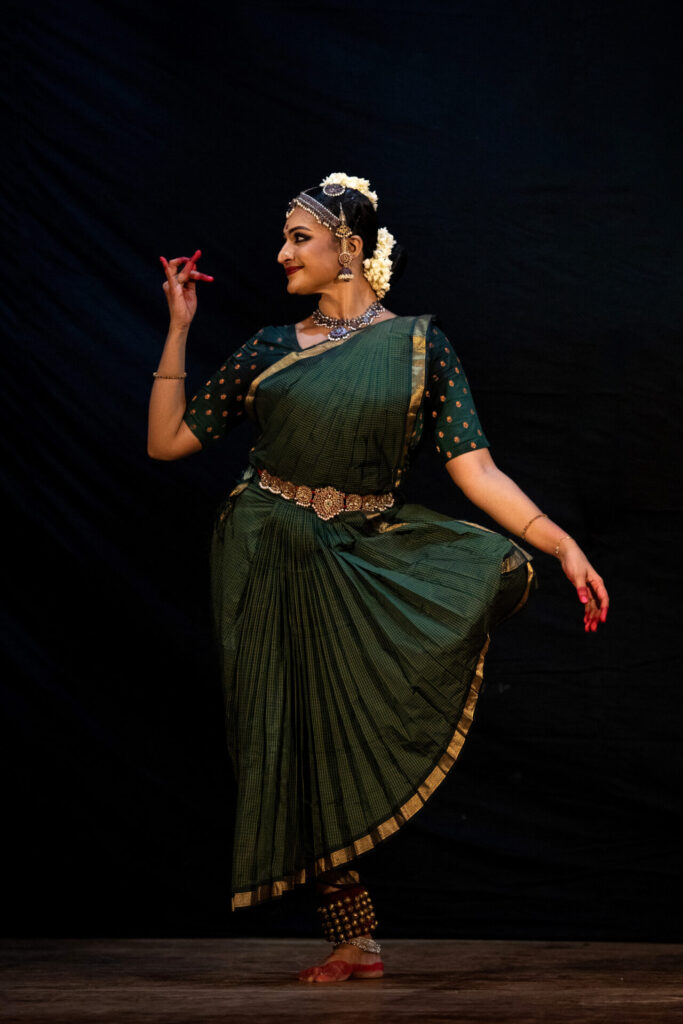
Manju portrayed a virahotkhandita nayika in the Charukesi varnam composed by Lalgudi Jayaraman. Her histrionic potential came to light when she portrayed the nayika’s intense longing for Krishna. As for the nritta part, the adavus appeared chiseled to geometric perfection. Interpretation of ‘Kuzhaloothum azhaka Kanna’ depicted listening to his flute as well as ‘you know my mind’. Space utilization of the stage for the performance as whole was praiseworthy.
‘Samayamithe ra ra’, Patnam Subramania Iyer’s padam in Behag once again helped her to exhibit her inimitable talent of abhinaya. One could actually perceive the anxiety of the nayika while Manju interpreted the verses , “Oh lord, please come. This is the most opportune time”.
For Kirtanam, she took Madurai R Muralidharan’s composition on Tripurasundari. One could watch in the portrayal the bewitching beauty of the goddess of the three worlds. Moreover her gaze at the Devi with adoration and wonder towards the end of the composition was really awe-inspiring.
She concluded the recital with the most alluring Thulasi bhajan – Sree Ramachandra Kripalu in Yamunakalyani and misra chap. As against the spirit of the bhajan, she interpreted the lines as Kausalya’s recapitulation of the childhood days of Rama, on his coming back to Ayodhya after fourteen years of exile. While soothing was the rendition of Bijeesh, the dancer’s abhinaya soared to unfathomable heights with her eyes welling towards the end. This was really touching.
That the audience felt, she could have continued with a couple of items more, was enough indication of the amazing artistry of Manju.