
A three-day festival in Goa brought together Hindustani, Carnatic, devotional, ghazal, Sufi and theatrical traditions in a celebration of India’s musical diversity.
Music in its many forms took centre stage at the third edition of Malhar by the Sea, held at Taj Exotica Resort. Presented by Showhouse under the theme One India, Many Voices, the three-day festival brought together a diverse line-up of classical, semi-classical, devotional and popular music, underscoring the richness of India’s plural musical traditions.
The programme featured leading artistes including sitarist Ustad Shujaat Khan, Dhrupad exponent Ustad Wasifuddin Dagar, Carnatic vocalists Ranjani and Gayatri, popularly known as the Raga Sisters, Bhajan Samrat Pt Anup Jalota, Hindustani vocalist Ronkini Gupta, singer Priyanka Barve, and a Sufi Qawwali ensemble led by Shivam Bhardwaj. Theatre, too, found a place in the festival with Danish Hussain’s musical presentation Main Pal Do Pal Ka Shayar Hoon, alongside a Beatles tribute by Wanted Yesterday and a Fado Unplugged performance by Nadia Rebello.
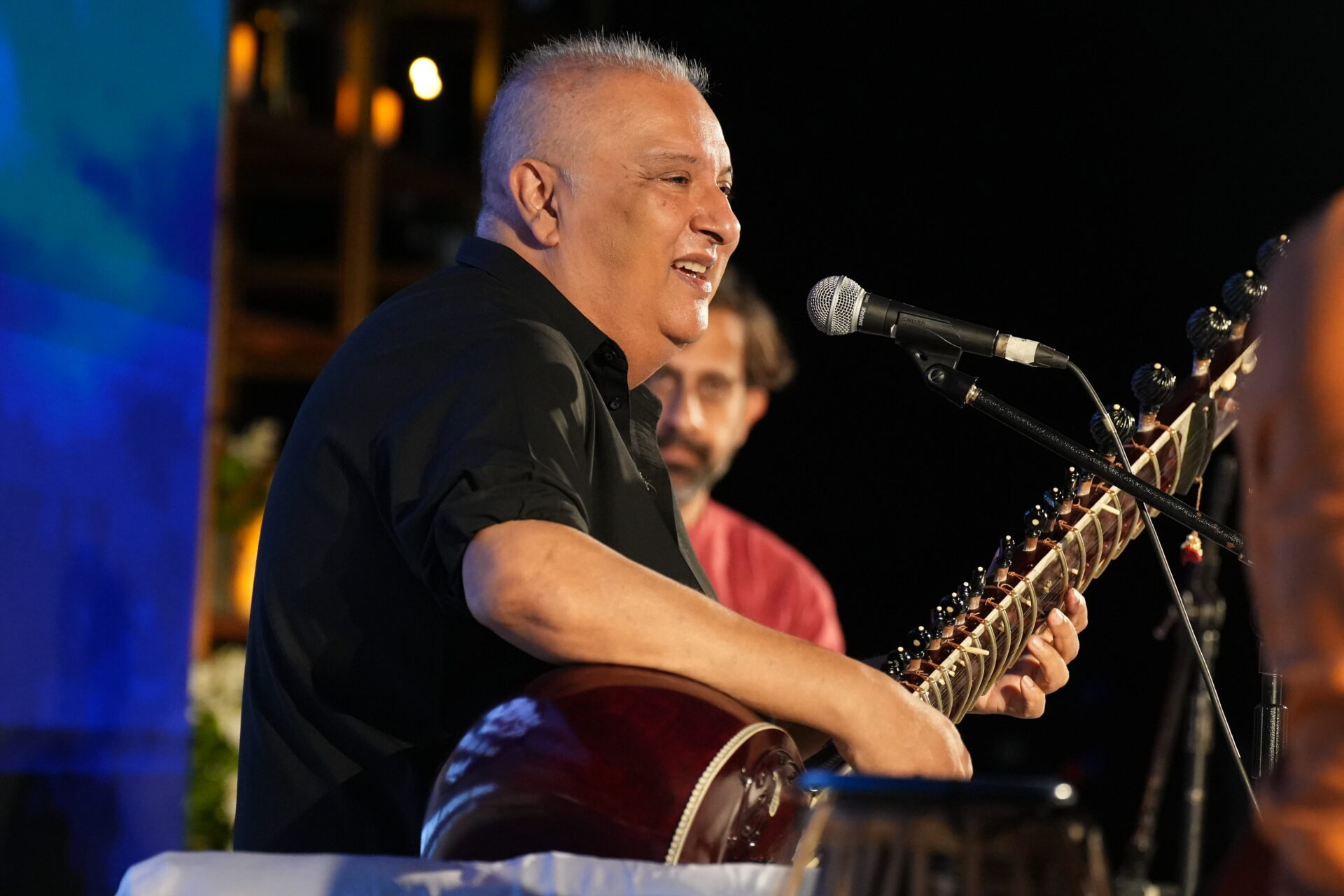
The festival opened with a recital by Ustad Shujaat Khan, one of the foremost sitarists of his generation. A disciple and son of the legendary Ustad Vilayat Khan, the pioneer of the gayaki ang style of sitar playing, Shujaat Khan has developed an exceptionally vocal quality of expression on the instrument. His ability to make the sitar emulate the nuances of the human voice was evident throughout the recital.
The artiste also recalled his performances with legendary singer Asha Bhosle in India and abroad. At one point, however, his concentration was interrupted by a spectator speaking on a mobile phone in the front row. “Hamara yahan pasina chhoot raha hai aur aap phone mein lage ho,” he remarked, drawing laughter from the audience. Later, with characteristic humour, he added, “Karo na” when the person appeared ready to make the call. Near the end of the recital, the arrival of the Raga Sisters prompted another playful remark: “Aap log abhi aa rahe ho?”
Shujaat Khan was accompanied by Vijay Natesan on the mridangam and Suhel on tabla. The use of the mridangam alongside tabla in a Hindustani recital was unusual, but it blended effectively into the percussion ensemble.
The depth and discipline of Dhrupad
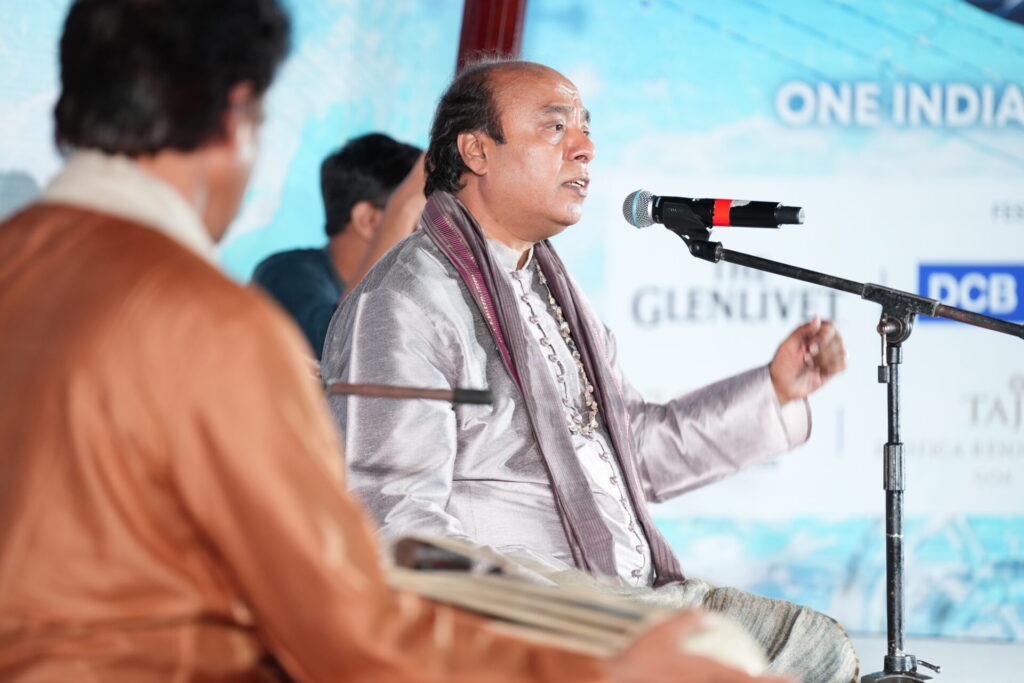
Dhrupad, among the oldest surviving forms of Hindustani classical music, was represented by Padma Shri Ustad Wasifuddin Dagar. Drawing from the Dagar tradition, he demonstrated the depth and flexibility of Dhrupad through subtle variations in tonal emphasis and interpretation. Each line of the composition acquired a different character through nuanced shifts in pitch, phrasing and tonal colour.
He commenced with ‘Ayi Hay Gata’, also sang “Jane Na De, Jane De Mohe” creating a lasting impression on the rapt audience. The musical range of Ustad is amazing, from simple notes to travelling through various octaves of music with effortless ease and mastery.. Mohan Shyam Sharma accompanied him on the Pakhawaj.
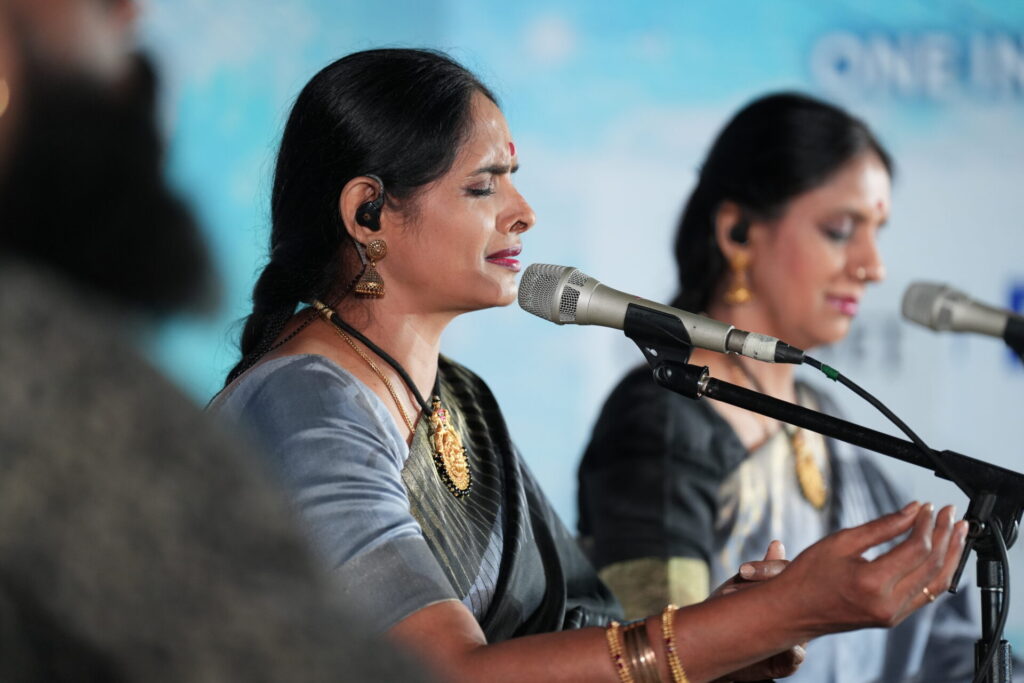
The Raga Sisters brought the distinctive vocabulary of Carnatic music to the festival. Ranjani and Gayatri, among the country’s prominent Carnatic vocal duos, have performed at major venues including London’s Royal Albert Hall.
Their presentation combined the rigour of the classical repertoire with a selection that reflected the wider musical traditions of India. Besides traditional and intense Ananda Amruta Varshani raag, they regaled the audience with Marathi abhangs like Tukaram’s “Bhoot Mate Mote, Pandaricha Bhoot Mote” signifying that the Lord is like a ghost, once you visit the temple, you will be dissolved completely, hence you may not return home. Pertaining to romantic monsoon, they duo sang with amazing dexterity “Barse Badariya Sawan Ki, Man Bhaavan Ki”. They were accompanied by Sai Giridhar on mridangam and Krishna on Ghatam.
Anup Jalota’s devotional repertoire
Padmashri Anup Jalota, known as Bhajan Samrat, acknowledged for his soothing divine voice that transcends all barriers and regions, creating a serene holistic atmosphere wherever he performed. He arrived by the early morning flight to regale the spectators on Saturday morning, that created a lasting impression on the listeners. He was accompanied by playback singer Shweta Pandit.
The first he rendered was the popular number of saint poetess Meera “Yeasi Lagi Lagan Meera Ho Gayi Magan”, making a fine start, followed with “Achudam Kesavam, Krishna Damodaram, Rama Narayanam, Janaki Vallabham”.
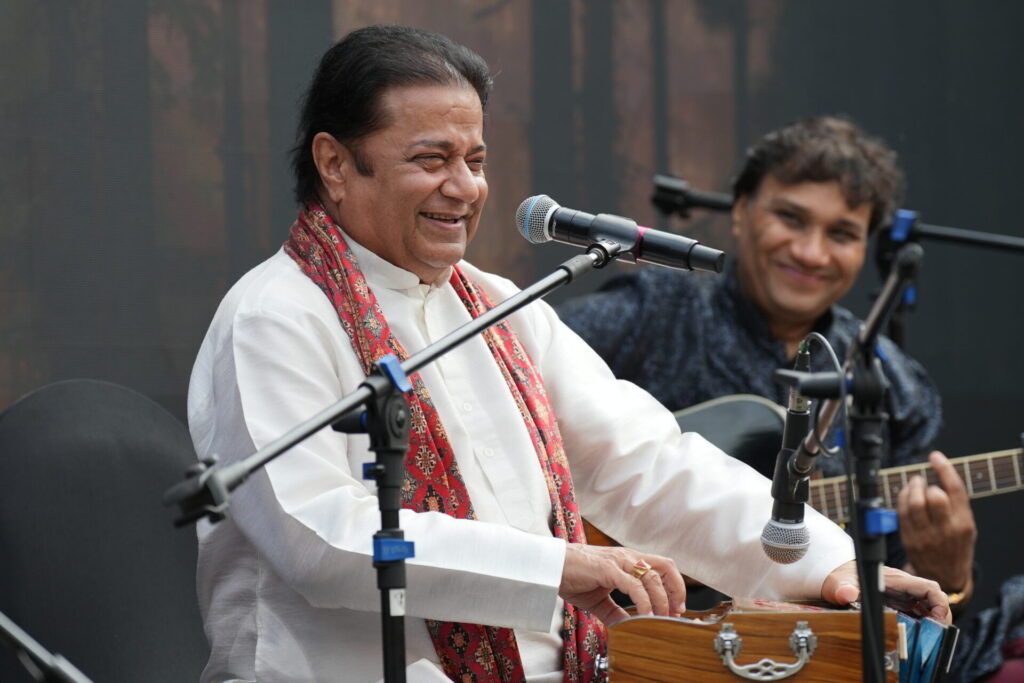
Panditji has a great sense of humour and cracks jokes quite often,making the atmosphere lighter with entertainment. Another iconic number rendered was “Itni Shakti Hame De Na Data, Man Ka Vishwas Kamjoor Ho Na”(O Lord please do not give us so much strength that we might become fickle minded or weak) Shweta Pandit rendered the popular solo number “Yashomati Maiya Bole Nandlala” pertaining to the complaints of child Krishna.
The iconic number of V Shantaram’s movie “Do Ankhen, Barah Haat” – “Ye Maalik Tere Bande Hum, Aisse Ho Hamare Karam”, the popular Gazal of Jagjit Singh “Tum Itna Jo Muskura Rahe Ho, Kya Gum Hay Jo Chupa Rahe Ho”(What is the sadness that u are hiding with your smile), “Hoto Se ChuLo Tum, Mera Geet Amar Kar Do”(Make my song immortal with your kiss) and the finale number was “Damadam Mast Kalandar”. He was supported with fine set of musicians, Mahesh Rao on the violin, Himanshu on Guitar, Devendra on Tabla and the talented keyboard musician.
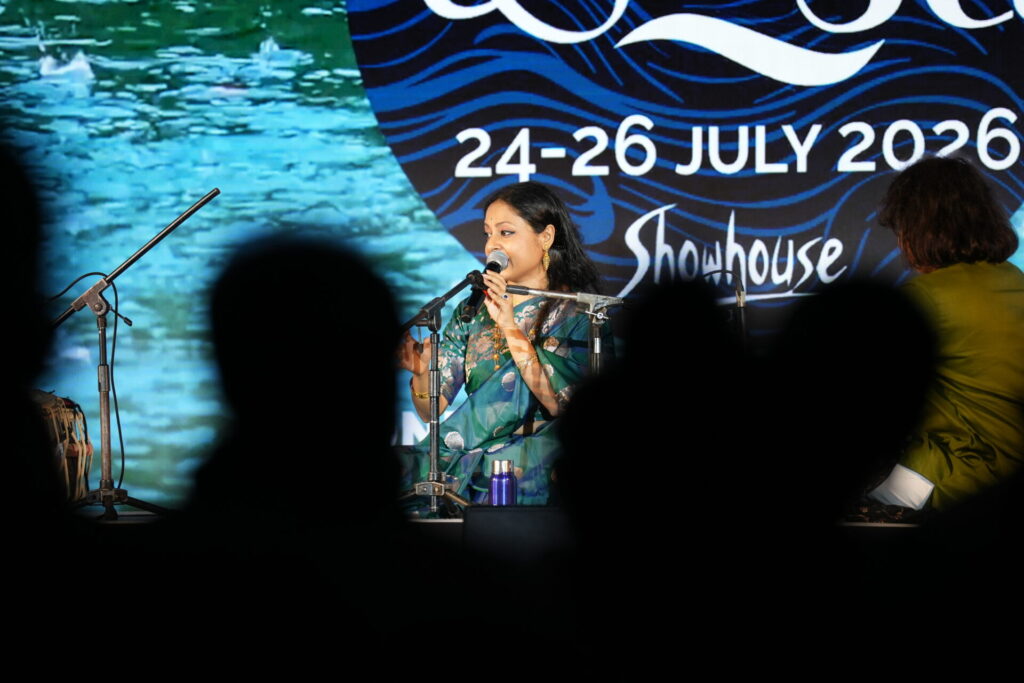
Hindustani music vocalist Ronkini Gupta from Kolkata impressed the spectators with her commendable renderings. She commenced with raag megh – ‘Koyaliya Gaye”followed with the exciting number “Bunde Bunde Barse”(Little drops of rain) taking the audience to higher level of musical melody , reverberating the entire atmosphere with her musical intensity. Ronkini was ably assisted on the Tabla by Asish Ragwani and Harmonium by Deepak Marathe. Ronkini has also sung for the renowned A.R.Rahman in varied projects
Priyanka Barve revisits the golden era of Hindi film music
Another powerful singer of the festival was Priyanka Barve, she consistently regaled the listeners with various Gazals and Geets from Indian cinema which are acclaimed iconic numbers of Lata Mangeshkar and Mehdi Hasan. “Mohabbat Karne wale Kam Na Honge, Teri Mehfil May Lekin Hum Na Honge”(There may be many who may fall in love with you but I may not be there).
The famous Lata number with music by the veteran Madan Mohan “Agar Mujse Mohhabatt Hay Toh Apna Gum De Do”(If you are in love with me then give me your sadness) another immensely popular number of Lata ‘Lag Ja Gale Se, Phir Yeh Haseen Raat Ho Na Ho”(Do embrace me as I do not know whether we can meet again for another beautiful night).
The Pahadi film sangeet “Hamari Atariya Sawariya”, ‘Yeh Dil Tum Bin Kahi Lagta Nahi Hum Kya kare”(What can I do without you) The number from Mughal-e-azam ‘Mohe Panghat Pe nandlal Ched Gayo”picturised on Madhubala and another hit number of Ashaji ‘Salona Sa Sajan Hay”. Incidentally Priyanka plays the role of Anarkali in the theatre extravaganza of Feroz Khan- “Mughal-e-azam”. Priyanka created a lasting impression with her melodious renderings.
One of the most unusual and engrossing presentations of the festival was the theatre production ‘Pal Do Pal Ka Shayar Hoon’ by Danish Hussain and his talented team of actors and singers,projecting the life of veteran lyricist Shahir Ludhiyanavi, through the medium of narration,story telling, songs and musical renderings, thoroughly enjoyed by everyone, as it was “nostalgia down memory lane” portraying as to how Shahir Ludhiyanavi struggled to establish himself as one of the best lyricists of Indian cinema.
When Shahir started off the name of the lyricist was not known to anyone as their names were not enlisted anywhere but Shahir fought for his rights to the extent that along with the mention of the singer, the name of the lyricist started being mentioned everywhere, furthermore it is interesting to note here that Shahir wrote the lyrics first, the music was composed later and not the other way around.’Pal Do Pal Ka Shayar Hoon”, “Thandi Sawaye,Lehraye”,”Tasveer se Bigdi”, the iconic number picturised on Johny Walkar “Jab Sar Chakra Jaye”, “Allah Tero Naam”,”The hit number from Gurudutt’s “Pyaasa”- “Ye Duniya Bhi Mill Jaya Toh Kya Hai?” and several others that formed an integral part of Hindi cinema.
The talented team of artists were Geetika Srender, Kumar Singh, Srijonee Bhattacharya,Shantanu Nandan,Herlekar,Siddharth,Nirtyanada padiyar,Kaustabh Shukla,Sohel Shaikh, Shantanu Surendra, Salvi,Devendra Singh,Kishwah,Devendra Singh,Prashat Sharma, Varun Gupta, Ramesh Laxman Dalvi and producer Amita Talwar.
Besides the realistic Rain Dogs exhibition by Rohit Chawla, the proceeds of the festival will be donated to Angels for Animals, an NGO for the welfare and caring of animals The festival was held from July 24 to 26, 2026