
Where ancient rhythms meet new worlds — Indian classical dance takes centre stage in America.
The 16th edition of the American Natya Festival, curated by dancer and cultural organiser Prasanna Kasthuri, reaffirmed its place as a serious, sustained effort to cultivate Indian classical dance traditions in the heart of the American Midwest. Held from June 13 to 15 at the Clayton High School Auditorium, St. Louis, the festival unfolded not just as a sequence of performances, but as a movement rooted in cultural continuity, intergenerational learning, and artistic conviction.
From earnest young learners to seasoned performers, this year, the festival offered a cross-section of the classical Indian dance landscape as it has evolved in diaspora spaces—where memory, identity, and belonging are often negotiated through art. It was an ode to perseverance and purpose, with each performance emerging as both an offering and an assertion of rootedness.
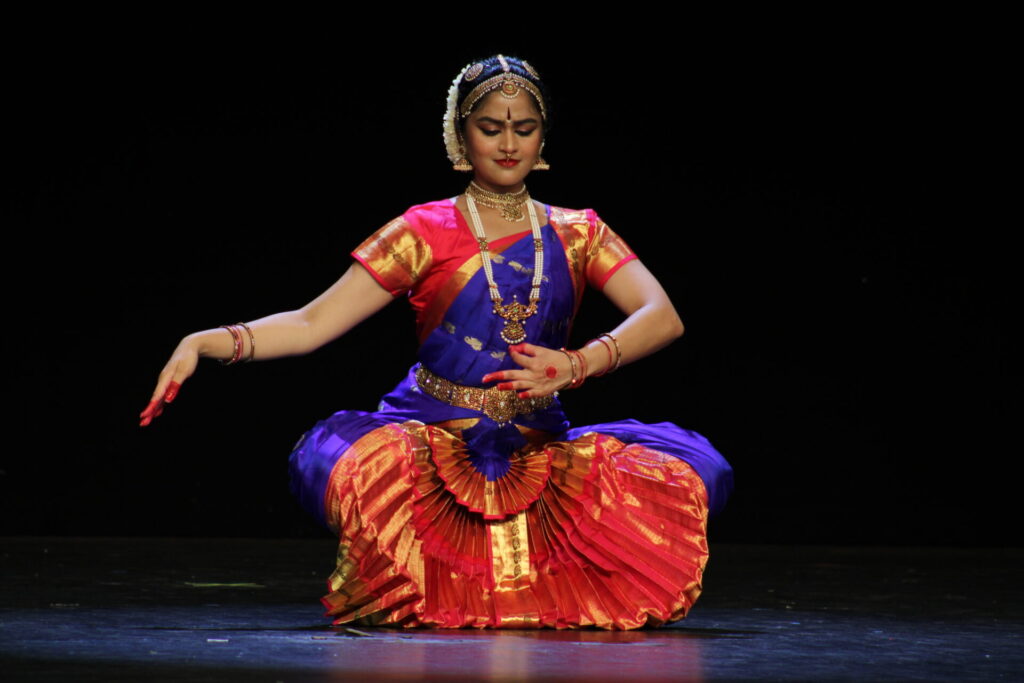
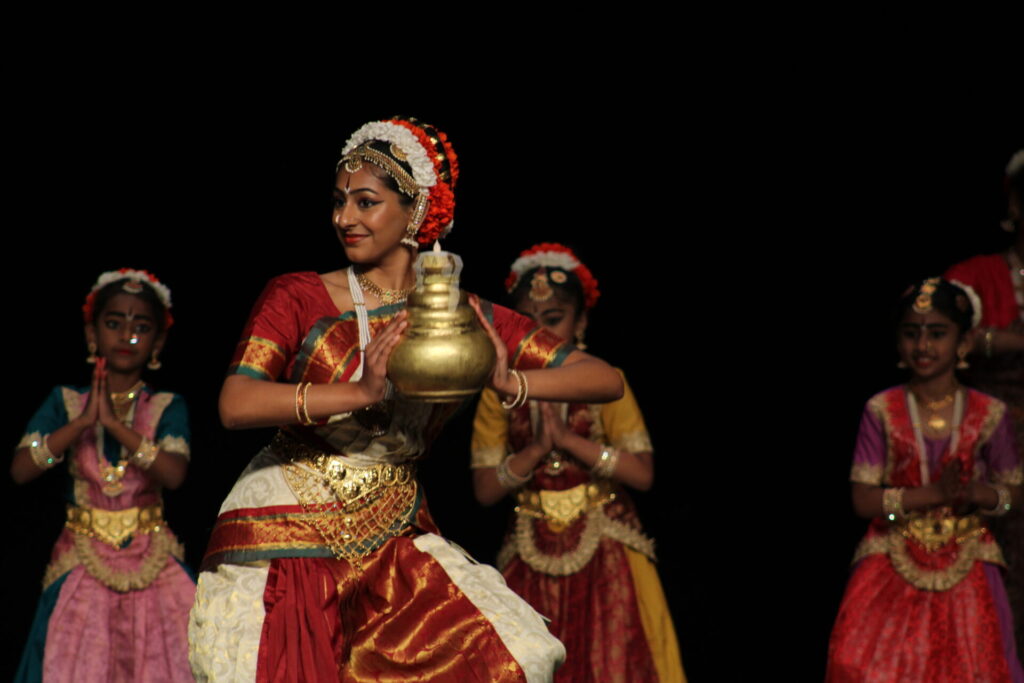
The festival opened with speeches, music, and a medley of short performances by local students—setting a warm, inclusive tone for the three-day celebration. Maithili Patel, a Kathak practitioner from New Jersey, opened the solo presentations with Aatman, her re-interpretation of Geeta Govindam. Under the mentorship of Guru Dr. Pali Chandra, Maithili’s presentation balanced classical rigour with meditative depth, exploring the evolution of the dancer’s inner gaze. It was a quietly powerful beginning.
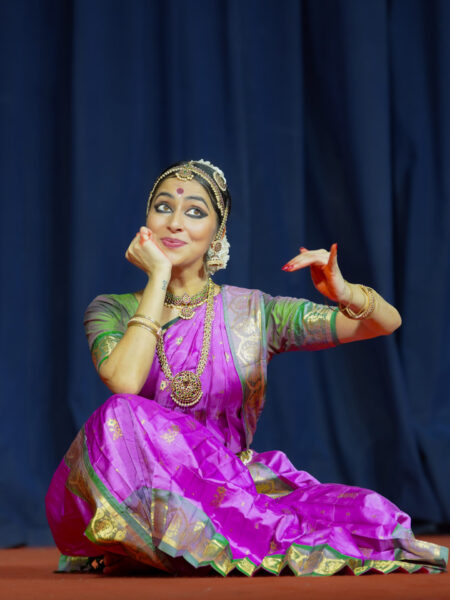
Following this, Sumangala Varun’s Bharatanatyam performance stood out for its emotional clarity. Her Shabdam captured the yearning of the virahotkhandita nayika, while a Vachana choreographed by Guru Sheela Chandrashekhar explored poetic episodes from the Sharana tradition. Her portrayal of Kannappa’s selfless devotion to Shiva was particularly moving.
Myth and metaphor
Mohiniyattam dancer Sreevidhya Vijayan presented Chandanam, a rare revival of a Desi choreography by Guru Nirmala Paniker. Through the myth of Shiva consuming the Kalakoota poison and Parvati applying sandalwood paste to cool him, the performance invoked healing, harmony, and feminine power. Set in Saurashtra Ragam, the piece combined lyrical beauty with narrative depth.
Sudha Raghuram’s spirited performance followed, featuring a Pushpanjali, Hanuman Chalisa, and Annamacharya’s Brahmamokate. Her presentation, rooted in joyful devotion, underlined dance as a mode of both expression and celebration.
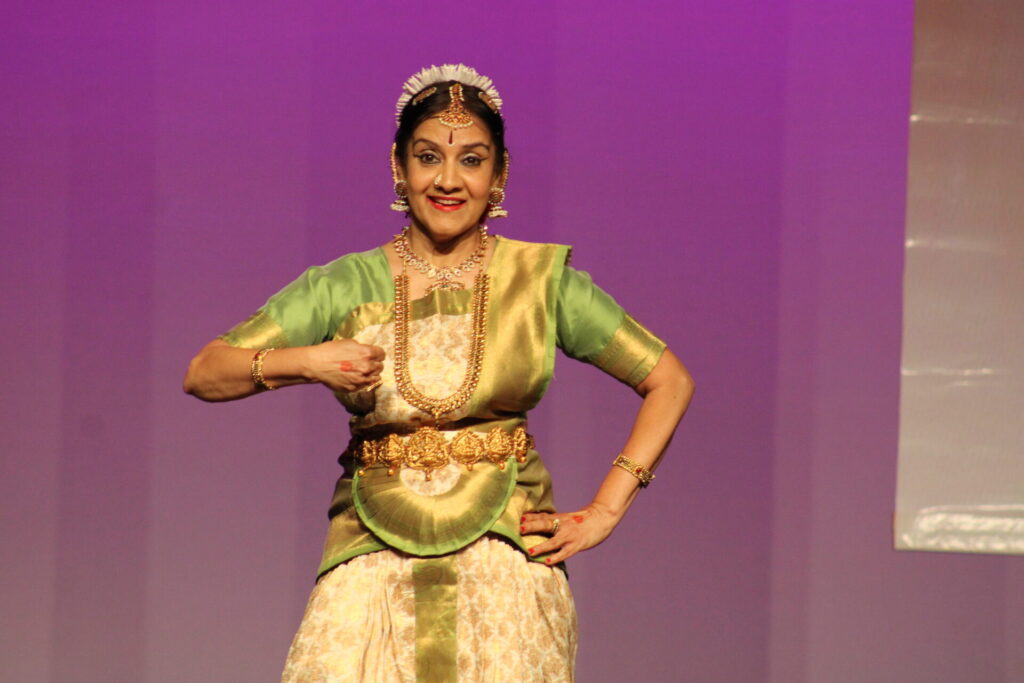
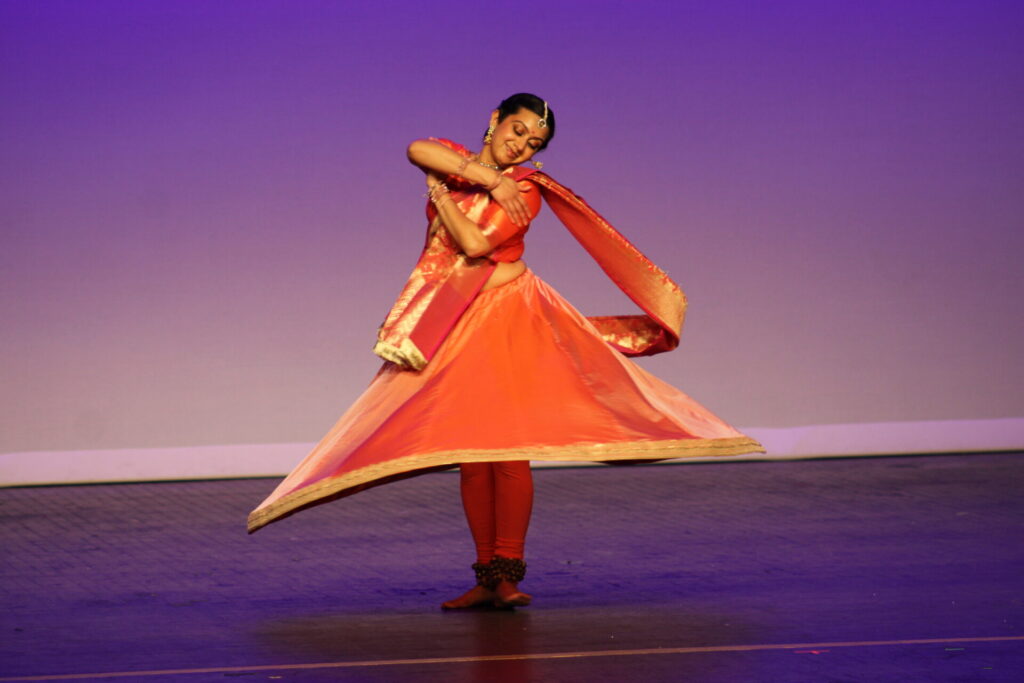
Later that evening, the students of Sujatha Vinjamuri took to the stage—an important feature of the festival’s ethos: to nurture emerging artists alongside veterans.
Honouring legacy and form
The second day opened with Kathak Vaibhavam by Soorya Dance School, brimming with rhythmic vitality.
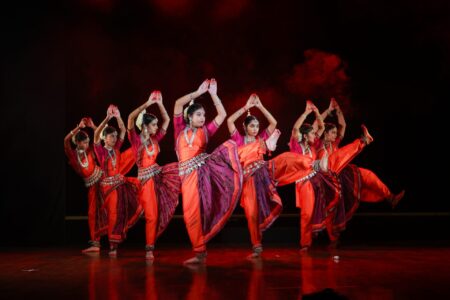
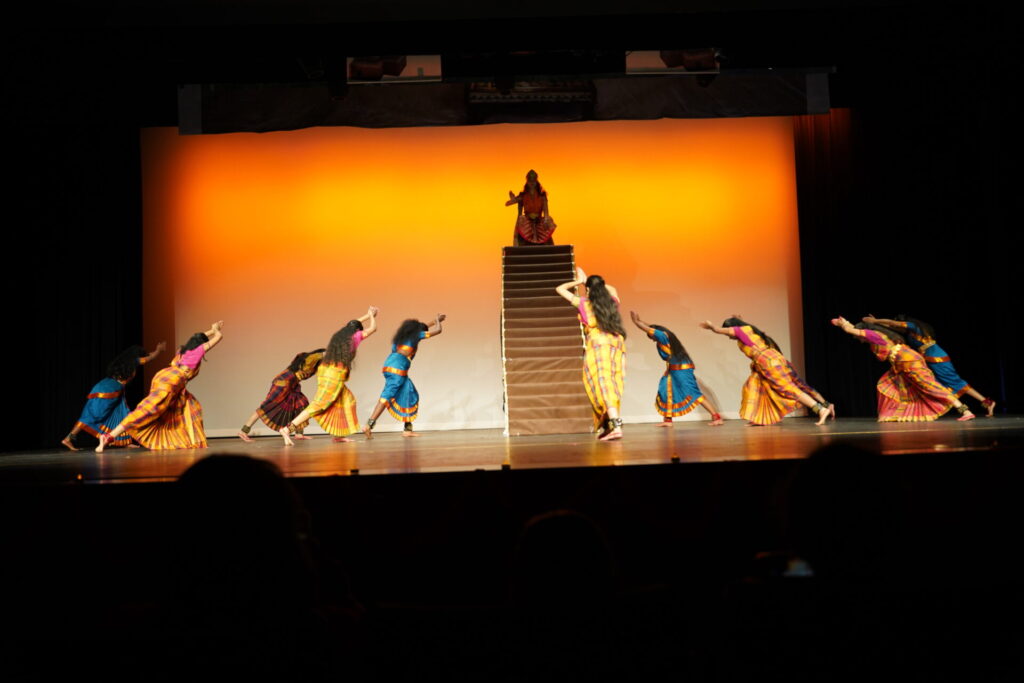
Among the standout productions was Sree Ayyappa Swami Charitham, a dance drama conceptualised and choreographed by Prasanna Kasthuri. With an ensemble of over 25 dancers, including Seema and Samanvita Kasthuri, the production traced Lord Ayyappa’s divine journey—from his celestial birth to the aura of Sabarimala. With music by Sri Tirumale Srinivasan and choreography steeped in devotion, the performance resonated as a spiritually charged theatrical offering.
Later, Ananta, choreographed by Tara Priyadarshini Bikkasani, paid homage to Krishna’s eternal presence—from childhood pranks to the cosmic counsel of Geethopadesam. Featuring dancers like Revathi Vijay and Nayana Jayakumar, and music by Kaniyal Hari Prasad and Ravi Kulur, the piece stood out for its emotive range and compositional strength.
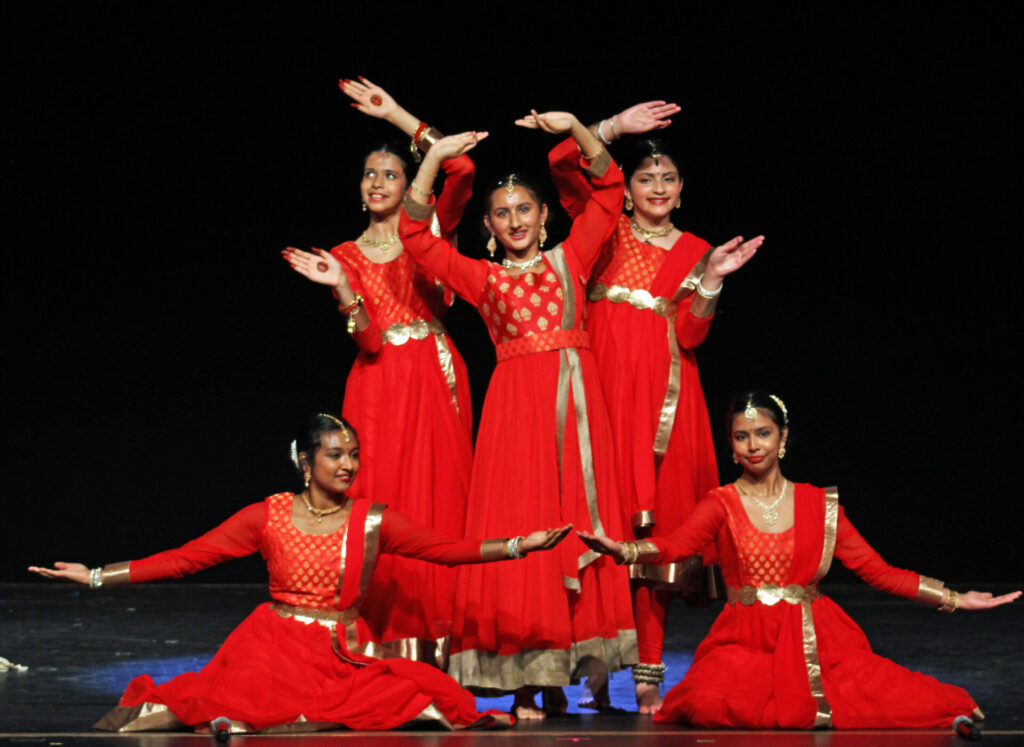
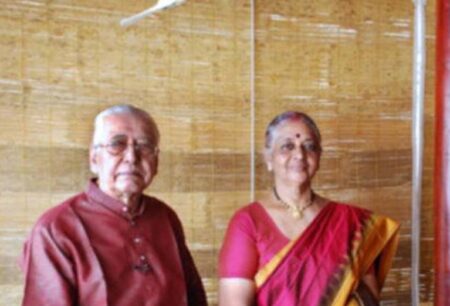
The Lifetime Achievement Awards were presented to Gurus Vinitha Subramanian and Sujatha Vinjamuri for their decades of tireless work in classical dance education across the US.
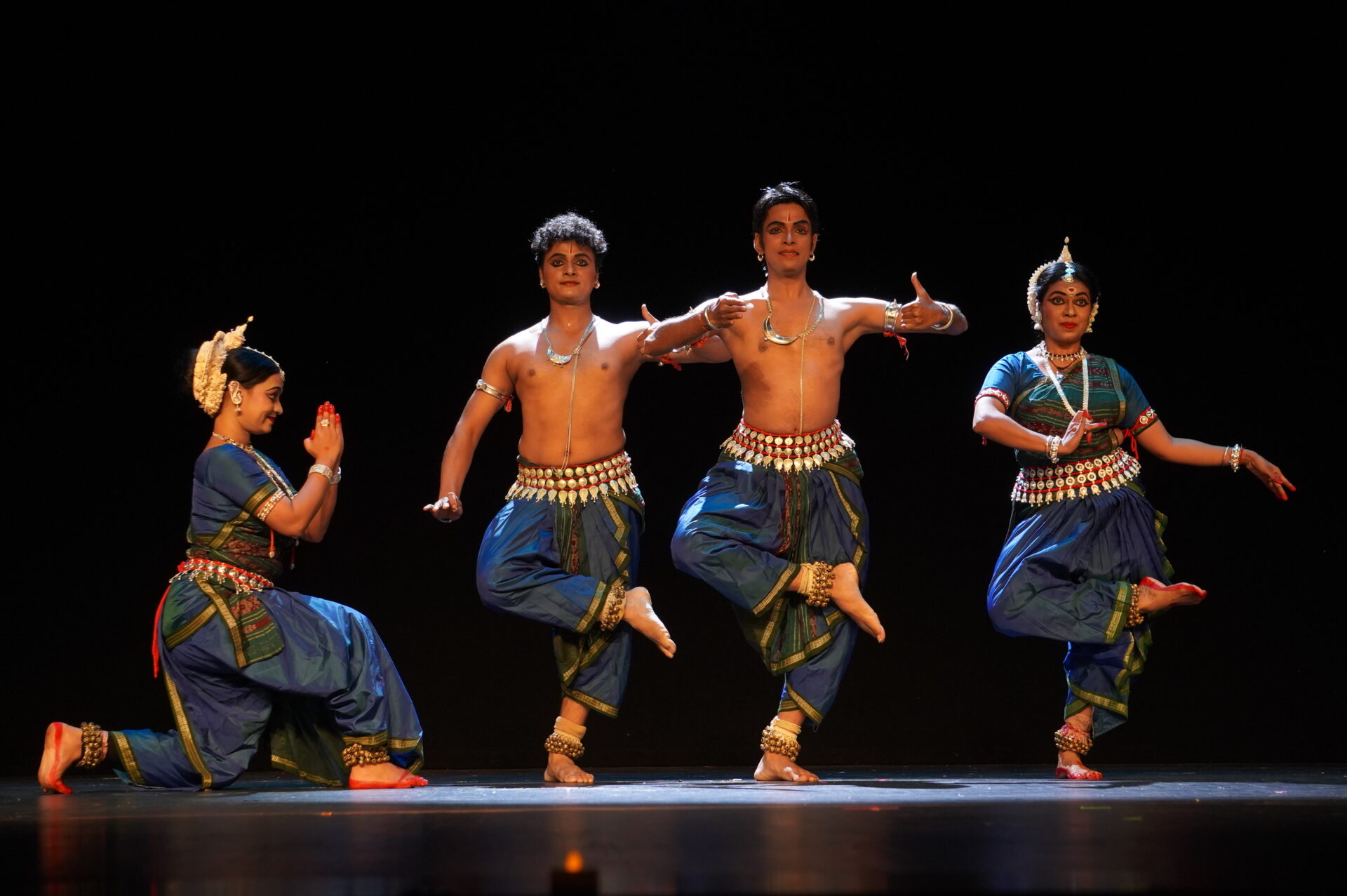
The evening concluded with a captivating presentation by Rudrakshya Foundation, the acclaimed Odissi ensemble from Odisha. Beginning with a Mangalacharan based on Ramcharitmanas, the repertoire moved into a lyrical Pallavi in Hamsakalyani, and then to Bhavani Bhujangam, choreographed by Guru Kelucharan Mohapatra. Their concluding Mokshya exuded quiet majesty. Dancers Santosh Ram, Samir Panigrahi, Debashree Patnaik, and Roji Swain performed with precision, intensity, and unwavering aesthetic focus.
Towards new languages
The final day opened with Fused, a contemporary-classical presentation by Samanvita Kasthuri. With a grounding in Bharatanatyam, Kathak, and Carnatic music, her work Krtghna—on environmental exploitation and Earth’s suffering—brought emotional nuance and choreographic promise to the stage.
Aikyam by Anu Samrat, founder of Alapadma Dance School, was a vivid celebration of unity in diversity. Featuring all eight Indian classical forms—Bharatanatyam, Kathak, Kathakali, Kuchipudi, Manipuri, Mohiniyattam, Odissi, and Sattriya—the piece was a rhythmic and visual mosaic, where each dancer brought their form’s distinct grammar to a shared canvas of cultural harmony.
Explorations by Anubhava Dance Company, choreographed by Joshua George and Shriya Srinivasan, blended Bharatanatyam with themes from neuroscience, philosophy, and human emotion. The dancers maintained aesthetic precision while embracing irony, wit, and contemporary sensibilities. Their inquiry into emotions like fear, anxiety, and hope offered a glimpse into how tradition can be both a foundation and a launchpad.
A moving performance based on Shataka Traya by students of Dr. Sreedhara Akkihabbalu brought the philosophical trilogy of Bhartrhari to life—from sensuality to moral reflection to renunciation. Through expressive abhinaya and disciplined choreography, the dancers articulated the transitions of human longing with quiet power.
Local groups including Nisha Muguluru & Team, Lalitha Jilakara & Team, and Soorya Dance School brought the festival to a close, embodying the celebratory spirit that underpinned every performance.
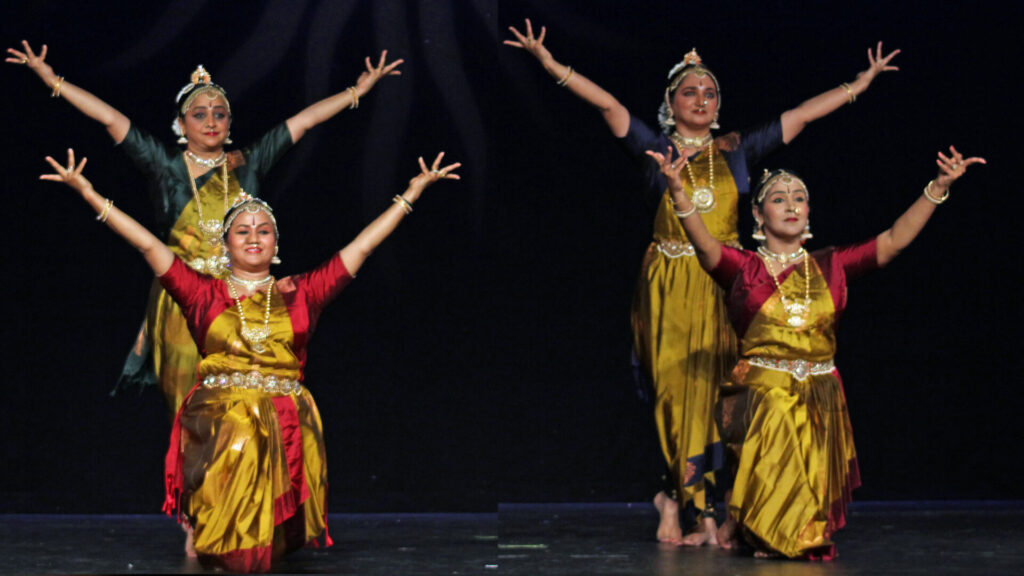
The American Natya Festival 2025 was not merely a curated list of performances—it was a lived experience of cultural memory, artistic labour, and diasporic longing. Prasanna Kasthuri’s vision has created a space where the classical arts do not merely survive but are reborn with each edition—bridging generations, genres, and geographies.
As a fellow practitioner in this shared journey, I view this festival as more than a celebration of dance. It is a cultural mandala—fragile yet enduring, intimate yet expansive—where tradition is not fossilised, but animated, questioned, and joyfully carried forward.