
With evocative performances, NAMAN 2025 in Bengaluru reaffirmed Odissi’s place as a living tradition, seamlessly blending devotion, artistry, and storytelling.
Of all cosmopolitan cities in India, Bengaluru stands out for its cultural inclusivity, artistic propensity and diversity. For years, the city has been a preferred space for traditional performers, non-conformists, mavericks and followers of the Avant Garde. Unlike much of south India, often indifferent to nurturing North Indian arts, Bengaluru has set a different benchmark.
This thought came to me during NAMAN 2025, a two-day Odissi festival by Nrityantar Academy of Performing Arts, led by noted dancer Madhulita Mohapatra. Since moving from Odisha to Bengaluru in 2008, Madhulita has consistently nurtured young talents. Along with institutions like Nrityagram, she has kept the legacy of Odissi vibrant in the south. No wonder Odissi today has a strong presence in Karnataka’s cultural circles.
Trained under veteran acharyas, Madhulita is committed to preserving tradition while recognising that it is never stagnant, but always in transition.
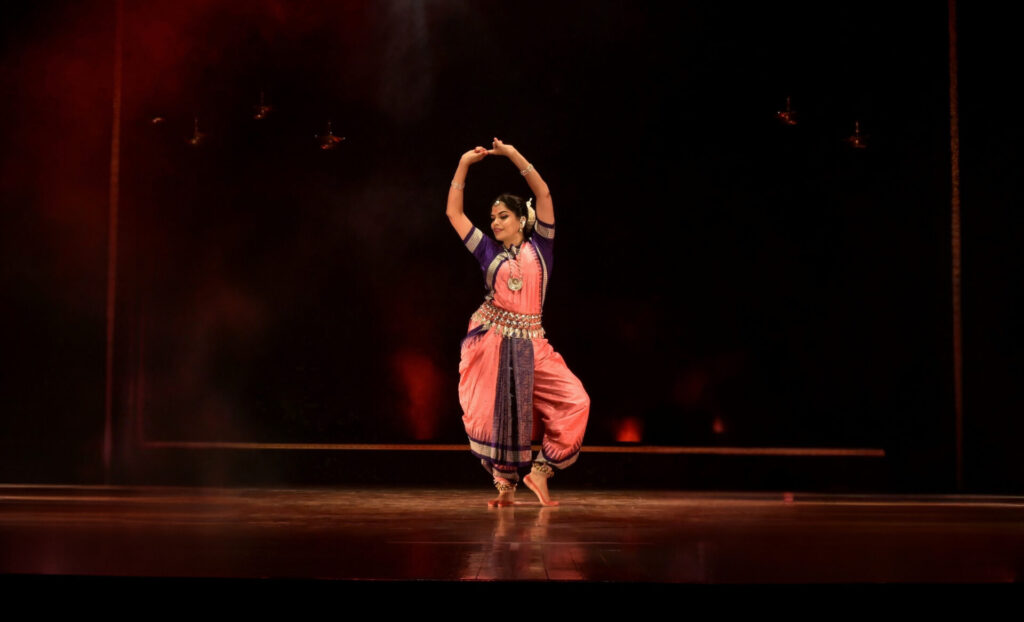
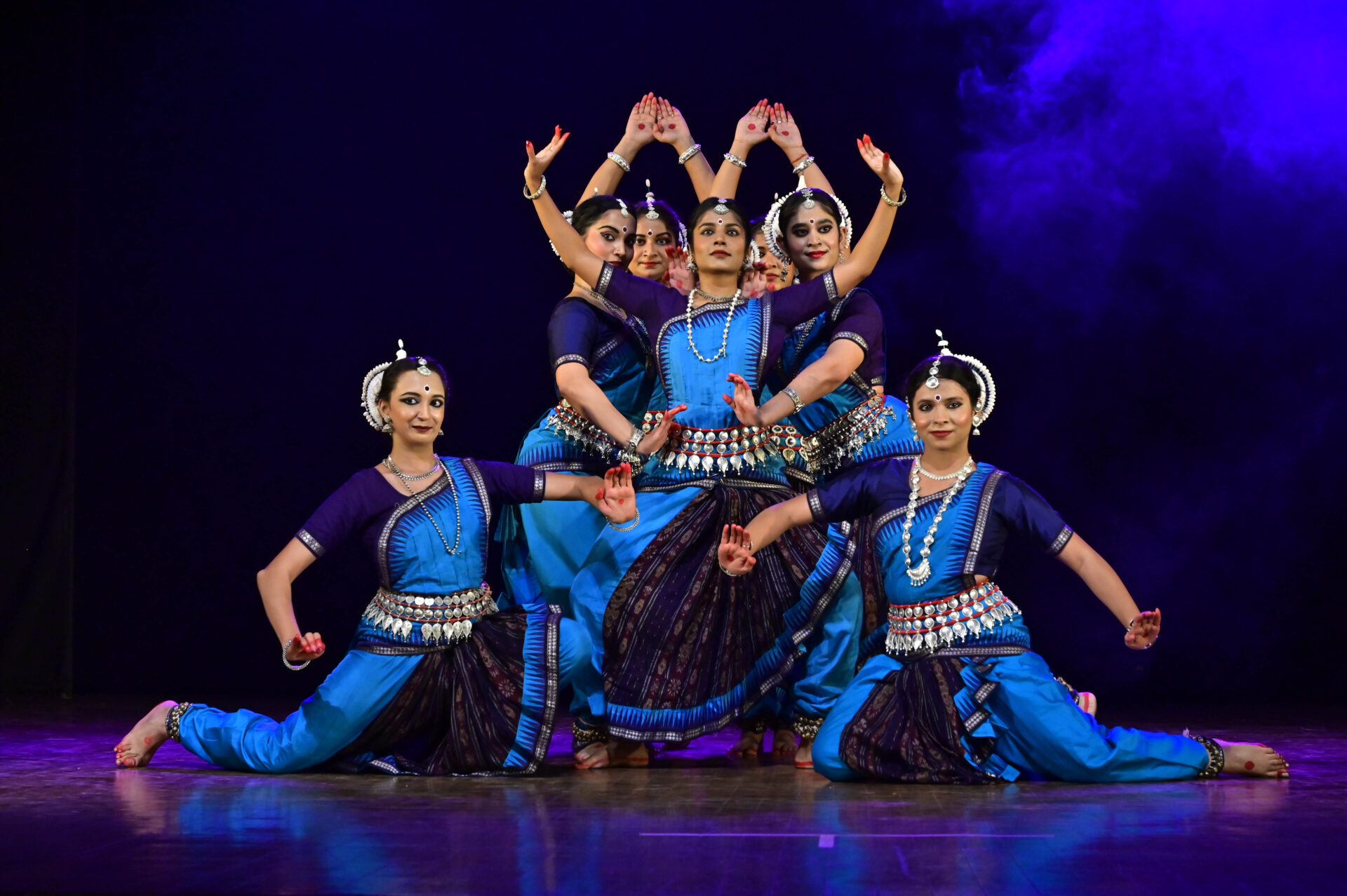
On the inaugural day, Madhulita’s students presented thirteen items, opening with Shivam Dhimahi. With precise use of angopanga pratyangas, they evoked Lord Nataraja—his matted locks flowing, goddess Ganga resting in his hair, and the crescent shining above. He drinks the venom spewed by Vasuki to save the world, earning the name Neelakanta, before his cosmic dance dissolves creation into nothingness.
The performance of Nandhana Sasikumar, Siri K. Reddy, Samiksha Singh, Debashree Barada, Lipsarani Sahoo, Smruti Snigdha Pattanayak and Sunaina Rao was particularly striking. Guru Dhaneswar Swain composed the rhythms, Sukanta Kundu provided the music, and Pandit Nityananda Mishra prepared the script and notes. Madhulita’s choreography bound these elements into a telling whole.
The following piece, Malhar Pallavi, was rendered by a group of young dancers with neatness and fluency.
Krishna-themed performances
The third item, Dekhago Radha Madhava Chali, based on a 17th-century Odia song by Banamali Das, captured a Sakhi’s joy at glimpsing Radha and Madhava in the famed Chandan Jatra procession. Choreographed by Ratikant Mohapatra, it was beautifully brought to life by the accomplished Saanvi Sahoo, leaving a lasting impression.
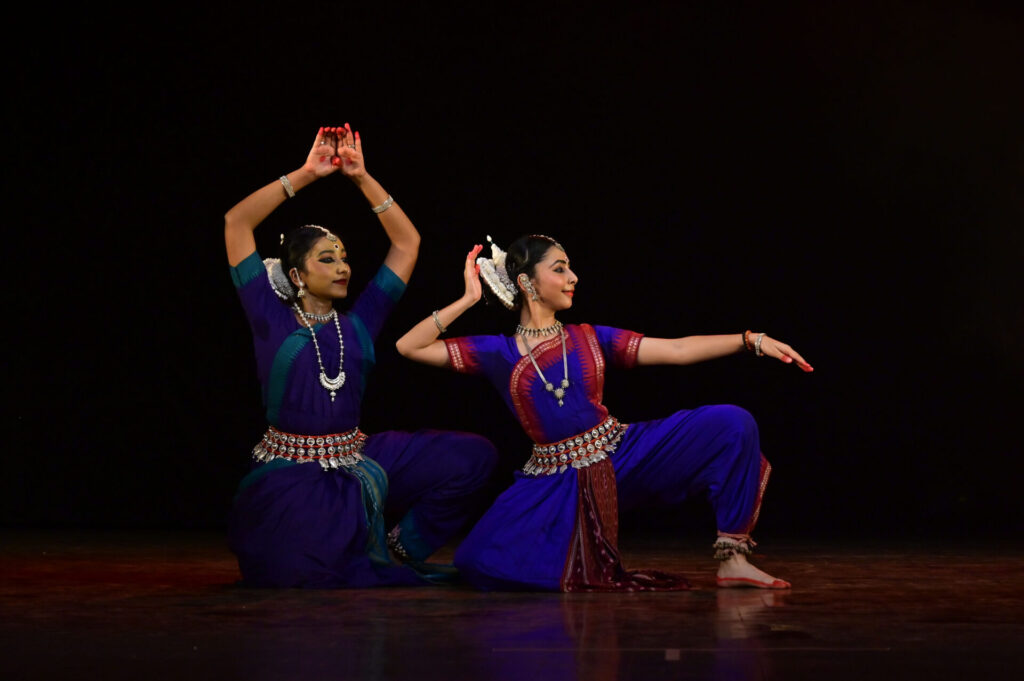
This was followed by excerpts from Colors of Krishna, where the divine child’s enchanting presence in Vrindavan unfolded—amidst Yamuna’s whispers, the sky resonating with the notes of his bansuri, and the many facets of Krishna revealed. The maternal warmth of Yashoda, his mischievous pranks, and his fierce encounter with Kaliya were woven into striking visual phrases. Krishna’s tandava on the serpent’s hoods, culminating in the Dashavatara, was a visual feast. Supported by Rupak Kumar Panda’s music, Guru Dhaneswar Swain’s rhythm, and Madhulita Mohapatra’s choreography, dancers Angeleena Avnee and Aditi Das etched an indelible impression.
The Narasimha Avatar, familiar across many Indian dance forms, was the next. Maya Raj Urs as the tyrant Hiranyakasipu, Mrida as the steadfast Prahlada, and Mahima Dash as the man-lion Vishnu created a gripping spectacle. Its theatrical force was simply irresistible.
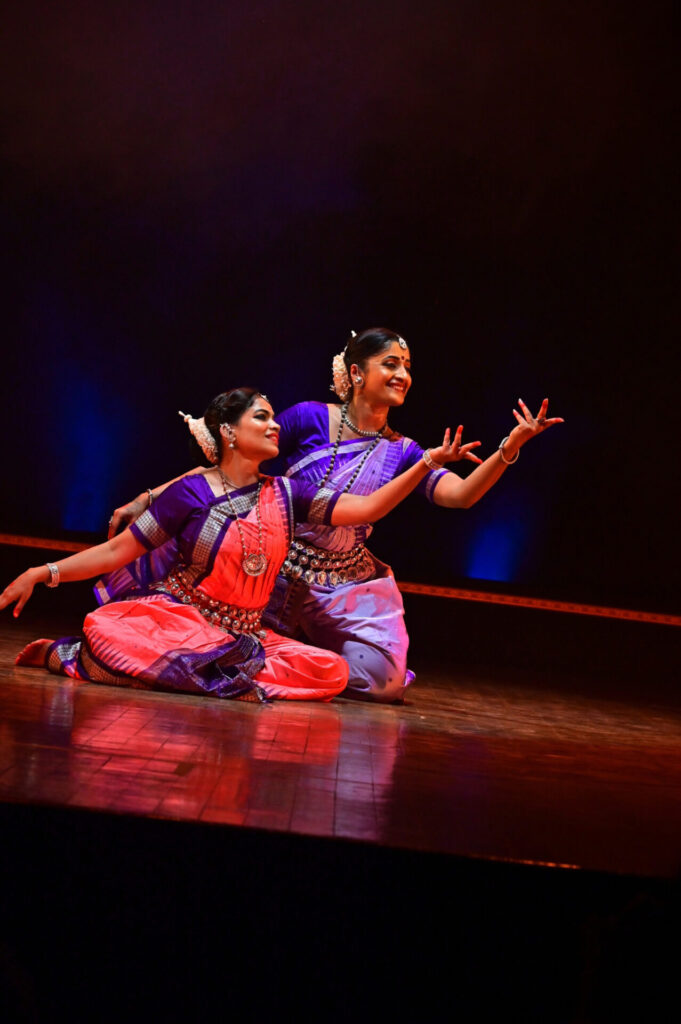
The next piece, set to Kabichandra Kalicharan Pattanaik’s Odia song Baasimohoila Phulaseja, portrayed Radha as a Virahotkhanditha Nayika. In a moving lament, she cries: “Oh Sakhi! The night of anticipation has faded, the flower bed has withered. Krishna did not come. My soul burns in separation, my eyes are smudged, my hair undone.” The anguish of Radha found a poignant expression in Anjali Raj Urs’s performance, supported by Guru Aruna Mohanty’s choreography and Guru Bijaya Kumar Jena’s music.
Expressions of Radha’s emotions
In Sakhi Hey Keshi, the celebrated Ashtapadi, Radha is in bliss, recalling to her Sakhi the sweet memories of her union with Krishna—their moments steeped in sensuality and transcendence. Overcome with longing, she implores her companion to reunite her with her beloved, the slayer of Keshi. Debarati Dutta’s portrayal captured both ecstasy and agony, while Madhulita’s imaginative choreography shone through.
The theme of Sajani mirrored the earlier pieces but with a reversal. Here, the Sakhi describes Krishna’s disillusionment and sorrow at Radha’s indifference, tracing his shifting moods in the throes of viraha. Finally, she adorns Radha and pleads with her to reconcile with her Lord. Dr. Seemanthini Desai distilled the essence of the work with effortless grace.
The next number, Dheera Sameere from the Gitagovinda, is familiar to all in Indian dance traditions. Here Radha, angered by Krishna’s intimacy with other Gopikas, retreats to a shady bower echoing with the drone of bees. A grief-stricken Krishna waits by the Yamuna, until Radha’s Sakhi intervenes, consoling her and reuniting the lovers. Amrita Sharma effectively conveyed the shifting moods of Nayika and Nayaka.
This was followed by a Pallavi in raga Darbari, composed by Rajesh Kumar Lenka and choreographed by Madhulita, in which Nandhana Sashikumar and Siri K. Reddy touched the very essence of Odissi.
Varsha, an excerpt from the Kishkinda Kanda of the Ramayana, came next. Dark clouds over mountains, streams flowing into pastures, dancing peacocks with spread plumes, and heavenly damsels—all found life in vivid stage imagery. A group of ten dancers transformed Valmiki’s verses into striking visual frames.
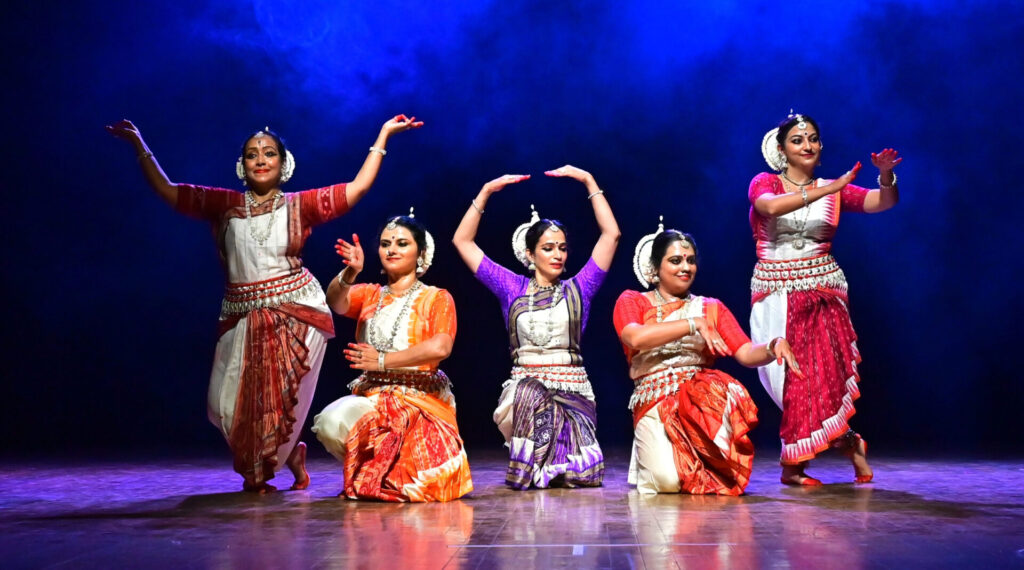
The day concluded with Panchabhuta, an ode to the five elements of the universe. Dr. Anupama Kumar, Mini Somakumar, Rajitha Shekhar, Srudhi Retheesh and Sweta Mishra Bindal embodied Earth (Prithvi), Water (Jal), Fire (Agni), Air (Vayu), and Sky (Akash) with elegant clarity. Guru Ramhari Das’s music and Guru Aruna Mohanty’s choreography heightened the splendour of this finale.
Draupadi’s Mahabharata portrayal
On the second evening, the Nrityantar Dance Ensemble staged Draupadi’s Mahabharata… the epic that began with her. The character of Draupadi has inspired countless interpretations across dance and theatre, her persona profound and many-splendored. Madhulita’s choreographic skill and stagecraft shone through in this action-packed production.
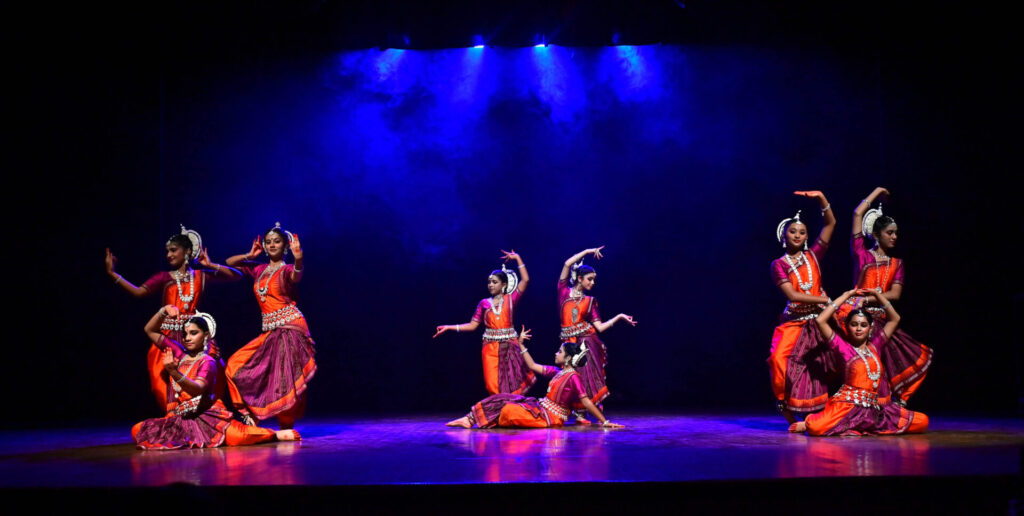
From her fiery birth and swayamvara to her destiny as the wife of the Pandavas, her taunts at Duryodhana, the humiliation of Vastrapaharana, her wounded pride erupting in fury, and the Kurukshetra war, the narrative unfolded with dramatic force before closing in reflective silence.
The final image—Draupadi walking across a battlefield strewn with lifeless bodies and dust-laden crowns—was heavy with unspoken truths. She came to embody the futility of war and the emptiness of victory. Madhulita’s identification with Draupadi was remarkable: never sentimental, but poised and balanced, her choreography marked by geometric precision and rekhashudhi (purity of line).
The ensemble cast lent depth with measured movement and expression. Sahana Raghavendra Maiya was inspirational as Arjuna, especially in the Geetopadesha scene. Reshmi Divakaran brought serenity as Krishna and Yudhishtira, while Devika R. impressed as Bhima.
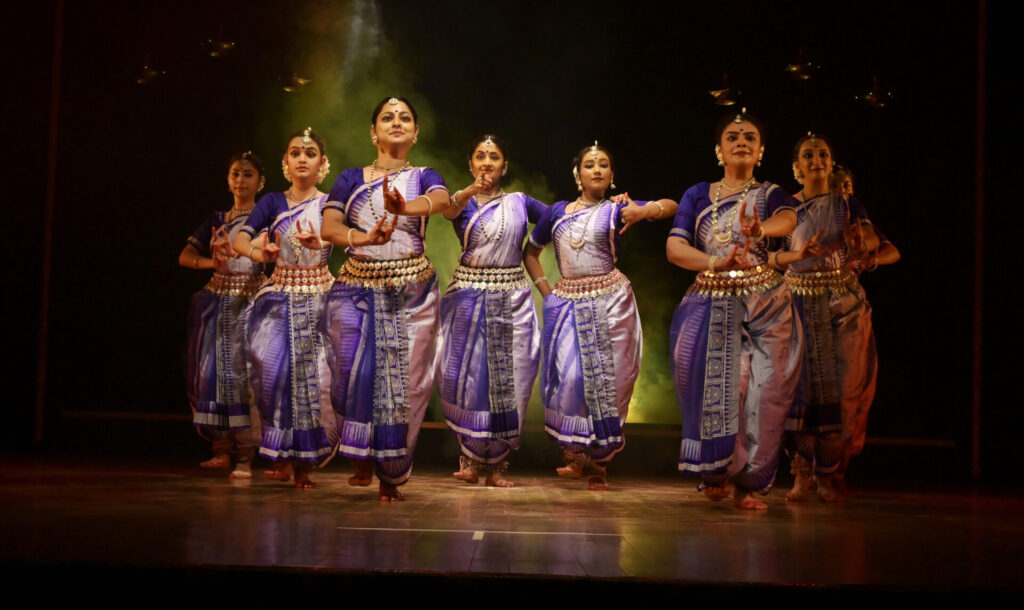
Aditi Das gave Karna quiet poignancy, and Anupama Kumar’s Shakuni radiated deviousness. Srudhi Retheesh’s Dussasana was commanding, while Siri Reddy conveyed Gandhari’s grief with restraint. Nandhana S. embodied both Bhishma and Subhadra with dignity. Angeleena Avnee’s youthful Abhimanyu was vigorous, and the cameo of Mihika Mahnoor as the infant Abhimanyu charmed the audience unexpectedly.
Rupak Kumar Parida’s music augmented the intensity of each and every visual-segment all throughout. Guru Dhaneswar Swain who lent diverse rhythmic patterns appropriate to the text and to the contexts enlivened the movement-dynamics of the dancers. Maharishi Vyasa, Ashtavadhani Balachandra Bhat and Kedar Mishra provided the weighty lyrics that illuminated the sequences one after the other.
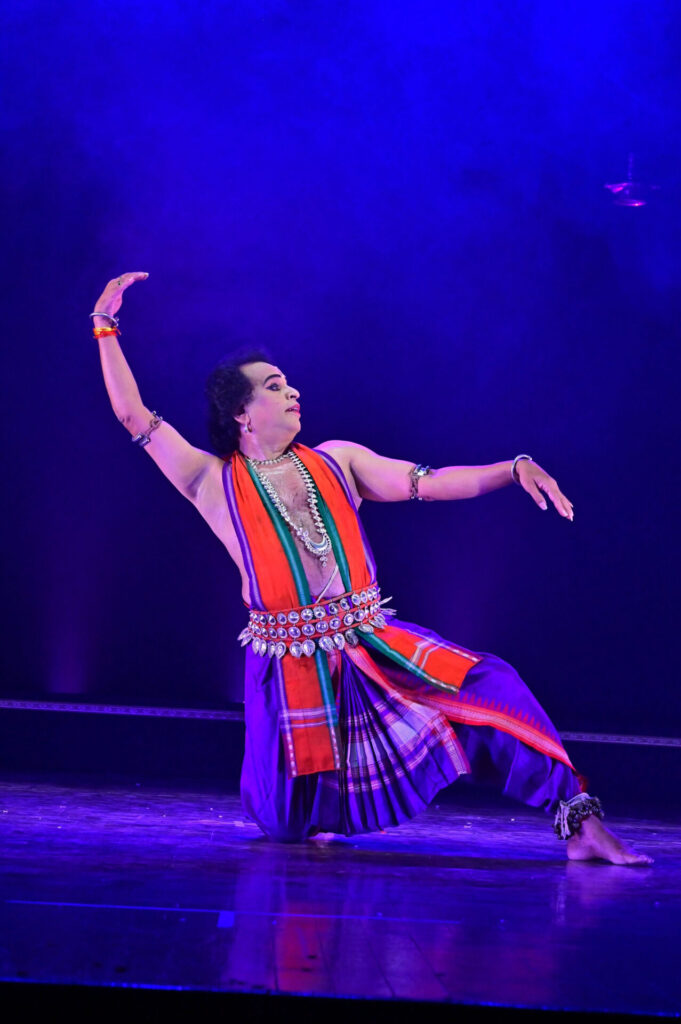
The renowned Odissi dancer and choreographer, Gajendra Pande, came on stage afterwards with Mangalacharana in which he evocatively portrayed goddess, Lakshmi sitting on the lap of Narasimha (the man-lion), the fourth incarnation of Lord Vishnu. The verse drew upon the signature prayer song of PrahladaNataka, the folk theatre form of Ganjam. Mangalacharana based on the Ragas, Mangala Gurjari and Lalita, was studded with garlands of vital Sabda, punctuating the verse as a sublime offering to the fierce features of Narasimha. Guru Gopal Chandra Pande’s music-composition was in harmony with Ukuta by the late Guru Banamali Maharana.
Pande later moved on to Manaudharana penned by Kabisamrat Upendra Bhanja. The lyrics exemplify Lord Jagannadha’s generosity in rescuing his devotee. Gajendramoksham and the episode from Mahabharata in which Krishna saved Draupadi from being disrobed in the Court by providing an endless length of cloth were the two Vinyasas Pande employed to uphold the magnanimity of Lord Jagannadha. Dr. Debaprasad Das’s ace choreography accentuated the articulations of Gajendra Pande in no small measure.
A fitting finale
Soor Mandir Dance Ensemble’s group-recital guided by Guru Dr. Jyotsna Sahoo proved to be a fitting finale to the two-day festival. The dancers commenced the concert with Ganesham in praise of the Siddhi Vinayak. As the unfading symbol of wisdom, prosperity and success and as the remover of all the obstacles, Lord Ganesha’s luminous presence was established on stage by the gifted young dancers.
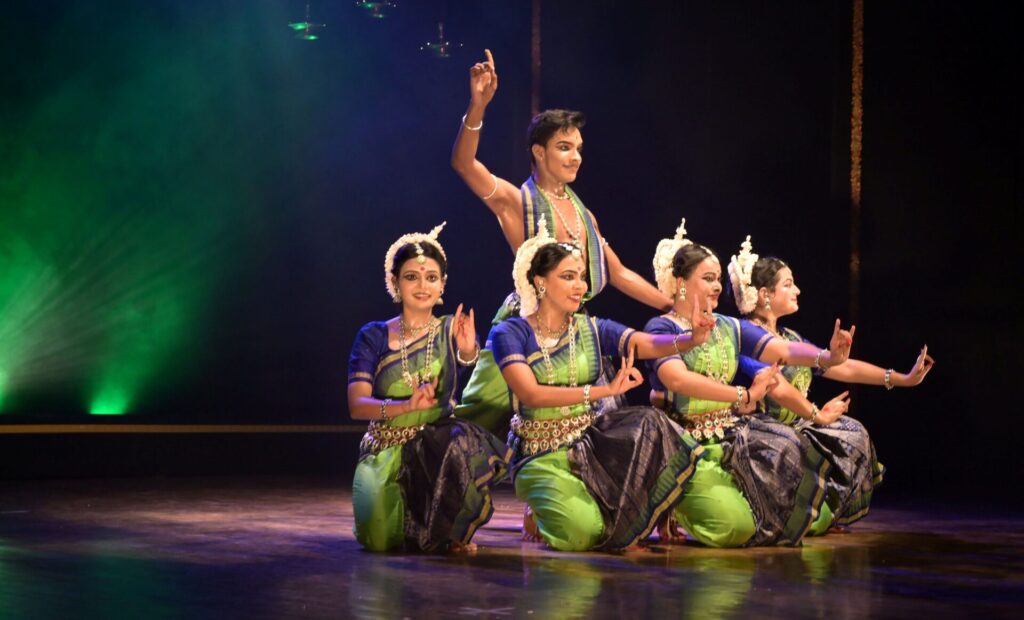
Jyotsna’s exceptional choreography was in perfect concord with the music composed by Agnimitra Behera. The rhythmic-segment composed by Guru Dhaneswar Swain invigorated the presentation beyond words. Pallavi, a pure dance item set to the alluring raga, Kalavati and Adi tala, followed in which the dancers registered their talents in the slow, medium and fast tempos. The visualization, music and the rhythm by the maestros in the respective fields had the desired effect.
SreeRangaCharan in Odissi is an earnest endeavor to highlight the divine feet of the Parabrahma (Lord Vishnu). Here, the dancers chose to present a few unforgettable moments from Threthayugam and Dwaparayugam. Ahalya cursed by sage, Gautama, to become a stone attaining redemption when the feet of Lord Srirama touched her was one instance.
The moment Sri Rama stepped into the boat of Guha, it turned into gold. In the Dwaparayuga, child Krishna dances on the hoods of the serpent, Kaliya, resulting in the latter’s moksha (redemption). There was never a dull moment in the entire presentation thanks to the choreography, musical structure and rhythmic attributes.
In association with the School of Performing, Visual and Creative Arts, Alliance University, Nrityantar organized a panel-discussion on the third morning. Select dancers, scholars and art-critics from across the country assembled at the University to express their considered views on the “Heritage and Horizons of Indian Classical Dance”. The audience comprised of the students and staff concerned of both the University and Nrityantar. The venue was transformed into a healthy public platform to share diverse perspectives on the Indian artistic heritage and culture.