
Shatkala Govinda Marar Sangeethotsavam in Ramamangalam revived Kerala’s rare musical traditions through Sopana Sangeetham, percussion, and classical dance.
For two days in succession, the village of Ramamangalam reverberated to the strains of Sopana Sangeetham and beatings of Edakka in the Shatkala Govinda Marar Sangeethotsav organised by Kerala Sangeetha Nataka Akademi. Akademi’s decision to give extra mileage to the esoteric music of Kerala seemed appropriate since Ramamangalam is the birth place of the legendary musician Shatkala Govinda Marar.
Further, one could hardly believe the response from the musicians to the call of the Akademi as hundreds of them applied for the offering of the music. Thirty musicians selected belonged to all age groups and represented the entire Kerala and the different banis. The enthusiasm with which they blared out verses of all composers was indicative enough of a resurgence of this branch of music that had faded almost into oblivion with the popularity of Carnatic music during last century.
Percussion heritage and powerful performances
True the annual festival began with the traditional art forms like Keli and rendition of Sopana Sangeetham every year. But the offerings of this type of music on the two days were unprecedented. In this connection Akademi deserves to be congratulated.
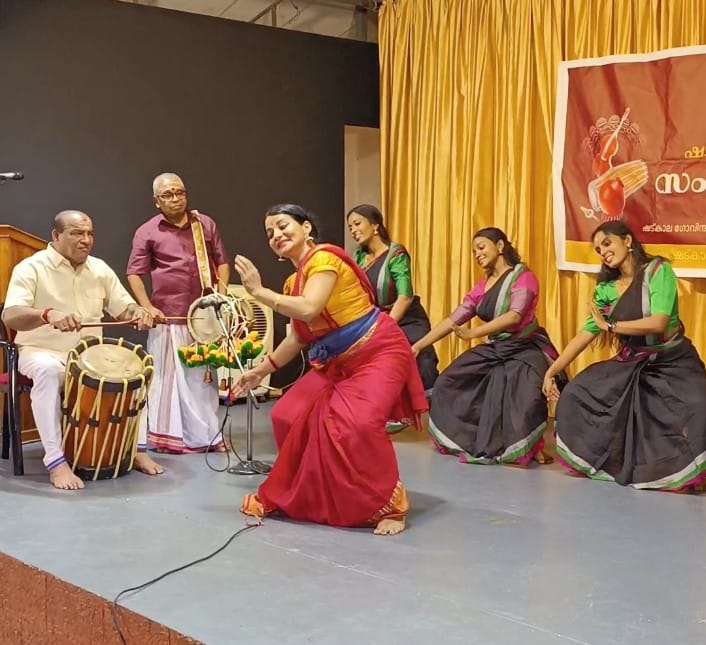
The inaugural ceremony itself had its novelty. After the lighting the lamp and the inaugural speech, the percussion maestro and Chairperson of the Akademi Mattannur Sankarankutty accompanied the Mohiniyattam troupe led by Sithara Balakrishnan on Chenda quite impromptu to the thunderous applause of the audience.
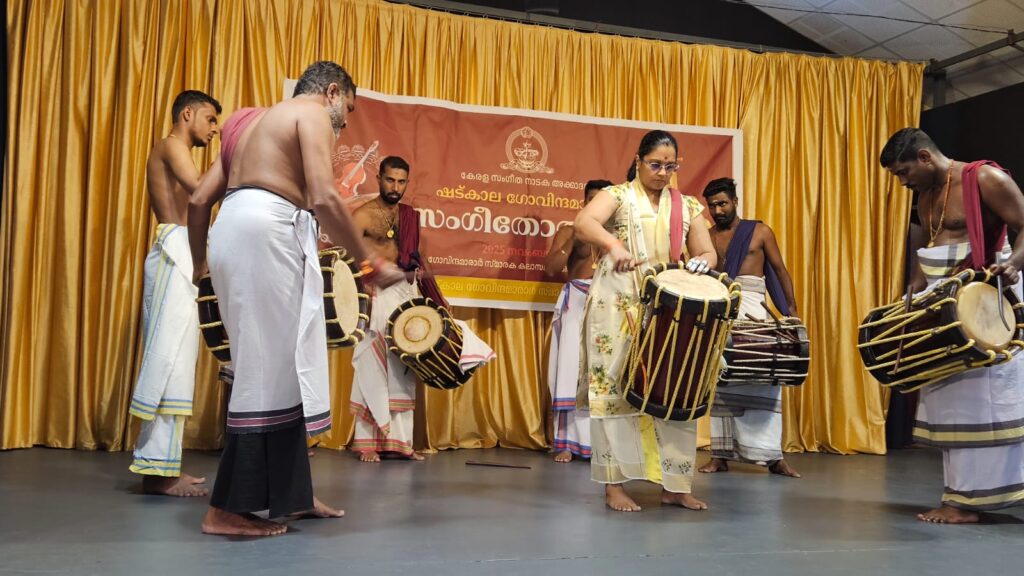
The festival always attached importance to percussion, Ramamangalam being the hotbed of all ensembles. Incidentally, Parisha Vadyam, believed to be the precursor of Panchavadyam, had its origin here. Also Kudukka Vina, a practice on which is a must for playing Edakka, was born here. It was the late percussion wizard Trikkambaram Krishnankutty Marar who introduced it to the concert stage. As of now, Kudukka Vina concerts are popular.
Women at the forefront of rhythm
As different from previous years, Tayambaka was a demonstration of woman power. Nandini Varma not only proved her mastery over rhythm, her show was highly ecstatic. Not only the different stages were perfect, she proved highly creative in the vinyasas.
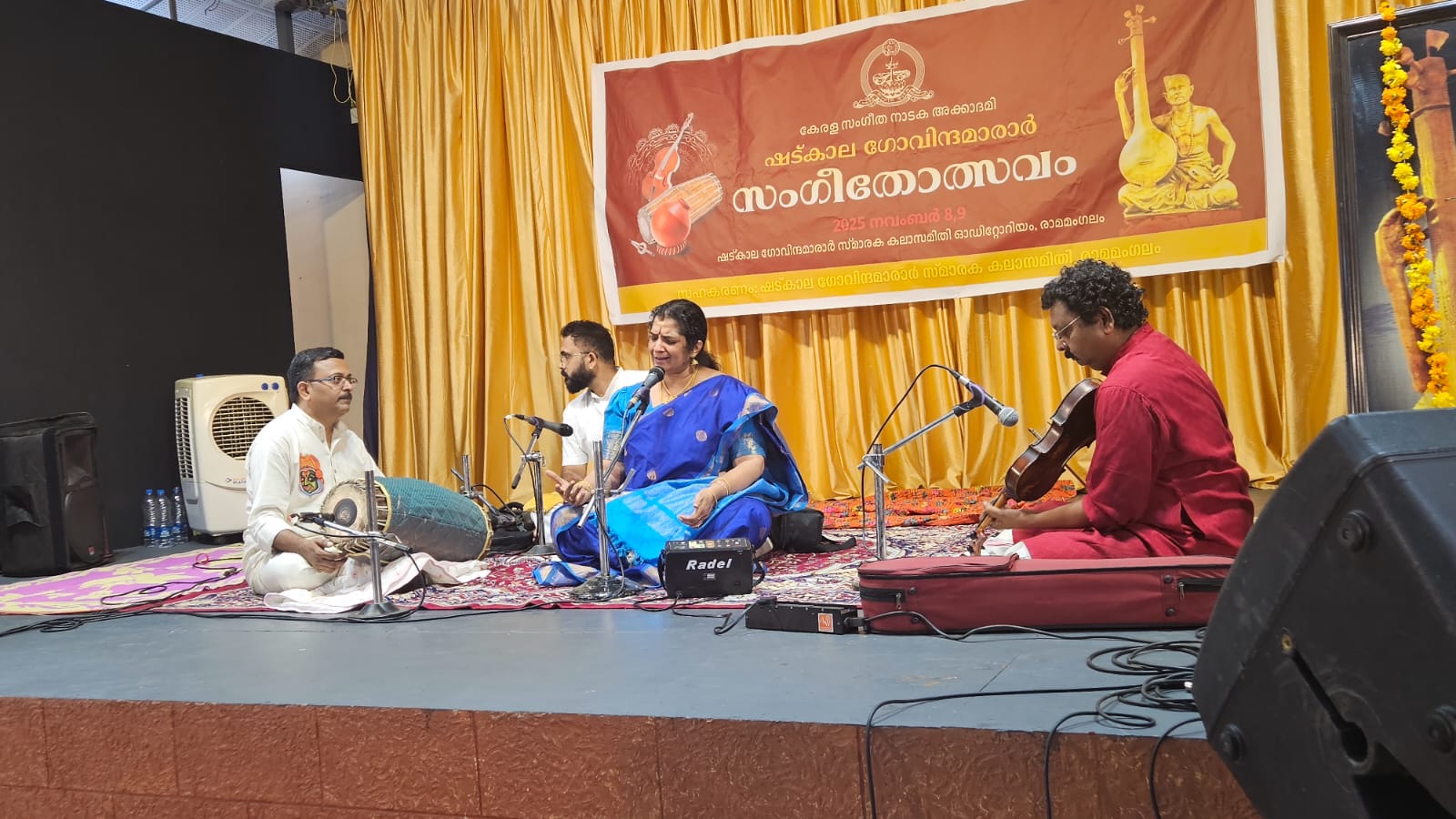
The first day’s programs concluded with music concert by Dr G Baby Sriram. She endeared herself to the audience not only by her soothing rendition throughout but also by selecting popular compositions.
She opened with the varnam in Vasantha and adi, “Ninnukori” the popular composition of Taccur Singarachari. Delivery of the swaras was delectable. Further the varnam showcased her virtuosity in classical music.
“Ninne bhajana seyu”, the Thyagaraja composition in Natta was alluring. The delivery brought to the fore the intrinsic mood of the composition, worship and meditation, apart from the essential features of the raga. Swati’s composition “Mamavasada” in Nattakurinji was especially noteworthy for the streamline flow of swaras that added to the peaceful ambience of the concert as a whole. So was ‘Entharo mahanubhavulu” of Thyagaraja in Sree and adi.
The extended alapana of Kalyani – the main raga of the concert, was quintessential of Baby’s mastery of the raga. For, a few introductory swaras were enough to reveal the identity of the raga. Embellished phrases of swaras in the niraval which appeared endless were commendable. The Thyagaraja composition, “Nidhichala sukhama’ was delicious!
She wound up with the famous Swati composition “Aliveni enthu cheyvu” in Surutti.
Baby had a competent team of accompaniments who contributed substantially for the success of the concert. Violin support by Thiruvizha Biju S Anand was in the right proportion. Taniavarthanam drummed up by Shyam Bhaskar Varavoor on mridangam and Vishnu V Kammath on Ganjira was noise-free and controlled.
Second day witnessed the customary programme of Thyagaraja Pancharatna Kirtana alapana led by Nechoor Ratheesan. Another programme was a 90 minute recital of Sopana Sangeetham by Vineeth Kammath and Rakesh Kammath. Not only their repertoire included a couple of Govinda Marar compositions, further the performance was a demonstration of the varied techniques of Edakka.
An evening of poise
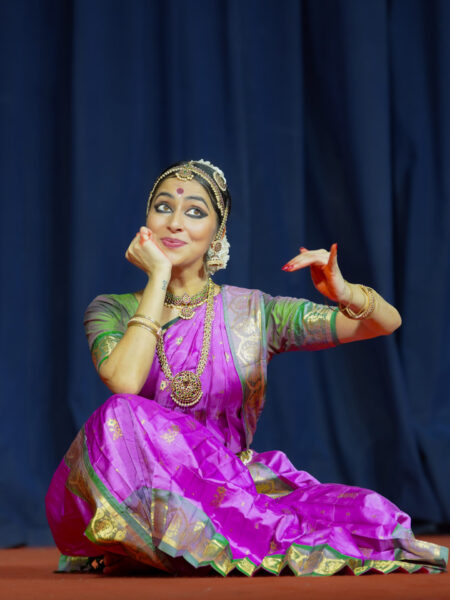
The festival concluded with a glittering recital of Bharatanatyam by the acclaimed exponent Manju V Nair.
The first number, Soorya Kavuthuam, itself showcased her terpsichorean dexterity. Composed in Brindavana Saranga, and adi, the number was an invocation to Sun marked by bewitching jatis which she stamped out in precision. Her footwork appeared charming for the soft stamping.
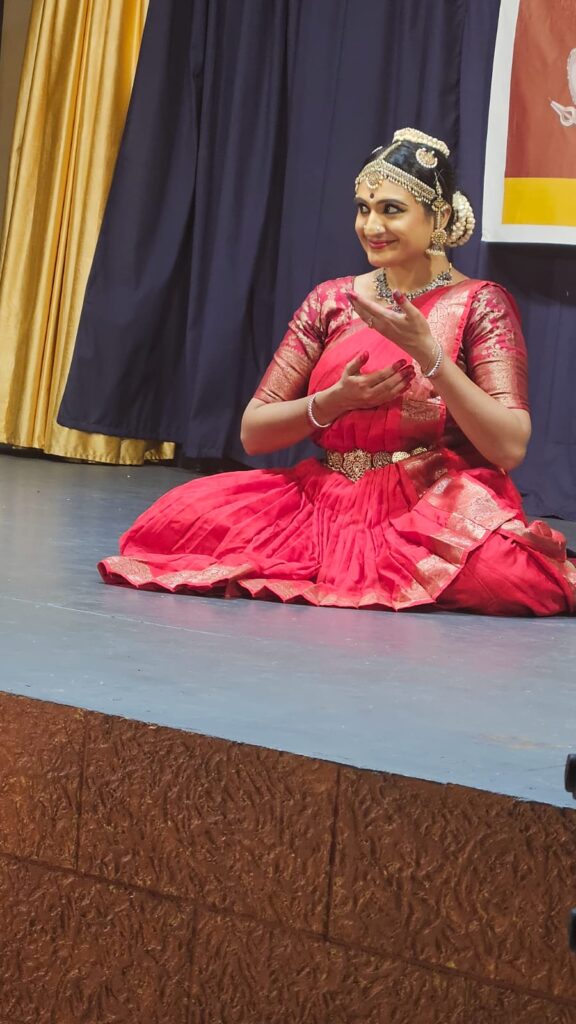
She switched to the famous Varnam of Lalgudi Jayaraman in Charukeshi and adi, ‘Innum en manam’. Here, the devotee of Krishna asks him, “is it justifiable that you behave like you don’t know my mind? Or are you just acting like this”. Making up herself was in the typical feminine style and response to the sound of flute was noteworthy.
The lyrics gave the dancer ample opportunities to bring out her histrionic potential in full. At the same time the nritta sequences and abhinaya were in full balance.
The Anjeneya Kirtanam composed by Jagadiswar Sukumar in Simhedra Madhyamam was her own choreography. The composition in praise of Hanuman, explained the anecdotes in which he meets Sita in Lanka who gives the Choodamani to Hanuman to be handed over to Rama, while Hanuman gives her the Mudra Ring. Captivating was the depiction of Hanuman and his antics.
Ashtapadi (6), “Sakhi he kesi madana muharam” was a recollection of romantic overtures of the nayika with Krishna with whom she yearns for reunion. Performed to Sudha Saranga and misra chap, the number once again brought forth the dancer’s competence in abhinaya.
She concluded with Sri Narayana Guru’s “Shivaprasada Panchakam” in ragamalika and adi, in praise of Lord Siva. The piece was specially noted for the myriad postures of Siva she struck with sculptural beauty and stability. Needless to mention, her aesthetically formed mudras which enhanced the splendour of her nritta.
Overall, she appeared to exude tremendous energy throughout the performance.