

Rasa sanchara— a dance-drama, traces the aesthetic journey of Malayalam literature through the poetic works of prominent poets from Kerala. Seven centuries of Malayalam poetry came alive on stage during the monumental performance, bringing long-forgotten verses back to living breath.
More than a thousand people had gathered in the grounds of Ramamangalam L P School at 8 pm on January 25. Their eyes were riveted on the stage with an LED screen in the backdrop. As the poems of the pantheon of Malayalam poets from 13 th century – most of them who had faded into the oblivion – started blaring from the speakers and the group of artistes began interpreting the poems through their unmatched artistry; the audience broke into a wild applause.
Poetry in motion
Rasa sanchara, an aesthetic journey through the poems of our late illustrious poets, was the two-hour production of the Shatkala Govinda Marar Smaraka Kala Samithy, Ramamangalam. For the Samithy which had revived and created numerous productions across different areas in the past, perhaps this was a landmark.
“It is a meaningful attempt as it would serve to create awareness about our rich literary past among the young generation who are totally averse to our mother tongue and its various branches”, commented poet Sachidanandan in his video message to the programme. Poet Murugan Kattakkada who inaugurated the performance underscored the importance of carrying the hoary tradition of poetry to the younger generation for whom visual interpretation was more effective.
Conceived and choreographed by Ms Sithara Balakrishnan (MFA), a direct disciple of late celebrity Dr Kanak Rele, the performance entailed a team of eight dancers who were trained by Sithara at the Samithy, along with two guest artistes.
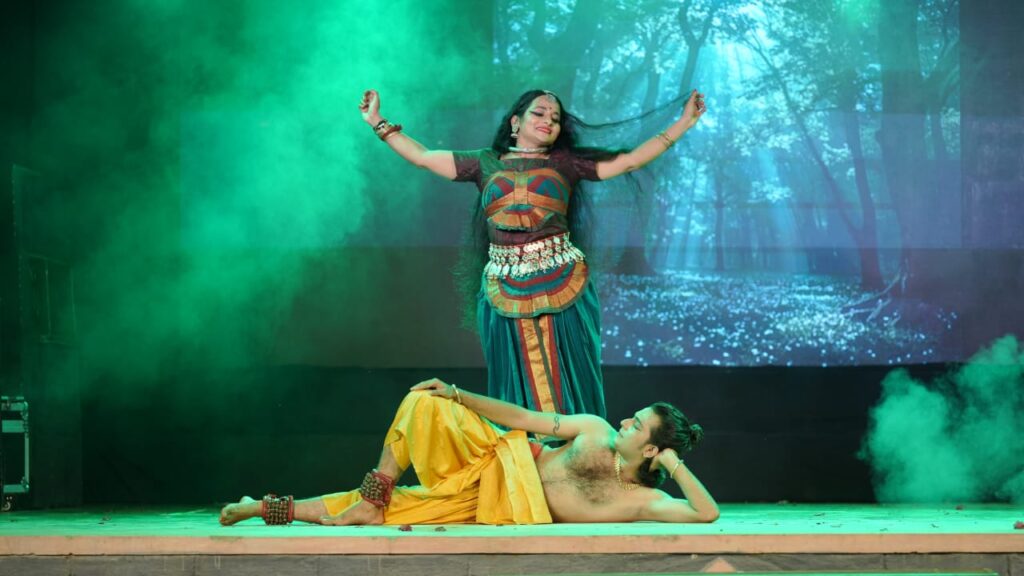
Grown-ups and even those well versed in literature among the audience were surprised to hear the strains from Ramacharitam which is widely recognised as the earliest extant literary work in Malayalam literature composed by Cheerama Kavi belonging to the 13 th century. The leitmotif is Yudhakandam of Ramayana and the language is an admixture of Malayalam and ‘Karinthamizh’. The lines beginning with ‘Kanannangalil arangukayarumayi’ had an auspicious beginning as Sithara and Arjun Kulathinkal presented it most attractively. The opening number itself heralded the tone of the performances that were to follow.
The journey through seven centuries included the select works of thirty eight poets which served to show the evolution of Malayalam poetry that embraced themes, literally, socially and culturally relevant.
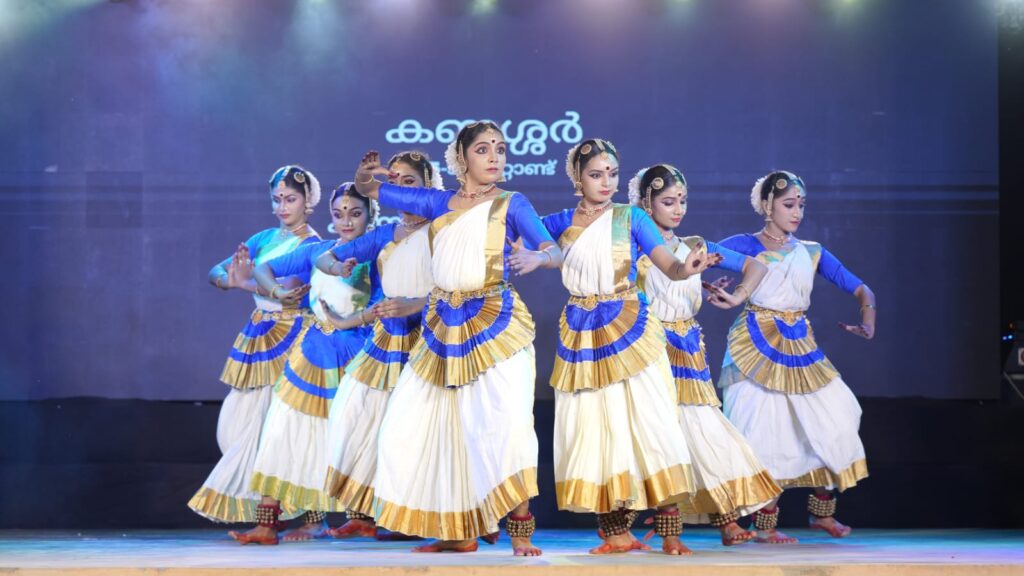
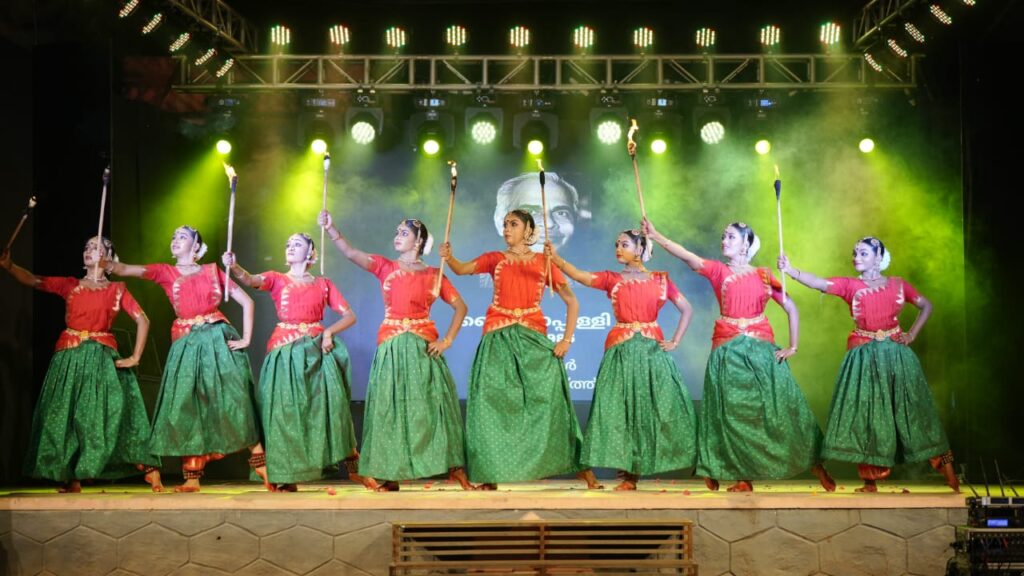
Sithara had employed dance forms Mohiniyattam, Bharatanatyam, Ottanthullal, Kathakali, theatrical elements, and also folk and contemporary dances for the forty poems. Among them Kunchan Nambiar’s Ottanthullal of Bakavadham provided variety.
From Kuchelavrutham to Nandi
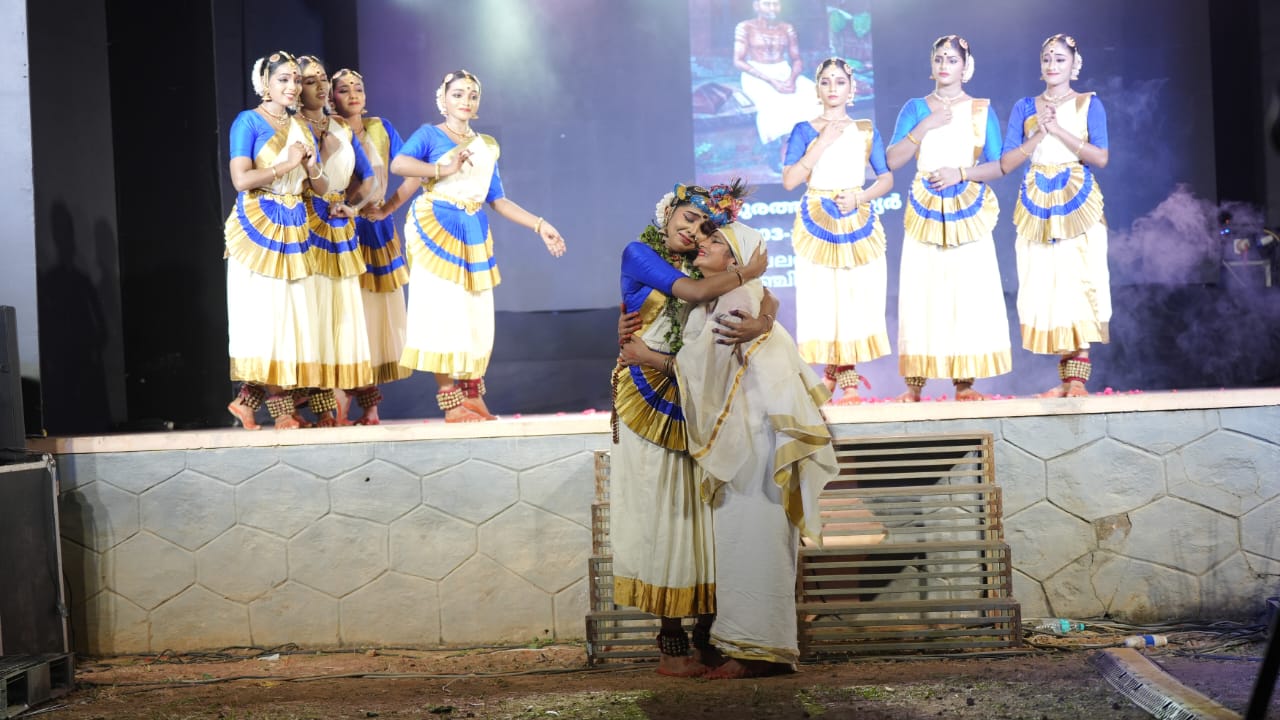
The most touching performance was the portrayal of Ramapurath Warrier’s Kuchelavrutham. Many eyes were wet when Kuchela (Sithara) who appeared from among the audience inched towards the stage, was received by Krishna (Arya Unni) running towards his old friend from the stage and hugged him, all on the ground.
Scenes changed at the wink of an eye for which the artistes deserve congratulations. Commendable was the speed with which they could change the costumes most colourful and befitting the theme of the lines. Interestingly, they created all the necessary props for the performances by themselves. The artistes included, apart from those mentioned above, Anila Akhil, Devika Saranya, Nivedita Nair, Shiona Shiju, Bhadra Arun, Myoonmaya and Krishnananda. Ottanthullal was presented by RLV Ramya Krishnan, a guest artiste.
Enthusiasm of the members of the Samithy was discernible as the septuagenarian Sukumara Marar appeared rendering Kunjunni Master’s lines “Ambatharaksharamalla, ambathonnu akshayavumalla”, moving rhythmically on the stage. The ‘Curtain call’ at the end of the show and the standing ovation by the audience for long was indication enough of the impact of the show.
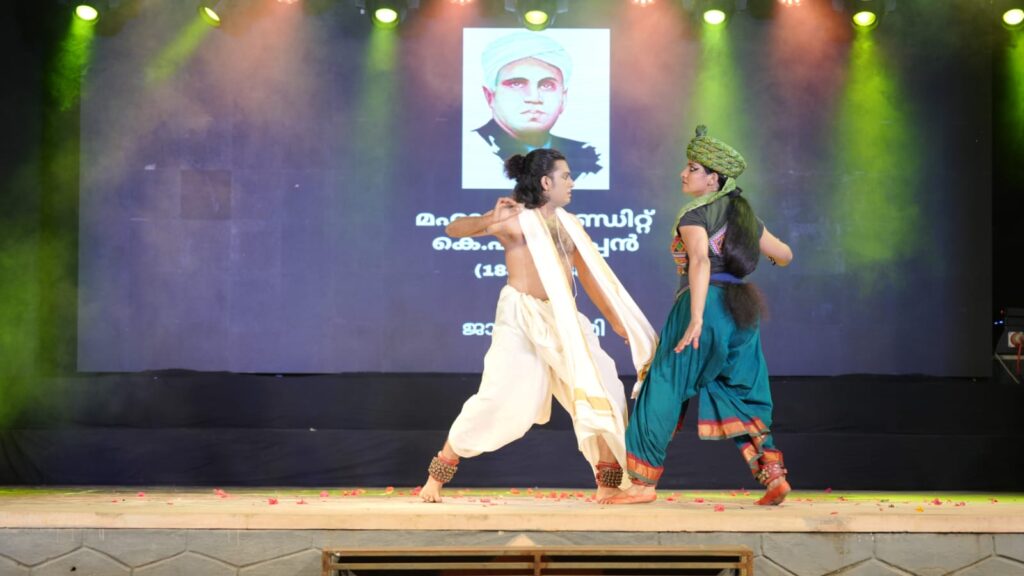
It speaks for the choreographic ingenuity and further deep research carried out by Sithara that the few lines chosen represented the gist of the whole poem that too in the chronological order. Further, many among them embraced themes that had contemporary relevance too. Also the last poem Nandi (thanks) of Sugathakumari appeared a striking denouement for the entire show.
The credit for scoring music with appropriate ragas and rendering them goes to Deepu Mohan and the accompanying artistes including Sajith Pappan (percussion), Soundararaj (vina), Pavithran Hamsadwani (flute).Flawless was the recording by Ani M Arjun. The LED screen in the backdrop where the pictures of the poets, their period and the poems flashed was the contribution of Sajeevan Gokulam. It was really a didactic gesture.
Visual productions of poems are not a new phenomenon; but Rasa sanchara stands out as a mega production that brought to the stage poems from thirty eight renowned poets of yore. In this respect one can say that Rasa sanchara created history.
(Poets: Cheerama Kavi, Kannasa Kavikal, Cherussery, Ezhuthachan, Kunchan Nambiar, Ramapurathu Warrier, Poonthanam, Valiya Koyi Thampuran, G Sankara Kurup, Sree Narayana Guru, Rajaraja Varma, Pundit Karuppan, Irayimman Thampi, Kumaranasaan, Ulloor, Vallathol, Sr Mar Beneja, Vennikkulam Gopala Kurup, P Kunjiraman nair, Pala Narayanan nair, Edappalli, Balamaniyamma, Vyloppilli, Changampuzha, M Govindan, Olappamanna, Akkitham, N N Kakkad, Punalur balan, Thirunelli Karunakaran, Kunjunni Master, Vayalar, Kavalam, Kadammanitta, Ayyappa panicker, ONV, Vishnunarayanan Namboodiri and Sugathakumari.)

1 Comment
Excellent