
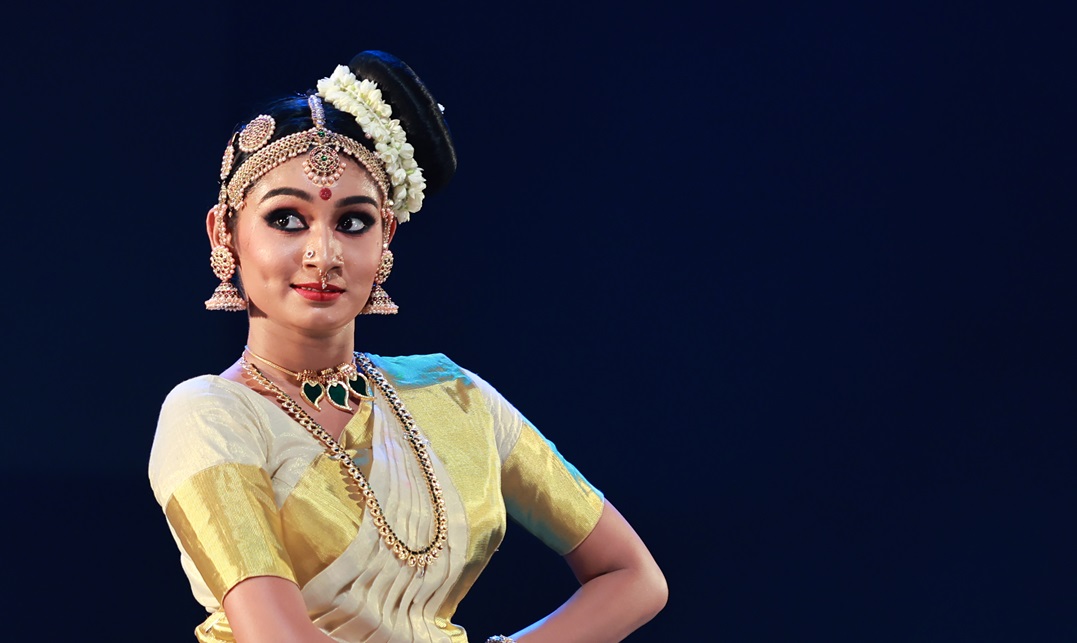
Mohiniyattam recital by Harinanda showcased her expressive grace and technical finesse,
Saparya – a journey through Mohiniyattam – is a unique dance project conceived by Sooryakanthi, the Thrissur-based cultural organisation, to promote young talents in Mohiniyattam. Apart from the systematic training imparted to selected students, the project also gives them stage experience through its various editions.
The second edition of Saparya was held recently at the K T Mohammed Smaraka Hall of the Kerala Sangeetha Nataka Akademi before an invited audience. The young dancer was Harinanda who had undergone initial training at Kalamandalam and winner of several accolades both at the school and university youth festivals. Commendable are her academic pursuits -she has to her credit a degree in Economics from Maharaja’s College, Ernakulum. Besides, now she is doing her graduate studies in Mohiniyattam at the Sree Sankaracharya Sanskrit University, Kalady.
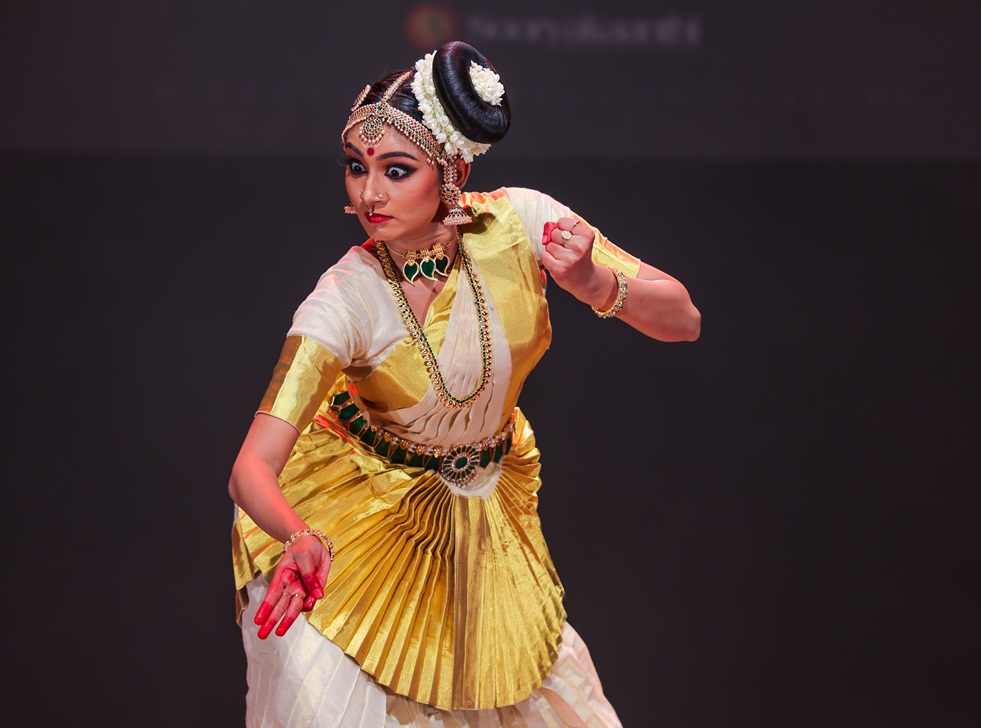
It was her indomitable passion for the dance form that led her to refine her skills under Kalamandalam Akshara Bijeesh over the last two years. Akshara is widely recognised as an acclaimed exponent of the Kalamandalam bani. All the pieces Harinanda performed were choreographed by her guru, and the 90-minute kutcheri beautifully reflected both the dancer’s devotion to the art and her admirable technical precision.
Rhythmic delight
The recital opened with a Cholkettu composed by Bijeesh in Sooryakantham and Adi tala. The chuzhipus and numerous adavus testified to Harinanda’s exquisite nritta. The opening number vividly brought forth the incomparable beauty of Mohiniyattam.
In the typical Margam format, this was followed by a Jatiswaram in Sankarabharanam and Rupakam. Known for its emphasis on nritta, the number showcased the dancer’s adavus, remarkable for their anga shuddha (purity of movement). It spoke volumes about her physical stamina and relentless practice that enabled her to perform two such protracted pieces of pure dance with vigour, without compromising on aesthetic appeal.
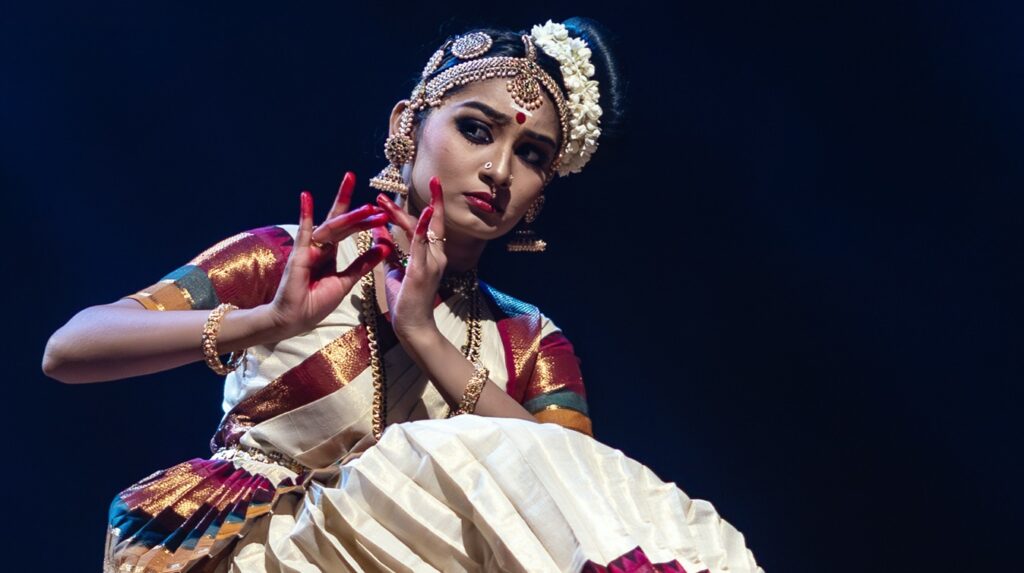
Harinanda’s histrionic dexterity came to the fore in the Varnam that followed — Muthiah Bhagavathar’s celebrated composition “Mathe, Malayadwaja…” in Kamas and Adi tala. Both guru and disciple deserve kudos for selecting such a weighty composition, rarely seen in Mohiniyattam recitals. It is in praise of Madhura Meenakshi Devi and composed with reference to the Maharaja of Mysore, Sreekrishna Rajendra Wodeyar. Incidentally, Muthiah Bhagavathar served as the court musician of the Mysore Palace.
Harinanda skillfully evoked the divine qualities of Devi, maintaining a perfect balance between nritta and nritya. Small wonder, the audience responded with thunderous applause.
Grace and precision
The Swathi Thirunal padam “Ilmariman nayane pathi virahall” in Behag beautifully portrayed the nayika’s separation from her beloved. The sakhi appears as the confidante to whom the nayika reveals her emotions. The portrayal was deeply touching, especially complemented by Bijeesh’s soulful rendition at a slow pace, which the dancer interpreted with heart-rending sensitivity. She truly embodied the saying, “The physical language of the body is more powerful than words.” It was a moment that left the audience teary-eyed.
The Ashtapadi (the eighth one) vividly expressed Radha’s yearning for Krishna’s company. As the virahotkanthita nayika, she experiences fear, hatred, and anguish at everything around her — emotions which Harinanda delineated with conviction. The composition, set in Darbari Kannada and Adi tala, was both poignant and powerful.
The recital concluded with a Tillana composed by Lalgudi Jayaraman in Desh and Adi tala, where the dancer demonstrated her keen sense of rhythm and finishing grace. Maybe she was totally engrossed in performing each number, she failed to utilise the space on her left side of the stage.
The performance was supported by a gifted team of musicians — Kalamandalam Charudutt (mridangam), Hariprasad Subramanian (flute), Soundara Rajan (vina), and Thrissur Ajith Kumar (edakka). Charudutt deserves special mention for composing all the jathis, and Ajith Kumar for coining the rhythm syllables for the Cholkettu. The vocal rendition by Bijeesh Krishna was a striking example of Nritta Sangeetham, with Akshara Bijeesh on Nattuvangam completing the perfect ensemble.
Photo: Anand Narayanan