

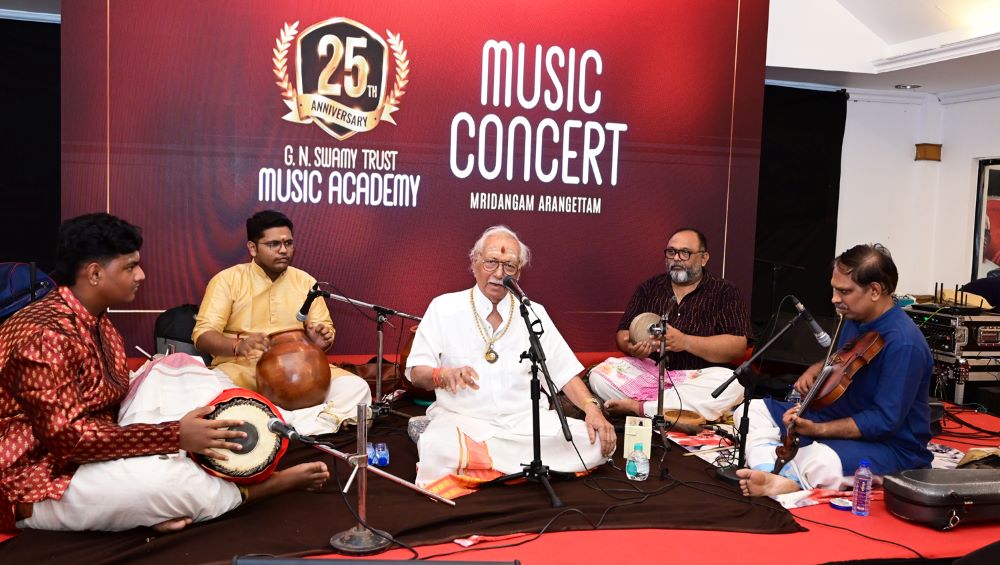
A three-day music festival in Kochi celebrated the spirit of legacy, learning, and heartfelt love for music.
Marking the silver jubilee of the G. N. Swamy Trust Music Vidyalaya, recently at Tripunithura in Ernakulam, witnessed three days of pure classical bliss — a festival that celebrated both memory and melody. The final day, held in remembrance of mridangist G. Narayanaswamy, was not merely a concert but an invocation of gratitude to a guru who had inspired generations of musicians. From veterans to budding performers, every note that resonated through the hall carried the warmth of mentorship and the joy of musical continuity.
The festival commenced with a concert by the renowned Carnatic musician Padma Bhushan T. V. Gopalakrishnan, whose very presence at 93 exuded musical authority and quiet grace. True to his stature as an “inimitable guru” who has mentored prodigies across generations, TVG lent his voice and wisdom to accompany the arangetram of young mridangist Devaraj Sangeeth, a disciple of ghatam maestro Tripunithura Radhakrishnan.
The concert began with the stately Saveri varnam, setting a devotional tone before moving on to a spirited “Vatapi Ganapatim” and a buoyant “Bandureeti Kolu.” The rendition of “Nee Vadalenanu” in Loka Saranga, set to Jhampa tala, was deeply contemplative. The Hamsanandi piece, a Lalitha Dasar kriti , unfurled with a detailed alapana that glided from mandra panchamam to tara sthayi panchamam.
The main piece of the evening, Mohanam, captured the essence of Tyagaraja’s “Mohananrama” with both precision and emotional depth. His concluding Jog Tillana was a fitting finale, vibrant yet meditative. The young mridangist Devaraj Sangeeth impressed with his sense of timing and tonal balance, earning warm applause from the audience. The ensemble with Edappally Ajith on violin, Harish R. Menon on ghanjira, and Rohit Prasad on ghatam, offered sensitive and intuitive accompaniment, enhancing the concert’s aesthetic cohesion.
Devotion in depth
The second evening featured Tamarakkad Govindan Namboodiri, whose tranquil stage presence and profound raga elaborations held even the youngest in the audience spellbound. He began with a crisp Begada varnam, followed by Swati Tirunal’s Gowla kriti, rendered with meditative poise. The rare Dikshitar composition “Kamajanaka Ripugana Vahana” in Naamanarayani, was a thoughtful inclusion on Deepavali, the day associated with the saint-composer’s samadhi.
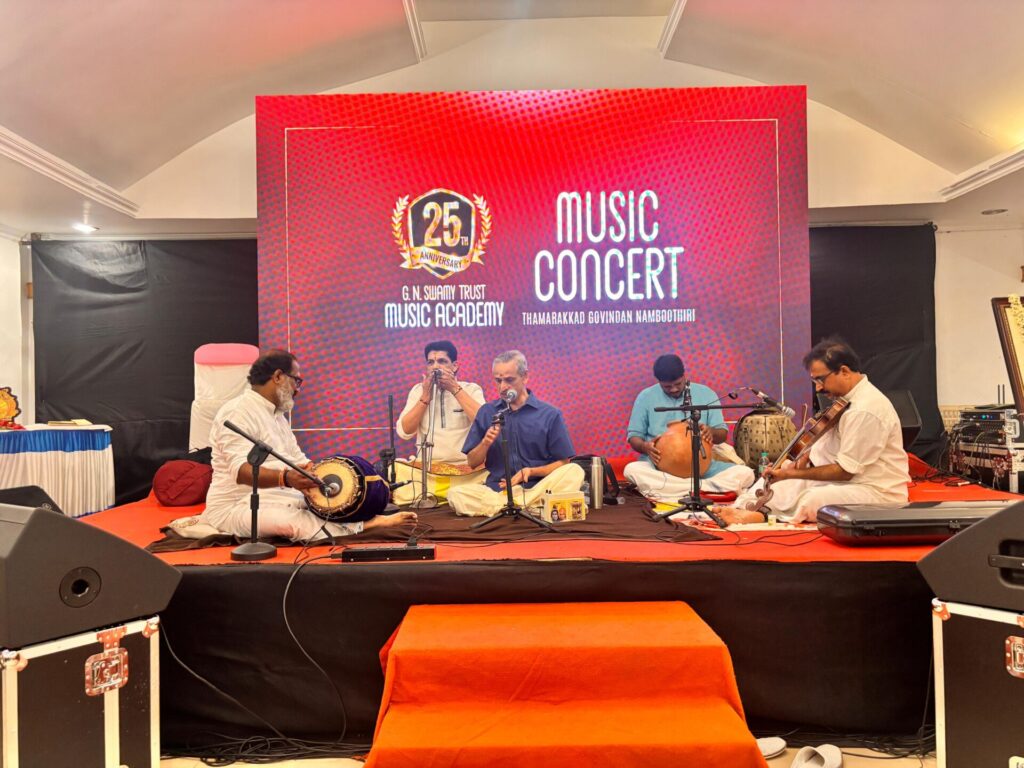
His choice of Namadeshi raga for “Narmada Kaveri Teera Nilaye” added freshness, while the expansive Huseni alapana revealed his nuanced understanding of microtonal beauty. Swati Tirunal’s “Pahimam Brihannayike” in Roopaka tala and Dikshitar’s “Kadambari Priyathe” in Mohanam (Tishra Triputa) followed both structured with crisp, elegant swaraprastaras.
A delightful interlude came through B. Shashikumar’s Malayalam composition “Shantam Parama Shantam Sachinmayam” in Dwijavanti, a short yet profound piece. The main raga of the evening, Hemavathi, became a canvas for Namboodiri’s deep ruminations. His rendition of “Sreekanthimatim” (Dikshitar) was elaborate, each phrase shaped with meditative calm and technical mastery. The violin support from Ranjith mirrored this sensitivity, while the thunderous tani avartanam led by Vaikom Prasad (mridangam), Meendam Harikrishnan (ghatam), and Payyannur Govindaprasad (morsing) received a standing ovation. The concert closed with the soulful Sindhubhairavi kriti “Karuna Jooda Manikanta”, wrapping the evening in serene devotion.
Virtuosity and innovation
The finale brought the youthful energy of Chandan Kumar, great-grandson of the legendary Mysore T. Chowdiah. His recital blended tradition with invention, a fitting tribute to his illustrious lineage. Opening with “Mahaganapathim”, he moved to “Enthamuddho” in Bindumalini and “Devi Brova Samayamithe” in Chintamani, both enriched by inventive sangatis that drew appreciative nods from seasoned listeners.
The highlight was an exquisite Ragam–Tanam–Pallavi in Brindavani, where Chandan’s interplay with Avaneeswaram S. R. Vinu on violin was electric. Their seamless sruti bhedam transitions from Brindavani to Hamsanandi, Hindolam, Varali, Reetigowla, and finally Jog left the hall spellbound. The percussive team, Njanjil Arul (mridangam) and Shinu Gopinath (ghatam), matched the shifts with impeccable precision. The concert concluded gracefully with “Chaliye Kunjaraho” and the lilting “Bhagyada Lakshmi Baramma.”
Adding colour to melody, the festival also showcased an art exhibition featuring oil and watercolour works by Ramya Radhakrishnan, granddaughter of G. N. Swamy, and her eight-year-old daughter Laya Swaminathan.
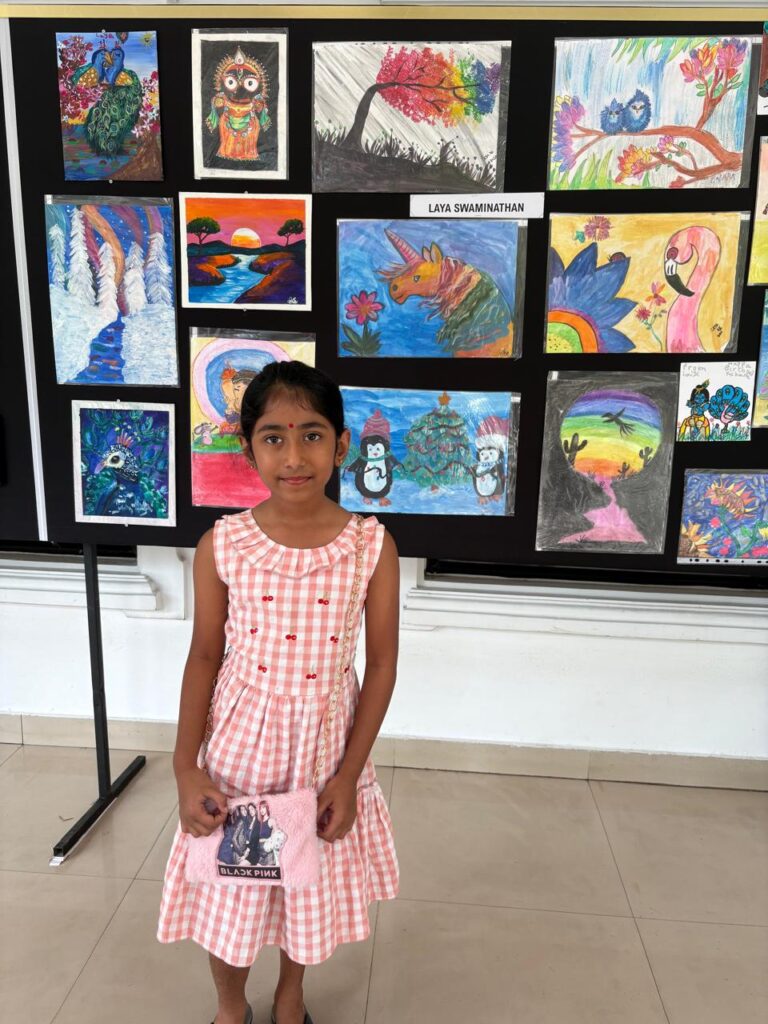
Their paintings, delicate, expressive, and deeply personal drew crowds through all three days, underlining how art and music continue to thrive together in this family’s lineage

1 Comment
Beautifully written 🙏🏻👍🏻