
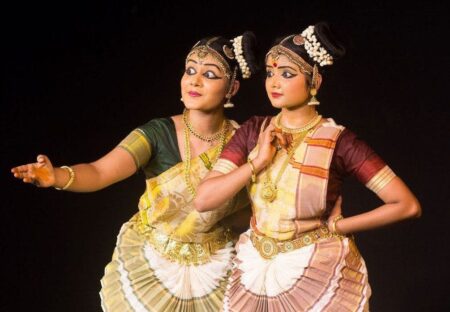
Mohiniyattam or a similar dance form was mentioned in 16th-century literature Vyavaharamala and the historical records of the Travancore rulers.
Mohiniyattam or a similar dance form was mentioned in 16th-century literature Vyavaharamala and the historical records of the Travancore rulers.
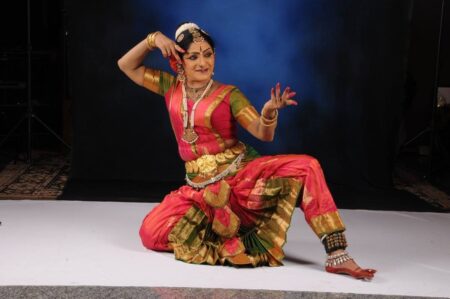
Vasundhara Doraswamy, renowned guru and exponent of Bharatanatyam and yoga, is a torchbearer of Pandanallur style of the art form. India Art Review will be publishing…
A slew of treatises of yore and temple inscriptions are enough indications of the numerous dance forms staged in temples.
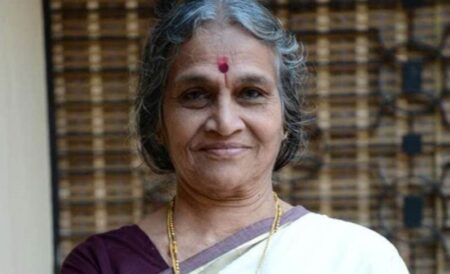
andalam Satyabhama was instrumental in the revival of Mohiniyattam, and her contributions serve as the base for the Kalamandalam style of the art form.
Dancers can perfect mandiadavus and better many traditional postures by practising Veerabhadrasana.
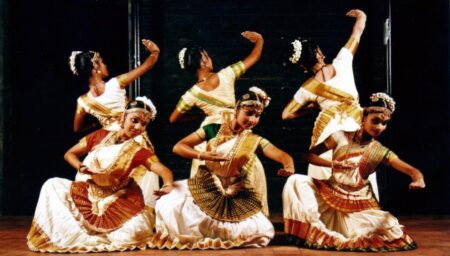
Devadasis were part of Kerala temples as well, shows history, though they were more respected and were even made queens, at times.
The present-day Mohininyattam is a beautiful combination of the Desi aspect of Kerala and the devadasi dance form that came from outside.
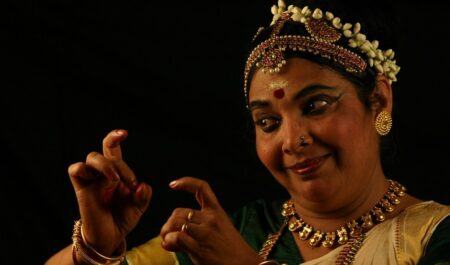
Sankaracharya mentions the lasya or grace of the Goddess in several of his verses, while the recurring theme of Mohiniyattam – the pain of a Nayika separated from the Nayaka, can be metaphorically compared to Jīvātma yearning to be reunited with the Paramātma.
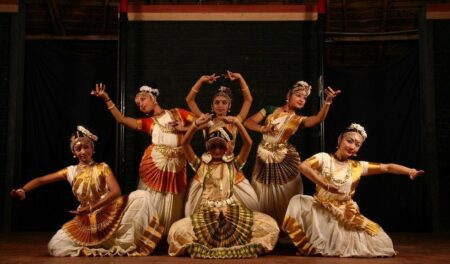
The manuals for several Kerala art forms like Koodiyāṭṭaṁ and Nangiārkūttụ are said to have been formed during the age of the Kulasekharas, who followed the Chera dynasty in Kerala. The current day Mohiniyattam can be considered a dance form in the lasya style which imbibed the core principles of many ancient dance forms of Chera influence
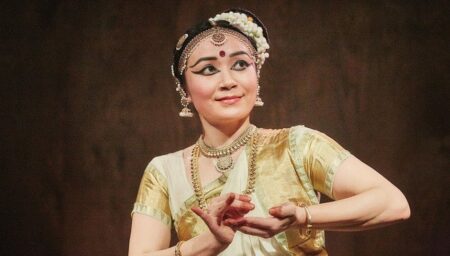
Hailing from Tokyo, Japan, the writer Keiko Okano has been practising and performing Mohiniyattam in Kerala for more than a decade now, shuttling between Kerala and Tokyo. This is a brief story of her journey to Kerala, to becoming a Mohiniyattam dancer.